
Teaching Mindfulness to Children and Teens: A Practical Family Guide
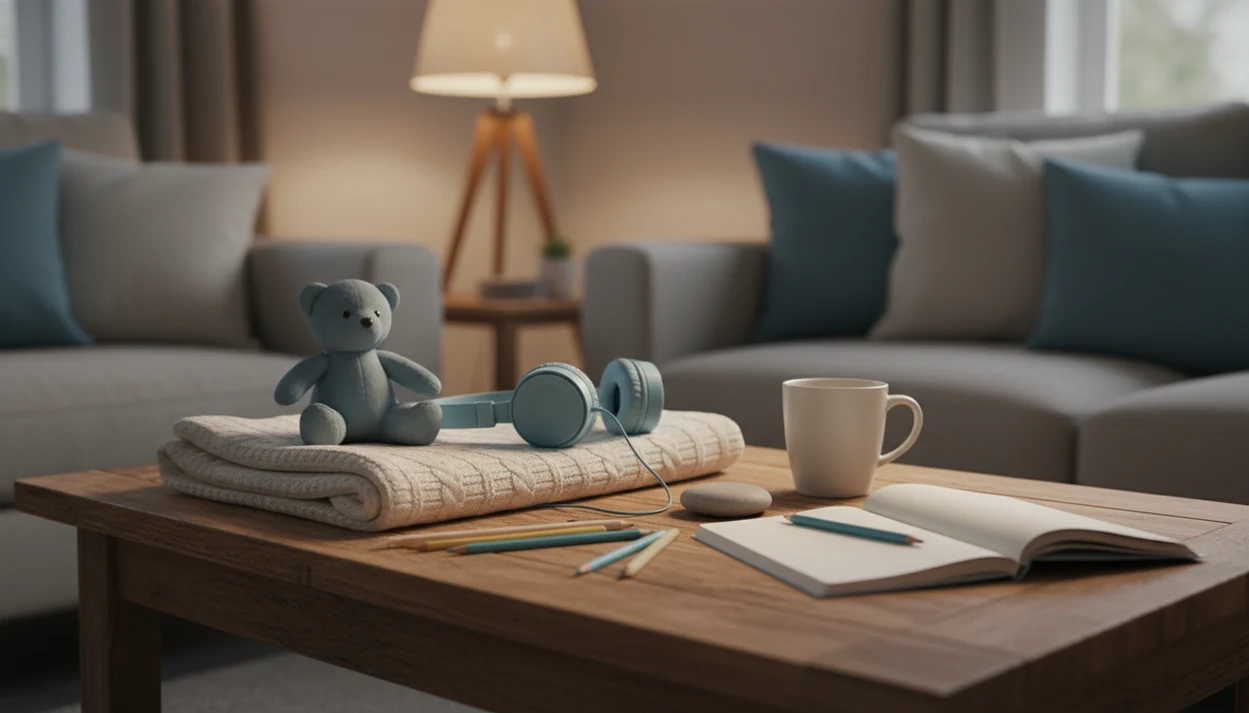


Teaching mindfulness to children and teens means helping them notice the present moment through short, age-appropriate breathing, sensory, movement, or guided-audio exercises. The aim is not perfect calm. It is learning to notice thoughts, feelings, and body sensations without self-judgment, then choose a safe next step. Practices can support emotional regulation, focus, stress recovery, and sleep routines.
Start with 2-5 minutes for younger children and 5-15 minutes for older children and teens, shortening sessions when needed. Tie practice to an ordinary cue: pajamas, school mornings, homework breaks, or recovery after conflict. Playful exercises and adult participation make the routine easier to repeat. Mindfulness is a coping skill, not a replacement for therapy, medical care, or school support when difficulties are significant.
The family basics
- Start with 2-5 minute practices for younger children and 5-15 minute guided sessions for older kids and teens.
- Use mindfulness for specific moments: bedtime, test anxiety, homework focus, conflict recovery, or transitions.
- Mindfulness can support stress, sleep, anxiety, and focus, but it is not a replacement for therapy, medical care, or school support when a child is struggling significantly.
Teaching Mindfulness to Children and Teens: The 5 Facts Parents Need First
- Short works better than serious. Young children usually respond to breathing games, sound hunts, and 2-minute resets more than long silent sitting.
- The evidence is promising, not magic. Studies generally show small to moderate benefits for stress, attention, resilience, behavior, anxiety, and quality of life.
- Adults set the rhythm. A child is more likely to try mindfulness when a parent or teacher practices too, even briefly.
- Guided audio can reduce friction. A familiar voice, story, or breathing track can help families practice at home without inventing instructions each night.
- Mindfulness is a coping skill, not a cure. It may support emotional regulation, but serious anxiety, depression, trauma symptoms, or behavior changes need qualified support.
Tiny counts.
A five-year-old may learn more from three teddy-bear belly breaths than from a lecture about calm.
How Teaching Mindfulness to Children and Teens Works
Teaching mindfulness to children and teens works by giving them repeated practice noticing what is happening inside and around them before they act. The skill is attention training: feeling feet on the floor, hearing a sound, spotting a thought, naming a feeling, or noticing an impulse like yelling, hiding, grabbing, or giving up.
For kids, the useful moment is the tiny pause between “my body feels mad” and “I slam the door.” Adults can explain it as a stoplight in the brain: red means pause, yellow means breathe and name it, green means choose the next safe step. Repetition makes that pause easier to find because the routine becomes familiar, especially when adults model it out loud: “I’m frustrated, so I’m taking one slow breath before I answer.” Mindfulness can support coping with stress, sleep, worry, transitions, and big emotions. It is not treatment for diagnosed anxiety, depression, ADHD, trauma, sleep disorders, or self-harm risk; those concerns need qualified professional care, with mindfulness used only as a possible support.
Child and Teen Mindfulness Effects in the Brain and Body
Mindfulness works by training attention: children learn to notice body sensations, emotions, thoughts, and impulses before reacting. In plain language, it builds a small pause between “I feel this” and “I do that.”
With repetition, that pause becomes more familiar. A child practices breathing, naming feelings, listening to sounds, or choosing a next step. Those small habits can support stress recovery, bedtime wind-down, homework focus, and emotional regulation, without promising medical treatment. For more ways to support coping and confidence, explore practical approaches to raising resilient children at home.
Teachers, parents, and guided audio provide instructions until children become familiar with the practice. At first, the adult says, “Feel your feet, take one slow breath, name the feeling.” Later, the child may remember the pattern alone in the hallway, at a desk, or under a blanket when thoughts get loud. For younger kids, a story can introduce the practice. For teens, it may be a 10-minute audio track and a dimmed phone screen.
Age-by-Age Teaching Mindfulness to Children and Teens Guide
Use age as a starting point, not a rule. Session length should grow only when the child shows readiness, not because an adult wants a longer practice.
| Age group | Useful practices | Typical length | Good daily cue |
|---|---|---|---|
| Ages 3-6 | Stuffed-animal belly breathing, sound listening, five-senses games | 1-3 minutes | Bedtime, after preschool, before leaving home |
| Ages 7-12 | Guided practices, body scans, emotion naming, mindful walking, bedtime stories | 3-7 minutes | Homework start, bedtime, after conflict |
| Ages 13-18 | Guided meditation, sleep audio, test-anxiety breathing, journaling prompts | 5-15 minutes | Before tests, evening wind-down, after practice |
Ages 3-6: Playful Sensory Mindfulness
Try “make the stuffed animal ride your belly” or “hear three sounds.” Preschool mindfulness should look like play, not performance. For very young children, short meditation for toddlers can stay simple and parent-led.
Ages 7-12: Short Guided Mindfulness
Kids in this range often like clear instructions: breathe in, scan shoulders, name the feeling, choose one helpful action. A 5-minute body scan may be plenty.
Ages 13-18: Teen Mindfulness Routines
Teens need choice. Offer a 5-minute breathing exercise, a 10-minute sleep track, or a private journal prompt. Don’t hover.
Offer choices before starting a classroom practice
Before a classroom exercise, explain its purpose and offer a non-meditative alternative. Students should be able to keep their eyes open, move, or opt out without penalty. A simple invitation might be to notice objects in the room, listen to sounds, feel feet on the floor, or stretch. These adaptations follow the inclusive practice implications of research on youth school mindfulness programs; they are not a guarantee that every practice will suit every student.
Teachers should communicate the purpose and limits to families, seek age-appropriate student agreement, and respect religious and cultural preferences. No student needs to describe private memories or feelings to take part. If anxiety, intrusive memories, detachment, or upsetting bodily sensations increase, stop the exercise and arrange appropriate support. Mindfulness should never become punishment or replace safeguarding and bullying responses. The school-intervention evidence review does not establish universal suitability.
5-Step Home Routine for Teaching Mindfulness to Children and Teens
A home mindfulness routine works best when one adult chooses one goal, one cue, and one short practice for a full week. Keep it boring enough to repeat.
- Choose one goal such as sleep, anxiety, focus, transitions, or emotional recovery.
- Pick one short practice matched to the child’s age and the goal, such as breathing, sound listening, or a guided body scan.
- Practice at the same daily cue for one week, like after pajamas, before homework, or after school pickup. A simple kids bedtime breathing routine can pair slow breaths with pajamas as a predictable evening cue.
- Model the practice as an adult instead of lecturing; say, “I’m taking three breaths before I answer.”
- Review what helped and adjust duration, timing, or format if the child resists or gets bored.
For family structure, a family mindfulness routine can help parents choose a repeatable cue. Guided audio can fit as breathing, sleep, or relaxation support for adults building calmer routines at home, but it should not be treated as child therapy.
What school research shows, and what it does not
A 2023 systematic review of school adjustment found small effects on overall school adjustment and academic performance, small-to-moderate effects on attention, and moderate effects on mindfulness compared with controls. These findings support mindfulness as an additional school skill, not a stand-alone way to improve grades. A child becoming more comfortable with a practice does not necessarily mean academic performance will change.
A 2014 review of school-based mindfulness interventions reported an overall effect size of g=0.40, while cautioning that study quality and intervention methods varied. For families, that variation matters: a brief home exercise is not identical to a structured school program. Useful signs to discuss include willingness to participate, recovery after stress, and attention during daily tasks, rather than expecting the same result for every child.
Mindfulness Tips for Children and Teens: Sleep, Anxiety, and Focus
Mindfulness is easier to teach when it solves a real moment: bedtime, worry, homework, or emotional recovery.
Bedtime Mindfulness for Sleep
Use body scans, calming stories, slow breathing, and a consistent audio cue before bed. The small decision of dimming the phone screen before starting bedtime audio matters because the routine feels different from scrolling. Families wanting a deeper sleep routine may like bedtime meditation for children.
Grounding Practice for Anxiety
Try five senses: name five things seen, four felt, three heard, two smelled, and one tasted. For anxious children, naming the worry without debating it can be kinder than arguing with it. The most common supportive way to use mindfulness for worry is grounding plus steady adult reassurance.
One-Minute Focus Reset
Before homework, ask the child to press both feet down, hear one sound, and take three slow breaths. For emotional regulation, use: pause, breathe, name, choose. Tools like Calm, Headspace, Mindful, and other guided-audio apps can also support adult sleep, anxiety support, beginner meditation, and everyday calm routines that parents model.
Best Fit and Safety Boundaries for Child and Teen Mindfulness
Mindfulness fits daily coping practice, not every child mental health concern. Use it as a supportive skill, and widen support when symptoms are intense, unsafe, or changing quickly.
| Best for | Not ideal for |
|---|---|
| ✅ Families wanting everyday calm routines | ✗ Replacing therapy, medical care, or crisis support |
| ✅ Bedtime wind-down and predictable evening cues | ✗ Trauma treatment without professional guidance |
| ✅ Test stress support and pre-performance breathing | ✗ Medication decisions or school accommodation decisions |
| ✅ Emotional vocabulary after conflict | ✗ Forced silence, punishment, or emotional control |
| ✅ Classroom transitions, breathing breaks, and sensory grounding | ✗ Learning-disability support without proper evaluation |
Clinicians typically recommend professional support when a child has severe anxiety, depression, trauma symptoms, self-harm thoughts, or major behavior changes. Mindfulness may sit beside that care, but it should not be used to delay it.
A child can be calm-looking and still overwhelmed.
For younger children who need co-regulation, parent and child breathing exercises may feel safer than asking them to sit alone with big feelings.
Evidence Behind Teaching Mindfulness to Children and Teens
Does teaching mindfulness to children and teens actually help? Research suggests it can, especially for stress, attention, resilience, behavior, anxiety symptoms, and quality of life, but results depend on consistency, adult support, program quality, and child fit.
A 2019 JAMA Pediatrics meta-analysis of 33 randomized controlled trials with 3,666 children and adolescents found small but significant improvements in cognitive performance, resilience, and stress, with stronger effects when teachers were well trained source. A 2016 randomized trial of about 560 sixth graders found that a 9-week school curriculum reduced stress and improved mental health and behavior compared with standard health classes source.
An MIT-led 2023 app study of 103 children aged 8-12 found that 40 days of home mindfulness app use was associated with lower stress and negative emotions, especially among children who practiced most often source. A 2013 adolescent trial reported reduced depressive symptoms and improved self-esteem after a 5-week program. A 2014 review of 24 youth studies found small to moderate effects on anxiety, depression, stress, and quality of life source.
For teens, guided practice usually works best when privacy and choice are respected, while younger children often need adult-led games because they rely more on co-regulation.
MindTastik Support for Family Mindfulness Routines
Parents often teach mindfulness more convincingly when they use it themselves. A child notices when an adult takes three breaths before answering, turns on a wind-down track instead of scrolling, or says, “I need a short reset.” Learning how to be a resilient parent can help adults model steady responses when family stress builds.
For adults, guided meditation apps can provide sleep audio, breathing exercises, and relaxation sessions that make modeling easier. Before the bedtime rush, a parent might use guided breathing; after the house gets quiet, sleep audio can become the cue to stop scrolling and wind down.
Children’s app use should be age-appropriate and guided by a caregiver. MindTastik should not be used to treat children’s anxiety, depression, ADHD, trauma, or sleep disorders. It can support adult modeling and calm routines, including bedtime routines, but care decisions belong with qualified professionals.
Guided audio for bedtime and family resets
MindTastik’s kids sessions, sleep stories, and breathing exercises can provide a repeatable cue for bedtime or a short family reset. Its guided meditation library also gives parents a way to practice alongside children rather than explain every step. Caregivers should supervise children’s use and choose suitable content. Children who dislike spoken guidance may prefer sound listening, stretching, or mindful walking without an app. Persistent anxiety, trauma-related distress, or major sleep difficulties call for professional support, not more audio alone.
When child mindfulness needs adapting or extra support
Mindfulness has useful possibilities, but families should keep the limits clear.
- Evidence is promising but still evolving, and many measured effects are small to moderate.
- Not all children enjoy quiet practices; some become restless, frustrated, silly, or more anxious.
- Mindfulness should not replace therapy, medical care, medication decisions, crisis support, or school accommodations.
- Children with trauma histories may need movement-based, eyes-open, or professionally guided practices instead of silent inward focus.
- Apps require device access, caregiver supervision, privacy awareness, and consistent routines.
- Forcing mindfulness can backfire if a child experiences it as punishment or emotional control.
- Benefits usually require repeated practice over weeks, not one session after a hard day.
- Some teens dislike family-led practice and may respond better to private audio, journaling, or school-based support.
- If a child says a practice feels bad, believe them and change the format.
At 2:13 a.m., when a teen checks the lock screen and realizes they are still awake, mindfulness can offer a next step. It is not the whole plan.
Questions about teaching children mindfulness
At what age can children start mindfulness?
Preschool children can try simple sensory games, sound listening, or stuffed-animal belly breathing. For ages 3-6, one to three minutes may be enough. Age is only a starting point: interest and comfort matter more than completing a set duration. There is no need to begin with silent sitting.
How long should children and teens meditate?
A practical starting range is one to three minutes for ages 3-6, three to seven minutes for ages 7-12, and five to fifteen minutes for teens. Shorten the exercise if attention or comfort fades. Longer sessions are not the goal; a brief practice that can be repeated is more useful than forced sitting.
How can parents teach mindfulness to a child who will not sit still?
Use movement rather than treating stillness as a requirement. Mindful walking, stretching, feeling feet on the floor, or listening for nearby sounds all provide ways to practice attention. Offer a choice between activities and keep the first attempt brief. Restlessness is a reason to adapt the exercise, not punish the child.
Can mindfulness help teenagers with anxiety?
Research on school programs suggests mindfulness can reduce anxiety symptoms on average, but results vary with the program and the student. A teen may prefer eyes-open grounding or movement to inward attention. Persistent, intense, or unsafe symptoms need professional assessment; mindfulness should not replace therapy, medical care, or school support.
How can mindfulness fit into a child's bedtime routine?
Choose one short practice after a familiar cue, such as putting on pajamas: a body scan, calming story, or gentle breathing exercise. Keep the routine predictable and avoid turning it into a task the child must perform correctly. Mindfulness can support winding down, but it is not a treatment for persistent sleep difficulties.
What should parents do if mindfulness makes a child upset?
Stop the exercise rather than insisting the child finish. Offer eyes-open attention to objects or sounds, stretching, or a different activity. Ask what felt uncomfortable without requiring private details. Repeated anxiety, intrusive memories, detachment, or distressing body sensations warrant professional guidance, particularly when a child has a trauma history.
Does mindfulness improve children's grades?
A 2023 systematic review found small effects on academic performance and school adjustment, with somewhat larger effects on attention. That does not make mindfulness a proven stand-alone academic intervention. It can supplement classroom routines, but children who need teaching support or accommodations should continue receiving them.
Should mindfulness be compulsory at school?
Mindfulness should be voluntary, with age-appropriate student agreement and clear information for families. Students need non-meditative alternatives and permission to opt out without penalty. It should not require closed eyes, stillness, or personal disclosure, and it should never serve as punishment or replace safeguarding and effective responses to bullying.