
Teen Sleep Meditation for Bedtime Calm
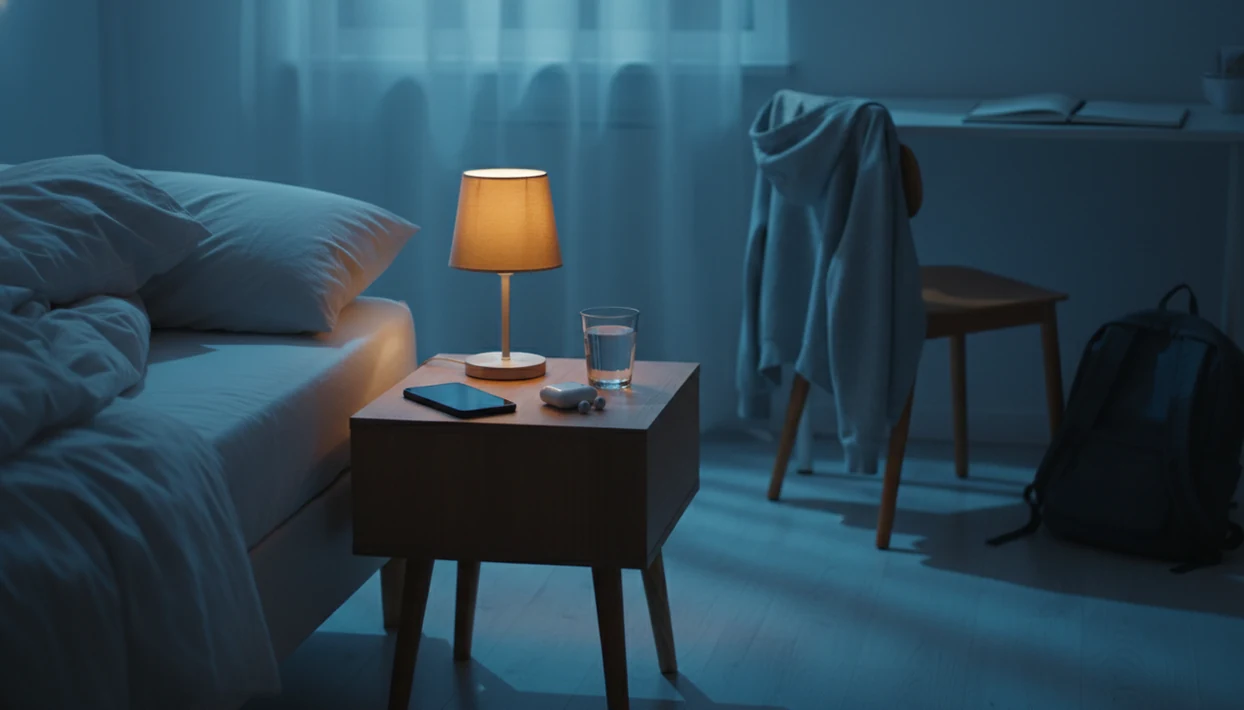


Teen sleep meditation is guided bedtime audio, breathing, a body scan, or a calming story that helps adolescents relax their body and settle racing thoughts before sleep. It is a low-pressure wind-down option, not a treatment for insomnia or a mental health condition. The aim is to give attention somewhere quiet to rest, rather than make falling asleep another task to complete.
It fits best inside a consistent bedtime routine, with dim screens, comfortable audio volume, and enough time set aside for sleep. Parents and teens can agree on suitable content, privacy settings, and when to stop a session that feels uncomfortable. Short, repeatable practice is a reasonable starting point; persistent sleep trouble or worsening mood needs attention beyond a bedtime recording.
Teen bedtime essentials
- Most teens need 8-10 hours of sleep, but many do not get enough on school nights.
- Short guided meditation, breathing, or calm audio can support a repeatable bedtime routine.
- Parents and teens should check privacy, content age-fit, volume safety, and warning signs that need professional help.
Teen Sleep Meditation Quick Facts for Bedtime Calm
- Teen sleep meditation means guided audio, breathing cues, body scans, calm stories, or nighttime soundscapes used before bed.
- It supports relaxation and sleep habits, but it does not replace sleep hygiene, medical care, therapy, or mental health treatment.
- Teens aged 13-18 are recommended to sleep 8-10 hours per 24 hours, according to the American Academy of Sleep Medicine and Sleep Research Society, summarized by the CDC source.
- Many teens fall short on school nights; a CDC analysis found that 72.7% of U.S. high school students get less than 8 hours on school nights source.
- Short and repeatable usually beats long and complicated; a teen who is already tired may do better with five minutes of breathing than a 40-minute lesson.
The 2:13 a.m. lock-screen check is familiar. That moment needs less pressure, not another performance task.
Teen Brain and Body Effects During Sleep Meditation
Teen sleep meditation works by lowering pre-sleep cognitive arousal, which means the mind is still “on” when the body is supposed to rest. Racing thoughts, worry loops, school deadlines, social stress, and body tension can keep attention locked on tomorrow instead of bedtime. Outside bedtime, exploring mindset change for teen stress may help teens respond differently to everyday pressures.
A guided session gives the brain one quiet task. Breathing cues slow the pace. A body scan moves attention from thoughts to physical sensation. Slow narration and predictable audio reduce stimulation, especially when the phone is face-down on the nightstand and the room is already dim.
Experimental research in young adults found that brief 10-20 minute guided mindfulness or relaxation audio before bed can reduce pre-sleep cognitive arousal and improve subjective sleep quality source. Teen-specific evidence is promising but more limited than adult sleep meditation research.
For teens with racing thoughts, short guided relaxation is often easier than silent meditation because the voice gives attention somewhere specific to land. For worries beyond bedtime, mindfulness for teen anxiety offers another way to practice noticing thoughts without judgment.
What the adolescent sleep research actually studied
One randomized trial involved 123 adolescents aged 12 to 16 with sleep and anxiety symptoms. The program combined cognitive-behavioral sleep strategies with mindfulness, rather than providing a bedtime meditation recording alone. Compared with an active study-skills control, the intervention produced greater improvements in self-reported sleep quality. A secondary analysis of the adolescent sleep trial found benefits were particularly evident among participants with higher anxiety or depressive symptoms.
That distinction matters when choosing bedtime audio. Evidence for a structured program that combines several approaches does not establish that a standalone sleep track will produce the same results. The finding supports mindfulness as one possible part of adolescent sleep support, not as a replacement for regular sleep habits or assessment. A recording can remain a modest routine option without being presented as a proven treatment.
Guided Meditation Steps for Teen Sleep
Use teen sleep meditation as a small bedtime sequence, not a last-minute rescue after an hour of scrolling. The goal is to make the next step obvious when thoughts get loud.
- Set a bedtime window that stays roughly consistent on school nights and weekends.
- Choose a short, age-appropriate track such as a 5-minute breathing exercise or a 10-20 minute body scan.
- Dim or lock the screen before pressing play, then avoid checking messages once the audio starts.
- Use safe volume through a speaker or headphones, low enough that the track feels calming rather than immersive.
- Follow one cue at a time, such as breathing, relaxing the jaw, or noticing the mattress under the back.
- Save the same track only if it remains helpful, and switch if it starts to feel frustrating or too familiar.
Do not use sleep hypnosis or meditation audio while driving, biking, cooking, or doing anything that requires alertness. For broader practice beyond bedtime, meditation for teens sleep and stress can help families choose a starting point. For school settings, learning about meditation instead of detention introduces a different context for supporting students.
Teen Bedtime Meditation Formats for Nighttime Calm Audio
Short, simple, repeatable audio is often better for teens than long or complex practices because bedtime attention is already limited. A teen who feels awkward about meditating may also prefer discreet, headphone-friendly audio. When practice feels awkward or frustrating, self-compassion for teen stress can encourage a kinder response to those feelings.
Earbuds on a nightstand, one side tangled around a charging cable, tell the whole story.
| Format | Best for | Watch-outs |
|---|---|---|
| Short breathing track | Quick anxiety reset, screen transition, tight bedtime | May feel too simple for teens who want a story or voice |
| Body scan meditation | Physical tension, stiff shoulders, restless legs | Can feel uncomfortable if body awareness increases worry |
| Sleep story | Teens who like narrative and gentle distraction | Plot can become too interesting if the story is not calm enough |
| Relaxing soundscape | Teens who dislike spoken guidance | May not help much with strong rumination |
| Sleep hypnosis-style session | Teens who like deep guided relaxation | Avoid intense suggestion, fear themes, or content that feels controlling |
A sleep soundscapes meditation app can be useful when spoken meditation feels like too much. For many teens, soft rain or low ambient sound is less self-conscious than “doing meditation.”
Teen Sleep Meditation Fit: Best-For and Not-For Cases
Teen bedtime meditation fits ordinary wind-down problems better than serious or escalating mental health concerns. It can complement care, but it should not be framed as treatment for depression, anxiety disorders, insomnia, PTSD, psychosis, or dissociation.
| Best for | Not ideal for |
|---|---|
| ✓ Racing thoughts about school, friends, sports, or tomorrow’s schedule | ✕ Active suicidal thoughts or self-harm risk |
| ✓ Ordinary school stress and bedtime restlessness | ✕ Severe trauma symptoms or frequent flashbacks |
| ✓ Difficulty shifting away from screens | ✕ Persistent insomnia that keeps happening week after week |
| ✓ Teens who want a calmer routine without a big conversation every night | ✕ Psychosis, dissociation, or complex mental health histories without clinician guidance |
| ✓ A supportive practice alongside healthy sleep habits | ✕ Any situation where symptoms worsen during silence, visualization, or hypnosis-style tracks |
Stop the session if it increases panic, numbness, fear, or intrusive thoughts. The right audio should feel manageable, not like being trapped inside the mind.
Parent Safety Checks for Teen Nighttime Calm Audio
Parents and teens should review sleep meditation tools together before bedtime use becomes automatic. The point is not surveillance. It is shared safety, especially when an app uses profiles, tracking, or personalized recommendations. If these conversations bring up anger, advice on responding to an angry teenager can help parents listen before reacting.
1. Privacy and data settings. Check privacy policies, account requirements, mood tracking, location permissions, ad targeting, and data sharing. If a teen is logging feelings at night, that information deserves extra care.
For U.S. families, teen and child app privacy should be checked against COPPA-style expectations around parental consent, data collection, and disclosure practices source.
2. Content age-fit. Look for calm language, clear guidance, and no intense trauma, fear, sexualized, or suggestive hypnosis themes. “Relax your shoulders” is different from a script that feels controlling.
3. Screen-light boundaries. Download or queue audio earlier, dim the screen, use sleep mode, and avoid scrolling after pressing play. The small decision of dimming the phone screen matters.
4. App role. Tools like [MindTastik]() offer guided meditation, sleep audio, breathing exercises, sleep hypnosis, and relaxing soundscapes for sleep, anxiety support, and everyday calm. They are supportive tools, not therapy replacements.
Families with younger siblings may want a separate meditation for kids app, since teen content and child content should not be treated as interchangeable.
Teen Bedtime Meditation Routine With Low Screen Light
Does teen sleep meditation work better with a full bedtime routine? Yes, it usually works better when it is placed inside a 20-30 minute wind-down instead of being used after sleep has already gone off track.
Try this sequence: prepare clothes or school items for tomorrow, reduce bright screens, wash up, choose the audio, breathe or follow a body scan, then lights out. A teen might choose between a 5-minute breathing exercise and a 20-minute body scan depending on how restless the body feels.
Core sleep hygiene still matters: regular schedules, caffeine limits, device boundaries, and enough total sleep, consistent with CDC sleep-hygiene guidance for regular sleep schedules and reduced nighttime light exposure source. Pediatric sleep guidance commonly emphasizes consistent bedtime routines, limited evening screens, and age-appropriate sleep duration rather than relying on one audio tool. The CDC has also found that most high school students get less than 8 hours on school nights.
Meditation cannot justify chronic late-night screens, irregular sleep, or dependence on one exact track. For shared household structure, a family mindfulness routine can make bedtime feel less like a rule and more like a repeatable pattern.
When to Get Professional Help for Teen Sleep Problems
Get professional help when teen sleep trouble is persistent, severe, unsafe, or tied to worsening mood and anxiety. Bedtime restlessness is common; repeated insomnia, panic, nightmares, or safety concerns need more than a calming track.
Meditation can support a care plan by making nights feel less chaotic, but it should not replace evaluation from a pediatrician, licensed therapist, sleep specialist, or emergency service when risk is present. Parents do not need to wait until everything is a crisis.
- Act immediately if a teen mentions self-harm, suicidal thoughts, feeling unsafe, or not wanting to be alive; contact emergency services or a local crisis line right away.
- Call the pediatrician when insomnia continues week after week, school functioning drops, daytime sleepiness becomes intense, or sleep suddenly changes without a clear reason.
- Ask for a licensed mental health referral when nightmares, panic at bedtime, trauma reminders, depression signs, or worsening anxiety are part of the pattern.
- Stop using the audio if meditation, silence, visualization, or hypnosis-style tracks increase fear, numbness, intrusive thoughts, or panic.
- Keep the routine simple while waiting for care: dim lights, reduce screens, stay nearby if needed, and avoid making sleep a test the teen can fail.
MindTastik sessions for a short teen wind-down
MindTastik’s library includes guided meditations, breathing exercises, sleep stories, and soundscapes. Its guided meditation library is an option for families looking for a quiet bedtime recording, with content reviewed together for age-fit before regular use. A teen who dislikes spoken instructions may prefer a story or soundscape instead. Families seeking treatment for persistent insomnia, panic, or worsening mental health should choose clinical support rather than rely on an app.
What teen sleep meditation cannot fix
Teen sleep meditation is a supportive practice with real limits. It can help some teens settle at night, but it should not carry responsibilities that belong to sleep hygiene, parents, clinicians, or emergency support.
- It is not a medical or psychiatric treatment for diagnosed insomnia, depression, anxiety disorders, PTSD, suicidality, psychosis, or dissociation.
- Direct research on teen sleep meditation is more limited than adult mindfulness and relaxation research, and results vary.
- It cannot compensate for chronic sleep restriction, caffeine, bright screens, irregular schedules, or unsafe device use.
- Some teens may become dependent on one audio track as a sleep crutch and panic when it is unavailable.
- Hypnosis-style or deep visualization content may increase distress in teens with trauma, dissociation, psychosis, or complex mental health histories.
- Audio should not be used while driving, commuting in a way that requires alertness, cooking, or chores that need full attention.
- Parents should seek professional or emergency help for self-harm thoughts, suicidal thoughts, severe panic, persistent insomnia, frequent nightmares, or worsening anxiety.
Clinicians typically recommend evaluation when sleep problems are persistent, severe, linked to safety concerns, or connected with major mood or behavior changes.
Teen sleep meditation questions
Does sleep meditation help teenagers fall asleep?
It may help some teens settle racing thoughts or physical tension before bed. Adolescent research has found benefits from programs combining mindfulness with behavioral sleep strategies, but that is not the same as studying a single recording. Sleep meditation is best treated as an optional wind-down habit, not a guaranteed way to fall asleep.
How long should a teen sleep meditation be?
A short session is a reasonable starting point, such as five minutes of breathing or a brief body scan. A longer recording can suit a teen who enjoys it, but length is not a target to achieve. The session should fit within bedtime, rather than postpone lights-out or reduce the time available for sleep.
What if a body scan makes a teen more anxious?
Stop the body scan rather than push through discomfort. Attention to physical sensations does not feel calming for everyone. A quiet story or soundscape may be a better fit, or meditation can be left out of the routine. Repeated panic, distress, or worsening anxiety should be discussed with a qualified clinician.
Can teens use a phone for sleep meditation without staying on screens?
A phone can play bedtime audio without becoming the main bedtime activity. Choose the track before settling into bed, dim or lock the screen, and avoid checking messages once playback begins. Parents and teens should also review account requirements, privacy settings, and content suitability before making an app part of the nightly routine.
Should parents make a teenager meditate before bed?
Meditation should be offered as one quiet option, not a compliance test. A teen can choose between simple breathing, a body scan, a story, or another calm activity. There is no requirement to empty the mind. Agreeing on a predictable bedtime routine matters more than insisting on one particular relaxation method.
Can sleep meditation replace therapy or treatment for teen insomnia?
No. Sleep meditation is a supportive practice, not medical or psychiatric treatment. It may sit alongside a care plan, but persistent insomnia, significant anxiety, depression, or trauma symptoms need appropriate assessment. A calming recording also cannot make up for regularly having too little time to sleep.
When should a teenager's sleep problems be checked by a doctor?
Seek assessment when sleep trouble persists, causes daytime sleepiness, or affects mood, learning, or daily functioning. Snoring, gasping, restless legs, and unusual nighttime behavior also warrant discussion with a clinician. Self-harm or suicidal thoughts require immediate help, not another attempt at bedtime relaxation.