
Snow Globe Mindfulness Exercise for Kids
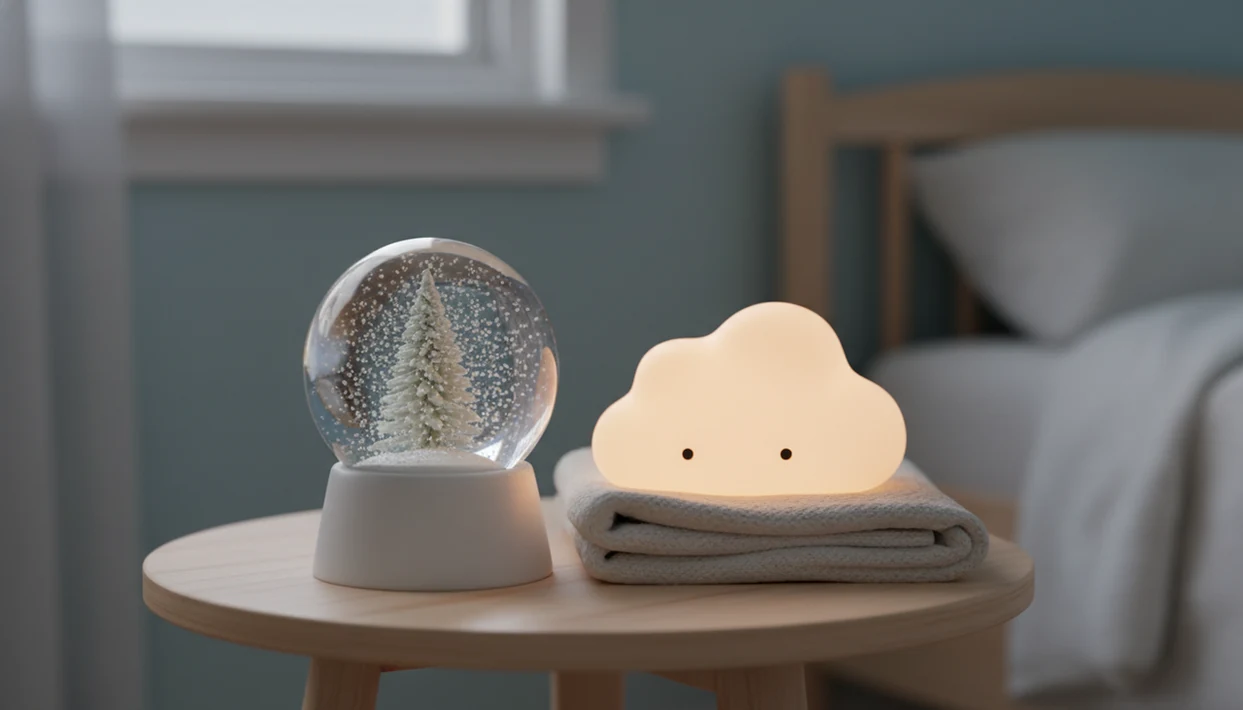


A snow globe mindfulness exercise for kids is a short breathing and visualization practice in which a child watches or imagines swirling snow settling, names a feeling, and notices their body softening. The snow gives busy thoughts and big emotions a visible shape. A real snow globe, glitter jar, drawing, printable, or imagined globe can work; the breathing and attention cues matter more than the object.
The routine usually takes 5 to 10 minutes, with shorter practice for children who lose interest. It can fit before bed, during mild worry, between activities, or in a classroom calm corner. Keep the sequence simple: shake, notice, breathe, watch, name, settle. It is a calming tool, not a replacement for professional mental health care.
The essentials
- Use a real snow globe, glitter jar, drawing, printable, or imagination; the object matters less than the breathing and attention cues.
- Keep the practice short, concrete, and repeatable: shake, notice, breathe, watch, name, settle.
- MindTastik can support the routine with guided meditation, sleep audio, breathing exercises, and calm-down sessions for families who want audio structure.
Snow Globe Mindfulness Exercise Kids Quick Definition
A snow globe mindfulness exercise for kids teaches children that thoughts and feelings can look messy at first, then settle with time, breathing, and attention. The shaken snow gives them something visible to watch while their body slows down.
The practice usually blends three skills: breath awareness, visualization, and emotional labeling. A child might say, “My snow is angry,” “My snow is worried,” or “My snow is fast today.” That simple label can make a feeling less mysterious.
It fits at home before homework, in a classroom calm corner, during bedtime, or inside an app-guided routine. For younger children, adults can keep eyes open and use one sentence at a time. For older kids, the same idea can become a private reset before a test or hard conversation. Parents supporting older children can explore mindful parenting for teenagers to consider how their own responses shape family interactions.
Snow Globe Mindfulness Exercise Kids Calming Benefits
The calming benefit of snow globe mindfulness is that it turns an invisible inner state into something a child can see, describe, and practice settling. It does not treat a diagnosis by itself, but it can support self-regulation skills.
- Visible feelings: Swirling snow gives children a concrete picture for big emotions. “Notice your blizzard” is easier than “regulate your nervous system.”
- Breath practice: Watching flakes fall creates a natural pace for slower breathing, especially when adults model it first.
- Emotional language: Naming the “snow” helps children connect body sensations with feelings like worry, frustration, sadness, or excitement.
- Mental health context: The CDC reports that about 15% of U.S. children ages 5-17 had a diagnosed mental, emotional, developmental, or behavioral disorder during 2016-2019: source
- Evidence frame: Broader youth mindfulness research suggests small-to-moderate benefits for anxiety, attention, stress, and well-being, but snow globe practice itself has limited direct study; see this review in Mindfulness: source
For bedtime routines, this can pair well with bedtime meditation for children when a child needs the same calm cue each night.
What child mindfulness research actually supports
Research on child mindfulness does not establish that watching a snow globe treats anxiety. A systematic review of randomized trials in children and adolescents found small positive effects for mindfulness-based stress reduction and moderate effects for some other mindfulness programs. Those findings concern broader interventions, not this single exercise. They support cautious expectations rather than promises that a globe will stop worry or prevent distress.
For younger children, the format matters as much as the idea. A review of early-childhood interventions describes a limited evidence base and emphasizes developmentally appropriate, brief, concrete practice supported by caregivers. That fits a simple watching-and-breathing activity better than prolonged silent meditation. Finishing the full routine need not be the goal; noticing one feeling or choosing to stop can keep the activity voluntary. For age-appropriate ways to keep practice brief and concrete, explore mindfulness for preschoolers with your child.
Snow Globe Mindfulness Exercise Kids Brain and Body Mechanism
Snow globe mindfulness works by giving the brain a simple sequence: look, notice, breathe, soften, and return attention. The object catches the child’s attention first, then the falling snow gives the body time to shift from fast reaction to slower observation.
This is also why the exercise works better when practiced before a child is overwhelmed. Once the routine is familiar, the snow globe becomes a shortcut cue instead of another instruction during distress.
Children understand concrete imagery before they can fully explain abstract feelings. A “busy mind or blizzard” makes worry visible. The child can point to it, name it, and watch it change without being told their feeling is wrong.
Small cue. Big difference.
With repetition, the metaphor becomes easier to recall during real moments. A child who practiced when calm may later say, “My snow is everywhere,” after a rough school pickup. That sentence gives the adult a starting point. The most useful version is practiced before distress, not introduced for the first time in the middle of tears.
Snow Globe Mindfulness Exercise Kids 5-Step Practice
Use this snow globe mindfulness exercise for 5-10 minutes total. Shorter is fine for preschoolers, restless kids, or a classroom transition.
- Choose a snow globe, glitter jar, drawing, printable, or pretend snow globe in your hands. Say, “This shows what thoughts can look like when they are busy.”
- Shake the globe gently, or imagine the snow swirling. Ask, “What kind of blizzard is inside today: worried, mad, excited, or tired?”
- Breathe slowly while watching one snowflake fall. Try, “Smell the cold air in, blow the snow down.”
- Notice the body. Say, “Can your shoulders drop while the snow settles?” Keep eyes open if closing them feels uncomfortable.
- Settle with one final sentence: “My snow can move, and my snow can rest.”
For families building a repeatable practice, parent and child breathing exercises can help adults use the same calm words outside this activity.
Choose a safe globe and leave room to stop
Use a shatter-resistant container with non-toxic materials sealed inside, and supervise young children. A drawing or imagined snow globe avoids handling a container altogether. These are practical safety precautions, not features of a proven treatment. AACAP guidance for families emphasizes safe, predictable surroundings and support tailored to the child, which provides a basis for offering this activity as a choice rather than a requirement.
Stop if the glitter motion, shaking, or language about settling increases distress. The flakes settling does not mean the child must become quiet or stop feeling angry. Offer eyes open, no object, movement, or a different activity, and do not require breath-holding, touch, or discussion of upsetting memories. AACAP’s guidance on anxious children supports individualized help and family involvement rather than one technique for every child. Caregivers can also explore mindful parenting for ADHD when adapting calming routines for children with attention difficulties.
Snow Globe Mindfulness Exercise Kids Best-Fit Situations and Cautions
Snow globe mindfulness works best as one small tool in a broader calm routine. It is not a command button for instant obedience, and it should not be used as punishment.
| Situation | Best for | Use caution when |
|---|---|---|
| Bedtime restlessness | Helping a child shift from play to quiet | Sleep problems are severe, frequent, or worsening |
| Mild worry | Naming and watching worried thoughts | Panic, intense fear, or repeated distress is present |
| Transitions | Moving from school, screens, or errands to the next activity | The child is already highly agitated |
| Classroom reset | A calm corner, focus break, or group breathing cue | Sensory sensitivity makes glitter, motion, or noise unpleasant |
| Focus breaks | Settling attention before reading or homework | ADHD support needs more structure, movement, or professional guidance |
Some children with trauma histories dislike closing their eyes or being asked to “relax.” Keep eyes open. Offer choices. For younger children, short meditation for toddlers may need more movement and fewer words.
Snow Globe Mindfulness Exercise Kids Coaching Tips for Parents and Teachers
Good coaching starts with the adult’s body, not a lecture. If your voice is tight, the child usually hears that before they hear the words.
- Model first: Take two slow breaths while looking at the globe. Say less than you want to say.
- Name the image: Try, “Notice your blizzard,” or “Watch one snowflake fall.” Concrete cues land better than long explanations.
- Practice early: Use the exercise when the child is already calm. The first practice should not happen during a hallway meltdown.
- Repeat the cue: Keep the same words across bedtime, school transitions, and worry routines. Repetition builds recall.
- Offer choice: Let the child pick a glitter jar, drawing, or imaginary snow globe. Choice lowers resistance. Children who prefer hands-on play may enjoy mindful sensory activities for kids as another way to practice paying attention.
A teacher might keep a small jar near the reading rug. A parent might place a printable beside pajamas. Same cue, different setting.
Snow Globe Mindfulness Exercise Kids MindTastik Audio Support
Guided audio can help adults keep a snow globe routine steady, especially when everyone is tired and the words disappear. The half-empty water glass by the bed, the dim phone screen, and one tangled earbud can be enough setup for a short reset.
For family use, adults can use audio structure to guide their own voice, choose a starting point, and keep the routine simple. For more ways to practice together, explore mindfulness resources for kids and families that suit your household's needs.
A good meditation app for sleep, anxiety, and everyday calm should offer gentle structure and repeatable cues, not diagnosis, cure claims, or emergency mental health care. Tools like MindTastik may sit alongside calm.com, headspace.com, or mindful.org when families compare guided audio options.
For a broader family setup, a meditation for kids app guide can help parents think through age fit, audio length, and supervision.
Snow Globe Mindfulness Exercise Kids Image Caption and Printable Idea
A helpful image would show a child sitting at a table or on a rug, watching a snow globe or glitter jar settle while breathing slowly. The adult should look calm and nearby, not hovering or correcting.
Suggested caption: “A snow globe mindfulness exercise kids can practice by watching the flakes settle while taking slow breaths.”
For a classroom or home printable, keep it very plain:
- Shake: “My thoughts are moving.”
- Breathe: “I watch one snowflake fall.”
- Settle: “My body can soften.”
Alt text should describe the action, not stuff keywords. A better alt text is: “Child watches a glitter jar settle during a breathing exercise.” The picture should teach at a glance.
Audio support for a parent-led snow globe routine
MindTastik’s kids sessions and guided breathing exercises can provide structure for adults leading a snow globe routine. A caregiver can use the audio as a starting point, then keep the spoken cues brief while the child watches the flakes. Families who prefer silence can use the globe without audio. Children who find stillness or visual motion uncomfortable may need movement or another calming activity instead. The app is not a medical treatment.
What snow globe practice cannot treat
Snow globe mindfulness is useful, but it has real limits. It has limited direct research as a distinct technique, so benefits are inferred from broader child mindfulness, breathing, visualization, and emotional regulation research.
- Some children need movement before stillness. A walk, wall push, or stretch may work better first.
- Children with sensory sensitivities may dislike glitter motion, bright colors, or visual tracking.
- Trauma-informed adaptations may be needed, especially around closing eyes, body awareness, or being told to relax.
- Serious anxiety, sleep problems, ADHD, mood symptoms, developmental concerns, or behavior changes warrant support from a qualified professional.
- Progress is gradual. Repetition, adult modeling, routines, sleep hygiene, movement, and supportive relationships all matter.
- App-based mindfulness can support consistency, but it should not replace clinical care, school support plans, or family guidance.
For children with frequent worry, meditation for anxious kids may be one supportive piece of a larger plan.
Snow globe mindfulness questions
What is snow globe breathing for kids?
Snow globe breathing pairs slow breathing with watching or imagining flakes settle after a gentle shake. The swirling snow represents busy thoughts or strong feelings. An adult can invite the child to watch one flake, name a feeling, and notice their shoulders softening. It is a practice, not a treatment.
What age can children start snow globe mindfulness?
There is no established minimum age for this specific exercise. Younger children need brief, concrete cues and caregiver support, rather than long explanations or silent meditation. An adult can model breathing while the child watches. Shorten or stop the activity if the child loses interest or becomes uncomfortable.
How long should a snow globe mindfulness exercise last?
A typical routine takes 5 to 10 minutes, but shorter practice is fine for preschoolers, restless children, or classroom transitions. There is no need to keep going until every flake settles. A few simple cues, slow breaths, and a chance to name a feeling can form a shorter version.
Can children do snow globe mindfulness without a real globe?
Yes. A drawing, printable, glitter jar, or imagined snow globe can supply the image of swirling and settling snow. The object matters less than the attention and breathing cues. If visual motion is unpleasant, use a still drawing or choose a different calming activity rather than insisting on a globe.
Can snow globe mindfulness help children at bedtime?
It can serve as a quiet transition from play to bedtime, with an adult nearby and a few familiar cues. It does not need to make the child fall asleep to be useful as a routine. Severe, frequent, or worsening sleep problems need attention beyond a snow globe exercise.
Does a snow globe exercise treat childhood anxiety?
No high-quality evidence establishes snow globes as a stand-alone anxiety treatment. The exercise may help a child practice breathing, attention, and naming feelings, but broader mindfulness findings cannot prove this specific technique works. Anxiety that disrupts school, friendships, sleep, separation from caregivers, or ordinary activities warrants professional evaluation.
What if a child refuses the snow globe exercise?
Let the child decline or stop. Offer movement, drawing, noticing feet on the floor, or another familiar calming activity instead. Avoid using the globe as punishment or a demand for quiet behavior. Practicing when the child is already calm may make the routine more familiar, but participation should remain voluntary.