
Nature Mindfulness Activities for Families
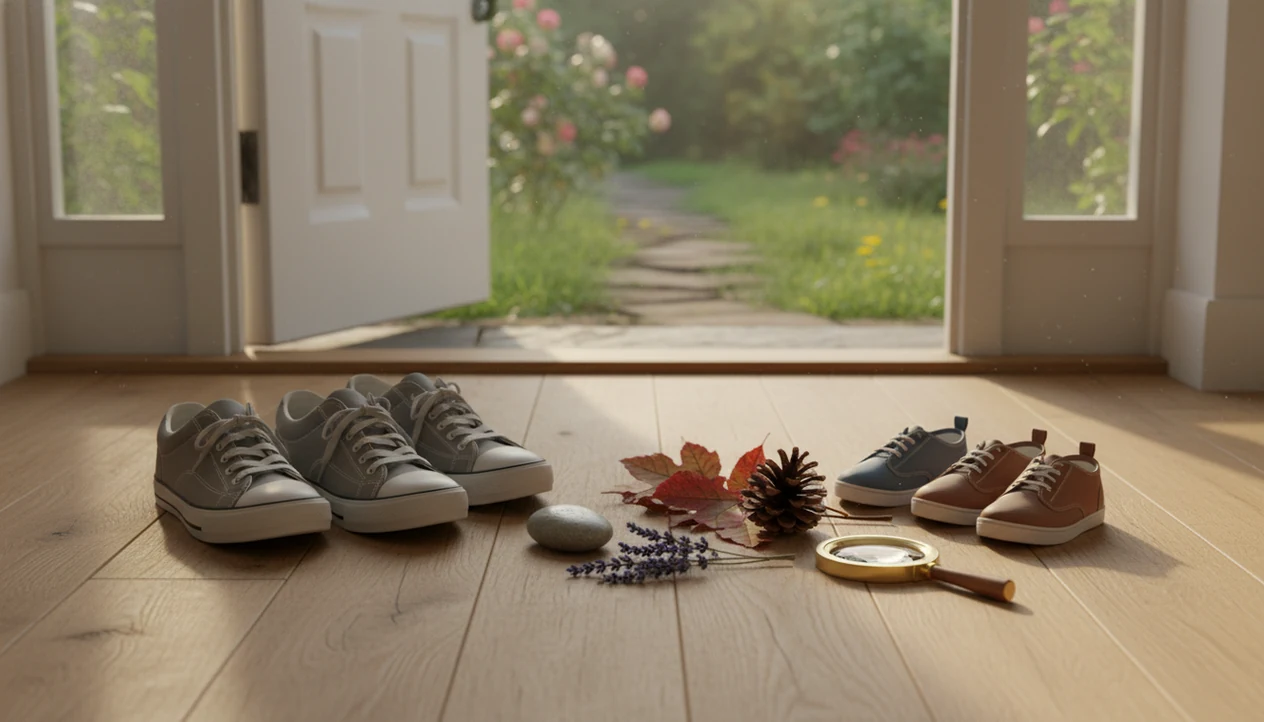


Nature mindfulness activities for families are short, sensory-based practices that help children and adults slow down together by noticing natural sights, sounds, textures, smells, and breathing. A five-senses walk lasting less than 10 minutes is a simple starting point. The same approach can work in a backyard, on a sidewalk, beside a houseplant, or at a window. A forest and complete silence are not required.
These activities build shared attention through concrete prompts, such as noticing a moving leaf or listening for a bird. Keep them brief, playful, and easy to stop. They can serve as a calm pause before homework, bedtime, or an anxious transition, but they are supportive routines, not replacements for medical or mental health care.
The essentials
- The best family nature mindfulness activities are brief, concrete, playful, and based on the five senses.
- A backyard, sidewalk, window, garden, or park can work; families do not need a forest or perfect silence.
- Use nature mindfulness as a supportive routine for calm, focus, and bedtime transitions, not as a replacement for medical or mental health care.
Nature Mindfulness Activities for Families Guide: What It Means
Nature mindfulness for families means using ordinary natural details to practice shared attention in a low-pressure way. The goal is awareness, not hiking distance, fitness, or getting everyone to “meditate correctly.”
A family might notice wet grass in a backyard, bird calls at a park, soil in a garden, clouds during a neighborhood walk, or tree movement through an open window. That counts. The practice works because the instruction is concrete: “Name one thing you hear,” not “clear your mind.”
For many families, this becomes a small bridge between busy moments. It can support a wind-down routine, anxious transitions, focus before homework, or a everyday calm habit. If you already use a family mindfulness routine, nature gives kids something real to look at, touch, and name.
Shoes by the door. Five minutes is enough.
Sensory Attention and Co-Regulation in Family Nature Mindfulness
Nature mindfulness works by giving the whole family concrete sensory targets, sound, texture, color, movement, and breath, so attention has somewhere simple to land. That does not erase stress, but it can interrupt rumination long enough for an adult to slow their voice, shorten instructions, and help a child re-enter the moment.
- Attention shifting: Leaves, wind, shadows, and sound give the brain a specific target.
- Co-regulation: Adults slow their voice and pace first; children often match that rhythm.
- Movement helps: Many kids focus better while walking, crouching, pointing, or collecting one leaf than sitting still.
- Family stress is real: The CDC reported that about 1 in 5 U.S. children ages 3 to 17 had a current diagnosed mental or behavioral health condition in 2023, with an estimated 5.0 million children affected source.
- Parents need support too: A 2024 U.S. Surgeon General report said about 41% of parents reported being so stressed most days that they could not function source.
Nature mindfulness is support, not treatment. Clinicians typically recommend professional evaluation when symptoms are persistent, severe, or impair daily life.
What the research does, and does not, show
Research on children’s mindfulness does not establish that a short family nature walk treats anxiety, sleep problems, or attention difficulties. A 2022 preschool mindfulness pilot trial involved 188 children and 25 educators across six Australian early-learning centers. It failed to meet feasibility criteria in four of seven educator-reported domains. Too few parents used the program to establish parent feasibility, an important limit when applying classroom findings to home routines.
An updated meta-analysis of children’s executive function found small significant effects on inhibitory control and cognitive flexibility, but those effects disappeared against active-control conditions. Structured attention and adult interaction may account for some benefits. These findings concern mindfulness interventions more broadly, not this specific nature routine. For families, a useful goal is a manageable shared pause, rather than a promise of lasting changes in focus or mental health.
5-Step Nature Mindfulness Routine for Families
Use this routine when everyone needs a reset but nobody has energy for a big plan. It works on a porch, near a window, beside a school fence, or during a slow walk around the block.
- Choose a safe setting where adults can supervise and children can move without rushing.
- Set a short timer for 3 to 10 minutes, depending on age and mood.
- Name one thing each person can see, hear, touch, and smell.
- Take three slow breaths while looking at one steady natural object, like a tree or cloud.
- Close with one shared observation, such as “The wind sounded different near the gate.” You can pair shared observations with a kindness practice for families to bring gentle attention to how you treat one another.
For young children, shorten the language. “Find green. Hear bird. Touch bark.” For older kids, invite more detail, but don’t turn it into a quiz.
For families with toddlers, a short meditation for toddlers may work better when paired with one simple nature cue.
Best Nature Mindfulness Activities for Families by Situation
The easiest activity depends on the moment. A tired bedtime child needs a different practice than a restless child bouncing before homework.
| Situation | Activity | How to do it | Why it fits |
|---|---|---|---|
| Beginners | Five-senses scavenger hunt | Find one thing to see, hear, touch, smell, and notice with breathing | Clear, playful, and easy to repeat |
| Anxious energy | Listening walk | Walk slowly and count sounds without judging them | Movement helps the body settle |
| Bedtime wind-down | Cloud watching | Look at clouds, moonlight, or dark tree shapes for two minutes | Gentle visual focus supports transition |
| Older kids and teens | Nature journal | Draw or write one detail from outside | Gives privacy and reflection |
| Weather, safety, or access limits | Window nature noticing | Watch rain, birds, light, or moving branches from indoors | No special outdoor trip needed |
For bedtime, keep voices low and instructions boring on purpose. The half-empty water glass by the bed can wait. For a shared evening practice, try family bedtime meditation after a few quiet moments of noticing nature.
Nature Mindfulness Activities for Families Tips by Child Age
Children need different pacing, not a different philosophy. Nature mindfulness usually works best when adults adjust the activity to the child’s attention span, need for movement, and tolerance for quiet.
Nature mindfulness for young children
Ages 3 to 6: Use playful noticing, tiny choices, and movement. Ask them to “walk like a quiet fox,” “find something soft,” or “listen for the farthest sound.” Keep it under five minutes if they are fidgeting.
Ages 7 to 10: Try scavenger hunts, breathing with trees, or drawing one detail. They can handle simple reflection, but they still need concrete prompts. A child who dislikes sitting may do better walking slowly while counting colors.
Nature mindfulness for tweens and teens
Tweens and teens: Offer silent walks, journaling, gratitude reflection, photography, or music-free outdoor time. More autonomy matters. Some teens will engage if they can choose the route, skip sharing out loud, or connect it to meditation for teens sleep and stress. For younger teens, mindfulness for middle schoolers offers another way to match practices to their age and interests.
Choice lowers resistance.
Common Mistakes With Nature Mindfulness Activities for Families
The most common mistake is making nature mindfulness feel like another task children can fail. Keep it gentle, short, and responsive so the activity stays regulating instead of becoming a battle.
A quiet walk does not have to mean total silence. Whispering, pointing, slow steps, or a hand signal can preserve the calm without asking a young child to act like a statue. Sensory prompts also work better as invitations than tests; “What do you notice?” lands softer than checking whether they found the “right” sound or leaf.
When a practice starts to wobble, simplify before you add more.
- Use one cue at a time with toddlers or children who are already scattered: “Find green,” then stop.
- Watch for cold hands, itching, squinting, unsafe wandering, or rising silliness that looks more frantic than playful.
- End early when a child is overstimulated, uncomfortable, or unsafe, even if the timer has not finished.
- Repeat the same tiny routine for several days before adding journals, apps, longer walks, or deeper reflection.
- Praise noticing and returning, not perfect stillness.
Leaving after three decent minutes is not failure. It is often the routine working.
Nature Mindfulness Activities for Families at Bedtime, Anxiety, and Focus Resets
Can nature mindfulness help with bedtime, anxious moments, and focus resets? It can support those transitions by giving families a simple sensory script, but it should not be treated as therapy or medical care. Parents considering consistent evening routines may also want to explore the Finnish bedtime rule for anxiety.
For bedtime, try cloud watching, moon noticing, or plant breathing before the final routine. Dim the phone screen if you use audio afterward. During an anxious moment, offer a concrete prompt: “Name three things you see and two things you hear.” Before homework, try a three-minute pause outdoors or beside a window. Mindfulness is a supportive routine, not a replacement for medical or mental health care. Children’s Health of Orange County’s mindfulness guidance recommends practicing together, modeling the activity, and starting preschool children with only a few minutes a day.
For children with frequent worry, meditation for anxious kids can add guided language to the same basic idea. Tools like MindTastik, Calm, and Headspace may help adults choose guided meditation, sleep audio, breathing exercises, or self-hypnosis sessions for sleep, anxiety, and everyday calm support.
Good meditation apps for sleep anxiety and everyday calm offer repeatable routines and gentle prompts, not diagnosis, crisis care, or a replacement for therapy.
Best For and Not For Nature Mindfulness Activities for Families
Nature mindfulness is most useful when the goal is a small reset, not a major clinical change. It fits families who want screen-free calming routines, smoother transitions, beginner mindfulness, and a few minutes of connection.
| Best for | Not ideal for |
|---|---|
| ✅ Screen-free calming routines | ❌ Emergency mental health needs |
| ✅ Mild stress and restless energy | ❌ Severe anxiety or panic symptoms |
| ✅ Bedtime transitions | ❌ Trauma processing without professional support |
| ✅ Family connection after a tense day | ❌ Unsafe outdoor conditions |
| ✅ Beginner mindfulness practice | ❌ Children who become highly overstimulated by sensory input |
Accessibility matters. Weather, air quality, mobility needs, allergies, and neighborhood safety can all change the plan. A window practice may be the right choice.
Make the backup plan specific before you start: if air quality is poor, if a child has seasonal allergies, or if the sidewalk feels unsafe, use a window, houseplant, shell, pinecone, or nature photo instead of forcing an outdoor walk.
For anxious children, sensory practice usually works best when it is repeated gently, while professional support fits symptoms that are persistent, severe, or impairing.
Audio support after a family nature pause
MindTastik’s kids sessions and breathing exercises are options for families who want an audio prompt after a listening walk or window-based pause. Adults can use the guided meditation library for their own practice, rather than making a child responsible for settling everyone. Families seeking a screen-free activity can stay with shared observation and conversation. Children who dislike guided audio may prefer walking, pointing, or drawing. The app is not a medical treatment.
What family nature mindfulness cannot address
Nature mindfulness can be helpful, but it has clear limits.
- It is not a stand-alone treatment for clinical anxiety, depression, trauma, ADHD, or severe sleep disorders.
- Benefits may be short-term and usually depend on repetition.
- Some children find quiet observation boring, frustrating, or overstimulating.
- Weather, air quality, accessibility, allergies, and neighborhood safety can limit outdoor practice.
- A single activity is unlikely to fix long-standing sleep, focus, or anxiety concerns.
- Claims about “detoxing the mind” or rapidly fixing focus are overhyped.
- Families should seek qualified professional support when symptoms are persistent, severe, worsening, or impair school, sleep, relationships, or safety.
If bedtime is the main struggle, a nature wind-down can sit beside bedtime meditation for children, not replace medical or behavioral guidance when it is needed.
Family nature mindfulness questions
What is a simple nature mindfulness activity for a family?
Start with a short noticing walk. Each person names something they can see, hear, touch, and smell, then notices their breathing. Finish by sharing one observation. Keep the activity under 10 minutes and treat the prompts as invitations, not questions with right answers.
How long should nature mindfulness last for preschoolers?
Start with only a few minutes. NHS Fife suggests approximately one minute per year of age as a practical guide, not a target children must meet. Shorten the activity if a child becomes frustrated or restless. Movement and one simple sensory prompt can replace sitting quietly.
Can families practice nature mindfulness indoors?
Yes. Watch clouds or tree movement through a window, notice a houseplant’s colors and textures, or listen to outdoor sounds from a safe indoor spot. The purpose is shared attention to a natural detail, not reaching a particular destination or spending a set amount of time outside.
What is a listening walk for children?
A listening walk is a slow walk with attention on nearby and distant sounds. Family members can name or count what they hear without judging the sounds. Talking, pointing, and pausing are allowed. Adults still need to supervise the route and keep ordinary outdoor safety in mind.
What if a child will not sit still for mindfulness?
Sitting still is not required. Try walking, crouching to examine a leaf, pointing at colors, or drawing one natural detail. Give one prompt at a time and allow conversation. If the activity becomes a struggle, shorten it or stop rather than treating stillness as a measure of success.
Can nature mindfulness help children settle before bed?
It can provide a gentle transition into the bedtime routine. Try two minutes of cloud watching, noticing moonlight, or observing a plant while breathing slowly. Keep expectations modest: a calming activity is not a treatment for persistent sleep difficulties, and one session is unlikely to change long-standing problems.
Can nature mindfulness treat a child’s anxiety?
Nature mindfulness can support a brief grounding pause, but it is not a stand-alone treatment for clinical anxiety or panic symptoms. Naming visible objects and nearby sounds offers a concrete focus. Persistent or severe anxiety calls for professional support rather than relying on a family mindfulness routine alone.
What if outdoor sights and sounds overwhelm a child?
Reduce the number of prompts and choose a quieter setting, such as looking at one plant indoors. There is no need to use every sense or insist on completing a walk. Some children find sensory observation overstimulating; stop if it increases distress and choose a different calming activity.