
Mindfulness Activities for Families: A Practical Guide for Calmer Homes
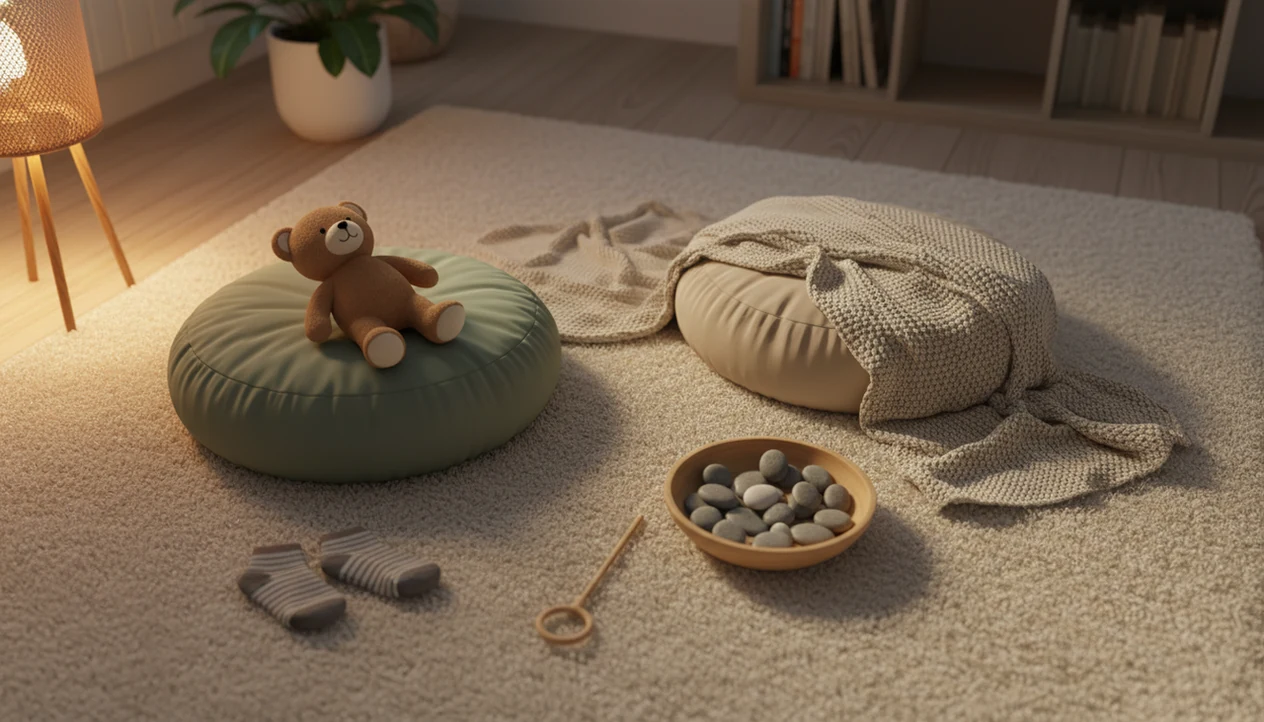


Mindfulness activities for families are short, shared exercises that help adults and children pause, notice the present moment, and reconnect. They include breathing games, sensory noticing, gratitude, mindful walks, and quiet bedtime routines. The aim is to notice breathing, body sensations, thoughts, and emotions without judging them, not to make everyone sit still or feel calm on command.
Start with 2 to 5 minutes attached to something that already happens, such as school pickup, dinner, or bedtime. Choose an activity that fits the moment: sensory noticing for attention, gentle breathing for a pause, or quiet audio for settling down. Adults can participate alongside children rather than directing every step. Guided support can provide structure when sleep, anxiety, or focus is the main concern.
The essentials
- Keep family mindfulness brief, playful, and routine-based: 2 to 10 minutes is enough to begin.
- Use different activities for different goals: breathing for anxiety, sensory games for focus, and quiet audio for bedtime.
- MindTastik can support parents with guided meditation, sleep audio, breathing exercises, and self-hypnosis sessions for adult sleep, anxiety, and everyday calm support.
Mindfulness Activities for Families: Five Facts Parents Should Know
- Family mindfulness is short present-moment practice, not formal meditation class. A child can notice three sounds at breakfast or trace one breath on a finger.
- Research is promising across several areas, but not uniform. Reviews of child and school-based mindfulness studies report possible benefits for attention, anxiety, stress, emotional regulation, and well-being, though effects vary by program and study quality (Zenner et al., 2014: source; Dunning et al., 2019: source).
- Consistency matters more than duration. For most families, two calm minutes after school beats a 20-minute plan nobody repeats.
- Parents model the skill first. A pause before snapping, a named feeling, and one slower breath teach more than a lecture. Parents can also practice listening and perspective-taking as they learn how to raise empathetic kids through everyday interactions.
- Mindfulness is support, not treatment. It can sit beside therapy, school support, sleep hygiene, or medical care, but it does not replace them.
The most useful family mindfulness habit is the one that fits a real day, not the one that looks impressive on paper.
How Mindfulness Activities for Families Work in the Brain and Home
Mindfulness activities for families work by training attention and emotion regulation through repeated, low-pressure practice. Children and adults practice noticing breath, body signals, sound, and emotion before reacting.
In plain terms, the family is rehearsing the pause. Attention training means gently returning to one focus point, such as the belly rising or a bird outside. Emotion regulation means naming “I feel mad” before the door slam. Over time, that can soften transitions, reduce some escalations, and make bedtime settling more familiar.
Child mindfulness trials and parent-child mindfulness research suggest possible gains in anxiety, attention, parenting stress, child behavior, and sleep-related functioning. Still, mindfulness should not be framed as a cure for anxiety, ADHD, trauma, or sleep disorders. At 2:13 a.m., when the lock screen says everyone should be asleep, a quiet routine may help the body settle. It is not medical care.
Classroom findings do not guarantee results at home
A 2022 pilot trial across six Australian early-learning centers involved 25 educators and 188 preschoolers. The eight-week program did not meet feasibility criteria in four of seven educator-reported domains, including implementation and practicality. Too few parents used the program to establish parent feasibility. That makes the early-childhood feasibility study particularly relevant to families: a program offered through a classroom is not necessarily easy to repeat at home.
There is also a difference between improvement and a benefit specific to mindfulness. A 2026 meta-analysis of children’s executive function found small significant effects on inhibitory control and cognitive flexibility, but those effects disappeared against active comparison programs. Structured attention and adult interaction may account for part of the benefit. Family practice is best treated as one supportive activity, not a proven way to improve every child’s attention.
Best Mindfulness Activities for Families by Goal
The right mindfulness activity depends on the goal, the child’s age, and the current stress level. A child who is already yelling may need space and safety before any breathing game.
| Activity | Best for | Time needed | Not for |
|---|---|---|---|
| Balloon breath | Anxious moments, transitions | 1 to 3 minutes | Kids who feel panicky when asked to breathe deeply |
| Starfish breathing | Homework focus, car rides | 1 to 2 minutes | Children who dislike touch-based prompts |
| Five senses exercise | Grounding, attention | 2 to 5 minutes | Very noisy rooms with too much stimulation |
| Gratitude circle | Family connection | 3 to 7 minutes | Moments when someone feels forced to be cheerful |
| Mindful walk | Restless kids, weekends | 5 to 15 minutes | Unsafe or rushed settings |
| Bedtime body scan | Sleep wind-down | 5 to 10 minutes | Children who become more alert when focusing inward |
| Breathing with a buddy | Young kids, co-regulation | 2 to 5 minutes | Conflict moments that are still heated |
For anxious children, meditation for anxious kids works better when the practice is introduced during calm moments first.
How to Use Mindfulness Activities for Families at Home
Use family mindfulness by choosing one small routine and repeating it for a week. Don’t start with a full family reset plan on Monday night.
- Choose one goal such as sleep, anxiety, focus, or connection.
- Set a 2 to 5 minute starting time so the practice feels doable.
- Attach it to an existing routine like dinner, school pickup, homework, or bedtime.
- Let children choose between two activities so they have some control.
- Repeat for one week before changing the routine or adding more time.
- Use guided audio when parents need structure or feel too tired to lead.
Choice matters. If one child picks five senses and another chooses starfish breathing, rotate days. Families building a repeatable plan can use a family mindfulness routine to keep the habit simple instead of inventing something new every night.
A Simple Mindfulness Activities for Families Schedule
A family mindfulness schedule should follow the day you already have. It should not become another chore on the refrigerator.
Morning breath: Take three slow breaths before shoes, backpacks, or screens. Younger children may pretend to smell soup and cool it down.
After-school reset: Use a five senses check in the car or hallway. The backpack can stay on. That small detail helps some kids avoid another transition.
Dinner gratitude: Each person names one ordinary thing from the day. Keep it specific, like “the funny dog near the bus stop.” Extend gratitude into caring actions by exploring how to teach kids kindness through small opportunities to help and share.
Bedtime audio: Try quiet breathing, a body scan, or bedtime meditation for children after pajamas and lights are low.
Weekend option: Take a mindful walk, do a sensory scavenger hunt, or pair quiet reading with two minutes of breathing.
Missed days are normal. Shorter sessions usually fit younger children; teens may prefer longer private audio or walking practice.
Mindfulness Activities for Families Tips by Age
What mindfulness activities work for different ages? Toddlers need play and movement, school-age children can follow simple structure, and teens often want privacy. Explore meditation for kids and families to find shared practices that suit your children's ages and preferences.
For toddlers and preschoolers, use stuffed animals, bubbles, animal breathing, and short movement games. A teddy bear rising on the belly is easier to understand than “observe your breath.” Families with very young children may prefer short meditation for toddlers built around parent participation.
For school-age children, try five senses, starfish breathing, gratitude, and drawing feelings. The breath count may get lost after four. That is not failure; it is information.
Tweens and teens often respond better to private audio, mindful music, journaling, walking, or short guided sessions. Give choices, use humor, and avoid turning mindfulness into a correction. Resistance is feedback. For older kids, meditation for teens sleep and stress can feel less childish than a group breathing game.
Guided Support for Family Sleep, Anxiety, and Everyday Calm
Guided tools can reduce decision fatigue when parents want a calm practice but do not want to lead every word. Calm, Headspace, and MindTastik are examples of apps parents may compare for sleep audio, breathing, and everyday calm.
In this context, app support is most useful for parent regulation: a calmer adult voice changes the room.
Good meditation app for sleep anxiety and everyday calm options deliver structure, repeatable audio, and simple practice cues, not a promise to fix family stress overnight.
Parents can use app-based breathing before school pickup, sleep audio after lights are dimmed, or guided meditation after children are asleep. The Best Meditation App for Sleep is still only useful if the routine feels realistic.
Guided support for parents and shared quiet moments
MindTastik’s kids sessions, gratitude sessions, and guided meditations offer options for shared quiet time. Its breathing exercises can also give parents a structured pause before a demanding transition. Adult sleep stories and self-hypnosis audio belong in a parent’s own routine, not automatically in a child’s bedtime practice. For child-focused guided audio, a meditation app for kids can offer structure for brief, shared practice with parents.
Families whose children prefer movement or conversation may find a sensory walk more suitable than audio. Persistent anxiety or sleep difficulties need appropriate professional care; MindTastik is not a medical treatment.
What family mindfulness cannot fix
Family mindfulness is useful, but it has clear limits. Treat it as a supportive practice, not a cure.
Mindfulness is a supportive practice, not a replacement for medical or mental health care when symptoms are serious or persistent. For routine-based practice, see this pediatric guide to mindfulness.
- Research is promising, but some studies have small samples, school-based settings, or short follow-up periods.
- Mindfulness does not replace professional treatment for severe anxiety, depression, trauma, sleep disorders, or neurodevelopmental conditions.
- Some children feel bored, resistant, silly, or irritated by stillness.
- Forcing breathing during conflict can backfire, especially when a child feels blamed.
- Not every meditation app is age-appropriate, evidence-informed, or designed for children.
- Families should seek professional help for persistent distress, safety concerns, self-harm talk, major sleep disruption, or school and home functioning problems.
- Some children prefer movement-based calming, not quiet audio or closed-eye exercises.
Clinicians typically recommend matching support to the level of distress; mindfulness can help with daily regulation, but serious symptoms need qualified care.
Family mindfulness questions
How do families start mindfulness at home?
Choose one familiar moment, such as after school or before bedtime, and try one activity for 2 to 5 minutes. Adults should join in rather than supervise from the sidelines. Repeat the same routine for a week before adding more activities, and let children choose between two simple options.
What mindfulness activities work for toddlers and preschoolers?
Playful activities are a better starting point than long periods of silent sitting. Try watching a stuffed animal rise and fall on the belly, noticing nearby sounds, or examining a leaf together. Keep the activity brief and allow movement. Young children do not need to understand abstract meditation instructions.
How long should a family mindfulness activity last?
Start with 2 to 5 minutes, and shorten that for younger children if needed. NHS Fife suggests approximately one minute per year of age as a practical guide for young children, not a target everyone must reach. A brief activity that fits the routine is preferable to a longer session that becomes a struggle.
What if a child refuses to do mindfulness?
Offer a choice rather than making participation a requirement. A child might prefer noticing sounds on a walk to following a breathing exercise. Adults can model the activity without demanding imitation. Refusal is a reason to adjust the format or timing, not to turn mindfulness into another source of conflict.
Should children do breathing exercises during a tantrum?
A child who is already yelling or overwhelmed may need space and safety before a breathing prompt. Do not insist on deep breaths, especially if they make the child feel panicky. Practice together during quieter moments so the activity is familiar, and offer it later rather than using it as a demand.
Can family mindfulness help children settle at bedtime?
Quiet breathing, a short body scan, or suitable bedtime audio can become part of a familiar wind-down after pajamas and dimmed lights. These practices may support settling, but they are not a guaranteed sleep solution. Persistent sleep difficulties deserve professional advice rather than increasingly long meditation sessions.
Can mindfulness reduce family arguments?
Mindfulness gives family members a chance to notice feelings before reacting, such as naming anger before slamming a door. It may support calmer pauses, but it does not resolve the underlying disagreement or replace boundaries and conversation. During an argument, safety and space come before asking everyone to meditate.