
How To Make A Glitter Jar For Kids
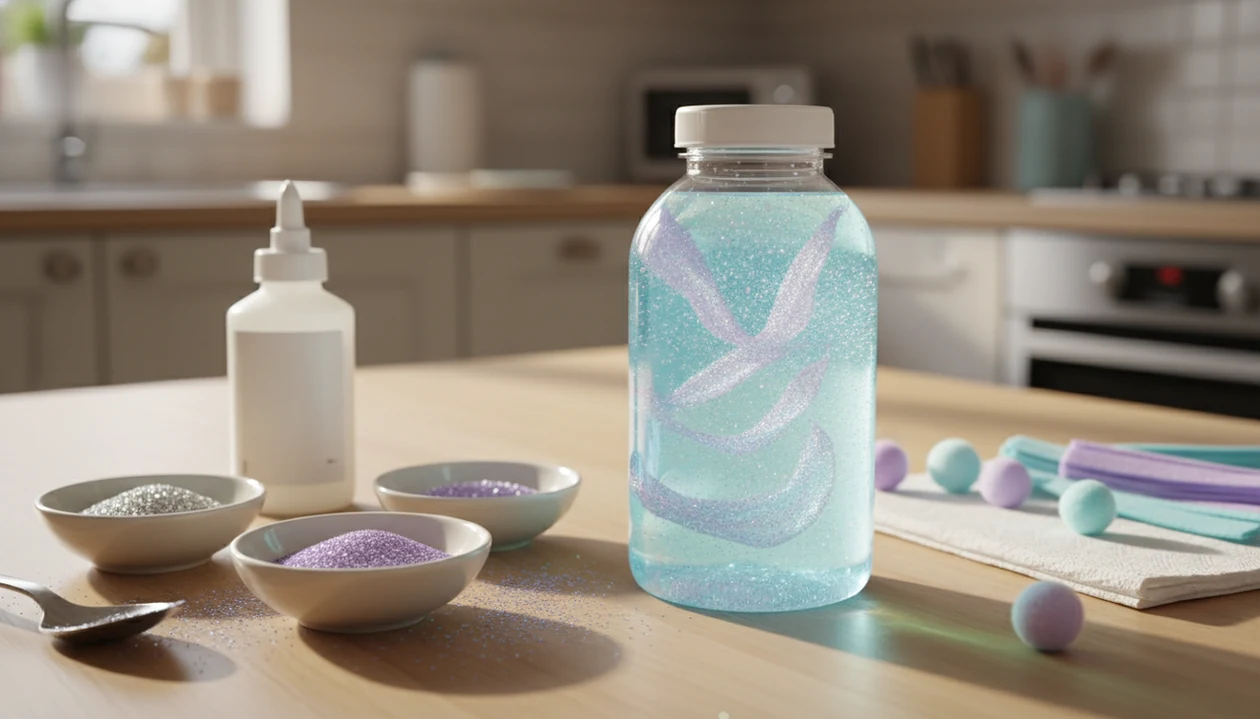


To make a glitter jar for kids, fill a clear plastic bottle with warm water, clear glue or glycerin, glitter, and optional food coloring, then seal the lid after checking how slowly the glitter settles. This sealed bottle is a visual calm-down tool: a child shakes it, watches the glitter drift, and can practice a few slow breaths with a caregiver.
Plastic is the better choice for younger children, with a tight lid permanently sealed using adult-applied glue. Clear glue, glycerin, corn syrup, or hair gel thickens the water and slows the glitter. The finished jar can support quiet time, breathing breaks, or a bedtime routine, but it is not a medical treatment for anxiety, ADHD, or sleep problems.
Before making the jar
- Use a plastic bottle for younger children and seal the lid permanently with strong adult-applied glue.
- Clear glue, glycerin, corn syrup, or hair gel slows the glitter so the jar feels calming instead of chaotic.
- A glitter jar can support quiet time, breathing breaks, or bedtime routines, but it is not a medical treatment for anxiety, ADHD, or sleep problems.
How To Make A Glitter Jar For Kids: Supplies List
A safe glitter jar starts with a clear container, a slow liquid base, glitter, and a lid an adult can seal tightly. Plastic is usually the better choice for toddlers and younger kids because it is lighter, easier to grip, and less likely to shatter.
Supplies to gather:
- Clear plastic bottle or jar: Choose a smooth-sided bottle with a tight lid so your child can see the glitter settle.
- Liquid base: Use warm water plus clear glue, glycerin, corn syrup, or hair gel to slow the glitter.
- Glitter mix: Fine glitter creates a soft shimmer; chunky glitter gives kids bigger pieces to track.
- Optional color: One tiny drop of food coloring is usually enough. Too much makes the jar hard to see through.
- Adult-only lid glue: Super glue or hot glue helps keep the lid closed.
The kitchen table gets sparkly fast. Put down paper first.
How A Glitter Jar For Kids Works As A Calm-Down Tool
A glitter jar works by giving a child one simple visual focus point while strong feelings rise, move, and settle. The swirling glitter becomes something to watch instead of another instruction to process.
The mechanism is simple: thicker liquid increases viscosity, which means the glitter moves through the water more slowly. In plain language, the jar buys a little time. That slower fall creates a short reset window where a caregiver can say, “Let’s watch until the glitter reaches the bottom.”
A glitter jar often pairs naturally with slow breathing. For example, a child can inhale while the glitter swirls upward, then exhale as it drifts down. For some children, this feels easier than closing their eyes.
It is still a routine tool, not a guaranteed emotional fix. Mindfulness-based activities may reduce anxiety and depression symptoms in some children and teens, but effects vary by study, according to a 2016 systematic review source. Evidence about the benefits of school mindfulness can help educators set realistic expectations for classroom calming activities.
How To Use A Glitter Jar For Kids In A Calm Routine
Does a glitter jar help more when children practice with it before they are upset? Usually, yes. A glitter jar is easier to use during big feelings if the child has already tried it during calm moments.
- Place the jar in a quiet corner, bedside basket, classroom calm space, or family reset shelf. For classroom use, mindfulness in schools offers broader context for making short calming pauses part of the day.
- Introduce it calmly by letting your child shake it when they are already regulated.
- Guide 3 to 5 breaths while they watch the glitter move down through the bottle.
- Name the reset with simple words, such as, “We’re giving your body a minute.”
- Pair it with quiet support like soft audio, dim lights, or a short bedtime wind-down.
For younger children, keep the routine short. One shake, five breaths, done.
If your family already uses a family mindfulness routine, the glitter jar can become the visual cue that starts it.
Let the child choose how to use the jar
Offer the jar as an option, not a requirement to stop crying or become quiet. A caregiver can ask, “Watch the glitter, stretch, or sit together?” The child can keep their eyes open, skip breathing prompts, or stop immediately. These choices apply the safety and control principles described in AACAP’s guidance for parents; they do not make the jar a proven treatment. A warm, responsive approach reflects how parental love supports development, beyond any single calming tool or activity.
Research on mindfulness programs should not be treated as evidence that a glitter bottle treats anxiety. A review of early-childhood interventions describes a limited evidence base and emphasizes developmentally appropriate, brief activities supported by caregivers. For this craft, that means a short invitation rather than a timed demand. If the swirling glitter or shaking increases distress, put the bottle away and offer a different activity. For older students, teaching mindfulness in high school calls for age-appropriate activities rather than relying on children's crafts.
Step-By-Step How To Make A Glitter Jar For Kids Guide
The easiest glitter jar method is to add the thickener first, add glitter and color, then fill slowly with warm water and test before sealing. Do not glue the lid shut until the glitter speed looks right.
- Add clear glue or glycerin to the empty bottle first. Start with enough to fill about one-quarter of the container.
- Add glitter using a small spoon or folded paper funnel. Mix fine and chunky glitter if you want layered movement.
- Add optional food coloring one drop at a time. Pale blue, purple, or green usually stays easier to see through.
- Pour in warm water slowly, leaving a little air space at the top so the liquid can move when shaken.
- Close and shake the bottle without sealing it yet. Watch how fast the glitter falls.
- Adjust the recipe by adding more water for faster falling or more clear glue, glycerin, corn syrup, or hair gel for slower falling.
- Seal the lid with adult-applied super glue or hot glue once the mix works.
For bedtime, test it in low light too. Screen brightness lowered to minimum, jar beside the pillow, one quiet minute.
Best Glitter Jar Recipe Ratios For Slow Swirling Glitter
The right glitter jar ratio depends on how slowly you want the glitter to fall. More water makes glitter settle faster, while more clear glue, glycerin, corn syrup, or hair gel makes it drift more slowly.
| Recipe style | Starting ratio | Glitter speed | Good for | Watch for |
|---|---|---|---|---|
| Light swirl | 3 parts water, 1 part clear glue | Faster | Quick resets | May feel too brief |
| Slow calm jar | 2 parts water, 1 part clear glue or glycerin | Medium-slow | Breathing breaks | Needs shaking to mix |
| Extra slow jar | Equal parts water and thickener | Very slow | Sensory focus | Can look clumpy |
| Gel-style bottle | Water plus small spoonfuls of hair gel | Adjustable | Experimenting | Gel blobs if overused |
Test before sealing. Always.
For most families, a medium-slow jar is easier than an extra-thick jar because the glitter still moves enough to hold attention.
Glitter Jar Safety Tips For Toddlers And Younger Kids
Glitter jar safety depends on the container, the lid, and the child’s age. The safest version for younger kids is a plastic bottle with no loose add-ins and a lid sealed by an adult.
For children under 3, avoid loose add-ins that could become choking hazards; the U.S. Consumer Product Safety Commission warns that small parts are a risk for young children: source.
- Use plastic instead of glass for toddlers and younger children because dropped glass can break into sharp pieces.
- Seal the lid permanently with super glue or hot glue applied by an adult, then let it dry fully before use.
- Avoid small decorative add-ins such as beads, buttons, sequins, or tiny charms for children who mouth objects.
- Supervise the first uses so you can check whether your child throws, bites, opens, or squeezes the bottle.
- Discard damaged jars if the bottle cracks, the lid loosens, the liquid leaks, or the contents smell odd.
If your child is very young, a short guided pause may work better than a long craft routine. The same idea is covered in short meditation for toddlers.
Best Uses And Poor Fits For A Glitter Jar For Kids
A glitter jar is best for short, supported pauses. It is a poor fit when a child needs medical care, therapy, a sleep plan, or a behavior support plan.
| Fit | Use it for | Why it helps |
|---|---|---|
| Best for quiet time | Reading corner or rest break | Gives the child a gentle visual anchor |
| Best for transitions | After school, before homework, leaving play | Marks a pause between activities |
| Best for breathing breaks | 3 to 5 slow breaths | Makes breathing more concrete |
| Best for bedtime wind-down | Basket near pajamas or books | Supports a low-stimulation routine |
| Not ideal for treatment needs | Anxiety, ADHD, sleep disorders, major behavior concerns | Needs professional guidance, not a craft alone |
Mindfulness tools may help some children, but responses vary. In 2019-2020, 15.4% of U.S. children ages 3-17 had a diagnosed mental or behavioral health condition, per the CDC’s National Center for Health Statistics source.
Tools like MindTastik, Calm, and Headspace can support adult sleep, anxiety, breathing, and everyday calm routines, not replace care for a child’s health or behavioral needs.
Use MindTastik as an adult support layer, not as the child’s care plan: a parent might play a short breathing or sleep routine while the child watches the glitter settle.
Common Glitter Jar Mistakes And Easy Fixes
Most glitter jar problems come from the wrong glue, the wrong thickness, or a lid that was sealed too soon. Fix the liquid and safety checks before calling the project done.
- Cloudy liquid: White school glue can work, but it often makes the jar milky. Use clear glue for a cleaner look.
- Glitter falls too fast: Add more clear glue, glycerin, corn syrup, or hair gel, then shake again.
- Glitter barely moves: Add warm water in small amounts. Too much thickener can make the jar feel stuck.
- Clumps appear: Reduce gel or glue next time, and avoid dumping glitter into a thick blob at the bottom.
- The lid leaks: Empty or clean the rim, dry it fully, then reseal with adult-applied glue.
- The jar feels like punishment: Let your child use it when calm, not only after crying or conflict. When calming tools do not help, self-compassion for parents of struggling kids can support a kinder response to frustration.
For children who need spoken guidance with the visual tool, parent and child breathing exercises can make the routine easier to follow.
Glitter Jar Image Caption For Parents And Teachers
Image caption: A child-safe clear plastic calm bottle filled with blue water and silver glitter, made as part of how to make a glitter jar for kids. The lid is sealed shut by an adult, and the glitter settles slowly after the bottle is shaken.
Use this kind of jar for quiet breathing, classroom reset moments, or a low-stimulation pause before bed. The child can watch the silver pieces drift down while a parent, caregiver, or teacher guides a few slow breaths.
Keep the bottle where it belongs, not loose in a backpack. A bedside basket, calm corner, or teacher shelf makes the purpose clearer.
For bedtime-specific routines, a glitter jar can sit beside bedtime meditation for children as a simple visual cue.
Pairing the glitter jar with short audio
MindTastik’s kids sessions and guided breathing exercises can accompany a short glitter-watching pause when a child welcomes spoken prompts. Sleep stories are another option for the bedtime routine after the jar is put away. Keep the activity brief and caregiver-supported rather than expecting prolonged stillness.
Children who dislike spoken guidance may prefer watching quietly or choosing movement instead. Persistent anxiety or sleep difficulties need professional guidance, not a longer audio session. Neither the app nor the jar is a medical treatment.
What a glitter jar cannot do
A glitter jar is a craft-based calming aid, not a treatment for anxiety, ADHD, sleep disorders, sensory processing differences, or behavioral conditions. It may support a pause, but it cannot diagnose, treat, or replace professional care.
Important limits to keep in mind:
- Some children do not find glitter jars calming. They may want movement, pressure, space, or words instead.
- The effect is short-term and situational. It usually works best as one small part of a routine.
- The recipe may need trial and error. Too much water is too fast; too much glue can clump.
- Glass jars, loose lids, and small add-ins can create real safety risks.
- A glitter jar should not be used to silence a child or avoid listening to what happened.
- Frequent anxiety, major sleep disruption, aggression, panic, or ongoing distress deserves support from a pediatrician, therapist, school counselor, or qualified professional.
If an older child wants more independent support, meditation for teens sleep and stress may fit better than a sensory bottle.
Glitter jar recipe and safety questions
What is the best water-to-glue ratio for a glitter jar?
Start with three parts water to one part clear glue for a lighter, faster swirl, or two parts water to one part clear glue for slower movement. These are starting points, not fixed formulas. Shake and check the result before permanently sealing the lid.
Can I make a glitter jar without clear glue?
Yes. Glycerin, corn syrup, or small amounts of hair gel can thicken the water and slow the glitter. Add the thickener gradually and check the movement before sealing. Hair gel can leave blobs if too much is added, so the final mixture may need adjustment.
Why is my glitter jar cloudy or clumpy?
White school glue often makes the liquid milky; clear glue gives a clearer view. Clumps can form when there is too much glue or gel, or when glitter is added into a thick blob. Adjust the mixture before sealing, using small amounts of warm water if it barely moves.
How do I make the glitter fall more slowly?
Add a little more clear glue, glycerin, corn syrup, or hair gel, then shake and watch again. More thickener generally slows the fall, but too much can leave the glitter barely moving. Make adjustments while the lid is still removable, then seal it once the movement looks right.
Are glitter jars safe for toddlers?
Use a shatter-resistant plastic bottle, non-toxic materials, and a lid permanently sealed by an adult. Avoid loose decorative add-ins such as beads or buttons, and supervise young children. A sealed lid does not remove the need for supervision. The bottle is for watching, not opening or drinking from.
What if my child does not find a glitter jar calming?
Stop the activity rather than insisting that the child watch until the glitter settles. Some children prefer stretching, rhythmical movement, drawing, or quiet company. Offer a choice and skip breathing prompts if they are unwelcome. Visual motion and shaking can increase distress for some children.
Can a glitter jar help a child with anxiety?
It may provide a brief visual focus during a supported pause, but no high-quality evidence establishes glitter jars as stand-alone anxiety treatments. Seek a qualified mental-health assessment when anxiety is severe or disrupts school, friendships, sleep, separation from caregivers, or ordinary activities. The jar should not delay that support.