
Kids Bedtime Breathing Routine for Calm Nights
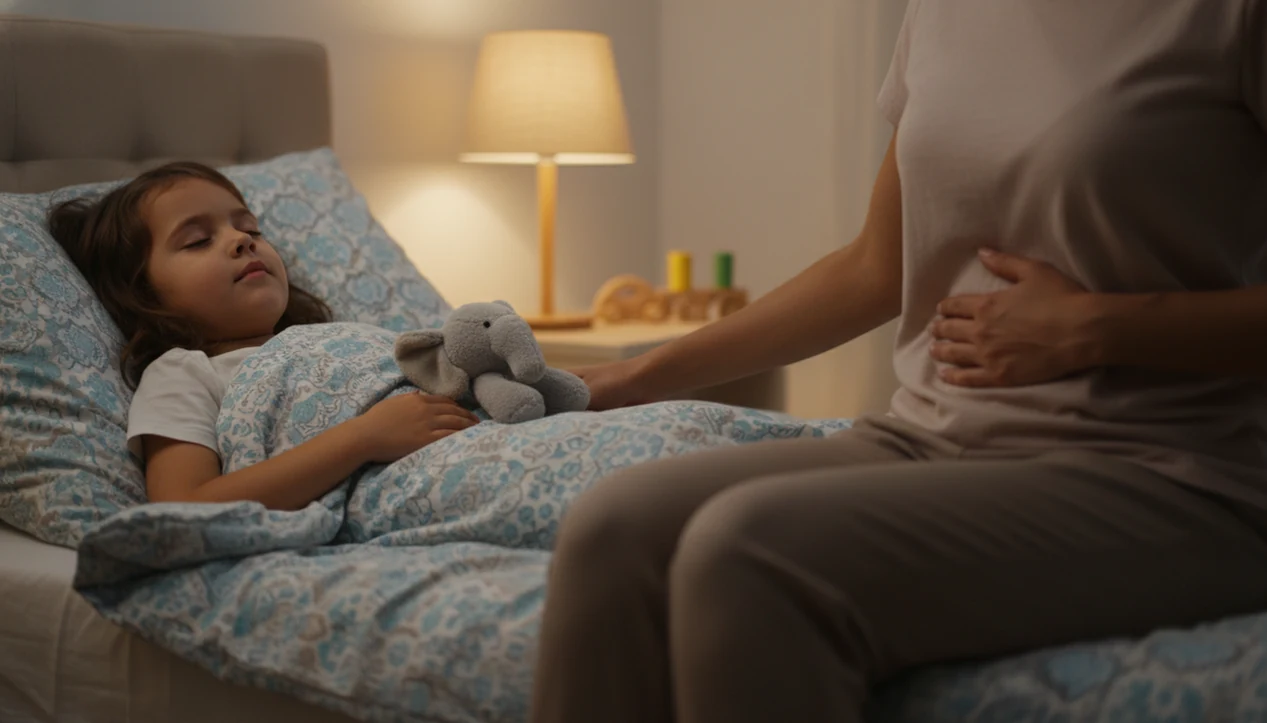


A kids bedtime breathing routine is a short, parent-led wind-down using slow belly breaths, simple imagery, and a predictable order before lights out. It helps a child move from daytime activity toward a calmer pre-sleep state, without making sleep a task to complete. A gentle routine can take 3 to 10 minutes, but a younger child may be ready to stop sooner.
Dim lights, a quiet parent voice, and playful cues such as smelling a flower and blowing out a candle keep the practice simple. Guided audio can help keep the sequence consistent, but it should not replace a parent's presence or turn breathing into a demand. Breathing is bedtime support, not a cure for sleep disorders or serious anxiety.
The bedtime basics
- Use belly breathing, playful cues, dim lights, and a calm parent voice.
- A 3-10 minute routine is usually better than a long or strict session.
- Guided audio can support consistency, but breathing is not a cure for sleep disorders or serious anxiety.
Kids bedtime breathing routine at a glance
A kids bedtime breathing routine usually takes 3-10 minutes and works best after screens are off, lights are dim, and your child is already in bed or close to bed. The aim is a calmer bedtime transition, not instant sleep or perfect cooperation. For mornings, try mindfulness for kids before school as a separate practice that helps children settle before the day begins.
Use this order: settle the body, place attention on the belly, try smell-the-flower and blow-the-candle breaths, add finger tracing if your child likes it, then close with one cozy phrase. A stuffed animal on the belly can make the breath visible without turning it into a lesson.
Keep it small.
If your child gets silly, restless, or chatty, shorten the routine instead of pushing harder. Soft guided audio can provide steady cues for parents who want help keeping the pace slow, but your calm voice and presence are still the main routine.
Best fit and poor fit for bedtime breathing for children
Bedtime breathing for children fits mild nighttime restlessness best, especially when the child can copy a parent’s slow pace. It should be used carefully when body-focused cues feel stressful or when sleep concerns look medical.
| Best for | Use carefully if | Not enough on its own |
|---|---|---|
| Busy mind at bedtime | Sensory sensitivity | Loud snoring |
| Mild bedtime worries | Trauma history | Pauses in breathing |
| Transition trouble after active play | Neurodevelopmental differences | Persistent insomnia |
| Children who like copying a parent | Frustration with body-focused exercises | Severe anxiety or panic |
| Families wanting a predictable ritual | Strong resistance to breath counting | Major behavior escalation or suspected medical sleep disorder |
For children who need more movement first, a short stretch or family mindfulness routine may work better before lying down. The dim lamp beside wrinkled pillows matters too; the room should already be saying, “we’re winding down.”
How bedtime breathing for children works
Bedtime breathing for children works by pairing slow diaphragmatic breathing with parent-child co-regulation and a predictable pre-sleep routine. Diaphragmatic breathing means the belly rises on the inhale and falls on the exhale, which encourages slower, steadier breathing.
Children often borrow calm before they can create it alone. That is co-regulation: your pace, voice, posture, and facial expression give their nervous system a pattern to follow. A child may not understand “relax your body,” but they can copy a slow whisper and a hand resting on the belly.
Predictable bedtime routines are associated with earlier bedtimes, shorter sleep-onset latency, and longer sleep duration in young children, according to the American Academy of Pediatrics. The NHLBI also reports that sleep problems are common in childhood. For young children, parent-modeled breathing is often easier than independent meditation because the child has a live rhythm to copy.
Breathing supports readiness for sleep. It does not force sleep.
How to use a parent guided breathing routine for kids
Use a parent guided breathing routine for kids as a short script, not a test. If your child becomes more alert, silly, or frustrated, stop and simplify.
- Set the room: Dim the lights, use a quiet voice, put devices away, and help your child get comfortable.
- Place a hand or stuffed animal on the belly: Say, “Let’s see it rise like a tiny hill when you breathe in.”
- Guide 3-5 flower-and-candle breaths: Say, “Smell the flower, now blow the candle,” with a slightly longer exhale if that feels natural.
- Trace five fingers or count soft breaths: Use a game-like cue only if your child wants something to follow.
- Close with a simple phrase: Try, “Your job is to rest; sleep can come when it comes.” If your child enjoys a warm closing thought, gratitude meditation for kids can offer another gentle way to end the evening.
Some nights, step four is too much. Skip it. Parents who want more variations can use parent and child breathing exercises as a wider menu.
Make room for worries before the breathing starts
A child who is worried about the night may need a brief conversation before a breathing cue. Ask what feels difficult, acknowledge the concern, and agree on a simple plan for the night. The American Academy of Child and Adolescent Psychiatry's sleep guidance supports addressing bedtime worries with reassurance and a predictable relaxation activity, rather than prolonged negotiation after the child is in bed.
Keep that conversation separate from the breathing practice. A closing phrase can refer back to the agreed plan, so the child does not have to solve the worry while following breath instructions. If anxiety remains intense, repeatedly disrupts sleep, or affects daytime functioning, the next step is a discussion with a pediatrician or qualified mental-health clinician. A calmer routine can support that care, but cannot replace it. Outside bedtime, mindfulness to help kids let go can help families talk gently about attachment, change, and difficult feelings.
Five child calming breathing cues before bed
Child calming breathing before bed works best when the cue sounds playful, not technical. Preschool and early elementary children usually respond better to images than to words like “diaphragm” or “regulate.” For children who prefer listening to spoken cues, calm down meditation for kids offers another option to try with a parent present.
- Flower and Candle Breath: Say, “Smell the flower, blow out the candle,” while your child inhales gently through the nose and exhales slowly through the mouth.
- Stuffed-Animal Belly Breath: Place a soft toy on the belly and invite your child to lift and lower it with quiet breaths.
- Take-Five Finger Breath: Trace up one finger while breathing in, then trace down while breathing out, until all five fingers are done.
- Balloon Belly Breath: Say, “Fill the belly balloon, then let it slowly shrink,” while keeping shoulders relaxed.
- Cozy Sigh Breath: Invite one soft inhale and one gentle sigh, as if settling deeper into the pillow.
Older kids can count silently if they prefer privacy. For younger kids, the image does most of the work.
Guided audio for a kids sleep calm routine
Guided meditation, sleep audio, breathing exercises, or self-hypnosis sessions can act as a soft cueing layer at family bedtime. If you use MindTastik, stay present with your child and treat the audio as support for consistency, not as the routine itself.
Keep the volume low, choose non-stimulating audio, and dim the phone screen before starting. Earbuds on a nightstand, one side slightly tangled around a charging cable, can be a reminder to keep the setup simple instead of fiddly.
For families comparing child-focused options, a meditation for kids app guide can help separate audio support from medical claims.
Common mistakes in child calming breathing before bed
The most common mistake is turning child calming breathing before bed into another bedtime demand. A routine that feels like pressure can raise arousal instead of lowering it.
- The “sleep now” mistake: Saying or implying “this will make you fall asleep” can make a child monitor every minute they are still awake.
- The overbuilt routine: Long scripts, complex counts, or performance goals often backfire after a tiring day.
- The correction loop: Fixing every breath teaches the child that breathing is something they can do wrong.
- The punishment trap: Breathing should not be used as a consequence or control tool.
- The sleep hygiene gap: Regular bedtime, dim lights, caffeine avoidance, and screen limits still matter.
If one cue annoys your child, swap it. Flower breath can become balloon breath. A child who hates counting may like one cozy sigh instead.
Evidence behind bedtime breathing for children
The evidence behind bedtime breathing for children is promising, but it usually comes from broader relaxation or mindfulness programs. That means breathing may help, but it is hard to isolate as the only active ingredient.
- Sleep problems are common in childhood; the NHLBI reports that about half of children experience sleep problems at some point. NHLBI: source
- The American Academy of Pediatrics has noted that 25-50% of children and 40% of adolescents experience sleep problems. American Academy of Pediatrics: source
- A 2012 randomized trial found that a self-help relaxation program including breathing and muscle relaxation improved sleep quality and reduced sleep-onset latency compared with a wait-list control. PubMed: source
- A 2013 school-based program found that 8 weeks of daily deep breathing and relaxation reduced children’s self-reported anxiety compared with baseline. Journal: source
- Many studies combine breathing, muscle relaxation, imagery, education, or mindfulness, so breathing alone cannot be credited for every result.
The most common medically supported approach for routine bedtime difficulty is a consistent bedtime routine combined with calming pre-sleep habits. For children who prefer a story-based wind-down, bedtime meditation for children may feel more natural than breath counting.
Audio support for a parent-led bedtime routine
MindTastik's library includes kids sessions, guided meditations, and breathing exercises. These are options for families who want spoken cues alongside a parent-led routine. Choose gentle guidance that the child can follow comfortably, keep the volume low, and stay present rather than leaving the audio to manage bedtime.
A familiar story or quiet parent voice may be a better choice when recorded instructions make a child more alert or frustrated. Persistent sleep loss, loud snoring, or significant anxiety calls for professional assessment, not a different audio session.
When bedtime breathing is not enough
A kids bedtime breathing routine is a supportive practice, not a treatment plan. It can be useful at 8:30 p.m. when the room is quiet and worries get louder, but it has limits.
- Breathing routines do not reliably treat clinical insomnia, obstructive sleep apnea, or significant mental health conditions on their own.
- Seek professional guidance for loud snoring, pauses in breathing, severe anxiety, panic, trauma symptoms, persistent sleep loss, or daytime impairment.
- Some children dislike body-focused attention or breath counting, especially with sensory sensitivities or neurodevelopmental differences.
- Rigid enforcement can increase conflict and arousal at bedtime.
- Evidence is promising but limited because many studies combine breathing with other relaxation strategies.
- Apps and audio guides support consistency, but they are tools, not cures.
- If bedtime regularly becomes unsafe, aggressive, or highly distressed, breathing should not be the only strategy.
Reset the plan.
Clinicians typically recommend evaluation when sleep problems are persistent, medically concerning, or causing daytime impairment.
Kids bedtime breathing questions
What age can children start bedtime breathing exercises?
Preschool children can try simple breathing alongside a parent if they enjoy copying the cues. One to three minutes may be enough. School-age children may tolerate several minutes, while adolescents can choose a longer practice. Readiness matters more than completing a set duration: stop if the child becomes frustrated or more alert.
How long should a kids bedtime breathing routine last?
A routine can last 3 to 10 minutes, but that is a flexible range, not a goal. Younger children may need only one to three minutes. A few gentle flower-and-candle breaths followed by a familiar closing phrase can be enough. Shorten the practice when it starts delaying bedtime or becoming another demand.
Can breathing exercises make a child fall asleep faster?
Breathing may help a child settle, but it cannot guarantee faster sleep. Much of the evidence comes from broader relaxation or mindfulness programs, so breathing's separate contribution is uncertain. The useful aim is a calmer transition to bed. Avoid promising sleep or asking the child to check whether the exercise is working.
Should children hold their breath or follow exact counts at bedtime?
This routine does not require breath holds or precise counts. Use gentle belly breaths or a playful flower-and-candle cue, with a slightly longer exhale only if it feels natural. The child should not have to perform a breathing pattern correctly. If counting creates tension, remove it and return to quiet, comfortable breathing.
What if my child gets silly or refuses to do the breathing?
Shorten or stop the practice rather than correcting every breath. Offer another quiet bedtime activity, such as shared reading, and keep the familiar bedtime sequence. Breathing should be an optional calming practice, not a punishment or a test of cooperation. Some children find body-focused attention uncomfortable and prefer a different kind of cue.
When should bedtime breathing happen in the bedtime routine?
Place it near the end of the routine, after active tasks are finished and the room is quiet. Tooth-brushing and shared reading can come first, followed by a brief breathing practice in bed or close to bed. Keeping the order predictable matters more than adding several different exercises each night.
When should a child's sleep problems be checked by a doctor?
Seek assessment for persistent trouble falling or staying asleep, daytime sleepiness, or effects on mood, learning, and daily functioning. Loud snoring, gasping, pauses in breathing, unusual nighttime behaviors, and significant anxiety also need attention. A bedtime breathing routine can remain a supportive activity, but it should not delay a clinical evaluation.