
Kids Meditation App Safety Guide for Parents
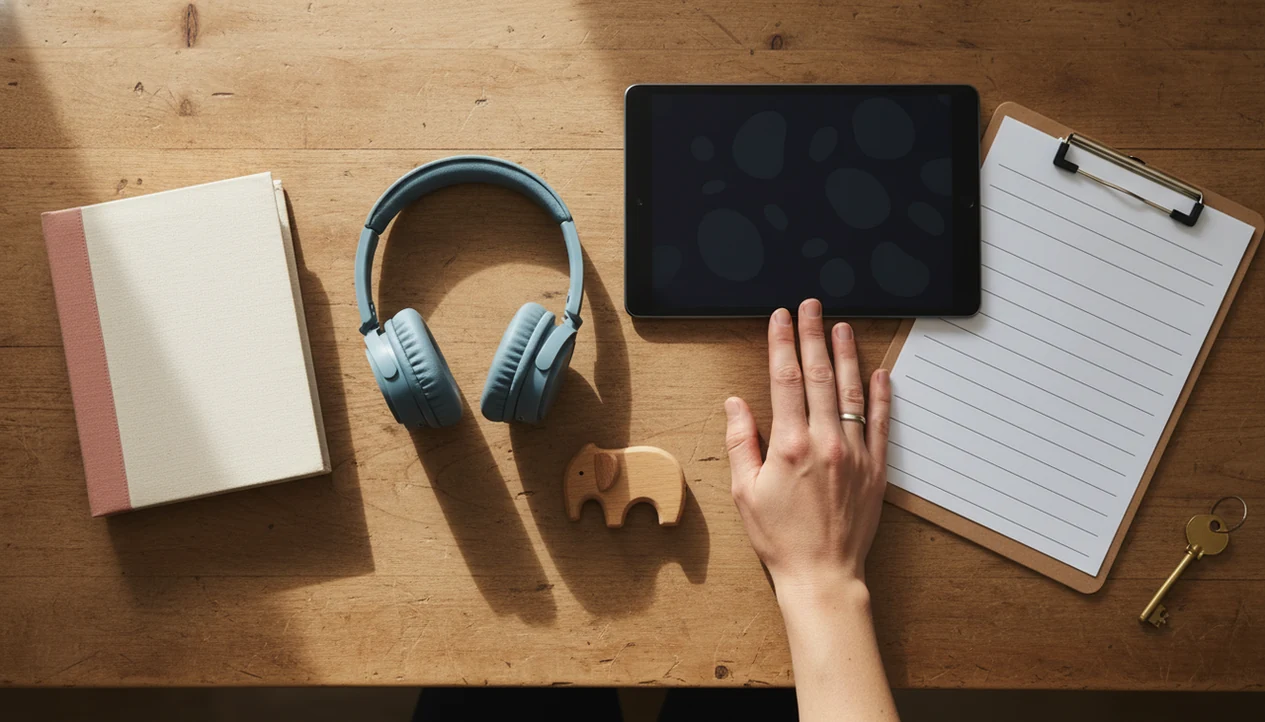


Kids meditation app safety means checking age-appropriate content, child privacy protections, parent supervision, and the limits of app-based support. A calming app can help with relaxation, bedtime routines, and everyday emotional regulation, but a friendly voice or child-friendly design does not establish safety. Parents need to preview sessions and review what information the app collects before a child starts using it.
This guide supports parent screening, not diagnosis or treatment. Apps should not replace professional help for persistent anxiety, depression symptoms, trauma symptoms, or severe sleep disruption. These concerns belong with a pediatrician or licensed mental health professional. Any self-harm talk needs prompt attention, with emergency support when there is immediate danger. Developmental fit, privacy, and the child's response all matter.
Parent screening essentials
- Choose safe meditation audio for kids by checking age fit, tone, themes, session length, and whether the content was made for children rather than adults.
- Review children meditation app privacy details before signup, including data collection, tracking, account controls, and whether the app shares information with third parties.
- Use a parent guided meditation app as a routine support tool, not as a replacement for therapy, crisis support, or medical care.
Kids meditation app safety checklist for parents
A kids meditation app is safer to try when the content, data practices, supervision plan, screen use, and support boundaries all make sense for your child. Parent ratings and bright child-friendly design can help you shortlist options, but they don't replace a privacy and content review.
| Safety check | What to look for | Parent warning sign |
|---|---|---|
| Content safety | Child-focused language, gentle pacing, short sessions | Adult themes, fear-heavy imagery, intense self-reflection |
| Privacy safety | Clear data collection, limited tracking, parent controls | Vague sharing rules, ads, unclear analytics |
| Supervision | Parent previewing and early co-listening | App encourages private, unsupervised use |
| Screen-time fit | Audio-first use, timer options, bedtime limits | Gamified streaks that keep the child checking |
| Escalation boundaries | Clear reminder that apps are support tools | Claims that meditation can fix serious distress |
A playlist can sound calm and still be unsuitable. If it collects too much data, uses adult stress language, or becomes the only way a child can settle, pause and reassess.
Use the same safety checklist across named options such as Headspace, Calm, Moshi, Insight Timer, and any smaller kids sleep-audio app; brand familiarity does not replace a parent preview or privacy review.
Is a meditation app safe for kids?
Is a meditation app safe for kids? A meditation app can be safe for kids when the content, privacy settings, and parent supervision are appropriate for the child's age and temperament.
The word “mindfulness” is not a safety stamp. Some adult meditation content includes grief, trauma, body-focused language, spirituality, hypnosis, or work stress themes that may not fit a child. The pacing can also be wrong. A 20-minute body scan may feel endless to a seven-year-old with socked feet shifting on a bedroom rug.
A 2021 peer-reviewed study of a consumer mindfulness app reported parent-described use of 16 minutes per session, 2.4 sessions per week, and 4.5 out of 5 parent satisfaction with impact on child wellbeing source. Those are useful real-world signals, but they are parent-reported outcomes from a specific app population, not proof that every app is safe for every child.
Evidence for mindfulness is not proof that an app is safe
A 2019 meta-analysis of 33 randomized controlled studies involving 3,666 children and adolescents found small improvements across several outcomes, including attention and anxiety or stress. Comparisons with active controls, rather than no intervention alone, left significant benefits only for mindfulness, depression, and anxiety or stress. Those results support modest expectations, not promises that a particular commercial app will help a particular child.
Effectiveness and safety are separate questions. The NCCIH guidance on complementary approaches for children says rigorous evaluation is still needed and risks and potential contraindications remain insufficiently defined. Even encouraging mindfulness findings do not establish an app's privacy protections, the suitability of its recordings, or its ability to treat a disorder. Those checks still require a review of the actual product and, when symptoms are significant, professional guidance.
How kids meditation apps work behind the scenes
Kids meditation apps work by turning calming skills into repeated behavioral cues: guided audio, breathing prompts, body scans, bedtime stories, music, and short mindfulness exercises. The helpful part is often simple repetition, not magic.
The mechanism usually combines attention redirection, slower breathing, predictable routine, emotional labeling, and parent modeling. In plain language, the child gets something steady to follow when their body feels keyed up. Consistent practice and parent modeling can support raising resilient children by building everyday coping skills.
There is also a data system behind the calm voice. An app may collect account details, usage history, favorites, device identifiers, analytics, and routine timing. Some apps personalize content based on those signals. That means content safety and data safety are separate checks. A story may be gentle, but the account setup may still ask for more information than a family wants to share.
Children meditation app privacy checks before signup
Children meditation app privacy deserves a careful read before a child creates a profile or saves routines. Wellness use can reveal sensitive patterns, including mood, sleep timing, anxiety-related sessions, favorites, and when a child needs calming support.
For U.S. families, check whether the app explains verifiable parental consent, child data deletion, and limits on child-directed tracking under COPPA; the FTC summarizes these requirements here: source.
- Data collection: Check whether the app gathers name, age, email, device identifiers, location, mood notes, sleep use, or listening history.
- Child profiles: Look for whether children have separate profiles and whether parents can manage or delete them.
- Usage sharing: Review whether usage data is shared with analytics vendors, advertisers, schools, partners, or third parties.
- Tracking controls: Inspect app store privacy labels, the privacy policy, in-app settings, and device-level parental controls.
- Free app tradeoff: Free apps are not automatically safer; some still monetize through ads, analytics, or data sharing.
The pocket check is real. Before handing over a phone, parents should know what the app records after bedtime audio starts.
Safe meditation audio for kids by age and temperament
Safe meditation audio for kids uses simple language, short duration, gentle pacing, and non-frightening imagery. A child-friendly voice, cartoon animal, or soft animation does not guarantee the session is right for your child.
Preschoolers: Choose playful sessions under a few minutes. Animal breathing, hand-on-belly breathing, or short “notice one sound” exercises usually fit better than stillness.
School-age children: Concrete imagery works well. A guided session might ask them to imagine a warm blanket, a quiet tree, or slow waves, without asking for deep emotional analysis.
Older kids and teens: Longer reflection may fit, but preview for adult stress themes, intense body scanning, trauma language, hypnosis, or spiritual framing. For older children, our guide to meditation for teens sleep and stress may help with age fit.
Image caption: Parent previewing child meditation audio before bedtime
Parent previewing child meditation audio before bedtime, with the phone brightness lowered and kids meditation app safety checks in mind.
How to use a parent guided meditation app safely
A parent guided meditation app is safest when it becomes a calm routine, not a crisis-only button. Try the first sessions together, then adjust based on your child's actual reaction.
- Preview the content before your child hears it, including the full ending, background sounds, and suggested next sessions.
- Set age and privacy controls in the app, device settings, and any family sharing tools.
- Sit with your child for early sessions so you can notice confusion, boredom, fear, or relief.
- Keep sessions short at first, often 2 to 5 minutes for younger children and slightly longer for older kids.
- Pair app skills with offline calming, such as a stuffed-animal belly breath or parent and child breathing exercises.
- Review the reaction the next day, not just during the emotional moment.
Tools like MindTastik are primarily adult meditation apps for guided meditation, sleep audio, breathing exercises, and self-hypnosis sessions, so parents should evaluate age fit carefully before any family use. For adolescent users, review our meditation app for teens safety guide before choosing recordings or setting account controls.
Best-fit and poor-fit kids meditation app safety decisions
A kids meditation app is a reasonable family support tool when the goal is routine calming, not clinical care. The Illinois Chapter of the American Academy of Pediatrics describes child-focused wellness apps as supporting relaxation, sleep, and emotional wellness rather than replacing clinical care source.
| Decision area | Best for | Not ideal for |
|---|---|---|
| Bedtime | Wind-down routines and gentle sleep cues | Severe insomnia or fear that worsens at night |
| Stress | Mild everyday stress and transition routines | Panic-like episodes needing urgent help |
| Skills | Breathing practice and emotional regulation words | Self-harm concerns or trauma symptoms |
| Family use | Parent-child calm time | Situations where the child becomes more distressed |
For bedtime routines, a bedtime meditation for children approach is often easier than open-ended app browsing because the parent can keep the routine short and predictable.
Red flags when a meditation app is not enough support
Meditation can be supportive, but it should not delay assessment when a child's distress is persistent, severe, or getting worse. Clinicians typically recommend contacting a pediatrician, licensed mental health professional, school counselor, or emergency support depending on the level of risk.
If there is immediate danger, self-harm talk, or fear that a child may hurt themselves or someone else, use emergency services or the 988 Suicide & Crisis Lifeline in the U.S.: source.
- Symptoms lasting weeks: Ongoing anxiety, sadness, irritability, or sleep disruption needs more than a playlist.
- School refusal: Repeated inability to attend school or separate from caregivers is a signal to seek help.
- Night distress: Frequent nightmares, major bedtime panic, or the 2:13 a.m. lock-screen check night after night deserves attention.
- Body and behavior changes: Appetite shifts, withdrawal, aggression, or sudden loss of interest should be taken seriously.
- Safety concerns: Talk of self-harm, wanting to disappear, or worsening distress after meditation requires urgent support.
For mild everyday overwhelm, calm down meditation for kids can teach a short reset. For persistent or severe symptoms, professional guidance comes first.
Using guided calming practices with parental supervision
MindTastik includes kids sessions, breathing exercises, and sleep stories. Parents looking for audio to support a bedtime or everyday calming routine can start by previewing the guided meditation library and choosing content that fits the child's age and response. The wider library also includes self-hypnosis and adult-focused material, so not every recording is a child session. Families needing treatment for persistent distress or serious sleep problems should seek professional care rather than rely on an app.
What app labels and mindfulness research cannot establish
Kids meditation app safety is not a one-time checkbox. It changes as the child grows, the app updates, and the family routine shifts.
- Many app outcomes are based on short-term use, parent report, or specific app populations.
- App store labels and marketing pages may not fully explain data collection, analytics, or third-party sharing.
- Meditation apps do not diagnose, treat, or replace therapy for clinically significant anxiety, depression, trauma, or sleep problems.
- Calming audio can become a crutch if the child cannot practice offline coping skills.
- Some children dislike body scans, silence, breath focus, or certain voices and may feel more anxious.
- A safe app for one child may be a poor fit for a sibling with different sensitivities.
- Parent supervision takes time, especially during the first week of use.
If your family wants a shared routine without making the app the center of everything, a family mindfulness routine can keep practice grounded.
Parents' questions about meditation app safety
How can I tell if a meditation app is appropriate for my child?
Preview the full recording, including its ending and suggested next sessions. Look for simple language, gentle pacing, short exercises, and non-frightening imagery. Check privacy settings separately. Child-friendly artwork and positive ratings do not establish that the content or data practices fit a child's needs.
Can children use meditation recordings made for adults?
Adult recordings are not automatically suitable for children. They may include grief, trauma, intense self-reflection, spirituality, or work-related themes. Long body scans can also be a poor developmental fit. Child-focused recordings are a better starting point, but parents should still preview them rather than rely on the label.
What information should parents check before creating a child profile?
Read what the app collects, why it collects it, and whether information goes to third parties. Check account details, device identifiers, location, mood entries, and listening history. Look for parent controls and deletion options. Avoid providing sensitive information that is not needed for the child to hear a session.
What should I do if meditation makes my child anxious?
Stop the recording rather than ask the child to finish. Exercises should be optional, without forced closed eyes or prolonged attention to breathing. Stay with the child and listen to what felt upsetting. Worsening or persistent distress needs professional guidance; immediate danger or self-harm concerns require urgent support.
How long should a child's first meditation session last?
Start with a brief exercise rather than a full-length adult session. Two to five minutes can be a starting point for younger children, while preschoolers may prefer less than a few minutes of playful practice. Boredom, confusion, or distress are reasons to shorten or stop, not insist on completion.
Do parents need to listen with their child every time?
Co-listening is useful for the first sessions because it lets a parent notice confusion, fear, boredom, or relief. Later supervision can reflect the child's age and response. Parents should continue previewing unfamiliar content and checking app changes rather than assume that every new recording has the same tone.
Can a meditation app replace therapy for childhood anxiety?
No. Meditation apps can support everyday calming skills, but they do not replace assessment or established treatment. Research suggests some benefits from youth mindfulness programs, with important limits. Persistent anxiety, school refusal, trauma symptoms, or worsening sleep problems call for professional support rather than more sessions.