
Mindfulness in Education: A Practical School Guide
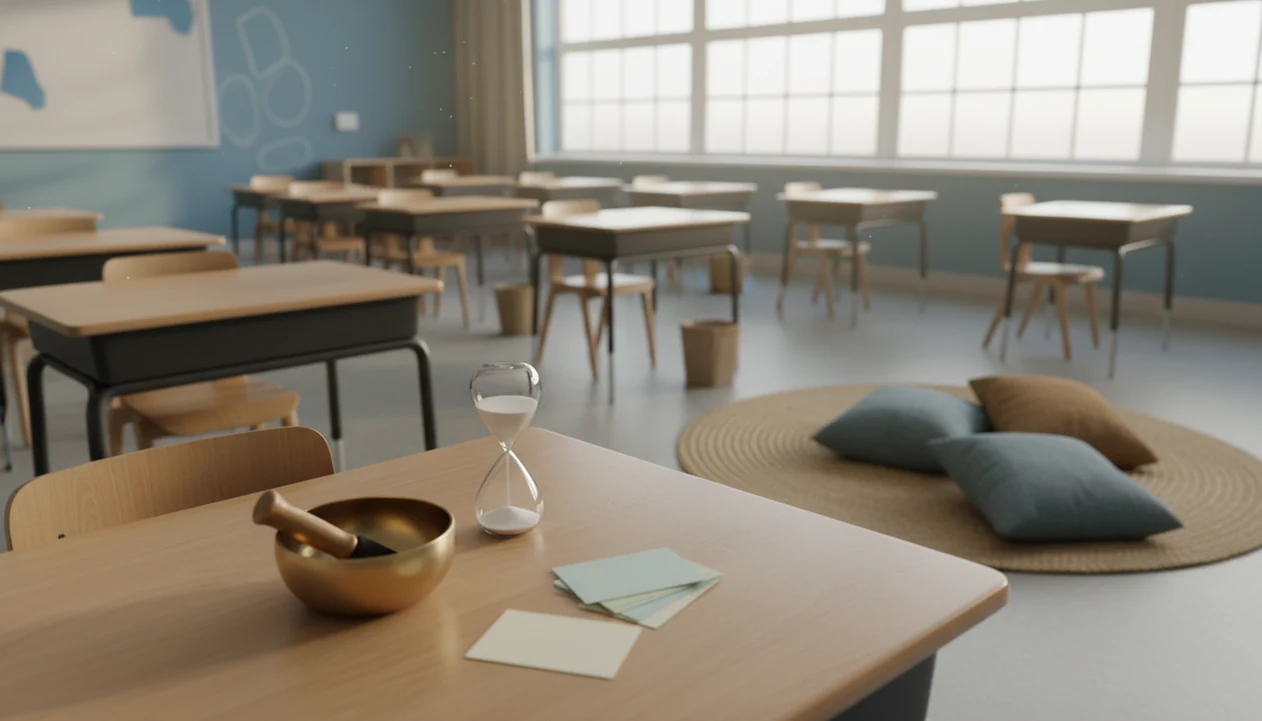


Mindfulness in education is the structured use of simple, secular attention and emotion-regulation practices to support focus, emotional awareness, stress regulation, and learning readiness. In schools, this can mean a brief breathing break before a quiz, gentle movement after lunch, or guided reflection during advisory. The purpose is to help students notice what is happening and choose a response, not to require quietness or replace counseling.
A school program needs more than a single lesson or assembly. Short, repeated routines, trained teachers, student choice, and optional home practice give it a practical place in the day. Research suggests benefits, but results vary across programs. Mindfulness should supplement teaching and student support, with clear limits and alternatives for students who find a practice uncomfortable. For older students, meditation for teen stress can offer optional practice for sleep, emotional awareness, and everyday pressures.
Mindfulness in Education Guide: What Schools Actually Teach
Mindfulness in education is usually secular, skill-based instruction that helps students notice attention, body signals, emotions, and choices before they react. It is not school therapy, religious teaching, or a demand that every child “calm down” on command.
In a classroom, it may look like one minute of breathing before a quiz, a short body scan after lunch, mindful listening with a bell, quiet reflection, or gentle movement beside a desk. The aim is learning readiness. A student who can notice clenched shoulders before speaking sharply has a little more room to choose.
Tiny pause. Real classroom value.
At home, optional guided-audio tools can extend practice for sleep, anxiety, focus, and everyday calm support. A good meditation app for sleep, anxiety, and everyday calm should deliver guided routines, breathing practice, and bedtime support, not diagnosis, discipline, or a replacement for trusted adults.
5 Mindfulness in Education Facts for School Leaders
- Mindfulness is usually secular. Most school programs teach attention and self-regulation skills, not belief systems or spiritual doctrine.
- Benefits are real but modest. Reviews report small to moderate gains in stress, attention, resilience, and executive functioning when programs are structured and repeated.
- Implementation quality matters. A clear routine beats a motivational assembly, especially during noisy transitions after lunch.
- Teachers need support too. Staff training and educator wellbeing should be part of the program, not an afterthought added during a crowded in-service day.
- Apps reinforce practice, but they do not replace people. Digital audio may help families build a family mindfulness routine, but classroom relationships, counseling access, and trained guidance still matter.
For school leaders, brief daily practice is often easier to sustain than occasional long mindfulness lessons because it fits existing classroom rhythms.
Before You Start a Mindfulness Program at School
Before starting a school mindfulness program, set the conditions for safety, clarity, and trust. The goal is not to launch the biggest initiative; it is to make one useful classroom routine responsible enough to repeat.
- Secure administrator support and choose a narrow goal, such as smoother transitions, test readiness, or a calmer start to advisory. A small target helps teachers know what success should look like.
- Notify families in secular, skills-based language. Describe breathing, attention, reflection, and choice; avoid religious framing or inflated promises.
- Train teachers before students are asked to participate. Include trauma-aware facilitation, eyes-open options, movement alternatives, and permission for students to pass without being singled out.
- Decide how discomfort will be noticed. Use quick student check-ins, teacher notes, counselor input, and a clear plan for stopping or adapting practices that increase distress.
- Set app boundaries early. Keep home audio optional, protect student privacy, limit screen time, and avoid making a phone the first answer to every worry.
Mindfulness in Education Mechanisms in the Brain and Classroom
Mindfulness works in schools by giving students repeated practice in noticing where attention goes, what the body feels, and what impulse is rising. That practice supports self-regulation, which means pausing long enough to choose a response instead of reacting automatically. For adolescents, mindset change for teen stress can complement this pause by encouraging more flexible responses to everyday setbacks.
In brain-and-behavior terms, mindfulness is often linked to executive functioning and stress-response awareness. Plainly, students rehearse “notice, pause, return” until it becomes more available during tests, conflict, or transitions. Short practice matters because the skill is built through repetition, not one impressive lesson.
One eye peeking at the timer happens.
Evidence fits that practical view. Meta-analyses report small improvements in attention, executive functioning, resilience, and stress. The large MYRIAD trial, however, found no overall one-year advantage for a universal school mindfulness curriculum compared with usual teaching. The most defensible takeaway is simple: mindfulness usually works best when it is brief, consistent, well-taught, and adapted to the students in front of the teacher.
7-Step Mindfulness in Education Implementation Plan for Teachers
- Set a clear purpose. Choose focus, test anxiety, transitions, sleep readiness, or classroom calm before picking activities. For adolescents facing test anxiety, mindfulness for teen anxiety offers optional ways to practice noticing tension and pausing.
- Start with 1 to 3 minutes. Use predictable moments, such as arrival, after recess, or before independent work.
- Train teachers first. Adults should practice and learn safe facilitation before guiding students.
- Invite, don’t force. Let students look down, keep eyes open, or use quiet drawing when needed.
- Add reflection. Ask one simple question, such as “What did you notice?”
- Offer home support. Short audio can help before homework, tests, or sleep; younger children may prefer parent and child breathing exercises.
- Review feedback. Adjust if students feel bored, exposed, restless, or pressured.
Set one school mindfulness goal
A narrow goal keeps the program usable.
Start with short daily practices
Short, repeated practice beats rare long sessions.
Train staff before scaling
Clinicians and education researchers typically recommend trained, trauma-aware implementation when mindfulness is used with children.
Review comfort and outcomes
Student comfort is data, not a side note.
5 Mindfulness in Education Activities for Daily School Routines
- Breathing breaks: Use three slow breaths before tests, presentations, or hallway transitions. Keep the cue simple enough for a substitute teacher to use.
- Mindful listening: Ring a chime or play a quiet sound, then ask students to raise a hand when they no longer hear it.
- Body scans: Guide students to notice feet, legs, shoulders, and face. This can connect gently with bedtime meditation for children when families want a calmer evening routine.
- Mindful movement: Try slow stretching, chair yoga shapes, or walking with attention. Restless groups often need movement before stillness.
- Journaling or reflection: Older students can write one sentence about attention, mood, or choice after practice. Reflection can also include self-compassion for teen stress, encouraging students to respond to mistakes with kindness rather than harsh judgment.
For younger students, mindful movement often works better than silent sitting because the body gets something concrete to do.
Mindfulness in Education Evidence: 4 Studies, Benefits, and Mixed Results
Research supports careful use of school mindfulness, but it does not support miracle claims. The evidence is strongest when programs are structured, repeated, and measured honestly.
| Study or review | What it found | What schools should take from it |
|---|---|---|
| 2015 sixth-grade randomized study | An 8-week program with 99 sixth graders reported lower perceived stress and fewer negative affective symptoms source. | Small classroom programs can help some students with stress. |
| 2016 systematic review | A review of 24 interventions found small to moderate effects on cognitive performance, resilience, and stress source. | Benefits are plausible, but not huge. |
| 2019 meta-analysis | Across 29 randomized trials, attention, executive functioning, and prosocial behavior improved slightly source. | Expect incremental gains, not instant behavior change. |
| 2022 MYRIAD trial | A trial of 3,668 students in 132 UK schools found no overall one-year improvement versus usual teaching source. | Large rollouts need caution, training, and evaluation. |
The honest conclusion: mindfulness belongs in the toolbox, not on a pedestal.
Mindfulness in Education Fit Guide for Classrooms, Counseling, and Home
Mindfulness fits best when it supports ordinary school moments: arrivals, transitions, test nerves, conflict recovery, and sleep-related routines. It is less appropriate when adults use it to avoid counseling, behavior support, or special education needs. Families addressing sleep-related routines can try teen sleep meditation as optional bedtime support alongside consistent sleep habits.
| Setting | Best for | Not ideal for |
|---|---|---|
| Classroom | Daily transitions, focus, emotional awareness, test anxiety support | Forced stillness, untrained delivery, replacing behavior plans |
| Counseling support | Naming body signals, grounding, stress awareness | Replacing therapy, trauma care, or crisis response |
| Teacher wellbeing | Brief resets during demanding days | Treating burnout as an individual breathing problem only |
| Home | Bedtime audio, short calming routines, focus before homework | Extra screen time without supervision |
A student staring at unread emails replaying behind closed eyes is not just “distracted” the next day. Sleep matters. A guided meditation app can be a gentle optional bridge for adults and families seeking sleep, anxiety, and everyday calm practice, alongside school support.
Mindfulness is not a response plan for bullying
A breathing exercise may give a student a pause after conflict, but it does not address the source of bullying or make an unsafe classroom safe. UNESCO’s overview of school violence links violence with anxiety, depression, absenteeism, lower grades, and dropout. Schools need prevention and safeguarding measures alongside any attention or self-regulation practice.
Mindfulness should never be assigned as punishment or used to make a targeted student tolerate mistreatment. A review of K-12 mindfulness initiatives reports promising findings on school climate and bullying-related incidents, but these findings do not establish mindfulness as a stand-alone prevention strategy. Participation should remain voluntary, and a quiet alternative should not reduce a student’s access to protection, counseling, or behavior support.
Mindfulness in Education App Tips for Sleep, Anxiety, and Home Practice
Apps should reinforce mindfulness in education, not become the curriculum. Use them for short guided practice before homework, before a test, or during a bedtime wind-down routine when the phone is face-down on the nightstand afterward.
For families, that may mean choosing between a 5-minute breathing exercise and a 20-minute body scan, then dimming the screen before audio begins.
Keep younger students supervised. Avoid turning every worry into a phone task. Families comparing options may also look for a meditation for kids app that uses age-appropriate audio and parent guidance.
Used well, apps can support next-day attention by making sleep and calm practice easier to repeat at home.
When School Mindfulness Should Lead to Professional Support
School mindfulness should lead to more support when a student becomes more distressed, frightened, shut down, or avoidant during or after practice. Classroom routines can support regulation, but they are not crisis care, trauma treatment, or a substitute for mental healthcare.
Watch for panic symptoms, dissociation or seeming “not there,” persistent distress across days, sudden refusal to attend class, intense shame, repeated avoidance of body-based exercises, or comments that suggest self-harm or danger. A quiet child is not always a calm child.
- Stop the practice for that student if it appears to increase fear, numbness, or distress.
- Offer a grounded alternative, such as eyes open, quiet drawing, walking with an adult, or sitting near the door.
- Document what happened in plain school language, including triggers, duration, and what helped.
- Involve the school counselor, psychologist, nurse, or safeguarding lead when distress is repeated, intense, or hard to explain.
- Contact families and clinical professionals when symptoms persist, safety concerns arise, or the student already has a care plan.
The scope is simple: teachers can guide brief, optional classroom practices. Diagnosis, trauma processing, medication questions, and crisis decisions belong with qualified professionals.
Optional audio for homework transitions and bedtime
MindTastik’s kids sessions, focus sessions, and guided breathing exercises can provide optional home practice before homework or during a bedtime routine. Its sleep stories offer another audio option for an evening wind-down, while parents can choose sessions for their own stress support.
These recordings are a supplement, not a school curriculum or medical treatment. Families seeking help with persistent anxiety, trauma-related distress, or school refusal should choose professional support rather than rely on an app. Younger children should use audio with adult supervision.
Where school mindfulness can fall short
Mindfulness in education has real promise, but schools should name the limits before launching a program.
- Evidence is mixed, especially in large universal programs where average effects may be small or absent.
- Some students do not like closing their eyes, noticing body sensations, or sitting quietly.
- Students with trauma histories or severe anxiety may feel worse during certain practices.
- Mindfulness is not a substitute for therapy, counseling, medical care, special education services, or crisis support.
- Poor implementation can feel like a slogan. Students notice when adults rush a “calm moment” before returning to a chaotic room.
- Apps alone are insufficient and may add screen time if families use them without boundaries.
- Ideal session length, long-term outcomes, and age-specific techniques are still being studied.
- Participation should allow choice, including eyes open, movement, drawing, or opting into another quiet regulation strategy.
If a child is persistently distressed, school mindfulness should point adults toward more support, not delay it. Schools should document when mindfulness is offered as a classroom routine versus when a student needs counseling, family contact, medical evaluation, or crisis support. Any practice that increases panic, dissociation, shame, or avoidance should stop and be reviewed by a qualified professional.
School mindfulness questions
Does mindfulness improve students’ grades?
School mindfulness research finds small average effects on academic performance and school adjustment, with somewhat stronger findings for attention. That does not make it a proven stand-alone academic intervention. Schools should treat it as supplementary support for learning readiness, not as a replacement for instruction or learning support.
How long should a classroom mindfulness activity last?
Brief practices of one to five minutes are a reasonable starting point, adapted to students’ ages and needs. A predictable moment, such as arrival or before independent work, makes the routine easier to repeat. Longer sessions are not the goal, and students should have non-meditative alternatives.
Is mindfulness appropriate in a secular school?
School mindfulness is usually taught as attention and self-regulation skills rather than religious instruction. Families should receive a clear description of the activities, purpose, and limits. Programs should respect religious and cultural freedom, seek age-appropriate student assent, and provide alternatives rather than require participation.
What training do teachers need before leading mindfulness?
Teachers need preparation in the practices they plan to lead, age-appropriate instructions, voluntary participation, and recognizing distress. Training should cover alternatives to breath focus and stillness, plus referral procedures. An audio recording can support a routine, but it does not replace a trained adult responsible for students’ wellbeing.
Can mindfulness make a student’s anxiety worse?
Yes, some students may experience increased anxiety, upsetting body sensations, intrusive memories, or a sense of disconnection during practice. Stop an activity that increases distress and offer a different form of grounding or a quiet alternative. Persistent or severe reactions call for professional support, not pressure to keep practicing.
Can school mindfulness prevent bullying?
Some reviews report improvements in school climate and fewer bullying-related incidents, but the findings do not show that mindfulness alone prevents bullying. It should sit alongside school-wide prevention, safeguarding, and behavioral support. A student reporting harm needs protection and a response to the behavior, not simply instructions to breathe.