
How to Teach Kids Kindness: A Practical Guide for Home, School, and Everyday Calm
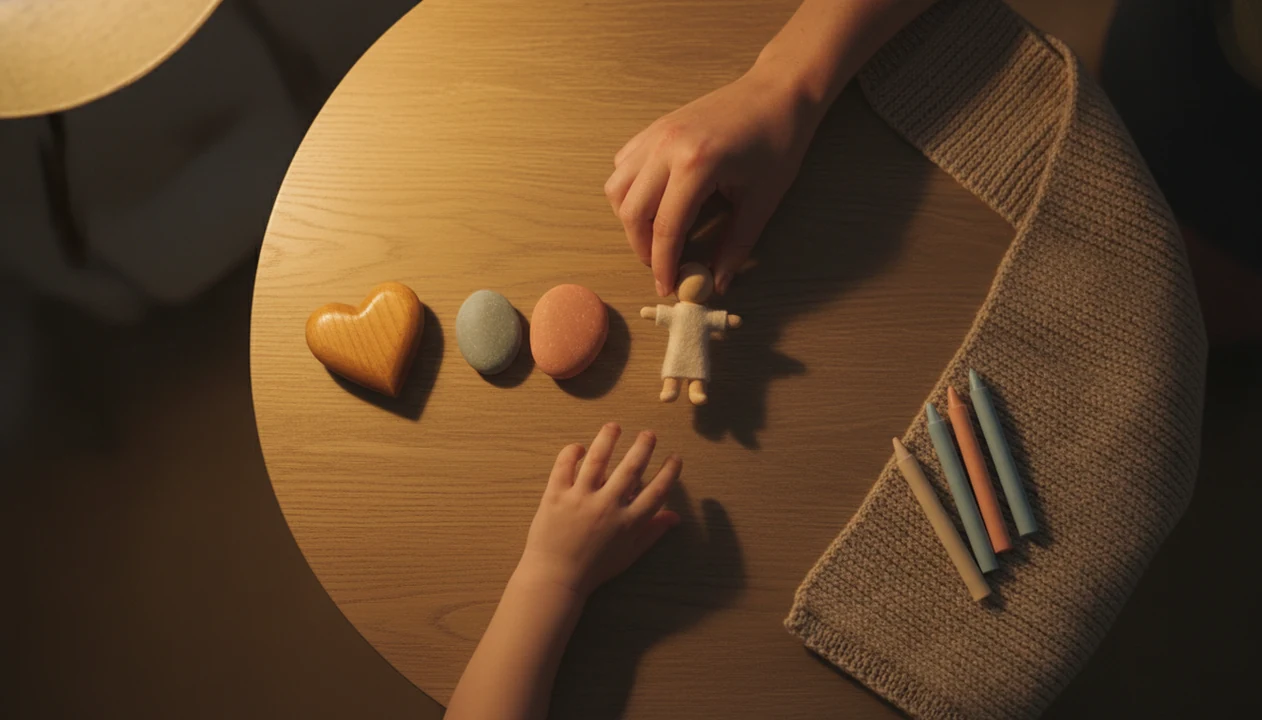


Teaching kids kindness starts with adults modeling caring behavior, naming feelings, and giving children daily chances to share, help, apologize, and repair harm. Kindness means noticing other people’s feelings, managing one’s own reactions, and choosing caring actions at home, school, and online. Children learn from how adults handle stress and conflict, not just from reminders to “be nice.”
Short breathing exercises, stories, gratitude routines, and loving-kindness practices can give children a pause before reacting. Keep practice concrete and brief, often 2 to 10 minutes, with time to repeat it in everyday situations. This guide supports everyday social-emotional learning, not diagnosis or treatment. Unsafe or extreme behavior, or major changes in mood, sleep, school, or friendships, calls for professional support.
Kindness basics
- Kids learn kindness most from watching adults handle stress, conflict, apologies, and everyday helping moments.
- Emotion skills matter: children are more likely to act kindly when they can name feelings, calm their bodies, and imagine another person’s perspective.
- Short routines work best: 2-10 minute breathing, gratitude, story, or loving-kindness practices can make kindness easier to repeat.
How to Teach Kids Kindness in One Simple Daily Pattern
The simplest daily pattern is: model it, name it, practice it, praise it, repair it. Kindness is a skill children build through repetition, not a fixed personality trait they either have or lack.
Model it by letting your child see you speak gently when plans change. Name it when someone shares a toy, comforts a sibling, thanks a teacher, or holds the door. Practice it with small jobs: “Can you bring your brother a tissue?” Praise the effort, not just the sweet moment. Then repair it when hurtful words happen.
At bedtime, keep it concrete: ask, ‘Who did you help today, and who helped you?’ That gives the child a tiny memory to replay instead of another lecture.
A child with a calm body and a rested mind usually has more room for kind choices. For younger kids, that may mean one deep breath before correction. For older kids, it may mean a short pause before replying to a message.
Before You Start Teaching Kids Kindness
Before you start teaching kids kindness, check the child’s body state and choose a small target. A hungry, tired, embarrassed, or overstimulated child may need support before they can hear a lesson.
Use this quick setup before the steps, especially after conflict:
- Check the basics first. Notice whether your child needs food, sleep, quiet, privacy, or a break from noise and attention.
- Choose one behavior to practice. Pick “use a respectful tone” or “ask before grabbing,” not every mistake from the afternoon.
- Teach when bodies are calm. Practice scripts, breathing, and repair language during ordinary moments, then return to the hard scene after everyone settles.
- Agree on family words. Decide what “repair,” “apology,” “private,” and “respectful tone” mean in your home so children hear the same message.
- Keep calm tools safe. Do not use breathing, meditation, or quiet time as a punishment, a public performance, or proof that a child is “good now.”
This preparation makes kindness practice feel teachable instead of shaming.
What Teaching Kids Kindness Means for Empathy, Manners, and Repair
Teaching kids kindness means building empathy, emotional awareness, self-regulation, respectful words, and helpful action together. It is bigger than saying “please,” “thank you,” or “be nice.”
If someone asks, “what is how to teach kids kindness,” the plain answer is this: help children notice feelings, calm their own reactions, and choose caring behavior often enough that it becomes familiar.
Manners can be part of kindness, but manners without empathy can feel empty. A child may say “sorry” while still not understanding the hurt. That is why repair matters.
Preschoolers need simple scripts like “Can I have a turn?” Elementary children can practice chores, gratitude, and apology do-overs. Tweens need deeper talks about sarcasm, group pressure, privacy, and online messages that look funny to one person but sting another.
The lesson grows with the child.
Five Evidence Facts Behind a Kids Kindness Guide
- Children learn kindness partly by watching adult behavior, especially during stress, conflict, waiting, and apologies; the American Academy of Pediatrics describes stable, responsive adult-child relationships as central to healthy social-emotional development source.
- Emotion recognition, perspective-taking, and self-regulation support kinder choices because children need to notice a feeling before they can respond to it.
- Everyday micro-moments are the strongest practice reps: sharing crayons, comforting a friend, helping with groceries, or thanking a teacher.
- A meta-analysis of 36 randomized controlled trials found school-based mindfulness programs produced small but significant improvements in prosocial behavior and empathy in children and adolescents, according to a 2019 Child Development review source.
- Teen stress matters. In a large U.S. survey, 57% of teens reported feeling nervous, anxious, or on edge in the last month, and 29% reported feeling this way almost every day, according to Pew Research source. For teens who want a brief calming practice, meditation for teens can support a pause before responding.
For many families, kindness improves when adults teach both the social skill and the calm-down skill.
How Kindness Learning Works in a Child’s Brain and Body
Kindness learning works through co-regulation first, then self-regulation later. In plain language, children borrow an adult’s calm before they can reliably create their own.
The sequence is simple, but not always easy: notice the feeling, pause, imagine another person’s perspective, then choose an action. A child who can say “I felt left out” has a better chance of not grabbing the game pieces. A tween who can pause before sending a group chat reply has a better chance of choosing privacy over a cheap laugh.
Sleep, anxiety, hunger, transitions, and digital overstimulation can shorten patience. The tablet turns off, the room gets loud, and the kind choice disappears fast.
That’s normal skill strain.
Mindfulness and loving-kindness practices can strengthen the pause-and-respond pattern. A short breath, a repeated phrase like “May we be safe,” or a quiet body scan gives the nervous system a tiny gap before action.
How to Use a Five-Step Kids Kindness Routine at Home
Use this five-step routine when you want kindness practice without building a whole curriculum. Keep it short enough that tired children can still do it.
- Model one kind action out loud. Say, “I’m going to check on Grandma because she sounded sad.”
- Pause before correction. Take one slow breath together before discussing grabbing, yelling, teasing, or refusing to share.
- Name both feelings. Try, “You felt mad when the blocks fell, and your sister felt scared when you shouted.”
- Choose one repair. Ask your child to help rebuild, offer a kind sentence, draw a note, or give space.
- End with reflection. At bedtime, ask, “What was one kind thing you noticed today?”
Some families add guided audio for the calm part. Tools like MindTastik can support family calm with sleep audio, breathing exercises, and short guided meditation, but they should not be used as punishment or as a substitute for needed care. A simple family mindfulness routine can make the practice easier to repeat.
How to Teach Kids Kindness Tips by Age
Children need kindness practice that matches their stage, attention span, and social world. Short, playful, concrete routines usually work better than long talks.
Preschool kindness practice
Preschoolers learn through pretend play, picture books, emotion faces, and repeatable scripts. Use phrases like “gentle hands,” “my turn next,” and “are you okay?” A two-minute practice is enough. If toddlers need even shorter calm support, short meditation for toddlers can be story-based instead of still and silent.
Elementary kindness practice
Elementary kids can connect kindness to chores, classroom examples, gratitude journals, and repair conversations. Ask, “What helped?” after they include someone at recess or thank the bus driver.
Tween kindness practice
Tweens need direct conversations about online kindness, group pressure, sarcasm, privacy, and sincere apologies. Discuss screenshots, inside jokes, and the difference between funny and humiliating. They may roll their eyes. Keep going, gently. Before adding guided audio for tweens or teens, review meditation app safety for teens together and discuss privacy.
Best Kindness Activities for Kids at Home, School, and Online
Kindness activities work best when adults model the behavior first, then invite children to practice it in a real moment. The activity is the container; the adult example is the lesson.
| Activity | Best age range | Best moment | Why it helps |
|---|---|---|---|
| Kindness jar | 4-10 | Home routines | Makes small caring actions visible |
| Helper chart | 3-9 | Chores and transitions | Links kindness with useful contribution |
| Gratitude circle | 5-12 | Dinner or classroom closing | Builds noticing and appreciation |
| Loving-kindness phrases | 6-14 | Before school or bedtime | Practices warm wishes toward self and others |
| Apology repair card | 5-13 | After conflict | Moves apology from words to action |
| Classroom thank-you note | 6-12 | School week ending | Helps children notice effort from teachers and peers |
At home, a child might add a marble to a kindness jar after helping set the table. At school, a thank-you note can name one specific act. Online, a tween can practice not reposting an embarrassing photo.
For children who need a body reset first, parent and child breathing exercises can come before the activity.
Mindfulness, Sleep, and Anxiety Support for Kids Kindness Skills
Tired or anxious children often have less capacity for patient behavior. That does not excuse harm, but it helps adults choose a better teaching moment.
Sleep is a practical kindness variable: the American Academy of Sleep Medicine recommends 9-12 hours per 24 hours for children ages 6-12 and 8-10 hours for teens ages 13-18 source.
The 2:13 a.m. lock-screen check is not only an adult problem. Some older kids and teens lie awake with school worries, friendship stress, or buzzing devices nearby. The next day, a small frustration can come out as snapping, withdrawing, or mocking someone else.
Research on youth mindfulness suggests short practices may support stress reduction, empathy, and prosocial behavior. Supportive routines include breathing exercises, short body scans, sleep audio, and loving-kindness phrases such as “May I be safe. May you be safe.” A bedtime meditation for children can fit here when the goal is winding down, not forcing behavior.
What kindness meditation research actually measures
A 2022 review of kindness- and compassion-based meditation for children covered 10 studies involving 807 children. It found statistically significant improvements in 26 of 55 wellbeing measures, with effects ranging from small to large. Those measures included stress, anxiety, self-compassion, gratitude, and resilience. The figure describes outcomes across studies, not the percentage of children who became kinder, and the authors judged the overall evidence base not yet strong.
These findings leave an important gap between feeling calmer and acting kindly during a disagreement. A gratitude score or a reduction in stress does not establish that a child will share a toy, stop teasing, or repair hurtful words. For everyday practice, pair a short meditation with an observable action already taught in this guide, such as asking for a turn or helping rebuild something. Treat the meditation as support for practice, not proof of behavior change.
Common Mistakes Parents Make When Teaching Kids Kindness
One common mistake is telling kids to “be nice” without showing them what kind looks like under pressure. Children notice the voice used with a cashier, the sigh at a slow driver, and the apology after a sharp sentence.
Another mistake is forcing apologies too quickly. A rushed “sorry” may end the adult discomfort, but it may not teach repair. First help the child understand what happened: “Your words made him stop playing.”
Parents can also overpraise public performance and miss private effort. The quiet moment when a child moves over to make room matters.
Don’t ignore sleep, hunger, anxiety, overstimulation, or transitions. These do not remove responsibility, but they change what support is needed.
Finally, avoid turning meditation into a consequence. A calm practice should feel like a reset, not a corner with softer music. For anxious children, meditation for anxious kids should be introduced during calm times first.
Short audio practices for calmer kindness conversations
MindTastik’s kids sessions, gratitude sessions, and guided breathing exercises can support a brief pause before a conversation about sharing, hurt feelings, or repair. The useful role is helping a child settle enough to practice a caring action, not replacing that action with listening.
Children who dislike audio or sitting still may prefer drawing, movement, or a story read together. Families dealing with unsafe behavior or severe anxiety need professional guidance rather than an app-led behavior plan. MindTastik is not a medical treatment. If you choose guided audio, review kids meditation app safety to help assess privacy, supervision, and age-appropriate use.
What kindness routines and meditation cannot resolve
Kindness routines can help, but they are not quick fixes. Children need steady adult support, repeated practice, and room to make mistakes without being labeled “mean.”
- Kindness training is gradual and depends on consistent modeling from adults at home, school, and other care settings.
- Meditation apps are supportive tools, not guaranteed behavior-change solutions.
- Some children dislike sitting meditation and may need walking, drawing, stretching, music, or story-based calm instead.
- Children with trauma, neurodevelopmental differences, severe anxiety, aggression, or unsafe behavior may need specialized professional support.
- Research on kids’ meditation apps specifically improving kindness is still emerging, so claims should stay modest.
- Family culture, temperament, sleep quality, school climate, peer pressure, and stress level all affect outcomes.
- A child may understand kindness in one setting and still struggle in another, especially during transitions.
Clinicians typically recommend professional evaluation when behavior is extreme, persistent, unsafe, or paired with major mood, sleep, school, or social changes.
Questions about teaching kids kindness
At what age can children start learning kindness?
Kindness practice can begin with simple, concrete actions in early childhood: gentle hands, helping with a small task, or noticing someone’s feelings. Preschoolers benefit from pretend play, picture books, and short phrases such as “Are you okay?” Older children can discuss motives, consequences, and how to repair harm.
How do I teach kindness without just saying “be nice”?
Name the action needed: “Ask before taking the crayons” or “Make room so she can sit down.” Model that behavior, let the child practice, and acknowledge the effort. After conflict, describe what happened and choose a repair. Specific language gives a child something to do, rather than a vague instruction to follow.
How can I encourage my child to share without forcing it?
Practice asking for a turn and agreeing on what happens next while everyone is calm. Help the child name the feeling behind refusing, such as frustration or worry about a possession. Offer voluntary choices about sharing rather than treating every refusal as unkind. Structured mindfulness research does not establish one proven parenting method for sharing.
Should children be forced to say sorry?
A rushed apology may stop the conversation without helping a child understand the hurt. First describe the effect of the behavior and help the child name both people’s feelings. Then choose a repair, such as rebuilding, offering a kind sentence, writing a note, or giving space. Words and helpful action can work together.
How do I teach empathy to a child who hurt someone’s feelings?
Wait until the child is calm enough to listen. Name their feeling alongside the other person’s: “You were angry, and she felt scared when you shouted.” Ask what might help now, then practice one repair. The goal is noticing another person’s experience while still holding a clear limit on hurtful behavior.
Can meditation make children kinder?
Meditation may support skills related to kindness, including attention, self-regulation, and prosocial behavior. Research findings vary, and evidence for direct improvements in empathy is less consistent. A short breathing or loving-kindness practice is best treated as support for adult modeling and real-life practice, not a guarantee that behavior will change.
What should I do when my child is too upset for a kindness lesson?
Check for hunger, tiredness, noise, embarrassment, or a need for privacy before starting a discussion. Offer calm adult support and a break, then return to one specific behavior when the child can listen. Teaching during a calmer moment allows practice of words and repair actions without adding another demand during distress.
When does unkind behavior need professional help?
Seek support when behavior is unsafe, extreme, or accompanied by major changes in mood, sleep, school participation, or friendships. A pediatrician, school counselor, or licensed child mental health professional can help assess what is happening. Kindness routines and meditation apps are supportive tools, not substitutes for assessment or treatment.