
Mindfulness Books for Children: A Practical Parent Guide
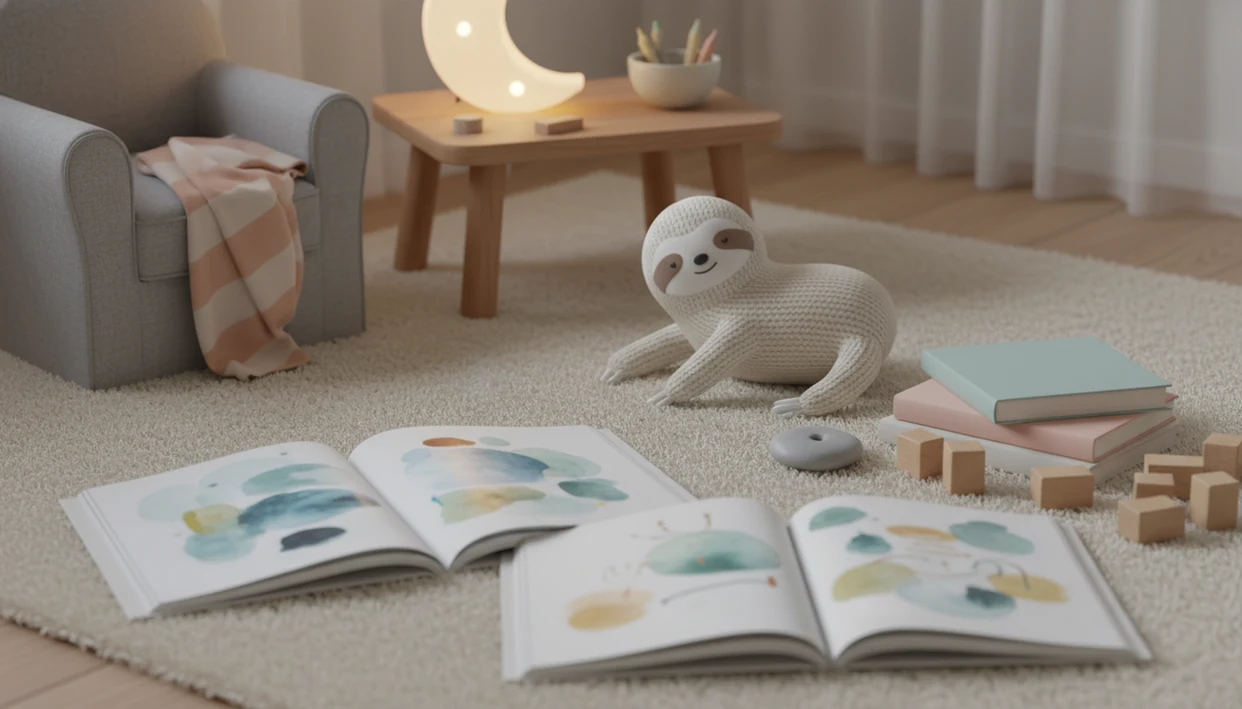


Mindfulness books for children are age-appropriate stories or activity books that teach present-moment awareness through breathing, sensory noticing, naming feelings, and gentle reflection. The most useful ones give children a small action to repeat: notice a sound, name a feeling, or take a slow breath with a character. These skills can become part of bedtime, school-day worry, or a pause after an argument.
Choose a book by the child’s age, preferred reading style, and the skill the family wants to practice. A picture book with one clear breathing cue may suit a younger child better than a workbook. Read together, pause at an exercise, and keep the routine familiar. One reading is an introduction, not a promise of changed behavior.
Choosing and using the books
- Pick mindfulness books by age, reading style, and the skill you want to practice: sleep, anxiety, focus, anger, or everyday calm.
- The most useful books turn big ideas into small actions, such as belly breathing, five-senses noticing, or naming a feeling out loud.
- Books work best when an adult reads with the child, pauses for questions, models the exercise, and repeats the routine over time.
Mindfulness books for children guide: what to look for first
A useful mindfulness book for children gives the child something to do, not just something calm to hear. Look for simple language, concrete exercises, emotional naming, and present-moment attention. A strong page might ask a child to notice their feet, find one sound, or say, “My body feels tight.”
Parents usually reach for these books during familiar pinch points: bedtime, worry before school, focus struggles, anger after a sibling fight, classroom calm, or a child who needs more words for feelings. The book is the doorway. The repeated practice is the skill.
Mainstream interest matters too. In the 2022 National Health Interview Survey, 17.3% of U.S. adults reported using meditation in the previous 12 months, according to NIH/NCCIH: source. That does not mean children need adult-style meditation. It means many families are already looking for gentler ways to practice everyday calm together.
Small actions beat big speeches.
Five mindfulness books for children tips parents should know
- Age fit matters more than popularity. A bestselling chapter book may miss a preschooler completely if the sentences are too long or the pictures do not guide the practice.
- Read-aloud books need adult participation. Pause after a breath cue, try it yourself, and let the child answer with words, gestures, or silence.
- Mindfulness books can support sleep, worry, focus, and emotional regulation. They are supportive tools, not clinical treatment for persistent anxiety, insomnia, or behavior concerns.
- One reading is rarely enough. Children often need the same phrase, same chair, and same two-minute practice before it starts to feel familiar.
- The strongest titles include actions children can practice. Choose books that teach belly breathing, five-senses noticing, drawing feelings, or choosing one calm action. For a hands-on alternative, learn how to make a glitter jar and use it as a simple noticing activity.
For toddlers who need very short practice, a short meditation for toddlers may pair better with a board book than a long read-aloud.
Best mindfulness books for children by age and use case
The right mindfulness book format depends on age, attention span, and the family goal. A toddler may need a sturdy board book with one breathing game. A tween may prefer a journal prompt that does not feel babyish.
| Age band | Best format | Good use cases | What to look for |
|---|---|---|---|
| Toddlers | Board book | Bedtime, transitions, early calm | Few words, clear faces, breath play |
| Preschoolers | Picture book | Worry, anger, naming feelings | Repeated phrases, expressive illustrations |
| Early elementary | Read-aloud story | Focus, classroom calm, bedtime | Simple plot plus one practice pause |
| Older children | Activity book | Anger, worry, self-awareness | Drawing, checklists, body maps |
| Tweens | Journal or guided reflection | Stress, identity, sleep routine | Privacy, choice, short prompts |
Examples such as Breathe Like a Bear or I Am Peace can be useful starting points, but no single title fits every child. For older kids nearing adolescence, meditation for teens sleep and stress may feel more age-respectful than a picture book.
7 mindfulness books for children to consider
Here are seven children’s mindfulness books worth considering, each with a clearer fit than “calming” alone. Use the list by matching the book to the moment: sleep, worry, anger, or focus.
- **Choose Breathe Like a Bear by Kira Willey** for ages 4-8 and focus or bedtime. It offers short breathing and imagination practices, such as pretending to smell cocoa; the limit is that some activities may feel young for older readers.
- **Try I Am Peace by Susan Verde** for ages 4-8 and worry. Children practice grounding with breath and present-moment noticing; the text can feel abstract without adult help.
- **Use Sitting Still Like a Frog by Eline Snel** for ages 5-12 and focus. The frog exercise teaches quiet noticing; restless children may need movement first.
- **Read My Magic Breath by Nick Ortner and Alison Taylor** for ages 4-8 and anger. Kids imagine breathing out heavy feelings; it may oversimplify big emotions.
- **Pick Anh’s Anger by Gail Silver** for ages 4-8 and anger. Children meet anger as a visitor and breathe with it; some pages are text-heavy.
- **Choose Good Night Yoga by Mariam Gates** for ages 4-8 and sleep. Gentle poses pair with breath; it needs floor space.
- **Try What Does It Mean to Be Present? by Rana DiOrio** for ages 4-8 and focus. It prompts sensory noticing; younger preschoolers may need shorter pages.
How mindfulness books for children work during reading
Mindfulness books work by creating a low-pressure setting for practicing attention, breathing, and emotional labeling. The child is not being told, “Calm down now.” Instead, the story gives a shared object to look at, a sentence to repeat, or a body cue to notice.
Illustrations, rhythm, repetition, and caregiver modeling make abstract skills easier. A child may not understand “present-moment awareness,” but they can point to the blue sock in the picture, hear three sounds, or feel shoulders tense against the mattress. That is attention training in kid language.
The benefit comes from repeated practice and adult co-regulation, not from the physical book alone. Co-regulation means the adult lends calm through voice, pace, and presence. Some children will still prefer movement, drawing, or audio instead of quiet reflection. Parents supporting autistic children can also use mindfulness for parents of autistic children to support their own calm.
That is not failure. It is information.
What the evidence says about mindfulness for children
The evidence is strongest for repeated mindfulness practice, not for children’s books by themselves. Books can make practice easier to start, but they should be treated as supportive routines rather than treatments for diagnosed anxiety, insomnia, ADHD, or other conditions.
CDC child mental health data, NIH/NCCIH summaries on meditation research, American Academy of Pediatrics guidance on stress and resilience, and peer-reviewed reviews generally point in the same direction: mindfulness-based programs may help some children with stress, attention, and emotional regulation, especially when practice is regular and age-appropriate. The book is the container; the skill is built through what happens around it.
- Model the practice so your child sees and hears a calm adult trying the breath or noticing prompt too. Practicing meditation for parents can give adults a separate space to pause before sharing a calming exercise with children.
- Repeat the same cue for several days, because familiarity helps the nervous system learn what comes next.
- Keep expectations modest and use books as one part of bedtime, worry, or focus support.
- Watch for limits because evidence is still mixed for younger children, long-term outcomes, app- or book-only use, and children with significant clinical symptoms.
What comparison groups reveal about the benefits
A 2019 meta-analysis of 33 randomized controlled studies included 3,666 children and adolescents. Compared with control groups overall, mindfulness programs produced small improvements in outcomes including attention, executive functioning, anxiety or stress, and negative behavior. These findings concern structured mindfulness programs, not the seven books listed here. They do not establish that reading a particular title will produce the same changes.
The results were narrower when mindfulness was compared with active controls, meaning groups receiving another activity rather than simply waiting. Significant benefits remained only for mindfulness, depression, and anxiety or stress. That distinction matters when choosing a family routine: the evidence does not show that mindfulness books are better than other shared activities. A realistic goal is learning and repeating a usable skill, not expecting broad improvements from a book.
How to use mindfulness books for children at home
Use a mindfulness book as a short routine, not a lecture. The goal is to practice one manageable skill before bed, after school, before homework, or after conflict.
If your child is wiggling, whispering, or upside down on the couch, keep the practice anyway: one shared breath beside the story often works better than insisting they sit perfectly still. When practice feels difficult, self-compassion for parents of struggling kids can help adults respond to themselves with greater kindness.
- Choose one skill from the book, such as belly breathing, naming a feeling, or noticing five things in the room.
- Read slowly and lower the pace at the page where the practice appears.
- Pause for a check-in by asking, “Where do you feel that in your body?” or “What feeling name fits?”
- Practice one breath together, keeping it playful and brief.
- Repeat at the same time of day for several nights or school mornings before changing books. For tight schedules, mindfulness for busy parents offers ways to fit brief practices around existing family routines.
- Add audio gently when the child is ready, using a short guided breathing or sleep track beside the story.
Tools like MindTastik can support adult wind-down routines, but it is designed for adults. Families wanting child-focused audio can compare a meditation for kids app with the same care they use for books.
Mindfulness books for children for sleep, anxiety, and focus
What mindfulness books help with bedtime, worry, and focus? For bedtime, choose slow pacing, predictable language, body relaxation, and soft sensory imagery. The book should make the room feel quieter, not turn the child into a performer.
For worry, look for feeling labels, reassurance, breathing, and naming thoughts without shame. A child who says, “My brain is too noisy,” may need words before they can use a breath. The CDC reports that anxiety is one of the most common diagnosed mental health conditions among U.S. children ages 3 to 17; its children’s mental health data page summarizes national estimates here: source.
A short attention game can give a child one clear task: listen for a sound, spot a color, count three breaths, or notice something through the senses. A related meditation for anxious kids routine can help families practice without making the book carry the whole job.
Best for and not for: mindfulness books for children
Mindfulness books are best for gentle practice and shared routines; they are not a replacement for professional care. They fit families who want repeatable language for feelings, breath, and calm moments.
| Best for | Not ideal for |
|---|---|
| Bedtime routines | Replacing therapy or medical care |
| Emotional vocabulary | Stopping severe panic |
| Mild worry | Solving persistent insomnia alone |
| Classroom calm | Forcing quiet on children who hate it |
| Parent-child connection | Managing crisis behavior |
| Beginner mindfulness | Safety concerns or severe distress |
Persistent distress, severe sleep problems, or safety concerns should be discussed with a qualified professional. Clinicians typically recommend extra support when symptoms are intense, long-lasting, or interfering with school, sleep, relationships, or safety.
A good meditation app for sleep anxiety and everyday calm should deliver repeatable guided support, not a promise that hard feelings disappear on command.
Mindfulness books for children read-aloud prompts
Read-aloud prompts should feel optional and light, not like a quiz. Try one prompt, then return to the story. If the child shrugs, keep reading.
- Breath prompt: “Can we take one slow breath like the character?”
- Feeling prompt: “What feeling name might fit this page?”
- Body prompt: “Where do you notice that feeling in your body?”
- Five-senses prompt: “What is one thing you can see, hear, or feel right now?”
- Choice prompt: “What is one calm action we could try?”
- Reflection prompt: “Did the character need help, space, movement, or words?”
An image for this guide should show a parent and child reading a mindfulness picture book, with a caption such as: “Parent and child using mindfulness books for children to practice breathing and naming feelings.”
For families building a regular rhythm, a family mindfulness routine can connect story time, breathing, and bedtime without adding too much.
Adding audio after a mindfulness story
MindTastik’s kids sessions, sleep stories, and breathing exercises can provide an audio option after reading. A parent can choose a session that matches the book’s activity, such as breathing or settling before bed, rather than introducing several new exercises at once.
Children who prefer pictures, conversation, or movement may do better staying with the book and an adult-led activity. Audio is optional, and MindTastik is not a medical treatment for persistent anxiety, sleep problems, or other health concerns.
What mindfulness books cannot do for children
Mindfulness books do not work equally well for every child. They can be useful, but the limits matter.
Use these books as routine-building supports, not as screening tools. If a child has persistent sleep loss, panic symptoms, school refusal, self-harm talk, or safety concerns, involve a pediatrician or qualified mental-health professional; AACAP family resources can help parents understand when extra support is needed: sourceandYouth/Family_Resources/Home.aspx.
- Evidence for books alone is limited compared with broader, repeated mindfulness practice.
- Some children dislike quiet reflection and do better with movement, play, drawing, or sensory strategies.
- Books are not a replacement for therapy, medical care, or school-based support when symptoms are persistent or severe.
- Some titles oversimplify emotional regulation by making calm sound immediate.
- Adult expectations can backfire if the child feels pressured to relax on command.
- A child in distress may need connection first, not a breathing exercise.
- Neurodivergent children may need adapted language, shorter prompts, or more physical regulation tools.
For many families, parent and child breathing exercises work better after the child has moved, eaten, or had a few quiet minutes.
Questions about children’s mindfulness books
How do I choose a mindfulness book for my child’s age?
Look at the activity as well as the reading level. Toddlers need few words and a simple action supported by pictures. Preschoolers may enjoy repeated phrases and expressive faces. Older children may prefer drawing, body maps, or journal prompts. Choose an exercise the child can understand without a long explanation.
Which mindfulness books are suitable for bedtime?
Look for slow pacing, predictable language, gentle sensory imagery, and a simple relaxation cue. Breathe Like a Bear includes short breathing and imagination practices for ages 4 to 8. Keep the exercise optional and quiet. A bedtime book supports a routine, but it is not a treatment for persistent sleep problems.
Can mindfulness books help a child with anxiety?
They can introduce words for worry and simple ways to notice feelings, breathe, or attend to the room. Research suggests some benefits from repeated mindfulness programs, but evidence for books alone is limited. Persistent anxiety, panic symptoms, or school refusal calls for professional support rather than relying on reading exercises.
What should I do if my child refuses the breathing exercise?
Keep reading without turning the exercise into a requirement. Offer another small activity, such as finding a color in the picture or naming a sound in the room. Eyes can stay open. If an exercise increases distress, stop it and involve a trusted adult or clinician if the distress continues or worsens.
How often should we read a mindfulness book?
Use a short, repeatable routine rather than trying to finish a whole book every time. The same page and one manageable exercise can be enough for a reading session. There is no established reading schedule that guarantees results. Repetition and adult participation matter more than adding many different activities.
Can toddlers use mindfulness books?
Toddlers can take part in simple picture-led activities, such as noticing a sound or copying one gentle breath. A board book with clear faces and few words is a practical starting point. Adult participation is important, and stillness is not the goal. Keep the activity brief and accept pointing, movement, or silence.
Should a parent practice the book’s exercises too?
Yes, shared practice gives the child a concrete example rather than another instruction to follow. An adult can try the breath cue, name a feeling, or notice a sound alongside the child. Leave room for different responses, including gestures or silence, and return to the story instead of checking for a correct answer.