
Mindfulness in Schools: A Practical Guide for Students, Teachers, and Families
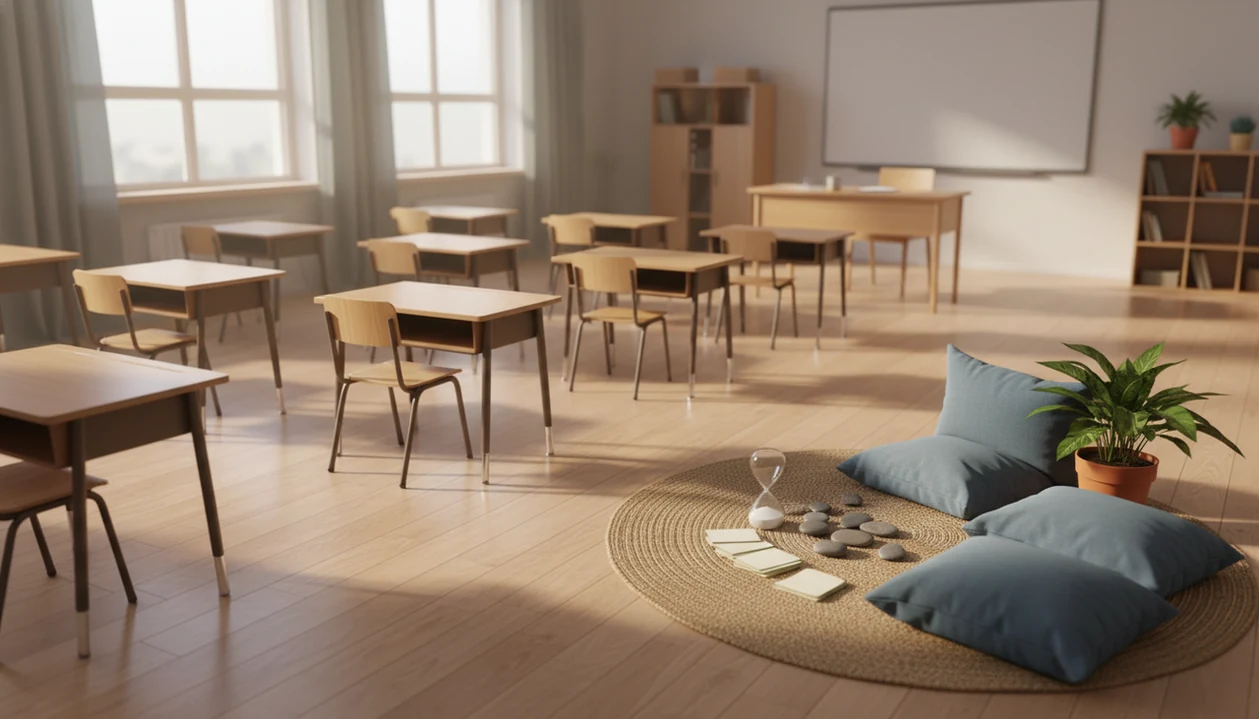


Mindfulness in schools means teaching students brief, secular attention and calming skills they can use during the school day. Students practice noticing thoughts, emotions, body sensations, and surroundings without immediately judging or reacting to them. A classroom routine might involve noticing sounds, feeling feet on the floor, or taking a few quiet breaths before a task. The aim is practical self-regulation, not religious instruction or a promise of better grades.
Useful programs fit existing routines, involve trained teachers, explain the purpose to families, and offer clear opt-out choices. Research suggests benefits for stress, attention, and behavior, but results vary. Mindfulness should complement counseling and school support, never replace them. Optional home practice can reinforce those skills.
The essentials
- Use mindfulness as a practical self-regulation skill, not a religious lesson or grade-boosting promise.
- Start with teacher practice, short routines, family communication, and clear opt-out options.
- Home tools such as MindTastik can support sleep, anxiety, focus, and everyday calm, but they should complement school guidance.
Mindfulness in Schools Definition for Parents and Educators
Mindfulness in schools is a secular attention and emotion-regulation practice taught through short, repeatable classroom routines. It helps students notice what is happening inside and around them before choosing what to do next.
In practice, that may look like three quiet breaths before a quiz, a body scan after lunch, mindful movement before reading, or a listening exercise during a noisy transition. It can also be a test-prep calming moment, where students feel their feet on the floor and name one helpful next step.
It is not a religion lesson. It is not “emptying the mind.” It should not force stillness on a child whose body needs a safer option. The classroom goal is simple: notice, pause, choose a response.
Small pause. Real skill.
Mindfulness in Schools Research: Benefits, Evidence, and Nuance
The research on mindfulness in schools is promising, but it is not a blanket guarantee. Benefits appear more consistent for stress, attention, behavior, and classroom climate than for grades.
- A 2022 systematic review of 77 randomized and quasi-experimental studies found small but significant improvements in student mental health, mindfulness, and executive function. Source: source
- The same review reported effect sizes of g = 0.21 for mental health, g = 0.32 for mindfulness, and g = 0.24 for executive function.
- A 2017 meta-analysis of 24 school-based mindfulness studies, with about 3,977 students, found effects on mindfulness, executive function, and prosocial behavior, but not academic achievement. Source: source
- A 2012 randomized trial of 99 low-income primary school students found improved attention and reduced aggressive behavior after a 12-week mindfulness program. Source: source
- The most defensible claim is that school mindfulness may support self-regulation and classroom behavior; it should not be sold as a direct grade-improvement tool. Schools considering mindfulness to reduce bullying should pair calming practices with clear reporting procedures and consistent adult intervention.
For many classrooms, the visible change is modest. A student reaches for a breath before snapping back. That counts.
How Mindfulness in Schools Works During the School Day
Mindfulness in schools works by training attention in small, repeated moments. Students practice noticing breath, body sensations, sounds, thoughts, and emotions without immediately acting on them.
The useful mechanism is the pause between stimulus and response. In child-friendly language, that means “something happens, I notice my body, then I choose what comes next.” That pause supports executive function, which includes attention control, working memory, and flexible thinking. Put simply, students get a little more room between a feeling and an action.
Routines matter more than special events. A one-time assembly may be memorable, but it rarely changes classroom habits. A 90-second transition reset after recess can become part of the room’s rhythm. The teacher’s tone matters too. If the adult sounds rushed or performative, students usually feel it.
The chairs scrape anyway.
How to Use Mindfulness in Schools Without Disrupting Class
The easiest way to use mindfulness in schools is to attach brief practices to routines that already exist. Start small, use plain language, and watch how students respond.
1. Start with adult practice
- Practice one minute of breathing yourself before teaching it.
- Notice what feels awkward, rushed, or useful.
- Avoid asking students to do something you have never tried.
2. Set one daily routine
- Choose one moment, such as arrival, post-recess, or pre-test time.
- Keep the practice between one and three minutes.
- Repeat it for two weeks before adding more.
3. Use neutral classroom language
- Say “notice your breathing” instead of using spiritual or vague language.
- Explain that wandering thoughts are normal.
- Invite students to return attention gently.
4. Offer choice and opt-outs
- Let students look down, doodle quietly, or sit with eyes open.
- Never require closed eyes or silent sitting.
- Coordinate with counselors if a student becomes distressed.
5. Review student response
- Track transitions, focus, conflict, and comfort.
- Ask students what helps and what feels uncomfortable.
- Share the plan with families before expanding.
Best Mindfulness in Schools Practices for Different Ages
Mindfulness practices should match a student’s age, body, and need for autonomy. Short, concrete practices usually work better than long explanations.
Younger children: Use sensory noticing, belly breathing, gentle movement, short stories, and visual cues. A hand on the belly or a picture of a balloon makes the skill easier to remember. For very young children, short meditation for toddlers should stay playful and parent-led.
Middle school students: Use transition resets, test breathing, emotion labeling, and mindful listening. This age group often needs less “close your eyes” language and more practical framing, such as “settle your attention before the next task.”
Teens: Offer autonomy, privacy, stress awareness, sleep support, and exam preparation. Teens may respond better when mindfulness is framed as a choice, not a behavior correction. A private practice for meditation for teens sleep and stress can feel less embarrassing than a public classroom exercise. Families can explore mindfulness benefits for teens when choosing practices that support stress management and everyday self-regulation.
Mindfulness in Schools Program Checklist for Buy-In
A school mindfulness program needs more than a script. It needs staff readiness, family clarity, student choice, and a plan for what happens when mindfulness is not enough. Practical tips for teaching mindfulness in high school can help staff build short routines that respect student choice.
| Program area | What to have in place | Why it matters |
|---|---|---|
| Administrator support | Time, policy clarity, and realistic expectations | Programs fade when they depend on one enthusiastic teacher |
| Teacher training | Staff practice, facilitation skills, and wellbeing support | Students notice when adults are reading a script they do not trust |
| Family communication | Secular explanation, sample language, and opt-out options | It reduces confusion and builds consent |
| Student safety | Trauma-informed choices and alternatives | Some students do not feel safe closing their eyes |
| School support links | Counselor coordination and social-emotional learning alignment | Mindfulness should fit existing care systems |
| Measurement | Attendance, behavior notes, student feedback, and climate checks | Schools need simple signals, not a paperwork burden |
For younger families, a family mindfulness routine can mirror classroom language without turning home into school.
How to check whether a classroom routine is helping
A school can assess a mindfulness routine without treating quiet behavior as proof of success. Before introducing it, choose a specific purpose, such as supporting transitions or helping students settle before independent work. Then review existing attendance and behavior records alongside student feedback about comfort, attention, and stress. The 2023 review of school adjustment found small average effects on school adjustment and academic performance, which supports modest goals rather than promises of higher grades.
Include students who opt out when asking whether the routine fits the classroom. Check whether alternatives are genuinely available and whether anyone reports increased anxiety, upsetting body sensations, or intrusive memories. Adjust or stop practices that cause distress, and use the school’s referral process when needed. A review of youth school mindfulness programs describes varied interventions and outcomes, so a favorable average result does not establish that one approach suits every class.
Mindfulness in Schools at Home With Gentle App Support
Families can reinforce school mindfulness at bedtime, before homework, or after stressful days. The home version should feel ordinary: one breath before opening the backpack, two minutes of listening before sleep, or a short reset after an argument.
Meditation apps can be optional support for sleep, anxiety, focus, and everyday calm. MindTastik is a wellness app for guided meditation, sleep support, anxiety tools, self-hypnosis, and everyday calm. Apps such as MindTastik, Calm, and Headspace can give families a guided starting point, especially when a child says, “I just need something to play when my thoughts get loud.”
Use short guided meditations, breathing exercises, sleep audio, or self-hypnosis only when age-appropriate and caregiver-approved. For bedtime specifically, bedtime meditation for children should stay calm, brief, and screen-light low.
Best For and Not For: Mindfulness in Schools Fit
Mindfulness in schools fits everyday self-regulation needs. It does not fit situations that require clinical care, crisis support, or specialized services.
| Fit | Appropriate uses | Not appropriate uses |
|---|---|---|
| ✅ Best for | Everyday stress, classroom transitions, focus practice, emotional awareness, and shared regulation language | Replacing counseling, therapy, special education services, or trauma treatment |
| ✅ Best for | Helping teachers and students pause before reacting | Promising better grades or guaranteed behavior change |
| ❌ Not ideal for | Mandatory silent sitting, untrained facilitation, or culturally insensitive scripts | Students with severe distress who need individualized support |
| ❌ Not ideal for | Treating severe anxiety, depression, PTSD, self-harm risk, or worsening symptoms | Delaying referral to qualified professionals |
Clinicians typically recommend professional mental health support when a child has severe anxiety, depression, trauma symptoms, self-harm risk, or symptoms that are getting worse. For everyday worry, meditation for anxious kids may be a supportive practice when adults stay involved.
When to Seek Professional Help for a Student
Seek professional help when a student’s distress is intense, persistent, unsafe, or beyond what a classroom routine can hold. Mindfulness can support regulation, but it should never slow down counseling, medical care, or crisis response.
Red flags include talk of self-harm or wanting to disappear, panic that does not settle, trauma reminders such as freezing or shaking, sudden withdrawal, repeated tearfulness, aggressive changes, or a sharp drop in eating, sleep, attendance, or functioning. Teachers can notice patterns, offer calm choices, follow school policy, and connect the student to support. They should not diagnose, investigate trauma, promise secrecy, or act as a therapist.
- Notice the concern and move the student to a safe, supervised setting if needed.
- Contact the school counselor, nurse, administrator, or mental health team according to policy.
- Communicate with caregivers when appropriate and required, using clear, factual language.
- Document what happened, what the student said or did, and who was notified.
- Use local crisis lines or emergency services immediately if there is imminent danger to the student or someone else.
The goal is care, not a perfect script.
Guided practice for after school and bedtime
MindTastik’s kids sessions and guided meditation library can provide an optional starting point for family practice after school. Breathing exercises, focus sessions, and sleep stories offer different formats for a brief homework reset or bedtime routine. Parents can use guided sessions for their own stress support, too. Caregivers can also try meditation for moms as an optional way to manage their own stress at home.
Families should choose a format the child accepts rather than require meditation. Children who find inward attention upsetting may prefer movement or noticing their surroundings. Persistent distress needs school or clinical support, not an app alone.
What school mindfulness research cannot promise
Mindfulness in schools has real promise, but implementation quality matters. The evidence base includes mixed results, short follow-up periods, and programs that vary widely in training, length, and delivery.
- Evidence is promising but mixed; studies differ in quality, size, duration, age group, and how faithfully programs were taught.
- The 2022 review found that only 13 of 77 studies reported effects lasting three months or longer after the program ended.
- A 2019 UK cluster randomized trial in 12 secondary schools found no overall depression-risk benefit compared with usual social-emotional teaching. Source: source
- That same trial also found some evidence of worse outcomes for students already at high risk, which is a serious caution.
- Mindfulness is not a replacement for mental health care, trauma-informed support, special education, or crisis intervention.
- Forced participation, poorly trained staff, and culturally insensitive framing can backfire.
- Benefits may fade without ongoing practice, family communication, and routine integration.
- Quiet space, adult support, devices, schedule pressure, and home stress can all affect results.
A calm script cannot fix an unsafe day.
School mindfulness questions
What if mindfulness makes a student more anxious?
Stop the exercise and offer a different activity, such as eyes-open orientation or gentle movement. Increased anxiety, intrusive memories, or upsetting body sensations should not be treated as a failure to practice correctly. Persistent or intense distress calls for school support or clinical care rather than more meditation.
Can mindfulness help prevent bullying at school?
Some school reviews report improvements in prosocial behavior, classroom climate, and bullying-related incidents, but this does not establish that mindfulness alone prevents bullying. Schools still need clear reporting procedures, safeguarding, and evidence-based prevention and behavior support. A breathing exercise should never replace action to protect a student.
How can parents support school mindfulness at home?
Parents can use the same plain language and offer a brief, optional practice before homework or bedtime. Ask which activities feel helpful rather than assuming breathing is the best choice. Noticing sounds, stretching, or listening to a short guided session are possible options. Home practice should remain separate from discipline or punishment.
At what age can children start learning mindfulness?
Children can begin learning simple mindfulness skills in preschool, with activities adapted to their development. Younger children may notice sounds, explore textures, or practice gentle stretching. Older students can learn to recognize thoughts and emotions. Keep instructions concrete and offer choices rather than expecting children to sit still or close their eyes.
What are some simple mindfulness activities for the classroom?
Classroom mindfulness can include listening for nearby sounds, noticing how feet feel against the floor, or stretching with attention to movement. Students can also silently name an emotion or observe an object’s colors and textures. Offer several ways to participate, including keeping eyes open, and avoid treating stillness as the goal.
Can mindfulness help students with ADHD?
Mindfulness may help some students with ADHD practice noticing distractions and returning attention to a task, but results vary. Movement-based activities and clear, concrete instructions may be more accessible than silent sitting. Mindfulness should complement, not replace, individualized classroom accommodations, behavioral support, or treatment recommended by a qualified healthcare professional.
Do teachers need training to teach mindfulness in schools?
Training helps teachers introduce mindfulness in developmentally appropriate, inclusive ways. Useful preparation covers activity design, student choice, cultural sensitivity, and how to respond when a child feels uncomfortable. Teachers do not need to act as therapists. They should understand their limits and follow school procedures when students need additional emotional or mental health support.
How is mindfulness different from social and emotional learning?
Mindfulness focuses on noticing present experiences, such as sensations, thoughts, and feelings, without immediately reacting. Social and emotional learning is broader, covering skills such as managing emotions, building relationships, and making responsible decisions. Mindfulness can support some of these skills, but it is one possible practice rather than a complete social and emotional learning program.