
Meditation Instead Of Detention: A Practical School Reset Guide
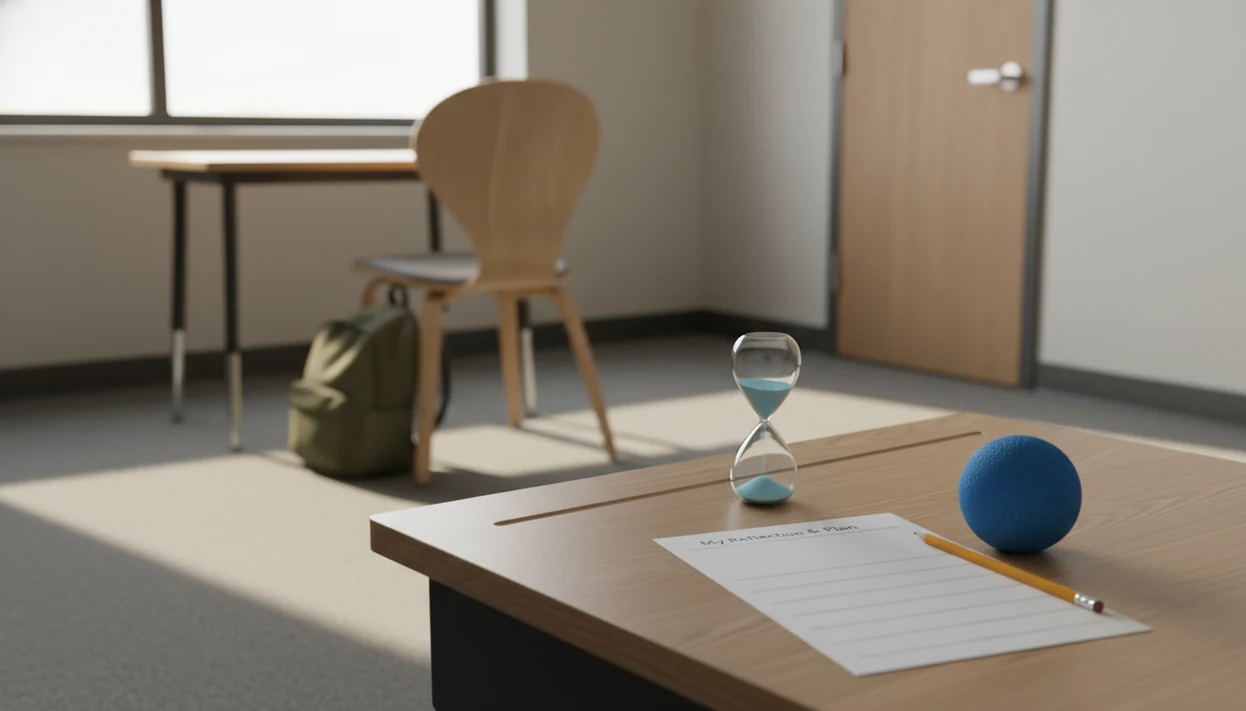


Meditation instead of detention uses structured breathing, mindfulness, and reflection after a school behavior incident so students can settle down and take responsibility. Rather than sitting silently through a punishment, a student practices self-regulation, identifies the impact of the behavior, and plans a better response. The reset may happen in a supervised room, counselor’s office, or classroom corner.
This approach works best alongside social-emotional learning, restorative conversations, clear behavior policies, and family communication. It is not a way to erase consequences or a quick fix for repeated conflict. Schools need to distinguish a student who needs help calming down from an incident that requires immediate protection, investigation, or clinical support. Guided audio can support a routine, but staff supervision and follow-through remain essential.
Meditation Instead Of Detention Meaning For Schools
Meditation instead of detention means a student completes a guided regulation and reflection process instead of sitting silently through traditional detention. It is not permissive discipline, because the student still names the behavior, its impact, and a better next action.
In practice, this may happen in a reset room, counselor office, or supervised classroom corner. A staff member might use short guided audio, a breathing script, or written reflection prompts. The student settles first, then talks.
The goal is skill-building. Social-emotional learning and mindfulness both ask students to notice feelings, pause before reacting, and choose a more workable response. For younger students, a calm down meditation for kids may be more useful than a long lecture after a hallway argument. Families can reinforce classroom skills with mindfulness books for kids that introduce noticing feelings and pausing before reacting.
Quiet is not the whole point. Repair comes next.
How Meditation Instead Of Detention Works
Meditation instead of detention works by slowing the moment between a trigger and a reaction, then using that calmer space for reflection and repair. Regulation comes before accountability, but it does not replace accountability.
A workable school sequence is simple:
- Notice the trigger that started the behavior, such as correction, teasing, frustration, noise, or feeling embarrassed.
- Name the arousal so the student can recognize a racing body, clenched hands, fast talking, or shutdown before the conversation gets bigger.
- Pause and breathe with a short guided practice that brings attention back to the present.
- Reflect on the impact once the student can think clearly enough to answer what happened and who was affected.
- Repair the situation with an apology, re-entry sentence, replacement behavior, or follow-up plan.
In school language, attentional control means being able to keep attention on the next right step, and working memory means holding that step in mind while emotions are still loud. Repetition matters because these skills become usable through many ordinary resets, not one dramatic calm-down session. The mechanism does not fit serious safety incidents involving weapons, threats, assault, self-harm risk, or situations that require investigation, caregiver contact, or emergency procedures.
Meditation Instead Of Detention Sequence During A School Day
Does meditation instead of detention change the school-day behavior sequence? It can, when the process interrupts the chain from trigger to reaction and gives the student a structured way back to thinking.
A typical sequence looks like this: trigger, emotional arousal, pause, guided regulation, reflection, repair plan. The pause matters because breathing and guided attention can reduce rumination. In plain language, the student stops replaying the conflict long enough to regain cognitive control.
How meditation instead of detention works is through repeated practice of self-regulation skills, not through one dramatic calm-down moment. Terms like working memory and attentional control mean the student can hold a goal in mind while resisting an impulse.
A 2014 meta-analysis of 42 school-based mindfulness programs and 5,081 students found small-to-moderate gains in cognitive performance and resilience, plus smaller reductions in stress and anxiety (Zenner, Herrnleben-Kurz, and Walach, 2014: source). A 2017 review also linked school meditation programs with small reductions in externalizing behaviors, while the American Psychological Association has summarized evidence connecting mindfulness practice with attention and working memory (APA overview: source).
Five Meditation Instead Of Detention Facts Parents Should Know
- It is a discipline alternative, not a reward. The student is not “getting out of trouble”; they are practicing regulation before accountability.
- It works best with trained staff and repeatable routines. A script, timer, and reflection sheet beat improvising after every incident.
- It may fit students reacting from stress, anxiety, poor sleep, or overwhelm. A child who snapped after a bad night may need a reset before a consequence conversation. For home support, families may also explore bedtime meditation for children.
- It should be paired with restorative conversations and clear expectations. The student still answers, “What happened, who was affected, and what will I do next?”
- App-based audio can make short sessions easier to run consistently. Guided audio can support breathing, focus, sleep, and everyday calm routines when adults choose age-fit content and follow school privacy rules.
How To Use Meditation Instead Of Detention In 5 Steps
Use meditation instead of detention as a written school routine, not a vague idea. The steps below keep the reset calm, brief, supervised, and tied to accountability.
1. Set the referral criteria
- Write the referral rule for when meditation is appropriate, such as disruption, test stress, minor conflict, or repeated low-level behavior.
2. Choose the reset practice
- Select a 5 to 15 minute practice using guided breathing, mindfulness, or simple body awareness based on age and attention span.
3. Guide the reflection
- Start with regulation before discussion so the student is not answering questions while still flooded.
- Ask three prompts: What happened? Who was affected? What will you do differently next?
4. Log the pattern
- Record the session type, duration, trigger, and follow-up action in a simple school log.
5. Review the next support
- Review patterns weekly and adjust supports if incidents repeat.
A counselor once told us the useful question was not “Did the student calm down?” It was, “Can they name the next move?”
Meditation Instead Of Detention Guide For Best-Fit Students
Meditation instead of detention fits some school situations better than others. It is strongest for regulation problems, not safety investigations or serious harm.
| Student situation | Best for | Not ideal for |
|---|---|---|
| Low-level disruption | Talking out, leaving seat, arguing after correction | Persistent defiance with no repair plan |
| Anxiety-driven behavior | Test stress, panic-like agitation, avoidance | Untreated crisis symptoms needing clinical support |
| Conflict recovery | Verbal peer conflict after separation | Bullying investigations or intimidation |
| Attention resets | Restlessness, frustration, focus loss | Incidents involving weapons or threats |
| Sleep-deprived students | Irritability after poor sleep | Cases requiring legal, safety, or emergency procedures |
Trauma histories and neurodivergent profiles may need open-eye, movement-based, or choice-based alternatives. A student may prefer counting steps slowly over closing their eyes in a room with adults. Families seeking additional support can explore mindfulness for parents of autistic children while respecting each child’s sensory needs and preferences.
Serious behavior still needs school policy, caregiver contact, and appropriate escalation. Clinicians typically recommend that mental health concerns be handled with qualified support, especially when anxiety, trauma, self-harm risk, or aggression is present.
Meditation Instead Of Detention Tips For Reset Rooms
A reset room should be quiet and supervised, not an unsupervised isolation room. Students need enough calm to reset, plus enough adult presence to stay safe and accountable.
Use these named parts:
- The supervised seat: Place the student where staff can observe without hovering.
- The timed reset: Offer 5, 10, or 15 minutes based on age, incident severity, and attention span.
- The reset kit: Include headphones, age-appropriate audio, a timer, reflection sheet, calm visual cue, and staff script. Alongside audio, staff can offer children’s books with mindfulness messages as optional reading for practicing calm outside reset sessions.
- The playlist map: Organize audio by sleep, anxiety, focus, breathing, and everyday calm.
- The return plan: End with one sentence the student can use when re-entering class.
Image caption guidance: “A supervised school reset space with headphones, a timer, and reflection prompts for meditation instead of detention.”
For younger grades, a meditation for kids app should be reviewed by adults before classroom use.
Offer a reset without forcing meditation
A reset routine should offer choices rather than require closed eyes, silence, stillness, or attention to breathing. A student might look around and name objects, notice sounds, feel their feet against the floor, stretch, or use gentle movement. The review of youth school mindfulness programs reports potential benefits across varied interventions, not proof that one exercise suits every student. When offering choices, consider whether shielding kids from boredom limits their opportunities to practice tolerating ordinary discomfort.
Explain the purpose in age-appropriate language, seek the student’s agreement, and provide a non-meditative alternative without penalty. Declining meditation does not remove the expectation to discuss the incident and make a repair plan. Staff should stop or change the exercise if anxiety, intrusive memories, upsetting bodily sensations, or a sense of disconnection increases. Communicate these choices and limits to families before the routine becomes part of school discipline.
Research Evidence Behind Meditation Instead Of Detention Programs
Direct research on replacing detention with meditation is limited. The related evidence comes from school mindfulness, youth anxiety, attention, stress, and behavior studies.
A 2014 meta-analysis of 42 school-based mindfulness programs involving 5,081 students found small to moderate improvements in cognitive performance and resilience, along with small reductions in stress and anxiety. Another 2014 systematic review reported that about 60% of youth mindfulness studies showed significant reductions in anxiety or stress symptoms.
A 2021 randomized clinical trial of 99 youths with generalized, social, or separation anxiety disorder found a 40% remission rate after mindfulness-based cognitive therapy, compared with 22% in the control condition (study record: source). That finding is about clinical anxiety care, not school discipline, so it should not be stretched into a claim that meditation replaces counseling or behavior policy.
For repeated low-level behavior, meditation usually works best when it is paired with clear expectations, restorative repair, and adult follow-up, while traditional detention fits cases where schools need a documented consequence.
No study means “meditation cures behavior problems.” The evidence is promising, but careful.
Measure what happens after students return to class
A quiet reset room is not enough to show that a program works. Schools should review attendance, behavior incidents, classroom climate, and student well-being over time. The 2023 review of school adjustment found small effects on overall school adjustment and academic performance, supporting mindfulness as a supplementary practice rather than a stand-alone academic intervention.
Before introducing the routine, decide which outcomes staff will record and how often the team will review them. Check whether students return to class, complete reflection and repair, and need repeated referrals. Include student feedback about comfort and choice, not just adult reports of compliance. If distress rises or incidents continue, revise the approach and use referral pathways for students who need more support.
MindTastik Support For Meditation Instead Of Detention Routines
In a school context, guided audio can help adults standardize reset sessions when staff need a predictable structure.
The practical value is consistency. A counselor can choose a 5-minute breathing exercise instead of inventing a script while a student is upset. Families can use sleep audio at home when tired mornings keep turning into school conflict. Focus meditation may support classroom readiness, and everyday calm practice can make the reset feel familiar.
Schools and families still need to consider consent, device access, privacy, supervision, and age fit. MindTastik is not therapy, clinical treatment, or a replacement for school counselors. Caregivers can also consider meditation for parents as personal stress support, separate from a child’s school behavior plan.
For teens, routines often work better when they feel private and not childish; meditation for teens sleep and stress covers that age fit more directly.
Guided audio for school resets and home routines
MindTastik’s breathing exercises can provide a consistent starting point for supervised resets when staff have checked the session for age fit. Its kids sessions and sleep stories may also support family routines outside school. Students who find breath attention distressing need a non-breathing option, not more prompting to comply. Schools needing behavior assessment, crisis care, or safeguarding support should use qualified staff and established procedures rather than an app.
What a meditation reset cannot replace
Meditation instead of detention has real promise, but it has boundaries. Schools should name those limits before launching a program.
- Evidence is promising but mixed, and research specifically on meditation replacing detention is limited.
- A one-off meditation session is unlikely to fix chronic behavior without broader support.
- Some students may find eyes-closed meditation uncomfortable, unsafe, boring, or triggering.
- Poorly trained staff can turn the practice into another timeout rather than a skill-building intervention.
- Meditation cannot replace safety policies, restorative repair, counseling, family communication, or crisis response.
- Commercial app use requires device access, connectivity, privacy safeguards, and age-appropriate content review.
- Students with trauma histories may need choice, movement, open eyes, or counselor-supported alternatives.
- Serious incidents still require documentation, caregiver contact, and school escalation procedures.
A reset is not a loophole. It is a pause with a plan.
Families who want home practice may start with a simple family mindfulness routine before expecting a child to use the skill during conflict.
Questions about meditation instead of detention
Does meditation instead of detention actually work?
Direct research on replacing detention with meditation is limited. Studies of school mindfulness programs report average improvements in areas such as attention, emotional regulation, and anxiety, but results vary. Those findings do not prove that a meditation reset reduces repeat incidents in every school. Staff should track behavior, student well-being, and follow-through.
Do students still face consequences after a meditation reset?
Yes. A reset gives students a chance to regulate before discussing what happened; it does not erase responsibility. The next step should identify the behavior, its impact, and an appropriate repair or consequence under school policy. Meditation should not replace safeguarding, bullying investigations, or responses to threats and serious harm.
How long should a school meditation reset last?
The attention exercise can be brief, often one to five minutes, with additional time for reflection and a return plan. A reset appointment does not need to mean continuous meditation. Age, attention span, comfort, and the student’s response should guide the length rather than a fixed requirement to sit quietly.
What if a student refuses to meditate?
Offer a non-meditative regulation option without penalizing the refusal. Choices can include noticing objects in the room, grounding through the feet, stretching, or gentle movement. The student can still be expected to discuss the incident and complete a repair plan. Participation in meditation and accountability for behavior are separate issues.
Is school meditation safe for students with trauma?
It is not automatically suitable for every student. Closed eyes, breath attention, or enforced stillness may be distressing. Offer eyes-open and movement-based options, avoid requiring personal disclosure, and stop if distress increases. Staff need referral pathways when a student experiences intrusive memories, marked anxiety, or a sense of disconnection.
Can meditation replace a school’s response to bullying?
No. A calming exercise may support a student after separation from a conflict, but it cannot determine what happened or protect someone from ongoing intimidation. Schools still need investigation, safeguarding, clear behavior expectations, and established bullying interventions. A student becoming calm is not evidence that the harm has been resolved.
What should parents ask about a school reset program?
Ask which incidents qualify, who supervises, what choices students have, and what happens after the reset. Families should know how staff handle refusal or distress, protect privacy, and communicate repair plans. It also helps to ask how the school checks whether the routine improves behavior and well-being over time.
Can teachers lead meditation instead of detention?
Trained teachers can guide brief, developmentally appropriate regulation exercises within a clear school routine. They need agreed referral criteria, student choice, supervision, and a reflection process. Leading a breathing exercise does not qualify someone to manage a clinical crisis, investigate serious harm, or replace specialist support.