
How to Raise Empathetic Kids: A Practical Parent Guide
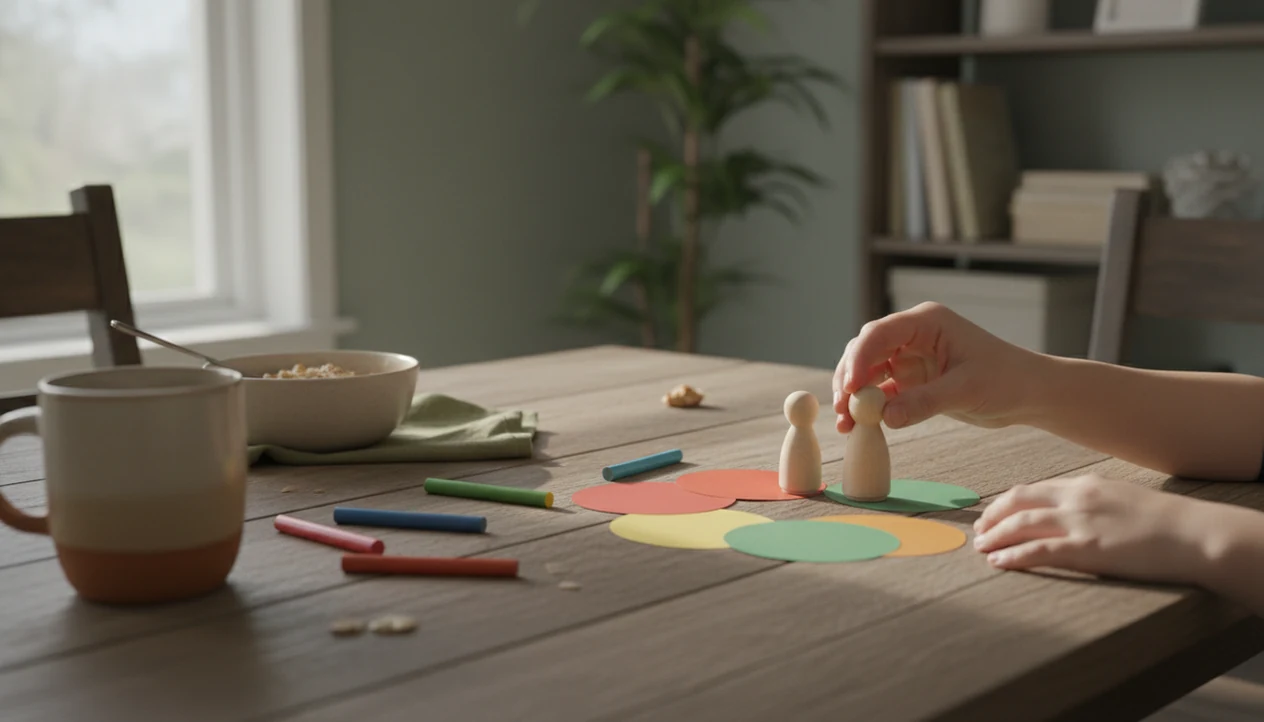


To raise empathetic kids, help children name emotions, model calm and caring behavior, and practice considering another person’s point of view during everyday conflicts. Empathy means noticing feelings, understanding someone else’s perspective, and responding with care while respecting healthy limits. It is not the same as instant obedience, and it develops through repeated conversations and small caring actions, not lectures alone.
Family life provides plenty of practice: returning a grabbed toy, listening to a disappointed sibling, or apologizing after speaking sharply. Clear boundaries and face-to-face interaction make these lessons concrete. Breathing, meditation, and sleep support may help children and parents settle big emotions enough to listen, but they cannot replace real conversations, consistent caregiving, or repair after harm.
The essentials
- Empathy starts with emotional literacy: children need words for feelings before they can understand those feelings in others.
- Parents teach empathy most powerfully through modeling: calm listening, repair after conflict, respectful limits, and kindness in daily life.
- Meditation, breathing, and sleep support can help children and parents regulate big emotions, but they do not replace real conversations and consistent caregiving.
Empathy Skills in Daily Family Life
Empathy is the ability to notice feelings, understand another person’s point of view, and choose a caring response. It is not the same as being quiet, polite, or instantly obedient.
A child can say “sorry” because an adult demanded it and still not understand what happened. Empathy goes deeper. It asks, “What did my brother feel when I grabbed the marker?” or “Why did my friend stop talking after that joke?”
Kindness is the visible behavior. Empathy is the inner perspective-taking that can guide that behavior.
Clear limits still matter. If a child hits, excludes, mocks, or destroys something, empathy does not mean brushing it off. A calm parent can say, “I won’t let you hurt her. We’re going to stop, then repair.” That sentence teaches care and boundaries at the same time.
How Raising Empathetic Kids Works
Raising empathetic kids works by helping children move from “I feel something” to “someone else feels something too.” Parents build that bridge through feeling words, steady adult responses, repair after conflict, and limits that protect everyone involved.
Before a child can truly take another person’s perspective, they need emotional literacy: simple language for what is happening inside. “You’re disappointed,” “She felt left out,” and “That was embarrassing” give children a map. Then comes co-regulation, which means an adult lending calm when a child cannot find it alone. Children copy the grown-up nervous system in the room: the sigh, the pause, the softened voice, the apology after a sharp moment.
A useful pattern is:
- Name the feeling without shaming the child.
- Pause long enough for bodies to settle.
- Ask one short perspective question.
- Set the limit clearly: “I won’t let you hit.”
- Guide repair with one concrete action.
Repair is where empathy becomes practice. The child learns that harm can be named, boundaries can stay firm, and relationships can still be mended.
Children’s Brains, Feelings, and Empathy Behaviors
Raising empathetic kids works by building three linked skills: emotional literacy, self-regulation, and perspective-taking. Children usually need to recognize their own feelings before they can understand similar feelings in someone else.
How empathy works: children build “affective empathy,” feeling with another person, and “cognitive empathy,” thinking about what another person may feel or need. In plain language, they learn both the heart part and the thinking part.
They also copy adult regulation. This fits child-development research on responsive adult-child interaction, including Harvard’s Center on the Developing Child guidance on serve-and-return relationships: source If a parent slams a drawer, mutters through clenched teeth, then later apologizes, the repair teaches more than a lecture would. If the parent pauses and breathes first, that teaches something too.
Children read faces, tone, posture, and body language long before they can explain them. A tight jaw at the dinner table. A sibling turned away on the couch. Those small cues become teachable moments when adults slow down and name what they see.
Five Empathy Facts Parents Should Know
- Children need feeling words before they can identify emotions in others. “Frustrated,” “left out,” and “embarrassed” give them more tools than “mad” alone.
- Parents model empathy through listening, conflict repair, and boundaries. The child watches how you answer a tired partner or apologize after snapping.
- Perspective-taking needs repeated practice in real situations. The playground, the car ride home, and the sibling argument all count.
- Reading faces and tone is a teachable skill. Try asking, “What does his face tell you?” before jumping to a moral lesson.
- Helping, sharing, volunteering, and repair actions make empathy concrete. For many children, carrying a bandage to a hurt sibling teaches more than a speech about caring.
For younger children who need shorter body-based practice, short meditation for toddlers can support calm before a feelings conversation.
Before You Start: Set Up Empathy Practice
Before you start empathy practice, make the moment small, calm, and clear. Children learn more when their bodies are settled, the words are familiar, and the adult is not asking empathy to replace limits.
- Choose a low-conflict opening. Start during a quiet car ride, bedtime check-in, or after everyone has cooled down, not while a child is yelling, hiding, or flooded with shame.
- Use feeling words your child already knows. “Sad,” “mad,” “scared,” “left out,” and “proud” may work better than a long emotional vocabulary lesson.
- Explain the boundary first. You can say, “We can care about his feelings, and you still need to return the toy.” Empathy helps with repair; it does not erase consequences.
- Keep the practice brief. One feeling, one perspective question, and one repair action are often enough, especially for younger children.
- Repeat gently. Short practice in ordinary moments builds the habit better than one serious family lecture.
Five-Step Empathy Practice Plan for Home
Use empathy practice right after real moments, not only during calm family talks. The most useful plan is short, repeatable, and connected to what just happened.
1. Name the feeling
Say what you notice: “You looked angry when the game ended,” or “She seemed sad when nobody saved her a seat.” Keep your voice plain.
2. Ask how it felt
Ask one perspective question: “How do you think that felt for him?” If your child shrugs, offer two choices.
3. Model the repair
When you lose patience, say, “I spoke too sharply. I’m sorry. I’ll try that again.” Repair is not weakness.
4. Choose one caring action
Pick something concrete: return the toy, draw a card, invite the child back into the game, or help clean the spill.
5. Reflect at bedtime
Ask, “What was one kind thing today, and what was one hard moment?” The room is often quieter then. The answers get more honest.
Empathy Tips by Child Age Group
Empathy teaching should match a child’s age and social world. Toddlers need simple labels, while teens can discuss identity, pressure, exclusion, and online harm.
Toddlers and preschoolers
Use short phrases: “Ouch, that hurt him,” “She’s crying,” or “Gentle hands.” Pair correction with comfort, not a long courtroom speech.
School-age children
Talk about fairness, sharing, friendship conflict, and being left out. A child who can describe “not fair” can start to understand another child’s version of the same event.
Tweens and teenagers
Discuss social pressure, group chats, race, exclusion, identity, and what it means to speak up. In a 2022 Pew survey, 63% of U.S. parents said they had discussed race or racism with their children at least once source. Those conversations may feel awkward, but avoiding them teaches silence too.
For older children who need stress support before hard talks, meditation for teens sleep and stress can be one gentle starting point. For older children using audio apps, review meditation app safety for teens together before choosing sessions or sharing personal information.
Calm Tools for Empathy: Best For and Not For
Calm tools can support empathy when big emotions are blocking listening. They work best as a bridge into conversation, not as a substitute for parenting. If worry makes listening difficult, meditation for anxious kids may offer a calming pause before you return to the conversation.
| Tool or routine | Best for | Not ideal for |
|---|---|---|
| Breathing exercise | Calmer transitions before apology, repair, or listening | Replacing consequences after harm |
| Guided meditation | Parent regulation before a hard conversation | Teaching empathy without real interaction |
| Sleep audio | Bedtime reflection and a steadier wind-down routine | Avoiding the next-day repair |
| Family reflection prompt | Naming kind actions and hard moments | Forcing a child to perform remorse |
Regulated adults usually respond more empathetically because they can pause before correcting. That pause matters when a child is crying in the hallway and another child is shouting over the story.
Tools like MindTastik can support adults with sleep audio, breathing exercises, anxiety support, and everyday calm routines.
What mindfulness research can tell parents about empathy
Research offers some support for mindfulness-related skills, but it does not establish that meditation reliably makes children more empathetic. A 2022 review of kindness- and compassion-based meditation covered 10 studies involving 807 children. It found statistically significant improvements in 26 of 55 wellbeing measures, including benefits in some studies for stress, self-compassion, resilience, and gratitude. The authors cautioned that the overall evidence base was not yet strong.
These findings should not be treated as proof that a short home audio session will change a child’s behavior toward siblings or classmates. A 2023 review of group mindfulness interventions also found mixed results for children’s emotion regulation. The practical distinction is important: calming practice may support the attention and self-regulation needed for a conversation, while understanding another person’s feelings and choosing a repair still require everyday interaction.
Common Empathy Mistakes Parents Can Avoid
The most common empathy mistake is telling a child to “be nice” and stopping there. Nice is too vague. Children need help seeing the feeling, the impact, and the repair.
Do not confuse empathy with permissiveness. A child can understand another person’s feelings and still lose a privilege, redo a task, or make amends. Boundaries help empathy become responsible behavior.
Try not to use screens as the main teacher of feelings. Some media can spark good conversations, but children still need faces across the table, a friend’s tone on the playground, and a sibling’s real reaction.
The American Academy of Pediatrics recommends judging screen habits by the quality of the content, the family’s circumstances, and the activities screens replace, rather than treating every kind of screen time alike. Before choosing children's audio tools, review kids meditation app safety to check privacy, parental controls, and age suitability.
Don’t shame a child for lacking empathy in a hard moment. Stress, hunger, embarrassment, and impulse control can all get in the way.
And when you lose patience, don’t skip repair. The parent apology is often the lesson the child remembers.
Family Routines That Build Empathy Skills
What family routines build empathy skills? The strongest routines are small, repeated conversations that help children notice feelings, read cues, and practice repair.
At dinner, try a quick feeling check-in: “What was one good feeling today, and one hard one?” Keep it brief. Some nights the answer is only “fine.” Still useful.
At bedtime, ask for one kind action and one difficult moment. A child may mention sharing a pencil, ignoring a classmate, or feeling left out at recess. Bedtime reflection pairs well with bedtime meditation for children when a child needs a softer landing.
Use screen-free moments to practice reading tone and facial expressions. “Did Grandma sound tired or angry?” is a real empathy question.
After sibling conflict, create a repair ritual: stop, name, listen, fix one thing. Parents who need to settle their own bodies first can use parent and child breathing exercises before the conversation.
Calming sessions before a family conversation
MindTastik’s kids sessions and breathing exercises can provide a pause before discussing a sibling argument or a difficult school day. Guided meditation may also suit a parent who needs to settle before responding. These are supports for regulation, not lessons that automatically produce empathy.
Families looking for help with perspective-taking still need live conversation and practice making amends. A screen-free pause may be a better fit when audio adds distraction or a child does not want to participate.
Empathy develops gradually, and calming tools have limits
Empathy advice can help, but it cannot promise a fast personality change. Children develop at different speeds, and family context matters.
- Empathy grows gradually and differs by age, temperament, neurodiversity, stress level, and home environment.
- Lectures alone rarely build empathy without adult modeling, practice, and real repair.
- No app, worksheet, script, or audio session can replace consistent caregiver behavior.
- Screen-based calming tools should not replace unstructured play, friendship practice, or live conversation.
- Meditation may support regulation, but it is not a stand-alone fix for aggression, cruelty, anxiety, or behavior problems.
- Persistent aggression, withdrawal, panic, sadness, or distress may need support from a pediatrician, therapist, school counselor, or other qualified professional.
- The CDC reported that 40% of U.S. high school students experienced persistent feelings of sadness or hopelessness in 2023, so emotional concerns deserve careful attention source.
- MindTastik should be understood as adult support for meditation, sleep, breathing, self-hypnosis, anxiety support, and everyday calm, not as child therapy or behavior treatment.
For families building a repeatable rhythm, a family mindfulness routine can support calm moments around the real empathy work.
Questions about teaching kids empathy
Can empathy be taught to children?
Children can practice the skills involved in empathy: naming feelings, considering another person’s perspective, and choosing a caring response. Everyday situations make these skills concrete. Returning a toy or listening to an upset friend gives a child something to do, rather than only an instruction to be nice.
At what age should parents start teaching empathy?
Empathy practice can begin with simple language in toddlerhood, such as “That hurt” or “She’s sad.” Preschoolers need short explanations and adult help. School-age children can discuss fairness and friendship conflicts, while teenagers can consider exclusion and social pressure. There is no single age when empathy becomes complete.
Why does my child seem to have no empathy?
One hurtful response does not establish that a child lacks empathy. Age, temperament, stress, neurodiversity, and the situation can affect how a child notices or responds to feelings. Start with the specific behavior and its impact. Keep the boundary clear, then revisit the other person’s perspective once everyone is calmer.
Should I force my child to say sorry?
A demanded apology can produce the word “sorry” without understanding. Focus on what happened, who was affected, and what repair is possible. A child might return an item, help fix something, or try speaking again respectfully. An apology matters more when it accompanies understanding and a concrete caring action.
How do I teach empathy after a sibling fight?
Stop harmful behavior and state the boundary before asking for perspective-taking. Once the children are calmer, name each child’s feelings without excusing the harm. Ask one short question about the impact, then choose a repair, such as returning the toy. Avoid turning the conversation into a long lecture.
How can I teach empathy without making my child a people-pleaser?
Teach care and limits together. Understanding someone’s disappointment does not mean giving them everything they want or accepting hurtful behavior. A child can acknowledge another person’s feelings while keeping a boundary. Empathy should guide a respectful response, not require the child to ignore their own feelings or needs.
Does screen time stop children from developing empathy?
Screen use is not one uniform activity. Some media can prompt useful conversations about feelings, but screens should not become the main teacher of social cues. Children also need live opportunities to hear tone, notice reactions, handle disagreements, and repair harm. Consider what screen use is replacing in family life.
Can meditation make children more empathetic?
Meditation may support attention or regulation, which can make listening easier, but direct improvements in empathy are not guaranteed. Research findings vary across programs and outcomes. Keep any practice brief and suited to the child, then connect it to real conversation and caring action rather than expecting meditation alone to change behavior.