
The Heart Chakra: Everything You Need to Know for Calm, Compassion, and Emotional Balance
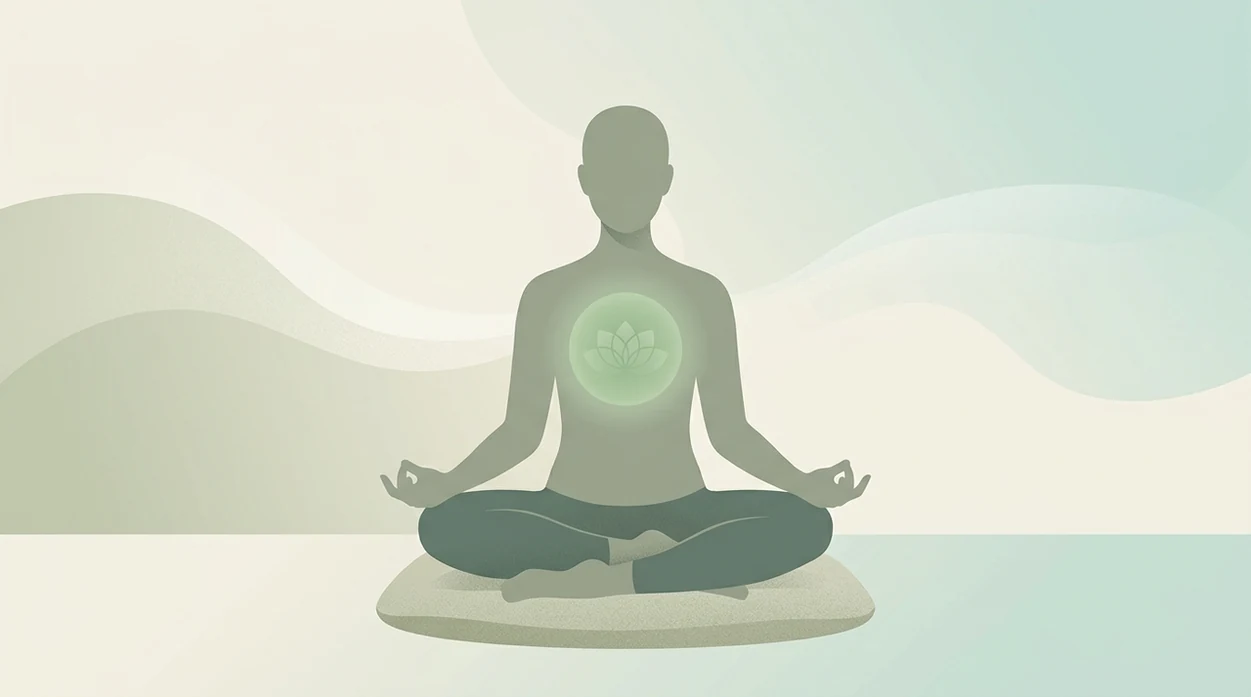


Heart chakra meditation is a chest-focused practice that uses breath awareness, gentle imagery, and compassionate phrases to reflect on love, trust, grief, and emotional balance. In yogic traditions, the heart chakra is called Anahata and is described as the fourth chakra, centered in the chest. Its location and symbolism offer a focus for meditation, not a description of human anatomy or a way to diagnose illness.
The practice overlaps with mindfulness and loving-kindness meditation. It can be used for everyday calm or a sleep wind-down without requiring belief in a physical energy system. This guide treats chakra language as a symbolic framework, not a medical claim. Heart-chakra practice should complement, never replace, mental-health support or cardiac care.
The essentials
- The heart chakra is traditionally described as the fourth chakra, located at the center of the chest and linked with compassion, forgiveness, self-love, and connection.
- Heart-chakra meditation is best understood as a symbolic, mind-body practice that overlaps with mindfulness, breathwork, and loving-kindness meditation, not as a proven physical energy system.
- Use heart-chakra practices gently, especially if you have trauma, intense grief, anxiety disorders, depression, or heart disease; they are complementary wellness tools, not replacements for professional care.
The Heart Chakra Everything You Need to Know at a Glance
The heart chakra, called Anahata in many yogic traditions, is the fourth chakra and is usually placed at the center of the chest. It is used as a meditation framework for compassion, grief, forgiveness, trust, and emotional openness.
Chakra language is not modern anatomy. You will not find a “heart chakra” on a scan or in a cardiology textbook. Still, related practices such as mindfulness, breath awareness, and loving-kindness meditation have research support for stress and emotional regulation. A 2014 JAMA Internal Medicine meta-analysis of 47 randomized trials found small to moderate improvements in anxiety, depression, and pain from mindfulness meditation programs JAMA Internal Medicine study: 1809754.
The practice is simple on purpose. One quiet breath, one softened jaw, one phrase you can repeat without forcing it.
Guided breathing, sleep audio, and short meditation sessions can help make the practice repeatable.
5 Heart Chakra Facts Every Beginner Should Know
- Fact 1: The heart chakra is called Anahata and is traditionally described as the fourth chakra in yogic systems.
- Fact 2: It is associated with love, compassion, connection, forgiveness, grief, trust, and emotional balance.
- Fact 3: Common practices include breath awareness, chest-focused attention, green-light visualization, loving-kindness phrases, and gentle yoga.
- Fact 4: Research supports related practices such as mindfulness and compassion meditation, not chakra-specific physical claims.
- Fact 5: People with heart disease, trauma histories, major depression, or anxiety disorders should use heart-chakra meditation as a gentle complement to professional care.
A beginner does not need a dramatic “opening.” Many people start by noticing how guarded the chest feels after a hard conversation or a lonely evening. That counts as practice.
For beginners, heart-chakra meditation is often easier than silent meditation because it gives attention a clear emotional anchor.
Heart Chakra Meaning, Location, Color, and Symbol
The heart chakra is a symbolic meditation center linked with compassion and emotional connection, not a physical organ or diagnostic sign. Its traditional language gives the mind something steady to focus on.
Heart chakra location
Anahata is commonly placed at the center of the chest, near the breastbone. That does not mean it sits inside the physical heart. In practice, the “location” works like a focus point, similar to noticing the breath at the nose or belly.
Heart chakra color meaning
Green is the most common color associated with the heart chakra. Some traditions also connect Anahata with air, balance, softness, and openness. A soft green image can be useful during meditation, but it is not a medical signal. If you prefer a tangible meditation anchor, explore heart chakra crystals for safe meditation as optional symbols rather than healing tools.
Heart chakra symbol
Common symbols include a lotus, intersecting triangles, and the Sanskrit name Anahata. These images are meditation anchors. Readers exploring symbolic practices may also enjoy how positive affirmations the importance of balance in the chakras frames balance as a repeated practice, not a fixed state.
How the Heart Chakra Works in Meditation and Breath Awareness
Heart-chakra meditation works as a structured attention practice: you bring awareness to breathing, chest sensation, emotion labeling, imagery, and compassionate intention. In plain terms, you give the mind one gentle place to return when it starts replaying conflict, loss, or fear.
The mechanism overlaps with mindfulness skills. Attention training helps you notice wandering. Interoception means sensing the body from the inside, such as tightness across the ribs or warmth under the collarbone. Emotion regulation comes from naming what is present instead of immediately reacting to it.
Loving-kindness phrases add rehearsal. Saying “May I be safe” or “May I meet this feeling with kindness” gives the nervous system a different script to practice. A 2018 systematic review of loving-kindness and compassion meditation reported moderate improvements in positive emotions and compassion, with smaller effects on depression and anxiety across 22 studies. NIH research: PMC6081743
In a quiet corner before sleep, resting a palm over the heart and repeating one gentle phrase can feel simpler than sorting through every emotion at once.
How to Use Heart Chakra Meditation in the MindTastik Meditation App
MindTastik can be used as a guided meditation app for sleep, anxiety support, beginner meditation, and everyday calm. For heart-chakra practice, keep the session short enough that you can finish without feeling trapped.
- Choose a starting point based on your goal: sleep audio, breathing exercise, loving-kindness track, or self-hypnosis session.
- Set the session length to 3, 5, or 10 minutes if you are new or emotionally tender.
- Lower the stimulation by dimming the phone screen and placing earbuds within easy reach.
- Follow the breath at the chest without pushing for a special feeling.
- Stop or switch tracks if distress, panic, or painful memories intensify.
- Repeat gently on ordinary days, not only when everything feels overwhelming.
A randomized controlled trial of a 10-day app-based mindfulness program found reductions in self-reported stress and irritability compared with a control condition journals reference: article. A good meditation app for sleep, anxiety support, and everyday calm delivers repeatable guided support, not a diagnosis, cure, or guarantee.
Blocked Heart Chakra Symptoms as Emotional Patterns
“What are blocked heart chakra symptoms?” A blocked heart chakra is best understood as a metaphor for emotional patterns, not a medical diagnosis.
Blocked heart chakra symptoms
Common patterns include resentment, guardedness, difficulty trusting, harsh self-criticism, grief that feels stuck, fear of closeness, and people-pleasing. Someone might describe needing a steady cue to settle into when the room grows quiet, because that is often when the pattern becomes easiest to notice.
Heart chakra opening symptoms
People sometimes describe “opening” as warmth in the chest, tears, sadness, relief, or a softer attitude toward themselves. Treat those as subjective meditation experiences, not proof that an energy center has changed.
Chest pain, shortness of breath, fainting, pressure, numbness, or unusual heart symptoms need medical care. Do not interpret those signs through chakra language.
Forgiveness does not require renewed contact
Forgiveness is often included in heart-chakra advice, but a meditation phrase is not equivalent to a structured forgiveness intervention. A 2014 meta-analysis of forgiveness treatments found improvements in forgiveness, with benefits for depression, anxiety, and hope compared with no-treatment controls. Those results concern explicit treatments, not proof that chest visualization alone produces the same changes.
Research guidance describes forgiveness as a process rather than a single decision. It can involve recalling the offense, considering perspective, and working through persistent resentment. Crucially, forgiveness does not require reconciliation or excusing abuse. A heart-focused practice can therefore leave boundaries intact. Renewed contact, disclosure, or forgiving a particular person should not become a condition for completing a meditation. A gentle forgiveness meditation can offer space to reflect on resentment without requiring renewed contact or reconciliation.
Heart Chakra Practices for Sleep, Anxiety Support, and Everyday Calm
Heart-chakra practices can support sleep routines, anxiety support, and everyday calm when they are short, repeatable, and emotionally safe. In the U.S., about 31.1% of adults experience an anxiety disorder at some time in their lives, per NIMH, so accessible supportive tools matter nimh reference: any anxiety disorder.
| Practice | Best use case | Session length | Safety note |
|---|---|---|---|
| Breath awareness | Quick anxiety support | 3 to 5 minutes | Keep the breath natural |
| Loving-kindness meditation | Self-criticism or resentment | 5 to 10 minutes | Use neutral phrases if strong feelings arise |
| Green-light visualization | Emotional softening | 5 minutes | Skip imagery if it feels forced |
| Journaling prompt | Grief, conflict, forgiveness | 10 to 15 minutes | Stop if rumination increases |
| Gentle yoga | Body tension and guarded posture | 10 to 15 minutes | Avoid strain or pain |
| Sleep-focused audio | Bedtime wind-down | 10 to 20 minutes | Choose calming, not emotionally intense, tracks |
For anxious nights, a 5-minute breathing exercise usually works better than a 20-minute body scan because it asks less from an already tired mind.
Heart Chakra Affirmations and Loving-Kindness Phrases
Heart-chakra affirmations work best when they are believable, gentle, and repeatable. They are not forced positivity. If a phrase makes you argue with yourself, soften it.
- Self phrase: “May I be safe.” Use this when your body feels tense or defended.
- Kindness phrase: “May I meet this feeling with kindness.” This fits sadness, shame, or irritation.
- Paced opening phrase: “I can open at my own pace.” This helps when closeness feels risky.
- Connection phrase: “May we both be free from unnecessary suffering.” Use this for a trusted person first, then maybe a neutral person.
- Difficult-person phrase: “May I hold boundaries and stay kind.” Skip this if it feels unsafe.
Compassion meditation research shows clearer improvements in positive emotions and compassion than in anxiety or depression. If you use crystals as meditation anchors, the ritual side is covered more fully in how to meditate with crystals 10 best meditation crystals.
Self-compassion evidence supports practice, not chakra claims
A 2021 review of self-compassion interventions combined 19 studies involving 1,350 participants. It found a medium reduction in self-criticism compared with control conditions. The authors also reported moderate study quality and substantial differences across studies. That finding supports a measured case for self-compassion exercises, not a claim that opening Anahata changes a physical energy center.
A concrete exercise is to describe a recent mistake in the balanced language normally offered to a valued friend. Name what happened, acknowledge the painful feeling, and identify something that can be repaired or learned. This keeps kindness connected to responsibility rather than forced positive thinking. The evidence does not establish that self-compassion improves every outcome or replaces psychotherapy. For mistakes that still weigh on you, a self-compassion forgiveness practice can pair kindness with honest reflection and responsibility.
Heart Chakra Misconceptions in Popular Healing Advice
Heart-chakra language can be meaningful without turning into medical misinformation. The safest approach is to respect the metaphor and avoid making claims the practice cannot support.
| Myth | Fact |
|---|---|
| Opening the heart chakra physically heals heart disease. | Meditation may support stress management, but it does not heal heart disease or replace medical care. |
| Balance means you never feel grief, anger, fear, or conflict. | Emotional balance means you can notice feelings without being ruled by every one of them. |
| Heart-chakra meditation requires a religion. | It can be used spiritually or secularly, depending on the person. |
| No dramatic release means failure. | Quiet practice still counts, even when nothing cinematic happens. |
| A blocked chakra explains every relationship problem. | Relationships also involve history, behavior, safety, communication, and support. |
No fireworks. Sometimes the real shift is just not sending the text you would regret.
People who enjoy crystal symbolism may compare this with zodiac-based guides such as crystals for taurus best 10 healing gemstones, but symbolism should not be treated as evidence.
When to Seek Professional Help for Heart, Anxiety, or Trauma Symptoms
Seek professional help when symptoms feel urgent, persistent, unsafe, or bigger than a meditation practice can hold. Heart-chakra work can be supportive, but it should never delay medical evaluation, therapy, crisis care, or emergency services.
Chest pain, fainting, shortness of breath, heavy pressure, numbness, sudden weakness, or unusual heart symptoms deserve prompt medical attention. Do not sit with those sensations and try to “breathe through” them as chakra activity. For emotional symptoms, care is also appropriate when anxiety, depression, grief, panic, intrusive memories, nightmares, avoidance, or numbness keep returning, interfere with sleep or relationships, or make daily life feel unmanageable.
- Call emergency services if you have chest pain, fainting, severe shortness of breath, or any symptom that feels immediately dangerous.
- Contact a clinician if anxiety, depression, trauma symptoms, or grief persist or worsen over days and weeks.
- Shorten or stop practice if focusing on the chest increases panic, dread, flashbacks, or physical distress.
- Use crisis resources right away if you might hurt yourself or someone else.
- Resume gently only when you feel supported and, when needed, guided by a qualified professional.
Guided options for compassion practice and evening calm
MindTastik’s guided meditation library offers a starting point for short, structured practice. For this topic, breathing exercises suit settling attention, while compassion-focused guidance can support reflection on self-criticism or resentment. Sleep stories are an alternative when emotional reflection feels too demanding at bedtime.
The app is not a medical treatment. Someone who finds chest-focused attention distressing may prefer a neutral focus or stop the session. Persistent panic, trauma symptoms, or intense grief call for professional support rather than a more emotionally demanding recording.
What heart chakra meditation cannot diagnose or treat
Heart-chakra meditation has real limits, and those limits matter. It can be a supportive practice, but it should not be used to explain away medical or mental health symptoms.
- Chakras are not recognized physical structures in modern Western medicine or anatomy.
- Evidence supports general mindfulness and compassion practices, not chakra-specific diagnostics, color frequencies, or physical blockage claims.
- Heart-chakra meditation is not a substitute for care for heart disease, trauma, major depression, or anxiety disorders.
- People with unresolved trauma or intense grief may feel more distress when focusing on the chest area.
- Stop, ground yourself, shorten the session, or seek professional support if practice feels overwhelming.
- Chest pain, fainting, shortness of breath, or unusual heart symptoms need medical attention.
- Promises about soulmates, instant abundance, or guaranteed emotional healing are marketing exaggerations.
- Guided audio can help structure practice, but it cannot decide what is safe for your personal history.
Clinicians typically recommend professional evaluation for persistent anxiety, depression, trauma symptoms, or cardiac concerns, with meditation used only as a complementary support when appropriate.
Heart chakra meditation questions
Where is the heart chakra located?
In yogic traditions, Anahata is usually placed at the center of the chest, near the breastbone, and described as the fourth chakra. This is a symbolic meditation location, not an anatomical structure. Attention can rest there without assuming that sensations reveal the condition of the physical heart.
How do beginners practice heart chakra meditation?
Start with three to five minutes of natural breathing and gentle attention to the chest. Add a simple phrase such as “May I be safe” if it feels manageable. Green-light imagery is optional. There is no need to force deep breaths, emotional release, or a particular sensation.
What does a blocked heart chakra mean?
“Blocked” is a metaphor sometimes used for guardedness, resentment, difficulty trusting, self-criticism, or grief. It is not a medical or psychological diagnosis. These experiences deserve attention on their own terms, especially when persistent, rather than being treated as evidence of an invisible physical blockage.
What are the signs of a heart chakra opening?
People sometimes use this phrase to describe tears, warmth, sadness, relief, or a kinder attitude toward themselves. None is a validated sign that an energy center has opened. A quiet session without unusual sensations is not a failure, and chest discomfort should not be interpreted as spiritual progress.
Can heart chakra meditation help with self-criticism?
Self-compassion exercises may help reduce self-criticism, and those exercises can be included in heart-chakra practice. A review of 19 studies found a medium benefit, but study quality was moderate and results varied. The evidence concerns self-compassion interventions, not chakra-specific effects or a guaranteed response to one session.
Do I have to forgive someone to open my heart chakra?
No. Forgiveness should not be a requirement for meditation, and it does not mean excusing abuse, resuming contact, or abandoning boundaries. Practice can begin with kindness toward oneself or a trusted person. Work involving painful interpersonal experiences may need more support than a brief guided meditation provides.
Is heart chakra meditation safe for trauma or intense grief?
Chest-focused attention and emotional imagery can feel distressing for some people. Keep practice brief and optional, and stop if it brings overwhelming emotion, dissociation, or a loss of safety. A neutral focus may be more manageable. Substantial or persistent trauma and grief symptoms deserve support from a qualified clinician.
Can heart chakra meditation heal heart disease?
No. Heart-chakra meditation is not a treatment for heart disease, and chakra language cannot explain cardiac symptoms. Chest pain, fainting, shortness of breath, heavy pressure, or unusual heart symptoms need prompt medical attention. Meditation should never delay evaluation or replace prescribed care.