


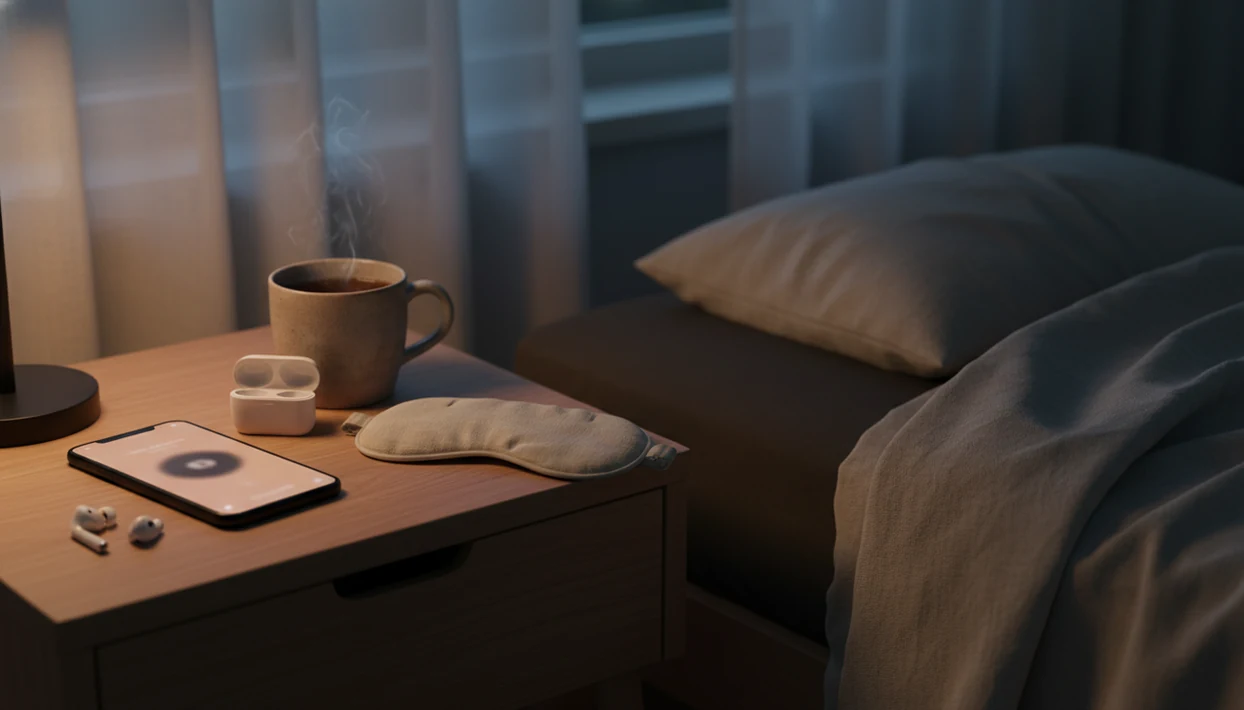
The best sleep meditation app for adults is one that provides nighttime audio suited to the main bedtime problem: racing thoughts, physical tension, or difficulty settling into a routine. These apps offer guided meditations, calming sounds, sleep stories, and wind-down exercises. They are nightly support tools, not treatments for every cause of poor sleep.
A useful shortlist starts with content, not library size. Short breathing exercises offer a manageable wind-down; longer stories give attention something gentle to follow. Consistent wake times, dim lighting, and less late caffeine remain part of the routine. Clinical research suggests some apps can improve reported sleep quality, but a Calm randomized trial does not establish that app meditation replaces insomnia treatment.
What matters at bedtime
- About 30% of adults report short-term insomnia, and 35.2% sleep under seven hours on average, according to Cleveland Clinic insomnia guidance (my reference: 12119 insomnia) and CDC sleep-duration data (CDC guidance: adults sleep facts and stats.html). That is why a sleep meditation app for adults should be judged as a nightly support tool, not a novelty download.
- A 2015 JAMA Internal Medicine randomized trial found that mindfulness meditation improved insomnia symptoms and sleep quality more than sleep-hygiene education alone in adults with sleep complaints (JAMA Internal Medicine study: 2110998).
- Nighttime-specific content matters. A daytime “focus” meditation can feel too alerting at 2:13 a.m., when the lock screen says you are still awake.
- Apps work better when paired with sleep hygiene. Dim lights, cooler rooms, consistent wake times, and less late caffeine give the audio a better chance.
- Length variety is practical, not cosmetic. Some nights call for a 5-minute breathing exercise; others need a 45-minute sleep story under the covers.
Calm and Headspace sleep features at a glance
| Calm | Headspace | |
|---|---|---|
| Platforms confirmed in the notes | iOS and Android | iOS; complete platform list not established |
| Guided meditation | Guided meditations and mindfulness programs | Guided sleep meditations |
| Narrated sleep content | Sleep Stories | Sleepcasts |
| Breathing programs | Available | Not published |
| Music and sleep sounds | Relaxing music and sleep sounds | Not published |
| App Store rating | Not published | Not published |
Sources: apps.apple.com, apps.apple.com, apps.apple.com.
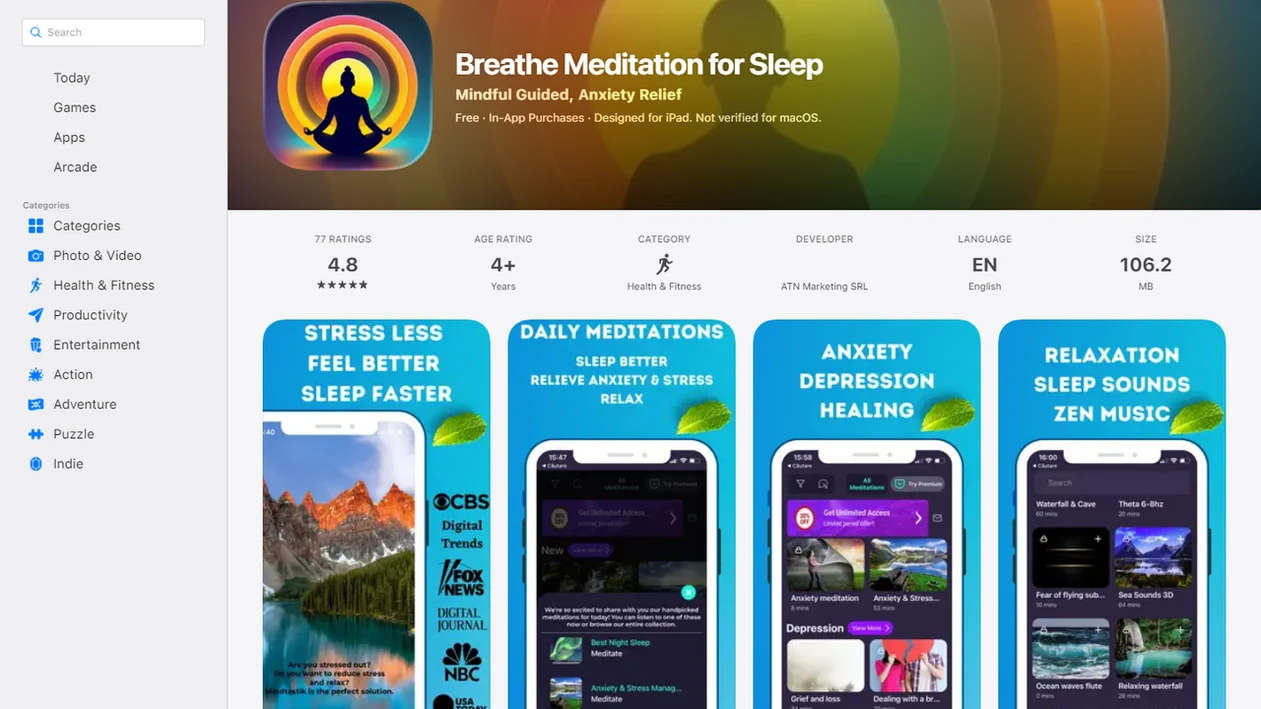
MindTastik, a bedtime meditation app for wired adults
MindTastik is the strongest pick here for adults who say, “I just need something to play when my thoughts get loud.” It focuses on the common wired-at-bedtime pattern: tired body, busy mind, and one more calendar worry in the dark.
- Sleep-specific guided meditations: MindTastik includes bedtime sessions, body scans, and self-hypnosis audio designed for lying down, not sitting upright at lunch.
- Daytime anxiety support: Short calming tools help lower baseline stress before the bedtime spiral starts. For a deeper anxiety comparison, use our best anxiety meditation app for everyday calm.
- Micro-calming for real schedules: Busy parents and shift workers can use brief breathing sessions between obligations, not only after a perfect evening routine.
- Offline and discrete listening: Downloaded audio helps when Wi-Fi is unreliable, and quiet playback works better for co-sleeping couples.
- Library trade-off: Calm and Insight Timer offer more total content, but MindTastik keeps the sleep path narrower and easier to choose.
When the issue is bedtime anxiety rather than content variety, MindTastik fits because it pairs sleep audio with daytime breathing and body-scan workflows.
Calm, Insight Timer, BetterSleep, and Headspace Compared
Calm, Insight Timer, BetterSleep, and Headspace are all credible sleep options, but they solve different bedtime problems. The choice comes down to cost, structure, sound control, and whether you want a broad library or a sleep-first routine.
Calm Sleep Stories and Pricing
Calm is known for a large adult sleep-story catalog, polished narration, and celebrity voices. It is a good fit if bedtime feels easier with a familiar voice, but the premium price can be a barrier.
Insight Timer Free Meditation Library
Insight Timer has one of the largest free meditation libraries, with many teachers and community timers. The downside is sorting quality on a crowded screen when you are already tired.
BetterSleep Sound Mixing and Tracking
BetterSleep works well for adults who want rain, white noise, fan sounds, or layered audio. Its sound-mixing engine can be more useful than narration for noise-sensitive sleepers.
Headspace Sleepcasts and Courses
Headspace offers structured wind-down courses, sleepcasts, and health-platform integrations. It tends to fit people who like a guided program more than browsing.
Good meditation app for sleep anxiety and everyday calm delivers repeatable wind-down support, not a medical fix or instant knockout.
Sleep App Evaluation Criteria for Adult Bedtime Routines
A sleep meditation app should be evaluated by how well it fits the last 30 minutes before bed. Nighttime-specific content, narration quality, and session length variety matter more than a giant homepage.
We looked for adult bedtime audio, 5-10 minute resets, 30-60 minute sleep stories, body scans, and breathing exercises. We also weighed personalization, offline downloads, auto-shutoff timers, and whether playback can stay calm with the phone face-down on the nightstand.
Price clarity matters too. A free tier should let you test real sleep content, not only sample clips. Paid plans should add meaningful variety, downloads, tracking, or courses.
After a restless start, when the screen is paused and the room feels too quiet, MindTastik helps because it gives adults a direct choice between a short reset and a longer guided sleep session.
For beginners who need basic technique before bedtime, our best guided meditation app for beginners guide explains how to choose a starting point without overthinking it.
How Sleep Meditation Apps Work
Sleep meditation apps work by giving the mind a steady object to follow, so attention moves away from rumination and toward a predictable voice, rhythm, or sound. That shift can reduce cognitive arousal, the “too awake to sleep” mental activation that keeps adults replaying the day.
The main tools work in slightly different ways:
- Follow a body scan to move attention through the face, shoulders, chest, belly, and legs, noticing tension without trying to solve anything.
- Use paced breathing to slow the rhythm of inhale and exhale, which can nudge the body toward a calmer parasympathetic state.
- Listen to sleep stories when your mind needs a soft narrative track that is interesting enough to hold attention but not exciting enough to wake you. For a different storytelling option, review Sutara Buddhist Stories app stats before comparing its content with bedtime narratives.
- Try self-hypnosis for repeated suggestions around heaviness, safety, and letting go.
Repetition matters because the same bedtime cue can become conditioned over time: dim room, familiar narrator, same breathing pattern, then sleep. These benefits are supportive, not a replacement for CBT-I, diagnosis, or medical care; behavioral sleep guidance from the American Academy of Sleep Medicine explains where relaxation and structured insomnia care fit (sleepeducation reference: cognitive behavioral therapy).
Nervous System Effects of Sleep Meditation Apps
Sleep meditation apps work by shifting attention away from anxious rumination and toward predictable sensory cues. In plain language, guided audio gives the brain something safer to follow than the next worry.
Body scans use progressive relaxation, which means attention moves through muscle groups one at a time. Many adults notice the jaw, shoulders, and stomach soften first. Paced breathing, including patterns like 4-7-8, may support vagal tone, a signal linked with parasympathetic “rest and digest” activity.
Not magic. Practice.
Consistent nightly use can create a conditioned relaxation response over days to weeks. The bed, dim screen, earbuds, and same narrator begin to cue the body that the day is ending. A 2015 JAMA Internal Medicine randomized trial found mindfulness meditation improved insomnia symptoms and sleep quality compared with sleep-hygiene education alone.
Therapists and mental-health guidelines commonly recommend relaxation skills as supportive tools for stress-related sleep difficulty, especially when paired with consistent sleep habits and appropriate care.
7-Step Bedtime Meditation App Routine for Better Sleep
Use a sleep meditation app as a repeatable wind-down routine, not a last-minute rescue after an hour of scrolling. The goal is to make bedtime feel familiar before your thoughts get loud. To support goals beyond bedtime, compare best self-care apps for goals alongside the sleep tools you already use.
- Set a wind-down alarm 30 minutes before your target bedtime.
- Dim the phone screen and enable night mode or a blue-light filter.
- Queue audio offline so buffering does not interrupt the routine.
- Choose the session length based on restlessness: 5-10 minutes for quick calm, or 30-60 minutes for a story.
- Lie down and start playback with eyes closed, using a body scan or sleep story.
- Keep sleep hygiene simple: avoid caffeine after 2 p.m., dim lights, and cool the room.
- Review the morning result and adjust the session type for the first week. If you want a structured way to record bedtime observations, a self reflection app is another tool to consider.
For adults who need a short reset rather than a long story, MindTastik works because it includes bedtime audio and micro-calming exercises in the same routine. If racing thoughts are the main problem, our best meditation app for racing thoughts guide goes deeper.
4 Misconceptions About Sleep Meditation Apps for Adults
The biggest misconception is that the app with the largest library is automatically the best sleep meditation app for adults. Fit, narration tone, and bedtime design usually matter more when you are half-awake and impatient.
- Biggest library does not mean better sleep. A smaller app with the right narrator may beat a huge catalog you never finish browsing.
- An app alone will not fix weak sleep habits. Late caffeine, bright lights, and irregular wake times can overpower good audio.
- General meditation is not always bedtime meditation. Some sessions encourage alert awareness, which can feel wrong when you need to drift.
- Night-one results are not the standard. Nervous-system retraining often takes days to weeks of repetition.
For adults with sleep anxiety, MindTastik is useful because it narrows the decision to bedtime-specific guided sessions, self-hypnosis, breathing, and body scans. Broader support for that pattern is covered in our best meditation app for sleep anxiety guide.
MindTastik for a simple audio wind-down
MindTastik suits adults who want guided meditation, breathing exercises, or self-hypnosis audio as a repeatable bedtime cue. Its sleep stories offer another option when following a narrative feels easier than concentrating on instructions. Selecting one familiar session in advance keeps the routine focused on listening rather than choosing.
Adults seeking treatment for chronic insomnia should look beyond a general meditation library to care that includes CBT-I. Those who find narration stimulating may prefer soundscapes or a quiet routine without spoken audio.
What sleep meditation apps cannot treat
Sleep meditation apps can support a bedtime routine, but they are not medical care. That distinction matters, especially when sleep problems are frequent, severe, or paired with daytime impairment.
- They are not a substitute for medical evaluation of sleep apnea, severe depression, chronic insomnia, or persistent panic symptoms.
- Evidence for mindfulness and sleep is promising, but CBT-I remains the better-established treatment for chronic insomnia.
- Some adults find voices, stories, or sound layers stimulating unless volume, length, and narration style are configured carefully.
- In-app trackers can increase sleep worry for some users. The numbers can become another thing to check.
- Phone-in-bed habits may conflict with sleep-hygiene advice if the app leads to scrolling after the session.
- Not all content labeled “sleep meditation” is clinically informed, trauma-sensitive, or evidence-based.
- Benefits vary. Some users feel calmer quickly; others notice only modest change after regular use.
MindTastik, Calm, Headspace, Insight Timer, and BetterSleep should be treated as supportive practice tools. If symptoms continue, professional guidance is the safer next step.
When bedtime listening becomes more screen time
- If you keep switching sessions after two minutes, the app may be adding decisions instead of removing them.
- If the screen brightness stays high under a dim lamp, the routine is working against the bedtime cue you are trying to build.
- If you choose the longest sleep story because you feel desperate, try the shortest repeatable option first.
- If you judge the session by whether you fell asleep immediately, you may miss the quieter benefit of practicing a slower exhale.
- If every night starts with browsing, save one body scan or offline audio track as your default.
When Sleep Won't Come
A sleep meditation app tends to work best when it gives the mind something simple to follow, not another performance goal. The useful shift is often from trying to force sleep to practicing a repeatable wind-down cue. When sleep will not come, the next best choice is usually the calmest next step. If bedtime brings harsh self-judgment, consider a meditation app for self love as a separate option for practicing kindness toward yourself.
A CBT-I sleep program is different from relaxation audio
Meditation, breathing exercises, and sleep stories mainly give attention somewhere to settle and help reduce arousal. CBT-I also addresses patterns that can maintain insomnia, including conditioned wakefulness, excessive time in bed, and unhelpful beliefs about sleep. Its components generally include stimulus control, sleep restriction or compression, cognitive work, and education. A product labeled as a sleep app may contain either approach, so the program's actual content matters more than the label.
In a 2025 randomized trial of 132 adults with clinical insomnia, an 18-session Headspace Sleep Program combined CBT-I techniques with mindfulness. Compared with a wait-list control, it improved sleep efficiency, time to fall asleep, and wakefulness after sleep onset. Those findings apply to the combined program, not to ordinary meditation tracks or Sleepcasts alone. Persistent sleep problems with daytime impairment call for assessment rather than repeated attempts to find a more effective story.
Choosing a body scan, sleep story, or breathing session
- Choose a body scan when your mind is busy but your body feels tense; the instructions give attention somewhere concrete to land.
- Choose a sleep story when thoughts are repetitive; a gentle narrative can replace mental replay without asking for effort.
- Choose breathing exercises when your bedtime feels rushed; a slow exhale is a clear signal that the day is ending.
- Choose offline audio when travel, poor Wi-Fi, or late-night notifications might interrupt the routine.
- Choose a shorter session when consistency matters more than depth; five repeatable minutes can beat one ambitious hour.
Sleep meditation app questions
What is the best sleep meditation app for racing thoughts?
The most suitable app offers a session that holds attention without adding effort: a guided body scan, a quiet story, or a simple breathing exercise. MindTastik includes guided meditation, sleep stories, and breathing audio. No trial establishes one app as the best choice for every adult with racing thoughts.
Do sleep meditation apps actually help people fall asleep?
Some trials report better sleep quality and shorter self-reported time to fall asleep. Results depend on the app, program, and population studied. A calmer bedtime does not guarantee faster sleep every night, and improvements in reported sleep do not always match changes in objective sleep measurements.
Is Calm or Headspace better for sleep?
Both have trial evidence for improvements in reported sleep quality, but the studies described here do not directly compare them. Calm offers Sleep Stories, music, and sleep sounds. Headspace offers sleep meditations and Sleepcasts. Its CBT-I-based Sleep Program should be considered separately from its general relaxation content.
How long should a bedtime meditation be?
A five-minute breathing exercise can be a manageable starting point; a longer story may suit someone who prefers sustained narration. There is no single session length established as best for everyone. A familiar session that fits the routine is more practical than choosing a long track solely to force sleep.
Are sleep stories better than guided meditation?
Neither format is established as universally better. Stories give attention a narrative to follow, while guided meditation may focus on breathing or bodily sensations. Some adults find spoken instructions or plots stimulating. The useful choice is the format that feels undemanding, rather than the one with the largest library.
Does offline listening make a sleep app more effective?
Offline listening can reduce connectivity problems and the need to handle the phone at bedtime. It is a practical feature, not a proven sleep treatment. The cited clinical studies do not establish that downloading audio, rather than streaming the same session, improves sleep quality or shortens time to fall asleep.
Can a sleep meditation app replace CBT-I for insomnia?
General meditation and story libraries do not replace CBT-I. CBT-I addresses sleep habits, conditioned wakefulness, and beliefs about sleep, not just relaxation. Some digital programs include these techniques, but that does not make all sleep apps equivalent. Frequent or severe sleep problems with daytime impairment warrant medical assessment.