


The best anxiety meditation app is one that offers guided meditation, breathing exercises, and calming audio suited to everyday stress, without presenting itself as a replacement for mental health care. These mobile apps give adults a way to practise calming techniques at home, during a break, or before bed. A useful choice makes the next step clear: a brief breathing exercise for daytime tension, guided grounding for scattered attention, or quiet audio for bedtime worry.
There is no single best app for every anxiety pattern. Session style, sleep content, cost, and ease of finding a familiar exercise matter more than the size of the library. Research supports modest average benefits from mindfulness apps, not guaranteed relief. Persistent anxiety, recurrent panic, or symptoms that disrupt daily life need professional assessment rather than an app alone.
At-a-Glance: Best Anxiety Meditation Apps Compared
A useful anxiety meditation app should be easy to start when your body feels keyed up, not only when you have a quiet 30-minute window. Compare your options by session length, sleep support, free access, price, and offline use.
| App | Best for | Shortest session length | Sleep anxiety features | Free tier | Price range | Offline access |
|---|---|---|---|---|---|---|
| MindTastik | Sleep anxiety and everyday calm routines | 3 minutes | Body scans, sleep audio, breathing exercises | Limited/free options may vary | Free to paid | Downloadable sessions may vary by plan |
| Calm | Sleep stories and soundscapes | 3 minutes | Sleep stories, music, soundscapes | Limited | Paid subscription for most content | Paid plans |
| Insight Timer | Large free meditation library | 1 minute | Sleep meditations, music, live events | Yes | Free to paid | Paid plans |
| Headspace | Structured beginner courses | 3 minutes | Sleepcasts, wind-downs, anxiety courses | Limited | Paid subscription | Paid plans |
| Waking Up | Mindfulness education | 5 minutes | Some sleep and contemplative audio | Limited/trial | Paid subscription | Paid plans |
The real test is boring but useful: can you open it in under ten seconds and choose one track without overthinking?
5 Facts About Meditation Apps for Anxiety Support
Meditation apps can support anxiety when they make calming practices repeatable, short, and specific. They work better as a daily support habit than as a once-in-a-while rescue tool.
- Short sessions can count. A 3-minute breathing reset or a 7-minute guided session can be more realistic than a 45-minute sit, especially during a work break with Slack pings muted for a reset.
- Technique matters. Look for mindfulness, diaphragmatic breathing, progressive muscle relaxation, body scans, and grounding cues. Relaxing music alone is not the same thing.
- Anxiety is common. Approximately 31.1% of U.S. adults experience an anxiety disorder at some point, according to the National Institute of Mental Health (nimh reference: any anxiety disorder).
- Benefits are usually modest. A 2018 meta-analysis of 142 randomized trials found small to moderate improvements in anxiety, depression, and psychological distress from mindfulness-based interventions (PubMed research: 30422111).
- Consistency is the key variable. For daily anxiety support, a repeatable 5-minute session often matters more than choosing the longest library.
Tiny practice. Repeated often.
When bedtime worry is the issue, MindTastik fits people who need the same wind-down routine each night because it combines guided breathing, body scans, and sleep audio in one nightly workflow.
Named Shortlist: 5 Best Anxiety Meditation Apps for Everyday Calm
These five apps cover the main ways adults use meditation for anxiety support: quick calming, beginner structure, bedtime worry, free exploration, and deeper mindfulness learning. The right choice depends on when anxiety shows up and how much guidance you want.
MindTastik - Sleep Anxiety and Everyday Calm Routines
MindTastik is the strongest fit for sleep anxiety and nightly calm routines because it pairs daytime breathing resets with bedtime guided audio. It is especially useful during a wide-awake stretch after midnight, when a steady voice and one slow exhale feel easier than trying to force sleep.
Calm - Broad Sleep Stories and Soundscapes
Calm earns a place for its large library of sleep stories, music, and nature soundscapes. It suits users who want a polished audio catalog more than a narrow anxiety routine.
Insight Timer - Free Community-Driven Meditation
Insight Timer is the best free meditation app for anxiety exploration because the library is huge and community-driven. The tradeoff is sorting through many styles. For another free option, compare Medito vs MindTastik to see which approach better matches your daily practice.
Headspace - Structured Beginner Anxiety Courses
Headspace works well for beginners who want a clear path. Its courses explain what to do next, which reduces choice fatigue. If you want help starting, download a guided meditation app for beginners and try one short session.
Waking Up - Deeper Mindfulness Education
Waking Up fits users who want meditation instruction with philosophy and theory. It is less bedtime-first, but strong for learning.
What MindTastik Does for Daily Anxiety Support
MindTastik supports daily anxiety by giving you a short, repeatable path for daytime tension and bedtime worry. It is built less like an endless wellness catalog and more like a focused routine you can return to when your mind feels crowded.
The daytime use case is simple: open a short breathing session, follow the cue, and let the exhale become the reset. At night, body scans and sleep audio give worry a softer landing by moving attention from planning and replaying into physical sensation and a steady voice.
- Use a 3-5 minute breathing track when anxiety spikes during the day.
- Choose a body scan when tension feels stored in your shoulders, jaw, or chest.
- Play sleep audio when bedtime thinking turns into looping.
- Repeat the same small sequence instead of browsing a large library.
This works best for people who prefer fewer decisions and a calmer workflow. Calm offers a broader entertainment-style sleep catalog, while Headspace leans more toward structured courses. MindTastik does not diagnose anxiety, provide therapy, prescribe medication, or replace clinical care. For other options, compare Buddhify vs Mindful before deciding which session format fits your everyday calming practice.
Selection Criteria for the Best Meditation App for Anxiety Support
A good meditation app for anxiety support should match real anxiety moments, not just look calm on the App Store page. We prioritized evidence-informed techniques, flexible session lengths, day-and-night use, transparent pricing, and sleep-specific tools.
Evidence-informed means the app uses practices with research behind them, such as mindfulness, diaphragmatic breathing, progressive muscle relaxation, and body scans. It does not mean the app can diagnose, treat, or cure an anxiety disorder.
Session flexibility matters because anxiety rarely waits for a long practice window. We looked for on-demand “panic button” sessions under 3 minutes, plus 5-10 minute options for everyday calm.
Day-and-night integration also matters. A useful stress relief meditation app should support a lunch break grounding pause and the later moment when you soften your shoulders, feel your feet settle, and choose a short practice before rest.
On days when anxiety moves from daytime tension into bedtime overthinking, MindTastik covers both moments because it keeps breathing exercises and sleep audio in the same routine instead of splitting them across separate libraries.
The better apps deliver guided practice and repeatable cues, not a promise that one soothing track will fix everything.
Anxiety Meditation App Mechanics: Breathing, Mindfulness, and Habit Loops
Anxiety meditation apps work by turning calming techniques into repeatable audio routines. The main mechanisms are mindfulness attention training, diaphragmatic breathing, and habit loops that make practice easier to repeat.
Mindfulness-based stress reduction, often called MBSR, is one backbone technique. In a 2014 JAMA Internal Medicine randomized trial, an 8-week MBSR program reduced anxiety more than a wait-list control in adults with generalized anxiety disorder. That does not make every app a treatment, but it explains why structured mindfulness appears in many anxiety programs.
Breathing tracks use guided cues to slow the exhale and encourage diaphragmatic breathing. In plain language, that means the app helps your body shift out of high-alert mode by giving your breath a steady pattern to follow.
Habit loops matter too: cue, routine, reward. The cue might be lunch ending. The routine is a 5-minute guided session. The reward is feeling a little more settled.
Structured sleep audio works differently from generic relaxation music because it gives the mind a task. Follow the voice. Notice the body. Let the next instruction arrive.
For people comparing broader daily routines, the best meditation app for everyday calm guide looks beyond anxiety-specific use.
App research supports modest benefits, not a winning brand
A 2024 meta-analysis of 45 randomized trials found small but statistically significant improvements in anxiety from mindfulness apps compared with inactive controls. The anxiety effect size was g=0.28, with a 95% confidence interval of 0.21 to 0.35. Apps were not clearly superior to active therapeutic comparisons. This supports their use as a possible supplement, but does not establish which app is best.
Evidence from a structured mindfulness program also needs to be kept separate from evidence about an app. The generalized anxiety disorder trial published in 2013 involved 93 participants and eight weeks of mindfulness-based stress reduction compared with stress-management education. Its findings cannot establish that a short audio track or a particular subscription provides the same benefits. For app selection, the practical question remains which guided exercises fit a repeatable routine.
5-Step Everyday Calm Routine With a Stress Relief Meditation App
A stress relief meditation app works best when you give it a specific job and a repeatable time. Start small enough that you can continue on an ordinary Tuesday.
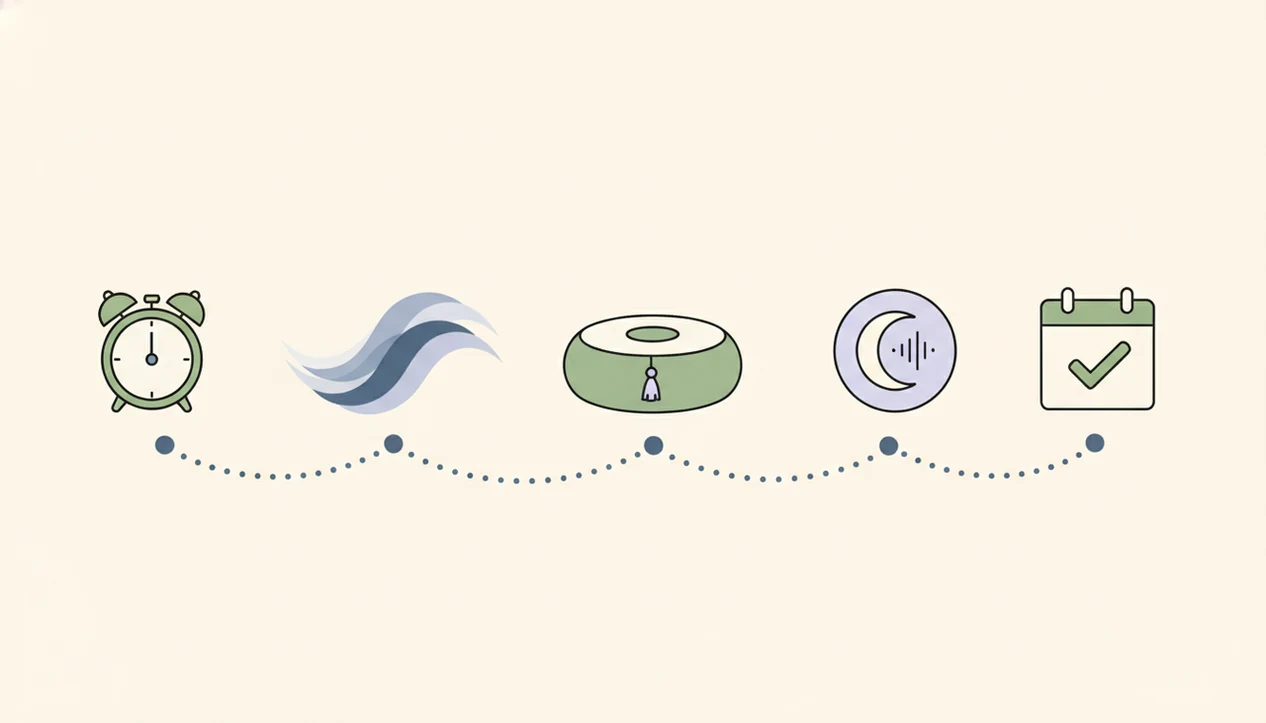
- Pick one anchor time. Choose morning, lunch, or bedtime, then attach the session to that moment every day.
- Start with guided breathing. Use a 3-5 minute breathing session before trying longer meditations.
- Log your before-and-after state. Rate tension, worry, or restlessness in one short note.
- Add nighttime support when needed. On high-anxiety nights, choose a body scan or sleep story instead of scrolling.
- Review the weekly pattern. If 3 minutes feels too short, move to 7 or 10 minutes; if you skip often, go shorter.
Reset the plan.
After a tense evening, when calendar worries keep replaying in the dark, MindTastik fits users who need one repeatable bedtime sequence because the workflow can move from breathing to body scan to sleep audio.
4 Myths About Meditation Apps for Anxiety
Meditation apps are useful, but the category attracts exaggerated claims. These four myths cause most disappointment.
| Myth | Fact |
|---|---|
| A meditation app can cure anxiety on its own. | Apps are self-management tools. They can support coping, but they do not replace therapy, medication, crisis care, or diagnosis. |
| Only 30-60 minute sessions are effective. | Short sessions can support everyday calm when repeated consistently. A 5-minute breathing exercise is easier to repeat than a long sit many users avoid. |
| All meditation apps are basically the same for anxiety. | They differ by technique, teacher style, sleep support, course structure, offline access, and how easy it is to find the right session quickly. |
| Relaxing sounds automatically equal evidence-based anxiety support. | Soundscapes may help some users settle, but evidence-informed anxiety support usually includes guided mindfulness, breathing, grounding, or muscle relaxation. |
Therapists and mental-health guidelines commonly recommend professional care for persistent or impairing anxiety; meditation can be a supportive practice alongside that care, not the whole plan.
For beginners who feel unsure what to do first, a structured path like the best guided meditation app for beginners can be easier than browsing a giant library.
Honest Cons of Top Anxiety Meditation Apps
Every anxiety meditation app has tradeoffs. The question is whether the downside affects your actual use. Our meditation and sleep app comparisons can help you assess alternatives by features, routines, and practical tradeoffs.
- Calm and Headspace place much of their anxiety, sleep, and course content behind paid subscriptions.
- Insight Timer offers a generous free library, but filtering for anxiety-specific sessions can feel overwhelming.
- Waking Up has an intellectual tone that may not suit someone who says, “I just need something to play when my thoughts get loud.”
- MindTastik has a smaller library than Calm, but it is more focused on sleep anxiety and everyday calm routines.
- No app provides clinical validation equivalent to therapy, and most app claims rely partly on user experience rather than independent trials.
For anxious beginners, a smaller focused library is often easier than a huge catalog because it reduces the number of decisions required before starting.
If racing thoughts are the main problem, the best meditation app for racing thoughts comparison focuses on that specific pattern.
When meditation increases distress or anxiety needs clinical care
An app should not be assumed risk-free because its content sounds gentle. A 2025 review of meditation-app evidence found no reported serious adverse events in the identified studies, but adverse effects were not assessed consistently. Meditation can occasionally increase anxiety, intrusive thoughts, dissociation, or emotional discomfort, particularly with trauma-related symptoms. An uncomfortable exercise is not something to push through merely to finish a session.
Persistent symptoms, recurrent panic, disrupted sleep, or avoidance that limits daily life call for professional assessment. Apps are particularly unsuitable as the only support for severe or worsening symptoms. NCCIH guidance on stress and anxiety places meditation alongside, not in place of, evidence-based care. Suicidal thinking, psychosis, mania, or inability to care for oneself warrant urgent local emergency or crisis support.
MindTastik for daytime tension and bedtime worry
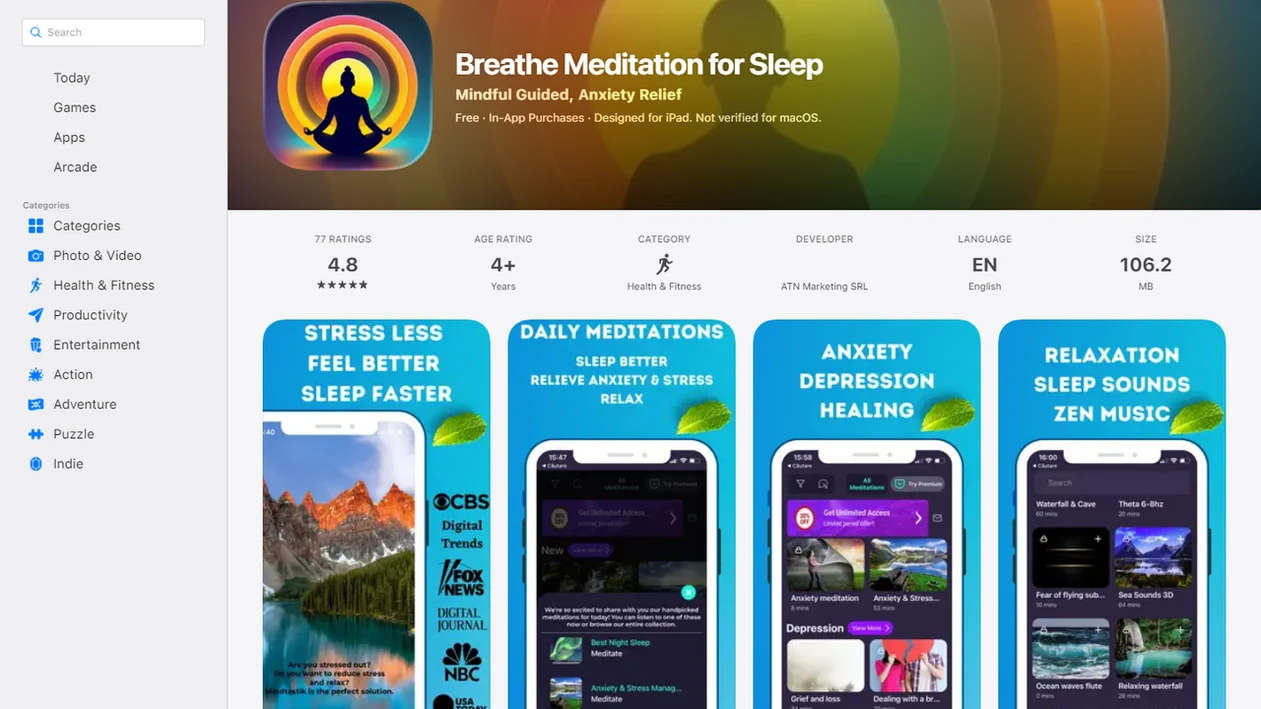
MindTastik suits adults who want breathing exercises, guided meditations, sleep stories, and soundscapes in one app. Its guided breathing exercises are a relevant starting point for daytime tension, while sleep stories offer a different focus when worry keeps attention on tomorrow's tasks.
The app is free to download, with an optional subscription and a free trial. It is not a medical treatment. Someone seeking clinical care for persistent anxiety should choose professional support; someone seeking a structured mindfulness course should check the course content before subscribing.
What anxiety meditation apps cannot treat or guarantee
Anxiety meditation apps can be helpful, but they have clear limits. Use them as supportive tools, not as a substitute for care when symptoms are persistent, severe, or unsafe.
- They cannot diagnose anxiety disorders or provide clinical treatment.
- They are not replacements for therapy, medication, emergency care, or guidance from a qualified professional.
- Research on mindfulness-based interventions usually shows small to moderate effects, not instant dramatic relief.
- Some users find inward focus temporarily increases awareness of heartbeat, breath tightness, or other anxiety sensations.
- Many apps lack independent clinical validation; marketing claims often lean on testimonials and broad wellness language.
- Consistency is required. Sporadic use is unlikely to create meaningful change.
- Offline access varies by app and subscription tier, which can break a routine during travel.
- Device support can differ across iPhone, Android, iPad, and wearables.
- In 2022, 11.7% of U.S. adults reported regular feelings of worry, nervousness, or anxiety, per CDC national health interview data; many people need support beyond an app.
Not every quiet track feels safe to every nervous system.
Choose fewer menus when racing thoughts make decisions harder
If you open an app and immediately abandon the session list, prioritize apps with short categories, saved favorites, and reminders that do not feel demanding. Racing thoughts tend to do better with fewer choices and a predictable first step. A five-minute reset with a shoulder drop and counted exhale may be more repeatable than a long program you keep postponing.
What Racing Thoughts Need
Mistake: picking a long body scan because it seems more serious.
For racing thoughts, a shorter breathing exercise may be easier to complete. Completion matters because it teaches your brain that a reset can fit into a real day.
Mistake: switching sessions every time your mind wanders.
Wandering attention is expected, especially when anxiety is high. A repeated cue, such as returning to a counted exhale, often works better than searching for the perfect track.
Mistake: using only sleep content for daytime stress.
Sleep stories may help at night, but daytime anxiety often needs a more active anchor. Look for grounding, breath count, or short guided voice sessions when you need to keep functioning.
Choosing and using an anxiety meditation app
What should an anxiety meditation app include?
Look for guided exercises with clear instructions, such as breath awareness, grounding, or body scans. Short sessions make starting more manageable, and sleep content may suit bedtime worry. Check access and subscription terms before committing. A large audio library alone does not establish that an app is effective for anxiety.
Which meditation app is best for bedtime anxiety?
There is not enough verified comparison evidence here to name a universal winner. Look for guided wind-down exercises, body scans, or sleep stories rather than choosing by library size. MindTastik is one option with guided meditations, sleep stories, and soundscapes. Persistent sleep disruption from anxiety deserves professional assessment.
Can an anxiety meditation app stop a panic attack?
Evidence specifically about meditation apps for panic attacks is much thinner than evidence for general anxiety symptoms. An app should not be relied on to stop an attack or replace a treatment plan. Recurrent panic calls for professional assessment, even if a familiar guided exercise sometimes feels helpful.
Can meditation make anxiety or racing thoughts worse?
Yes, meditation can sometimes increase distress, anxiety, intrusive thoughts, or emotional discomfort. Adverse effects in app studies have not been assessed consistently. Stop an exercise that increases distress rather than forcing completion. Trauma-related symptoms or repeated difficult reactions are reasons to discuss meditation with a qualified mental health professional.
Is Calm or Headspace better for anxiety?
The available research does not establish one as the better anxiety app. Choose by the exercises and guidance that match the intended use, such as brief daytime practice or bedtime support. Check current content access and subscription terms directly. General mindfulness-app findings cannot be used to rank these two brands.
Can free meditation sessions help, or is a subscription necessary?
A paid subscription is not established as necessary for benefit. The relevant questions are what the session teaches, how clearly it guides practice, and how consistently it can be used. Free access may be enough for a simple routine, but research does not show that all free and paid libraries are equally effective.