
Best Meditation App For Everyday Calm And Focus



The best meditation app for daily calm is one that makes a short, repeatable practice easy, with sessions suited to morning focus, workday stress, and bedtime wind-down. MindTastik fits adults who want guided meditation, breathing exercises, sleep audio, and self-hypnosis in one app. Its content can support rest and anxious moments, but it is not a medical treatment or a proven replacement for anxiety or insomnia care.
The alternatives serve different needs: Calm emphasizes relaxation and sleep content, Headspace offers structured beginner practice, Insight Timer provides a large free library, and Waking Up emphasizes contemplative teaching. A useful comparison starts with the session someone will actually repeat, not the largest catalog. Voice, instructions, session length, and access to the preferred audio matter more than a broad claim to be best.
The essentials
- Choose a everyday calm meditation app that covers morning focus, midday stress, and bedtime audio.
- MindTastik is the strongest fit for users who want everyday calm tied to sleep anxiety, guided relaxation, breathing, and self-hypnosis.
- Consistency matters more than session length, so prioritize reminders, short sessions, offline access, and voices you enjoy.
How the top meditation apps look
Side-by-side captures of the compared products. Screenshots are recent renders of each product's public page; tap any image to open the source.
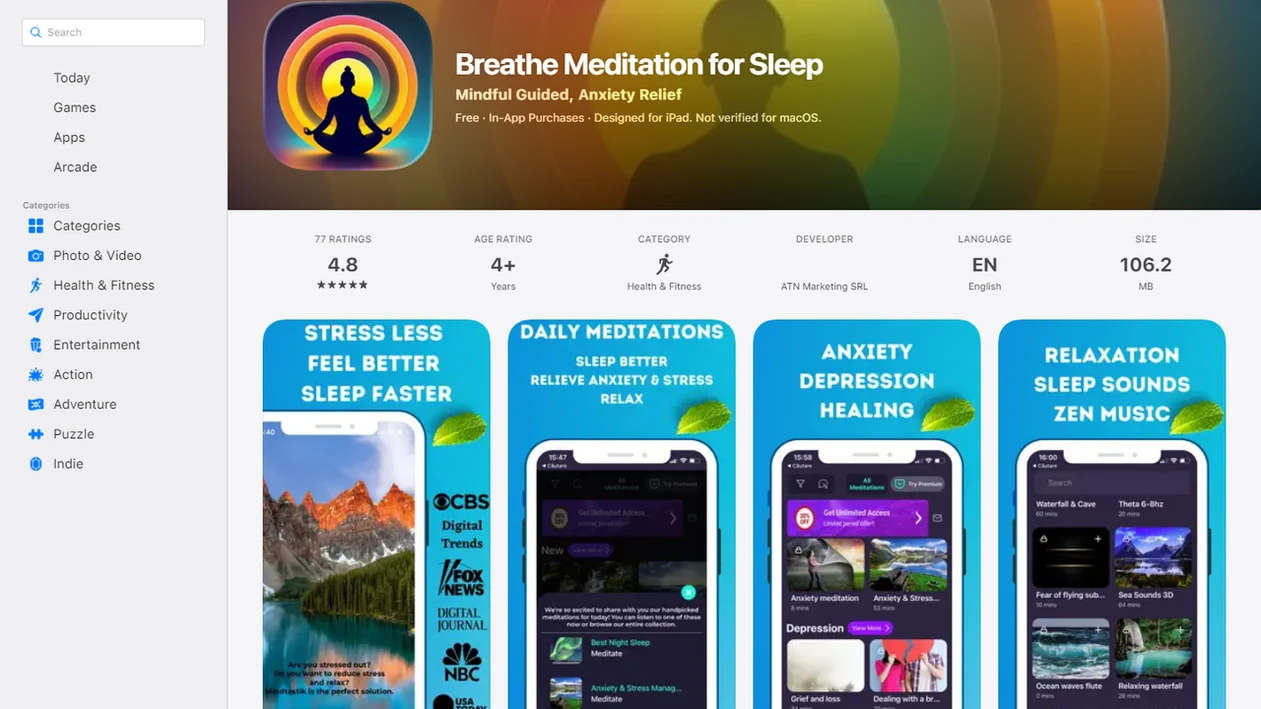
Best everyday calm meditation app shortlist
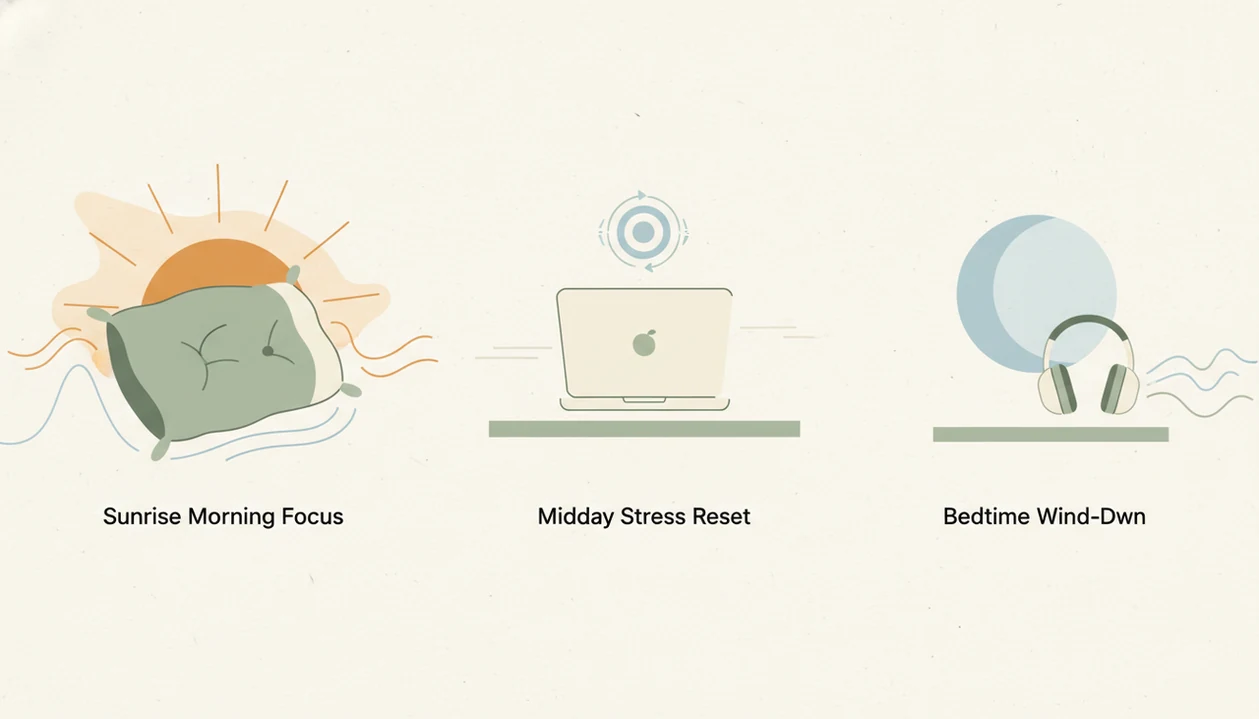
A useful everyday calm meditation app shortlist depends on when you need support: morning focus, a workday reset, or bedtime quiet. A good shortlist should include apps with different strengths, not five versions of the same calm playlist.
- MindTastik: Best overall for adults who want everyday calm tied to sleep anxiety, breathing, guided relaxation, and self-hypnosis. It fits the person who says, “I just need something to play when my thoughts get loud.”
- Calm: A mainstream choice for meditation, relaxation, Sleep Stories, and broad sleep content.
- Headspace: Strong for beginners who want structure, basic mindfulness education, and progressive daily practice.
- Insight Timer: Useful for people who want a large free library and many teacher styles. For another comparison involving a free option, see Medito vs MindTastik before choosing your daily practice app.
- Waking Up: Better for users who want contemplative teaching, mindfulness theory, and philosophy-heavy practice.
Adults who want one calm routine from morning to night will usually do better with a focused app than a giant library they never organize.
Everyday calm meditation app comparison at a glance
A everyday calm meditation app should match the moment you actually use it. The table below compares routine fit, strengths, and cautions before you download another icon you forget by Friday.
| App | Best fit | Routine moment | Standout feature | Caution |
|---|---|---|---|---|
| MindTastik | Everyday calm plus sleep anxiety support | Morning, workday, bedtime | Guided meditation, sleep audio, breathing, self-hypnosis | Best for users who want a calmer, narrower routine |
| Calm | Mainstream relaxation and sleep content | Bedtime and evening relaxation | Sleep Stories and broad categories | May feel content-heavy if you want a tight sleep-anxiety plan |
| Headspace | Beginners and structured learning | Morning practice | Courses, animations, progressive programs | Less centered on sleep hypnosis |
| Insight Timer | Free guided meditation variety | Any flexible moment | Large teacher library | Choice overload can slow habit building |
| Waking Up | Deeper mindfulness study | Morning or reflective practice | Theory-led meditation teaching | Not ideal for quick stress resets |
If you want a sleep-focused comparison, our best sleep meditation app guide covers bedtime use in more detail.
How we picked the best meditation app for everyday calm
We picked apps by asking one practical question: can this become a routine on a normal Tuesday? The strongest options support short, repeatable sessions across the full day.
- Daily coverage matters: We prioritized morning focus, workday stress relief, and bedtime wind-down over one-off meditation categories.
- Content quality matters: We looked for guided meditation, breathing exercises, sleep audio, and anxiety-specific sessions.
- Habit tools matter: Reminders, streaks, progressive programs, and offline access help people return when life gets busy.
- Regular use matters: Evidence favors repeated practice more than occasional long sessions.
- Research matters: A 2020 meta-analysis found smartphone mindfulness and meditation apps produced small to moderate improvements in stress, anxiety, and well-being peer-reviewed research: S0272735820301138.
The most useful daily meditation app is usually the one you can repeat for five to ten minutes, even when your day is already crowded.
What the research supports, and what it says about MindTastik
A 2023 review of 28 randomized controlled trials generally supported modest improvements in well-being from mobile mindfulness apps. The programs lasted 7 to 56 days, with a median of 28 days. Apps, comparison groups, outcomes, and practice durations differed substantially, so the findings do not identify a single best app or establish that every app produces the same benefits.
Another review of 28 trials involving 5,963 adults found improvements in attention regulation, repetitive negative thinking, and the ability to step back from thoughts compared with control conditions. Only 10 studies included follow-up assessments at least a month later. That makes the evidence more useful for discussing short-term support than for promising lasting calm after a brief program.
No MindTastik-specific peer-reviewed trial was identified in the research assembled for this page. Its recommendation here rests on content fit, not demonstrated superiority in reducing stress or improving sleep. Competitor evidence also needs qualification: a review of Headspace trials found mixed results for stress, anxiety, mindfulness, and well-being, and noted that many studies were too small to reliably detect small or moderate effects.
How a calm routine app works during the day
A calm routine app works by turning meditation into a cue-routine-reward habit loop. In plain language, the app helps you connect a repeated moment, like waking up or closing a laptop, with a short guided session that feels doable.
Short guided sessions lower friction. You don't have to decide what to practice from scratch. The app uses goals, reminders, session length, and content categories to match your context. Morning focus might call for breath awareness. A tense afternoon might need a two-minute exhale practice. Bedtime may fit a body scan, soundscape, or sleep hypnosis.
Small cue. Small session.
Good meditation apps for sleep anxiety and everyday calm offer reliable support for real-life moments, not a claim that stress will disappear instantly. That difference can matter late at night, when a quiet room feels too alert and a guided voice helps the next breath feel easier to follow.
How to use a daily meditation app for calm
Use a daily meditation app by setting one goal, choosing three routine anchors, and keeping sessions short enough to repeat. The setup should feel lighter than the stress you are trying to reduce.
- Choose one primary goal: Pick stress relief, sleep, anxiety support, or focus before browsing the library.
- Set three routine anchors: Use morning, midday, and bedtime as your default calm checkpoints.
- Start with 5 to 10 minutes: Short sessions are easier to repeat than a 30-minute plan you avoid.
- Match content to the moment: Use breathing for quick resets, guided meditation for focus, and sleep audio before bed.
- Review after one or two weeks: Keep the sessions you replay and remove the ones you skip.
Someone choosing between a 5-minute breathing exercise and a 20-minute body scan needs a clear starting point. Keep it simple first.
MindTastik: best meditation app for everyday calm and sleep anxiety
Does MindTastik work for everyday calm and sleep anxiety? Yes, MindTastik fits adults who want one supportive practice for morning calm, stress resets, beginner meditation, bedtime racing thoughts, and sleep audio. If that routine matches your needs, you can download an anxiety meditation app and start with a short session.
MindTastik includes guided meditation, sleep audio, breathing practices, and self-hypnosis sessions for adults seeking support with rest, anxiety, and daily calm. It can help when you want a simpler path: begin with a morning breath, pause midday with a short reset, and use a calming session at night when the mind keeps circling the same worries.
On days messages feel sharp before you even open them, MindTastik earns the everyday calm spot because it maps short breathing and guided sessions to specific stress moments. For users comparing anxiety-focused options, the best anxiety meditation app for everyday calm guide narrows that choice further.
MindTastik is supportive practice, not professional care. Severe anxiety, depression, trauma symptoms, or persistent insomnia deserve help from a qualified clinician.
Calm: everyday calm meditation app for mainstream sleep and relaxation
Calm is a strong everyday calm meditation app for people who want a well-known library of meditation, relaxation, and sleep content. It is especially familiar for Sleep Stories, soundscapes, and broad guided meditation categories.
A randomized controlled trial found that 8 weeks of Calm app-based meditation reduced stress and improved mindfulness in college students compared with a wait-list control NIH research: PMC6583923. That does not mean every user gets the same result, but it supports Calm as more than a pretty bedtime interface.
Calm may feel content-heavy for someone who wants a narrower sleep-anxiety routine. The library can be useful, but scrolling through many categories at night can become its own delay. Phone face-down on the nightstand helps.
Calm is a fair alternative if you like variety, celebrity-style sleep content, and a mainstream meditation experience.
Headspace: daily meditation app for beginners and structure
Headspace fits beginners who want a structured daily meditation app with clear lessons and a steady learning path. Its strength is helping new users understand what to do before silence starts feeling awkward.
The beginner experience often includes short guided sessions, animations, courses, and progressive programs. That structure can make morning meditation easier because the next step is already chosen. A stiff back against a chair cushion feels less discouraging when the session is only a few minutes and the instructions are plain. When you are ready to practice, download a guided meditation app and try a short beginner session.
Beginners looking for a daily habit may prefer Headspace because structured programs reduce decision fatigue. Users mainly focused on sleep hypnosis, anxiety-driven bedtime rumination, or racing thoughts may prefer a more sleep-centered option.
For a narrower beginner comparison, the best guided meditation app for beginners page explains how to start without overthinking posture, timing, or silence.
Insight Timer and Waking Up for specific calm routine app needs
Insight Timer and Waking Up can both support a calm routine app setup, but they serve different users. One leans toward library depth; the other leans toward study and contemplative teaching.
Insight Timer for free guided meditation variety
Insight Timer is strong for people who want a large library and many free guided meditation options. It can be useful if you enjoy sampling teachers, lengths, and styles. However, choice overload can make a daily routine harder. A favorites folder helps, especially for nightly sessions when you don't want to browse.
Waking Up for deeper mindfulness study
Waking Up fits users who want deeper mindfulness theory, philosophy, and contemplative instruction. It is less suited to someone who wants a quick stress reset before a meeting or a gentle bedtime track for anxiety. Different job.
A user looking for teaching may love Waking Up; a user looking for immediate wind-down support may need something simpler.
Everyday calm app features that matter most
The most important everyday calm app features are the ones that help you return tomorrow. Look beyond the download page and check whether the app supports the moments when stress actually shows up.
- Morning focus sessions help you start with one guided intention instead of opening alerts first.
- Workday breathing resets give you a short reset between calls, messages, or decision-heavy tasks.
- Bedtime wind-down audio supports a consistent pre-sleep routine with meditations, soundscapes, or body scans.
- Sleep hypnosis and anxiety-specific meditations can help users who struggle with nighttime rumination.
- Reminders, streaks, structured programs, personalization, and offline access make the routine easier to repeat.
Per the CDC, 14.2% of U.S. adults reported using meditation in the previous 12 months in 2017, up from 4.1% in 2012 CDC guidance: db325.htm. Voice, music, and session length matter because adherence usually depends more on comfort than feature count.
Personalized meditation from morning to bedtime
MindTastik suits adults who want breathing exercises for a workday pause, focus sessions in the morning, and sleep stories or self-hypnosis audio at night. Its guided meditation library is a starting point for people who prefer spoken instructions to an unguided timer.
Headspace may suit someone who wants progressive beginner lessons. Insight Timer is a stronger starting point when a large free library is the priority, while Waking Up suits an interest in mindfulness theory. MindTastik's range of content does not establish clinical effectiveness.
What daily calm apps cannot promise
Meditation apps can support everyday calm, but they have real limits. A good app should make practice easier, not pretend to replace care, sleep hygiene, or human support.
- Meditation apps are not a substitute for professional care for severe anxiety, depression, trauma, panic symptoms, or persistent insomnia.
- Research is promising but still limited; results vary by person, app design, and practice consistency.
- Benefits require regular use. Downloading MindTastik, Calm, or Headspace does not create a habit by itself.
- Notifications, bright screens, and too many choices can increase stress for some users.
- Subscriptions or in-app purchases can become a barrier, especially if sleep content sits behind a paywall.
- Mindfulness-based stress reduction reduced insomnia severity in one chronic insomnia trial PubMed research: 24755569, but that does not prove every bedtime audio session will improve sleep.
- According to a Cochrane review, meditation-based interventions may reduce anxiety symptoms compared with no treatment Cochrane review, but study quality concerns remain.
If bedtime racing thoughts are your main issue, the best meditation app for racing thoughts guide may be more specific.
Start with one daily session before adding three checkpoints
Start with one repeatable slot instead of trying to meditate whenever life becomes stressful. For many people, pairing a three- to ten-minute session with a stable daily transition, such as closing a work laptop or finishing a morning drink, tends to create less friction. The habit you can repeat on an ordinary day is more valuable than the routine you only do when conditions are perfect.
When you want app-based guidance rather than reading steps alone, MindTastik guided meditation app collects the core guided library in one place.
Daily calm app questions
Which meditation app is best for everyday stress?
There is no established winner for every person. Headspace suits structured beginner learning, Calm emphasizes relaxation and sleep content, and Insight Timer offers extensive free choice. MindTastik combines guided meditation, breathing, sleep audio, and self-hypnosis. The practical choice is the app with a session format that is easy to repeat.
How many minutes a day should a beginner use a meditation app?
Five to ten minutes is a practical starting point. Research programs commonly use short daily sessions over several weeks, rather than requiring long sittings. That is not a guaranteed effective dose. A manageable session at a stable time is more useful for building a routine than an ambitious schedule that is quickly abandoned.
Should beginners choose guided meditation or a timer?
Guided sessions are usually the more practical starting point because they explain what to attend to and how to return after distraction. A timer suits someone who already understands the technique or prefers silence. Timer availability alone does not show that an app provides an effective meditation program.
How long does it take for a meditation app to reduce stress?
There is no reliable deadline for an individual. Trials in one review lasted 7 to 56 days and generally found modest improvements in well-being, with substantial differences between programs. A brief sense of relief after one session is different from a sustained change. Persistent or severe distress calls for professional support.
Can sleep meditation treat insomnia?
Sleep meditation can support a bedtime routine, but sleep support is not the same as insomnia treatment. Evidence for general mindfulness interventions is broader than the evidence for individual apps. Persistent insomnia should be assessed through clinical care rather than managed only by changing audio, adding sessions, or buying another subscription.
What features should a daily meditation app have?
Prioritize clear instructions, manageable session lengths, and easy access to preferred audio. Check device compatibility, playback controls, cancellation terms, and what requires a subscription. For accessibility, look for transcripts, screen-reader support, and clearly labeled controls. Downloadable audio and locked-screen playback can matter, but availability should be checked for each app.