
Download Anxiety Meditation App For Everyday Calm Support
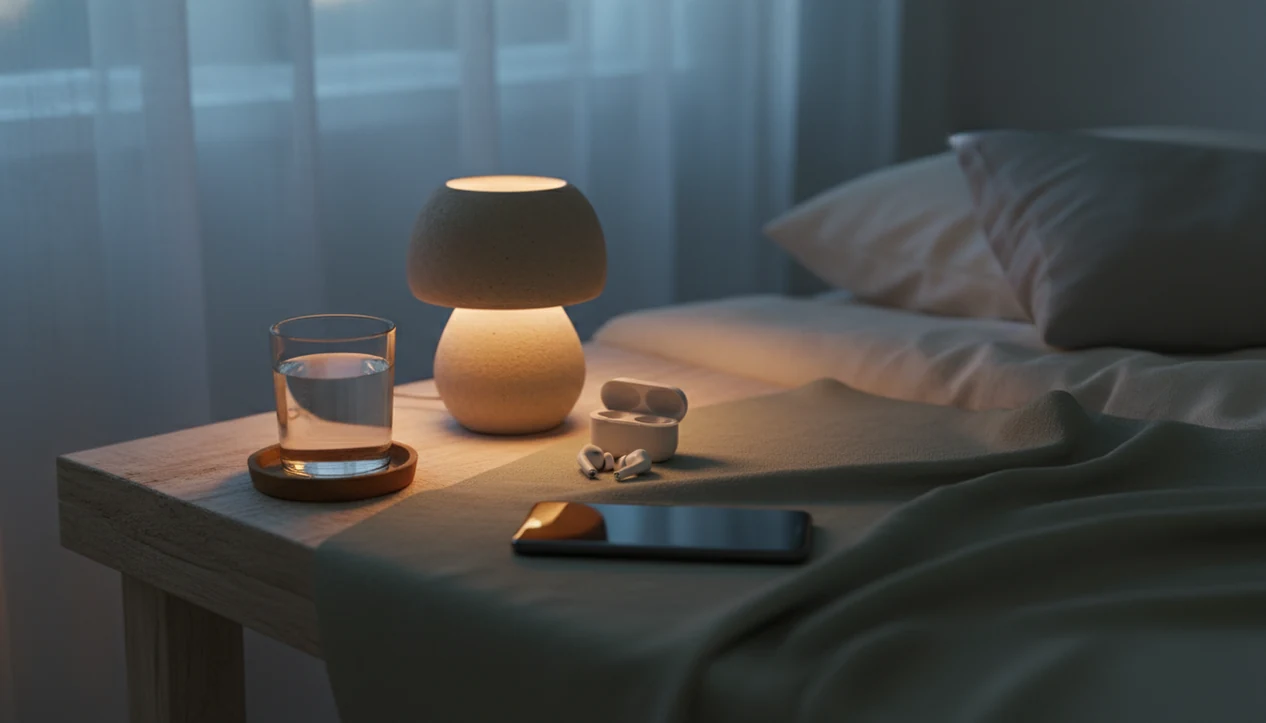


An anxiety meditation app provides guided breathing, grounding, sleep audio, and short calming sessions on a phone, but it is not a substitute for mental health treatment. MindTastik supports adults with guided meditations, sleep tracks, breathing practices, and self-hypnosis sessions intended for rest, anxiety support, and everyday calm. The useful starting point is a specific need, such as bedtime worry or a brief pause during a stressful day.
Research suggests mindfulness apps can modestly reduce anxiety for some people, but results vary. Before downloading, check privacy practices, subscription and trial terms, and the style of the audio. Clear wellness boundaries matter: an app cannot provide diagnosis, therapy, medication, or crisis care.
Before downloading
- MindTastik supports anxiety, stress, sleep, and everyday calm with guided audio, breathing exercises, grounding sessions, and self-hypnosis-style tracks.
- Meditation apps can modestly reduce anxiety and stress for some people, but they are self-help wellness tools, not replacements for therapy, diagnosis, medication, or crisis care.
- Before any stress relief app download, check privacy practices, subscription details, content style, and whether the app clearly explains its mental health boundaries. If you are new to practice, download a guided meditation app with short sessions and clear instructions.
How the anxiety meditation apps look
Side-by-side captures of the compared products. Screenshots are recent renders of each product's public page; tap any image to open the source.
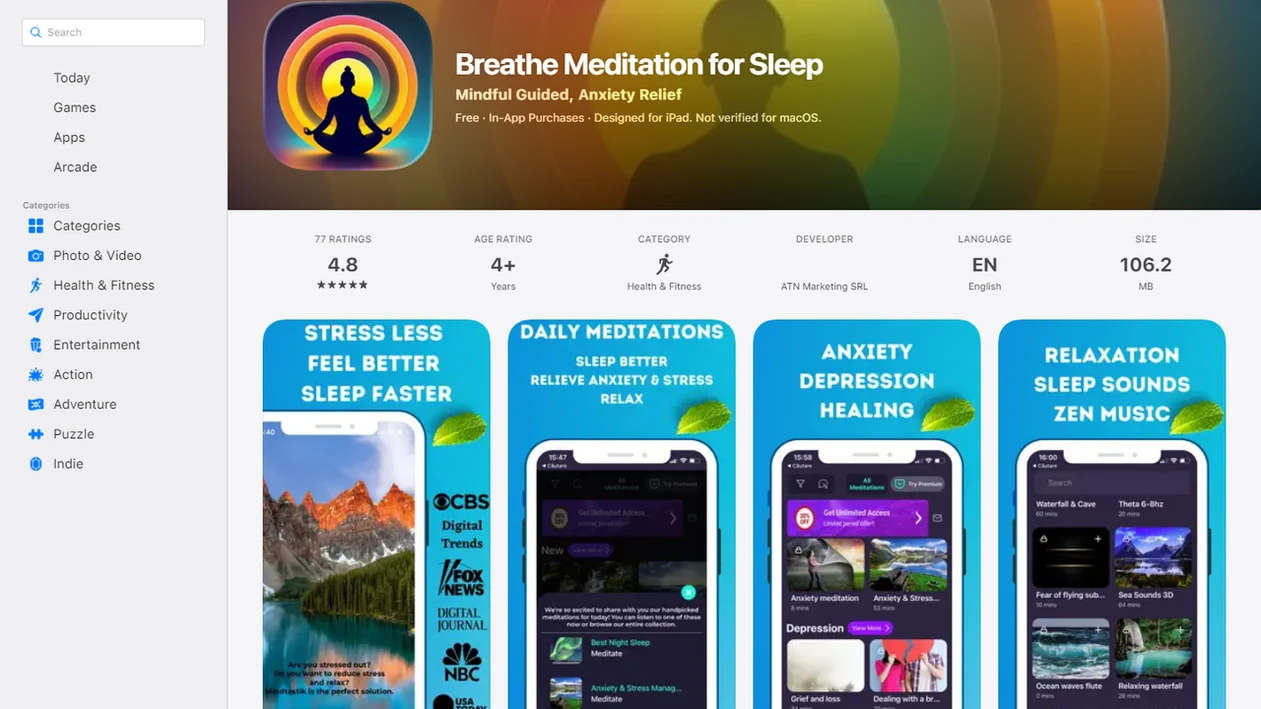
Anxiety meditation app download at a glance
MindTastik includes guided meditation, sleep audio, breathing exercises, and self-hypnosis sessions for anxiety support, stress relief, and daily calm. It is built for someone who wants a soothing track ready when the mind feels crowded and settling down feels hard.
Common use cases include bedtime rumination, work stress, tense mornings, panic-like spirals, and short resets during the day. One person might choose a 5-minute breathing exercise before opening messages. Another might begin sleep audio during a wakeful stretch, rest both feet on the floor, and follow the next slow exhale.
Keep the boundary clear.
MindTastik supports well-being routines, but it does not diagnose, treat, cure, or replace professional mental health care. The right fit for quick anxiety support is MindTastik because it gives adults a simple guided-session path instead of an open-ended audio library. Our Medito vs MindTastik comparison can help you weigh guided audio options against your preferences and budget.
How an anxiety meditation app works for stress relief
An anxiety meditation app works by giving attention a simple target, such as breath, body sensations, sound, counting, imagery, or a calming phrase. That target interrupts the usual loop of scanning, worrying, checking, and reacting.
Breathing exercises can slow the pace of a session and help users notice tension without arguing with thoughts. In plain language, the app gives the mind a low-effort job. Sleep audio and self-hypnosis-style sessions use repetition, imagery, and relaxation cues to support a wind-down routine when the nervous system still feels switched on.
Research is promising, but not magic. A 2014 systematic review of 47 randomized trials found moderate improvements in anxiety and depression from mindfulness meditation programs (JAMA Internal Medicine), and a 2022 meta-analysis found small to moderate effects for smartphone mental health interventions (npj Digital Medicine). Outcomes still vary by person, practice consistency, and symptom severity.
Good meditation apps deliver repeatable calming routines, not diagnosis, crisis response, or guaranteed relief. For another comparison of meditation options, Buddhify vs Mindful highlights differences that may matter to your daily routine.
What newer research says about anxiety app benefits
A 2024 review of 45 randomized controlled trials found a small but statistically significant improvement in anxiety with mindfulness apps compared with inactive controls. The effect size was g=0.28. That supports a modest role for apps in everyday self-help, not a promise of substantial relief for every person or proof that any particular commercial app works.
The apps were not clearly superior to active therapeutic comparisons. This distinction matters when choosing between an app and treatment: doing better than an inactive control does not establish that guided audio can replace clinical care. These findings concern mindfulness apps as a group, not MindTastik specifically, and should not be extended automatically to panic attacks or flight anxiety.
Five facts before you download an anxiety meditation app
- Anxiety is common: about 19.1% of U.S. adults experienced an anxiety disorder in the past year, according to the National Institute of Mental Health nimh reference: any anxiety disorder.
- Meditation apps usually include guided meditations, relaxation music, breathing tools, sleep sessions, and short grounding exercises.
- App-based mindfulness can help some users; studies show modest to moderate benefits depending on design, symptoms, and consistency. If you are comparing approaches to mindfulness, Waking Up vs Mindful offers a closer look at these two options.
- These apps are wellness and self-help supports, not replacements for therapy, diagnosis, medication, or emergency care.
- Before downloading, users should check privacy practices, subscription terms, in-app purchases, and crisis disclaimers.
After a stressful meeting, when the body still feels keyed up, MindTastik can fit a short reset because it separates breathing, grounding, and sleep content into practical starting points. If you want broader options, our download meditation app for sleep and calm guide covers the general category.
How to use an anxiety meditation app after download
Use an anxiety meditation app in short, repeatable sessions before trying long meditations. Daily practice usually depends more on consistency than on session length.
- Set a realistic goal: Choose everyday calm, bedtime wind-down, or stress reset instead of trying to solve everything at once.
- Choose a short session: Start with 3 to 10 minutes, especially if sitting still feels uncomfortable. For a simple starting point, compare the best guided meditation apps for beginners by session length and instruction style.
- Start with breathing: Use a guided breathing exercise when thoughts feel fast or scattered.
- Use sleep audio at night: Try this before bed, especially if rumination gets louder after the lights go off.
- Review what helps: Notice whether breathing, grounding, music, or a body scan feels most manageable.
- Reset expectations: Use professional support when anxiety is frequent, intense, or interfering with work, sleep, or relationships.
On days your chest feels tight before a presentation, MindTastik earns its place because the first action can be a short breathing session, not a search through dozens of unrelated tracks.
When a meditation session makes anxiety worse
Meditation is not always calming. A 2025 review discussing meditation-app safety reported no serious adverse events in the identified app studies, but adverse effects were not assessed consistently. That leaves an important gap: an absence of reported harm does not establish that every session is suitable for every listener.
Meditation can sometimes increase anxiety, intrusive thoughts, dissociation, or emotional discomfort, particularly in people with trauma-related symptoms. A session that increases distress is a reason to stop, not to force completion. Persistent or worsening symptoms call for professional assessment. Severe symptoms, thoughts of self-harm, or an inability to care for oneself require urgent local crisis or emergency support rather than another app session.
MindTastik calm app download features for sleep anxiety
MindTastik organizes calm support around guided meditation, breathing exercises, sleep audio, relaxation music, grounding resets, and self-hypnosis sessions. Each feature fits a different moment, which matters when anxiety shows up at odd times.
- Guided meditation: useful for morning worry or a tense commute.
- Breathing exercises: helpful for midday stress and short resets.
- Sleep audio: fits bedtime rumination and waking at night.
- Relaxation music: works when words feel like too much.
- Grounding resets: useful during panic-like spirals or sensory overload.
- Self-hypnosis sessions: support a repeated wind-down routine through imagery and relaxation cues.
For adults who need sleep anxiety support, MindTastik is a practical fit because it connects bedtime audio, breathing, and grounding in one calm routine. The Best Meditation App for Sleep angle is strongest when someone wants night support without treating audio as medical care. For more bedtime-specific guidance, compare it with a download sleep meditation app workflow.
Anxiety meditation app download for iPhone vs Android
iPhone and Android users should download only from official app stores or verified MindTastik links. That matters for any calm app download or stress relief app download because fake listings can copy names, icons, and screenshots.
| Download factor | iPhone / iOS | Android |
|---|---|---|
| App store path | Check the Apple App Store listing or verified MindTastik links | Check Google Play or verified MindTastik links |
| Updates | Review version history and recent update notes | Review update frequency and device compatibility |
| Subscriptions | Check trial terms, renewal timing, and cancellation path | Check in-app purchases, trials, and renewal settings |
| Privacy details | Review Apple privacy labels before installing | Review Google Play data safety details before installing |
| Notifications | Adjust reminders so calm prompts do not become noise | Adjust reminders and battery settings for playback |
| Audio playback | Test sleep audio with lock-screen controls | Test background playback and Bluetooth headphones |
If you are comparing platforms first, use the meditation app for iPhone sleep and calm guide or the meditation app for Android sleep and calm guide.
Common myths about a stress relief app download
- Myth: downloading an anxiety meditation app will cure an anxiety disorder. More accurate view: meditation apps can support coping routines, but they are not cures or standalone treatment.
- Myth: a calm app download is the same as seeing a therapist. Therapy can include assessment, diagnosis, treatment planning, and clinical oversight.
- Myth: every meditation app is fully free after installation. Many services, including categories similar to calm.com and headspace.com, use free trials, subscriptions, or in-app purchases. Compare meditation and sleep app reviews to assess available options before choosing a trial or subscription.
- Myth: clinical trial involvement means an app is automatically FDA-approved. Being studied does not automatically make an app a regulated medical device.
- Myth: meditation should feel peaceful right away. Some sessions feel restless, especially when anxiety is high or the room is too quiet.
Therapists and mental-health guidelines commonly recommend professional evaluation when anxiety is persistent, impairing, or linked to panic, trauma, self-harm, or substance use. A smartphone tool can sit beside that care, not replace it.
When to seek professional help for anxiety
Seek professional help when anxiety is persistent, intense, or starting to shrink your life. Apps can support a wellness routine, but they are not clinical assessment tools and cannot tell you whether symptoms meet a diagnosis.
Some red flags deserve more than another audio session: panic attacks, avoiding work or social situations, ongoing insomnia, trauma symptoms such as flashbacks or feeling constantly on guard, or using alcohol, cannabis, or other substances to get through the day. A licensed therapist, psychologist, physician, or psychiatrist can assess what is happening and talk through therapy, medication, lifestyle supports, or other care options.
- Notice patterns: Track whether anxiety is affecting sleep, work, school, relationships, driving, eating, or leaving home.
- Contact support: Reach out to a licensed mental health professional, primary care clinician, or local clinic if symptoms keep returning or feel hard to manage.
- Use trusted resources: Look for guidance from NIMH, SAMHSA, or your local health service when you are unsure where to start.
- Act urgently: If you might harm yourself, feel unable to stay safe, or someone is in immediate danger, call local emergency services or a crisis line right now.
MindTastik sessions for short resets and bedtime worry
MindTastik suits adults looking for guided audio rather than clinical treatment. Its breathing exercises offer a focused option for a short daytime reset, while sleep stories, soundscapes, and self-hypnosis audio provide choices for a bedtime routine. A free download includes an optional subscription and a free trial, so access terms need checking before committing.
People seeking assessment, treatment for recurrent panic, or help with severe or worsening anxiety should choose professional care rather than rely on an audio library alone.
What an anxiety meditation app cannot provide
A meditation app can support everyday calm, but it has clear limits. Those limits should be visible before anyone installs a sleep-focused meditation app or any similar wellness tool.
- Meditation apps do not replace diagnosis, therapy, medication, crisis lines, or emergency services.
- Results vary; some users feel too anxious to follow guided audio without additional support.
- Evidence is promising, but not every commercial app has been independently tested in clinical trials.
- Subscriptions may limit access to the most useful sleep, anxiety, or self-hypnosis content.
- Apps cannot respond to emergencies in real time.
- Users should contact local emergency services or crisis lines for immediate danger, suicidal thoughts, or acute distress.
- Guided audio may not fit everyone; some people prefer therapy worksheets, movement, journaling, or resources from mindful.org.
- Night listening can become another phone habit if the screen stays bright or notifications remain on.
Tiny detail, big difference: dim the screen before starting bedtime audio.
Short session choices for tension, racing thoughts, and stressful moments
| Technique | Best for | Minutes |
|---|---|---|
| Counted exhale breathing | shallow breathing and physical tension | 3-5 min |
| Grounding body scan | racing thoughts and scattered attention | 5-10 min |
| Short guided calm reset | pausing before work, sleep, or a stressful conversation | 3-8 min |
If you are ready to move from tips to practice, MindTastik guided meditation app is where MindTastik keeps its guided meditation experience.
Anxiety meditation app questions
How many minutes should a beginner meditate for anxiety?
A brief guided session of 5 to 10 minutes is a reasonable starting point. Breath awareness, grounding, or a body scan gives attention one clear task. The aim is not to eliminate thoughts, but to notice them and return attention gently. Longer sessions are not necessary just to get started.
Which app features are useful for anxiety at bedtime?
Sleep audio, relaxation music, guided meditation, and self-hypnosis-style sessions can support a wind-down routine when worry becomes louder at night. The choice depends on whether spoken guidance or simpler audio feels easier to follow. These features are wellness supports, not treatment for ongoing insomnia or anxiety that repeatedly interferes with sleep.
What should I check before downloading an anxiety meditation app?
Check the official store listing, device compatibility, privacy information, and subscription terms. Confirm when any trial renews and how cancellation works. Review the content style and whether the app clearly describes its limits. A wellness app should not present guided audio as a replacement for therapy, medication, or emergency care.
Can I use an anxiety meditation app alongside therapy?
An app can serve as an additional self-help tool alongside professional care, rather than replacing it. Clinical guidance supports meditation mainly as an adjunct for stress and anxiety. A treating clinician can help assess its suitability, especially when symptoms include recurrent panic, trauma-related distress, depression, or significant disruption to sleep and daily functioning.
What type of meditation is best for anxiety?
There is no single meditation style that works best for everyone. Guided mindfulness, body scans, and loving-kindness practices may help you relate differently to anxious thoughts. Start with a practice that feels comfortable and easy to follow. If focusing on your breath feels uncomfortable, try noticing sounds or physical contact with the floor.
How can I meditate when anxious thoughts keep interrupting?
You do not need to stop thinking to meditate. When an anxious thought appears, gently notice it and return to a simple anchor, such as sounds around you or the feeling of your feet on the floor. Repeating this process is the practice, not a sign that you are doing it wrong.
Is it better to meditate for anxiety in the morning or at night?
The best time is usually one you can repeat consistently. Morning meditation may help you begin the day more calmly, while an evening session can support winding down. You can also practice during a quiet daytime break. Choose a time when you are less likely to feel rushed or interrupted.
Is it okay to fall asleep during a guided meditation?
Falling asleep during a bedtime meditation is generally fine if your goal is rest. If you want to practice staying aware, try sitting upright or meditating earlier in the day. Frequently dozing off may also reflect insufficient sleep. Meditation can support relaxation, but it does not replace getting enough sleep.