
How to Calm an Anxious Brain
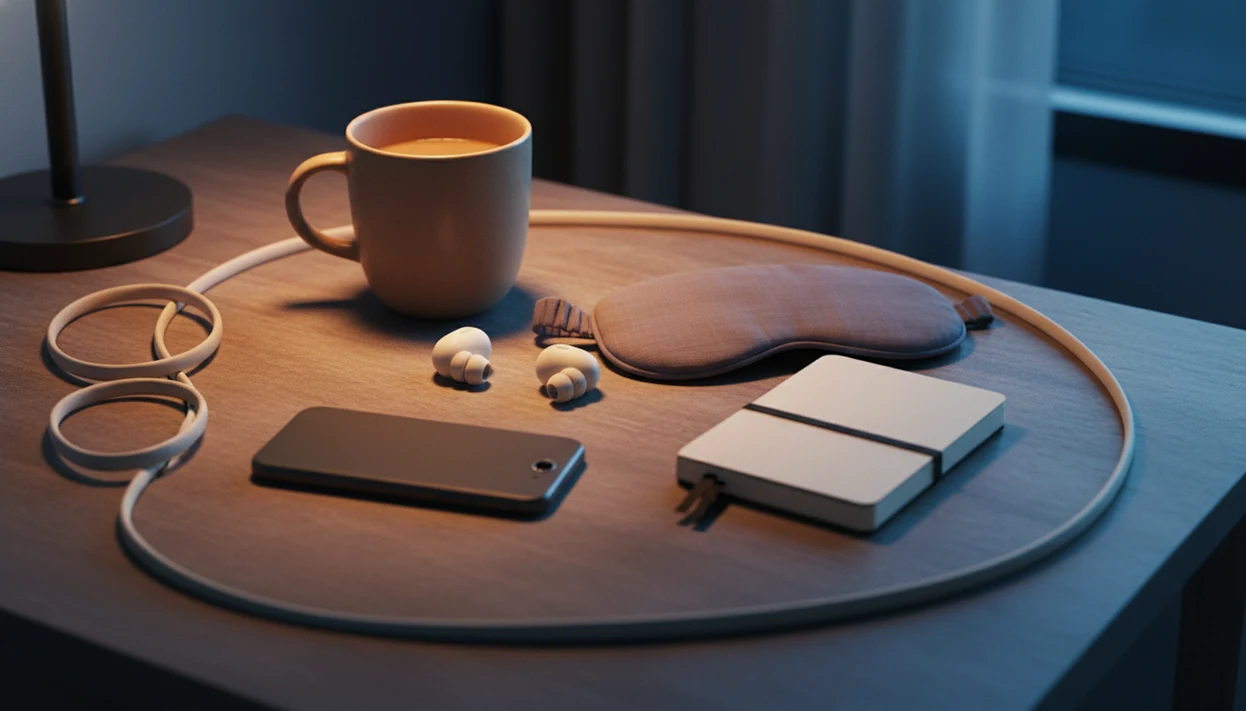


Calming an anxious brain starts with reducing physical stress arousal through steady breathing, grounding, muscle relaxation, or gentle movement, then returning attention to one manageable action. The goal is not to erase every worried thought. It is to ease racing thoughts and body tension enough to notice the present moment and respond more clearly. A short reset can be more manageable than trying to reason through every possible problem.
For longer-term support, repeatable routines matter: protect sleep, notice caffeine and screen overload, and keep a simple calming practice available. Guided breathing, meditation, and sleep audio can provide a focus when attention feels scattered. These tools support short-term calming and daily practice, but they are not medical treatment or a substitute for care when anxiety disrupts ordinary life.
Start here
- Start with the body: slow breathing, grounding, relaxed muscles, and movement can lower anxious intensity.
- Then reduce triggers: caffeine, poor sleep, screen overload, and constant stimulation can keep the anxious brain activated.
- Use guided tools consistently: short breathing audio, meditation tracks, or sleep audio can provide structure, but they are support tools, not medical treatment.
How to Calm an Anxious Brain in the Next 5 Minutes
To calm an anxious brain in the next 5 minutes, lengthen your exhale, name where you are, release tight muscles, and lower stimulation. The aim is not perfect calm. It is a steadier state.
Try this sequence: breathe in for 4, breathe out for 6, and repeat for one minute. Then name the room, the date, and three objects you can see. Unclench your jaw, drop your shoulders, and loosen your hands. If the room feels too loud, dim the screen or step away from the alert that started the spiral.
Small is enough.
Quick techniques reduce anxious intensity; they do not permanently cure anxiety. If you want a voice to follow, choose a short guided breathing session or 5 minute meditation for anxiety support.
How an Anxious Brain Works During Stress
An anxious brain is a mind-body stress loop where threat scanning, racing thoughts, tense muscles, and shallow breathing keep reinforcing each other. Calming works better when it addresses both attention and physical arousal.
During stress, the brain looks for danger and the body prepares to respond. That can feel like a tight chest, restless legs, a fast pulse, or the sense that every unread message matters right now. The thought says, “What if?” The body answers with tension. Then the tension makes the thought feel more urgent.
That loop is not a character flaw.
A useful reset gives the body a safer signal while giving attention somewhere concrete to land. Clinicians typically recommend seeking professional support when anxiety is persistent, intense, or interfering with daily life, especially if panic or avoidance is growing.
When the anxious brain keeps asking for certainty
Some worry loops are less about an immediate danger than the discomfort of not knowing what will happen. Research on intolerance of uncertainty helps explain why settling one question may not settle the worry itself. A 2024 review of 22 psychotherapy studies involving 1,491 participants found a large reduction in intolerance of uncertainty compared with passive controls. Results varied substantially across studies, so this does not mean every therapy or person responds equally.
A practical response is to notice a prediction as a thought, allow some uncertainty to remain, and return to a chosen action without first settling every possibility. That differs from forcing positive thoughts or arguing until anxiety disappears. A review of mindfulness and acceptance interventions found a small improvement in tolerance of difficult feelings. These practices aim to reduce struggle and avoidance, not guarantee relief; persistent impairment needs clinical support. When worry turns into harsh self-judgment, mindfulness for self-criticism can help you respond to yourself with more kindness.
Five Facts About How to Calm an Anxious Brain
- Anxiety is common and not a personal weakness; the CDC reports that more than 1 in 5 U.S. adults live with a mental illness.
- Meditation and mindfulness programs have evidence for small to moderate anxiety improvements, according to a Cochrane review of 136 studies and 11,605 participants.
- Slow breathing, grounding, and muscle relaxation can lower anxious intensity in the moment by reducing stress arousal.
- Sleep loss, caffeine timing, screen overload, and low movement can all make anxious reactivity feel sharper. If anxious reactivity also brings mood swings, understanding why you feel moody may help you notice patterns.
- Apps help most when they make practice easier to repeat, not when they become another thing to check.
For anxious beginners, a short guided session is often easier than silent meditation because it gives the mind a simple track to follow. That can help late at night, when a small timer and a steady breath feel more useful than trying to force sleep. If worry starts soon after waking, try meditation for anxious mornings as a gentle first practice.
Calm Anxious Brain Routine in 6 Steps
Use this routine when anxiety feels high at home, at work, or before sleep. It is simple on purpose, so you do not have to make many decisions.
- Exhale slowly for 60 seconds, making each out-breath slightly longer than the in-breath.
- Ground yourself by naming five things you see, four you feel, and three you hear.
- Relax your body by softening your jaw, shoulders, stomach, and hands.
- Reduce stimulation by lowering brightness, pausing notifications, or moving to a quieter spot.
- Choose one next action such as sending one reply, filling water, or getting into bed.
- Use guided support if needed, such as breathing audio, a short meditation, or sleep audio.
The most common medically supported way to reduce anxious intensity is a body-calming method combined with attention redirection and steady daily habits. For night spirals, breathing exercises for anxiety at night can be easier than thinking your way out.
Best Calm Anxious Brain Tips for Work, Sleep, and Restlessness
The best calm anxious brain tip depends on the trigger and your energy level. A tense workday needs a different reset than midnight overthinking or restless pacing.
| Situation | What to try first | Why it helps |
|---|---|---|
| In-the-moment anxiety | Longer exhales plus grounding | Slows the body while giving attention a place to land |
| Overthinking at night | Sleep audio, body scan, dim screen | Reduces stimulation and gives the mind a low-effort focus |
| Stress at work | Two-minute breathing before the next task | Creates a pause between pressure and reaction |
| Anxious restlessness | Gentle walk, stretching, or wall push | Uses physical energy instead of forcing stillness |
A conference room chair between meetings can become a reset spot if you keep the practice short. For work-specific routines, meditation for work stress fits better than a long bedtime body scan.
MindTastik Support for Sleep, Anxiety, and Everyday Calm
MindTastik offers guided meditations, sleep audio, breathing exercises, and self-hypnosis sessions for adults who want support with rest, anxiety, and everyday calm. It can give structure when choosing a starting point feels harder than the practice itself.
Helpful guided categories include:
- Breathing exercises: short resets for stress spikes or bedtime anxiety.
- Guided meditation: step-by-step attention support for beginners.
- Sleep audio: low-stimulation sound and narration for a wind-down routine.
- Self-hypnosis sessions: habit-focused audio for people who like repeated cues.
Tools like MindTastik, Calm, Headspace, and mindful.org resources can help you practice more consistently. A reading light, a relaxed jaw, and one guided cue may be enough to begin.
Best Fit and Poor Fit for Calm Anxious Brain Techniques
Calm anxious brain techniques fit everyday stress and mild racing thoughts better than emergencies or disabling anxiety. They can support a routine, but they should not delay needed care.
| Best for | Not ideal for |
|---|---|
| Adults with everyday stress | Medical or mental health emergencies |
| Racing thoughts that ease with grounding | Severe panic that feels unsafe or uncontrollable |
| Sleep-related worry and bedtime tension | Anxiety that prevents work, school, caregiving, or basic routines |
| Beginner meditation needs | Situations needing diagnosis, therapy, medication, or crisis care |
| People who want simple daily practice | Trauma patterns that intensify during quiet stillness |
If anxiety is persistent, intense, or interfering with life, professional support is the safer next step. For people who want structured practice alongside healthy routines, a meditation app for anxiety support can be useful. Still, the plan should match the person, not the other way around.
When to Seek Professional Help for Anxiety
Seek professional help when anxiety keeps returning, feels hard to control, or starts shrinking your life. You do not need to wait until things are unbearable; care can be a practical next layer of support.
Common signs include persistent worry, repeated panic, avoiding ordinary places or responsibilities, and sleep disruption that does not settle with basic routines. A therapist can help you understand patterns and practice skills with more support. Medication may also be appropriate for some people, and a medical evaluation can rule out or address physical contributors such as thyroid issues, medication effects, pain, or sleep problems.
Use a simple next-step plan:
- Track what is happening, including panic, avoidance, sleep, caffeine, and major stressors.
- Contact a licensed therapist, primary care clinician, or mental health service if symptoms persist or interfere with daily life.
- Mention trauma history if quiet meditation makes anxiety, flashbacks, numbness, or body fear worse.
- Seek urgent help now if you might hurt yourself, feel in immediate danger, or cannot stay safe.
Getting help is not a failure of calming practice. It is choosing the right size of support.
Before You Start: Safety and Scope
These techniques are support tools for short-term calming and daily practice, not a diagnosis, treatment plan, or substitute for mental health care. Use them to steady the next few minutes, then choose the safest next step for your situation.
- Use breathing, grounding, movement, or guided audio when anxiety is uncomfortable but you can still stay oriented and make basic decisions.
- Notice symptoms that need more than self-help, including severe or repeated panic, chest pain, fainting, thoughts of self-harm, feeling detached from reality, overwhelming fear after trauma, or anxiety that stops sleep, work, school, caregiving, or eating.
- Seek urgent help right away if you feel unsafe, might hurt yourself or someone else, or cannot get through the moment safely.
- Contact a licensed professional if anxiety is persistent, escalating, disabling, or returning despite regular calming practice.
- Treat this guide as one layer of support: useful for a reset, useful for repetition, but not the whole plan when symptoms are intense.
You do not have to prove anxiety is “bad enough” before asking for help.
Guided audio for racing thoughts and bedtime tension
MindTastik’s guided breathing exercises suit moments when following a voice feels easier than remembering a routine. Guided meditations offer another focus for scattered attention, while sleep stories and soundscapes can support a quieter bedtime routine. If breath counting increases self-consciousness, grounding or gentle movement may be a better starting point. Persistent panic, disabling worry, or trauma-related distress calls for professional support rather than a longer audio session. MindTastik is not a medical treatment.
What calming exercises cannot resolve on their own
No single technique works for every anxious brain. A method that helps on Monday may feel useless on Thursday, especially after poor sleep or a high-caffeine afternoon.
- Breathing and meditation may lower intensity temporarily, but they do not cure chronic anxiety.
- Apps are support tools, not substitutes for diagnosis, therapy, medication, or crisis care.
- Poor sleep, caffeine, burnout, trauma patterns, and panic cycles may require broader support.
- Some people feel more aware of anxiety during quiet meditation and may prefer movement or grounding.
- Results are gradual and depend on consistency, stress load, sleep habits, and follow-through.
- More practice time is not always better if it turns into checking, forcing, or self-criticism.
Quiet can backfire.
If stillness makes anxiety louder, try walking, stretching, or a grounding exercise before guided meditation. People dealing with panic symptoms may also need more specific panic attack meditation support and professional guidance.
When breath counting or sitting still makes anxiety harder
- If counting your breath makes you more self-conscious, switch to grounding through touch, sound, or a slow shoulder drop.
- If silence makes racing thoughts louder, a short guided voice may give your attention a steadier place to land.
- If a breathing exercise feels forced, shorten the exhale count rather than pushing for a perfect rhythm.
- If you are too restless to sit still, try a standing reset with relaxed shoulders and one simple cue repeated for two minutes.
- If you keep restarting the same session, pick a shorter practice and finish it once; completion builds trust.
If your nervous system needs something faster than a full sit, try MindTastik breathing exercises for guided breath pacing.
Questions about calming an anxious brain
How can I calm an anxious brain in five minutes?
Start with a comfortable, slightly longer exhale, then name the room and a few objects nearby. Release tension in the jaw, shoulders, and hands, and reduce noise or screen stimulation. Choose one small next action. The aim is a steadier state, not complete calm or a permanent solution.
How do I stop racing thoughts without arguing with them?
Notice the thought as a prediction rather than a problem that must be solved immediately. Return attention to something concrete, such as nearby sounds, contact with a chair, or the next task. This approach reduces the struggle with thoughts; it does not require making them disappear before acting.
Why does my brain keep worrying even after I get reassurance?
Worry can involve difficulty tolerating uncertainty, so answering one question may leave another possible threat to resolve. Practicing acceptance of some uncertainty and returning to a chosen action may be more useful than repeated checking. This is not a diagnosis; persistent worry that interferes with daily life deserves clinical assessment.
How can I calm racing thoughts before sleep?
Reduce screen brightness and notifications, then choose a low-effort focus such as a body scan, sleep narration, or quiet sound. Release muscle tension rather than trying to solve every concern in bed. Sleep disruption that keeps returning despite basic routines is a reason to seek additional support.
Can meditation cure an anxious brain?
No. Mindfulness and acceptance practices may help reduce anxiety symptoms and the struggle with uncomfortable feelings, but research results vary and do not establish a guaranteed cure. Meditation can support a routine. It should not replace assessment, therapy, medication when appropriate, or urgent care.
When should anxiety get professional or urgent help?
Seek professional help when worry keeps returning, feels difficult to control, or disrupts sleep, work, relationships, or basic responsibilities. Severe symptoms need more than a calming exercise. Chest pain, fainting, thoughts of self-harm, or feeling detached from reality are reasons to seek urgent help rather than assume anxiety is the cause.