
Gut Brain Connection: A Practical Guide to Calmer Digestion, Sleep, and Focus
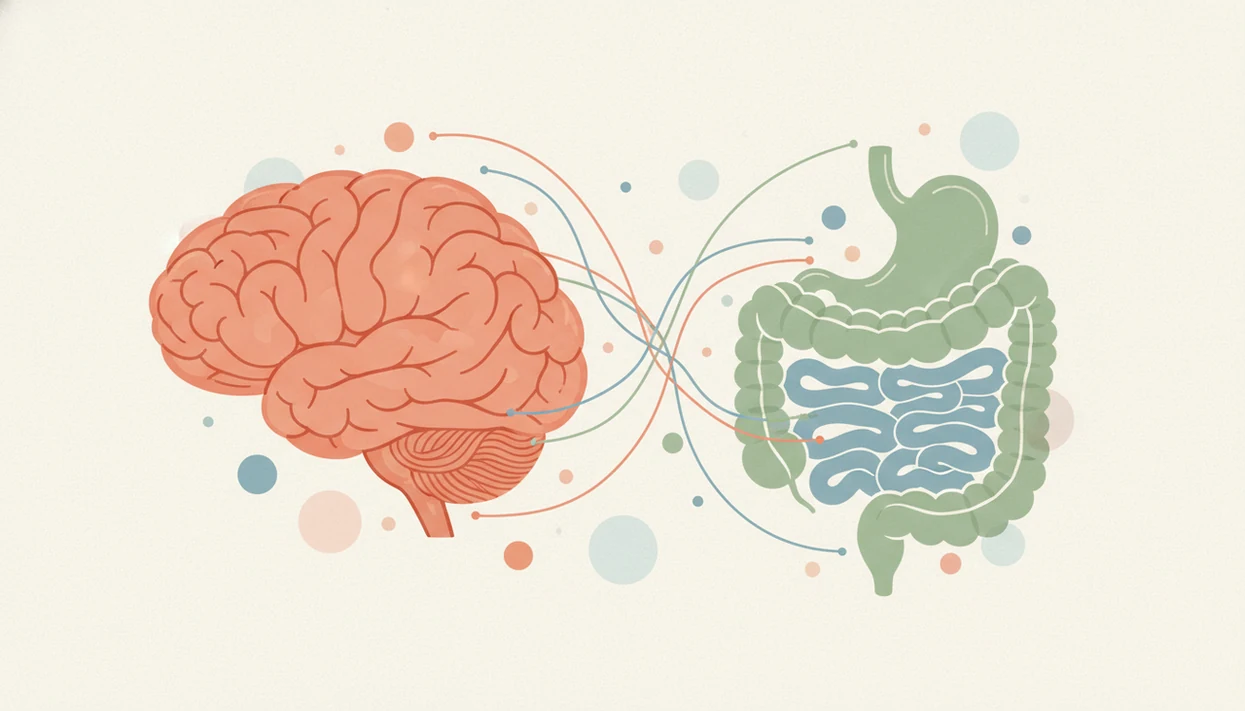


The gut brain connection is the two-way communication between the digestive system and the brain, helping explain why stress can upset the stomach and gut discomfort can affect mood, sleep, anxiety, and focus. Also called the gut-brain axis, it carries signals through nerves, hormones, immune pathways, and gut microbes. Stress-related nausea, appetite changes, and a nervous stomach are familiar examples, but this connection does not mean every digestive symptom is caused by stress.
Practical support combines medical care when needed with steady meals, movement, regular sleep routines, and short relaxation practices. Breathing exercises, body scans, and guided meditation can help with stress management. They belong alongside digestive care, not in place of an assessment for new, severe, or unexplained symptoms.
The essentials
- Your gut and brain communicate through the vagus nerve, hormones, immune signals, and the microbiome.
- Stress can change gut motility and sensitivity, while gut discomfort can reinforce anxiety, poor sleep, and low focus.
- Short daily practices such as breathing, body scans, sleep meditations, and gut-directed relaxation can support the nervous system without replacing medical care.
Gut Brain Connection Definition and Everyday Meaning
The gut, brain connection is a real body communication system, not a vague wellness phrase. It describes how the digestive tract and brain send signals back and forth through nerves, hormones, immune messengers, and gut bacteria.
You already know parts of it. Butterflies before a meeting. Stress nausea before travel. Appetite vanishing after bad news. A nervous stomach when your calendar gets too full.
The gut, brain axis helps explain why digestion, mood, sleep, anxiety, and focus often move together. It does not mean every stomach symptom is “just stress.” It means the nervous system and digestive system are linked enough that everyday calm practices can matter.
Small signals add up.
This guide focuses on practical support: steadier routines, calmer transitions, better sleep preparation, and simple meditation tools that fit into normal life.
How the Gut Brain Connection Works Inside the Body
The gut brain connection works through bidirectional signaling, meaning the gut can affect brain-related systems and the brain can affect digestion. The main pathways include the vagus nerve, stress hormones, immune activity, gut movement, gut sensitivity, and microbial activity. Beyond digestion, research on stress, the brain, and heart health explores how sustained stress may affect other body systems.
Five useful facts:
- The vagus nerve is a major gut, brain highway. It carries signals between the digestive tract and brainstem, helping regulate digestion, heart rate, and relaxation responses.
- Stress changes gut motility. Some people get urgency; others feel slowed down, tight, or bloated.
- Gut sensitivity can rise under strain. A normal amount of gas or stretching may feel sharper when the nervous system is on alert.
- The microbiome influences chemical signaling. Gut microbes interact with neurotransmitters such as serotonin and GABA, plus immune and metabolic pathways.
- Most body serotonin is made in the gastrointestinal tract. Reviews commonly estimate that roughly 90% or more of the body’s serotonin is produced in the gut, but gut serotonin does not simply travel into the brain and become brain serotonin: NIH research: PMC4048923
Some people first notice the connection when stomach tension eases a little after a slow breath.
Gut Brain Connection Evidence for Anxiety, IBS, Sleep, and Focus
Evidence for the gut, brain axis is strongest in conditions where digestion, stress, and nervous system sensitivity overlap. IBS is one of the clearest examples, but the same communication pathways are relevant to anxiety, sleep disruption, and focus.
Five evidence-based points:
- IBS is common. NIDDK estimates that IBS affects about 12% of people in the United States: niddk reference: all content
- Psychological factors can affect symptom severity. Anxiety, depression, and somatization are major contributors in a meaningful subset of IBS patients.
- Mindfulness has measurable but modest effects. A JAMA Internal Medicine review found small-to-moderate improvements in anxiety, depression, and pain outcomes from meditation programs, with important limits in study quality and effect size: PubMed research: 24395196
- Sleep and digestion influence each other. Poor sleep can raise stress reactivity, and gut discomfort can make bedtime feel harder.
- Focus often suffers when the body feels unsafe. A loud stomach, nausea, or cramping can pull attention away from work or conversation. Learning how the mind filters reality can help explain why interpretations of body sensations differ from sensations themselves.
For stress-sensitive digestion, short daily nervous system practice is often easier than occasional long sessions because repetition trains the body during ordinary moments.
Lower stress markers do not prove better digestion
Research offers some support for meditation’s effects on the stress response, but that is different from evidence of digestive improvement. A 2017 review of 45 randomized controlled trials reported reductions in several physiological stress markers, including cortisol, with effects differing by meditation type. Those findings do not establish that a brief breathing session treats IBS, changes gut microbes, or resolves abdominal pain. For related brain research, see what studies suggest about meditation and brain changes, while keeping digestive claims separate.
Cortisol also needs careful interpretation. A 2021 review of mindfulness and biomarkers describes promising but inconsistent findings and explains that cortisol measurements are sensitive to collection time, sleep, medication, illness, caffeine, exercise, and acute events. A single reading is not a complete measure of psychological stress. For this article, the defensible claim is stress-management support, not proof that meditation repairs the gut-brain axis.
Gut Brain Connection Guide for Daily Nervous System Support
A practical gut brain connection guide should feel boring enough to repeat. The goal is not to control every symptom; it is to give your nervous system predictable cues across the day.
- Start with morning breathing. Take five slow breaths before checking messages, especially on days when your stomach already feels tight.
- Pause before meals. Sit down, relax your jaw, and breathe for one minute before the first bite.
- Add gentle movement. Walk after meals when possible, even if it is just around the block or down the hallway.
- Notice patterns lightly. Track sleep, stress, meals, and symptoms without turning your day into a spreadsheet.
- Use nighttime sleep meditation. Choose a short body scan or guided session before bed instead of scrolling.
Tools like MindTastik can support this routine with guided meditation, sleep audio, breathing exercises, and self-hypnosis sessions. If you are brand new, our how to meditate guide keeps the starting point simple.
Gut Brain Connection Tips for Stress-Related Stomach Symptoms
When stress-related stomach symptoms show up, downshifting the nervous system can reduce tension and lower the volume on gut sensitivity. It may not remove the symptom, but it can change how intensely the body reacts.
Try these short practices:
- Breathing reset: Use 5 minutes of slow exhale-focused breathing when your stomach feels jumpy before a call.
- Body scan: Move attention from forehead to belly to feet, softening one area at a time.
- Progressive relaxation: Tighten and release muscle groups, especially shoulders, jaw, belly, and thighs.
- Gentle self-hypnosis audio: Use calm, repetitive guidance when thoughts and gut sensations keep looping. If repetitive thoughts add tension, learning about self-talk and brain cells can offer another perspective on internal dialogue.
- Bedtime wind-down: Pick one 10-minute track before sleep, not six options on a crowded screen.
Clinical research on gut-directed hypnotherapy has reported meaningful IBS improvement for many participants, but trial context matters. App audio is not the same as clinician-led gut-directed hypnotherapy.
Helpful, not magic.
For more practice options, the mindfulness exercises and techniques hub gives simple formats to compare.
Best For and Not For Gut Brain Connection Practices
Gut, brain practices are best for people who notice digestion getting worse with stress, poor sleep, or anxious thinking. They are not appropriate as a substitute for medical evaluation when symptoms are severe, new, or unexplained.
| Fit | Best for | Not for |
|---|---|---|
| Stress-sensitive digestion | Nervous stomach, mild bloating linked to stress, appetite shifts | Severe pain, persistent vomiting, fever |
| Anxiety support | Short resets, breathing, body scans, pre-meal calming | Replacing therapy, medication, or crisis support |
| Sleep disruption | Wind-down routines, sleep meditation, reduced bedtime rumination | Untreated sleep disorders or sudden major sleep changes |
| Beginner practice | People who want simple guided sessions | People who need specialist care for complex symptoms |
| Everyday calm | Repeatable routines before work, meals, and bed | Bleeding, unexplained weight loss, or worsening symptoms |
MindTastik can support sleep, anxiety, beginner meditation, and everyday calm, but it is not a diagnosis or treatment tool. Significant digestive changes deserve professional care.
Gut Brain Connection Diet, Supplements, and Meditation Balance
Do diet and supplements fix the gut brain connection? Food quality, fiber, regular meals, hydration, and movement can support digestive stability, but no single probiotic or supplement reliably fixes mood, anxiety, or gut symptoms for everyone.
Meditation fits beside nutrition and medical advice. It does not replace either. A steady meal pattern may help one person more than breathwork; another person may need a clinician’s help with IBS, reflux, food intolerance, medication effects, or anxiety.
Be careful with overhyped gut, brain marketing. “Psychobiotic” claims can sound tidy, but research on specific microbes and mood is still developing. One-size-fits-all protocols often miss the real pattern in someone’s week.
Track gently. Note sleep, stress, meals, movement, and symptoms for a few days, then stop if tracking makes you more anxious. For bedtime support, a sleep hygiene routine pairs well with calming audio.
A Gut Brain Connection Routine for Sleep and Calm
Guided meditation apps can provide sleep audio, breathing exercises, body scans, and self-hypnosis-style sessions for adults who want sleep, anxiety, and everyday calm support. For the gut, brain connection, use them as nervous system support, not as gut treatment.
A simple routine might look like this: morning breathing before the day begins, a midday reset after lunch, an evening body scan, and sleep audio as the room gets quiet. If digestion, restlessness, or mental chatter shows up overnight, a familiar track can make the next step feel easy to choose.
Consistency over weeks matters more than intensity.
If you are comparing tools, our best meditation app for sleep anxiety guide can help you choose a starting point.
Suggested image caption
Illustration showing the gut, brain axis, the vagus nerve, daily breathing, gentle movement, and bedtime audio as part of a gut brain connection routine.
Medical Review and Source Standards
This article is editorially reviewed for accuracy, scope, and plain-language usefulness; it is not a personal medical review. It explains gut, brain support habits and evidence limits, but it cannot diagnose IBS, anxiety, reflux, food intolerance, infection, inflammatory bowel disease, or any other condition.
We prioritize sources such as NIDDK, NIH, peer-reviewed reviews, and clinical guidelines when describing digestive conditions, meditation research, and red-flag symptoms. App-based meditation, breathing, body scans, and sleep audio are framed here as complementary support for stress regulation and everyday calm, not as treatment or a substitute for a clinician’s plan.
- Check whether a claim is educational, practical, or medical before including it.
- Prefer public health agencies, clinical guidance, and review papers over wellness marketing.
- Separate supportive practices from diagnosis, prescription, or symptom guarantees.
- Flag symptoms such as bleeding, unexplained weight loss, fever, severe pain, persistent vomiting, or major bowel changes as reasons to seek medical evaluation.
- Review this page at least annually, or sooner when major clinical guidance changes.
Last updated: January 2026.
MindTastik sessions for stress-sensitive digestion
MindTastik’s guided breathing exercises offer a follow-along option for a brief pause before meals or after a stressful event. Body scans and sleep meditations may suit adults whose digestive discomfort overlaps with tension or bedtime rumination. These sessions support relaxation, not treatment of the gut.
People seeking a diagnosis, an IBS treatment plan, or advice about food intolerance need clinical care rather than an app. Anyone who finds attention to breathing or belly sensations uncomfortable may prefer a different relaxation practice.
What gut-brain habits cannot treat or prove
The gut brain connection is useful, but it is easy to overstate. Keep these limits in view:
- Research on specific microbes, psychobiotics, and microbiome interventions is still evolving.
- Meditation and relaxation can support stress management, but they do not replace medical care.
- Benefits are usually modest and often require consistency over weeks or months.
- Not everyone responds well to breathing, meditation, body scans, or gut-directed audio.
- Serious, new, or worsening digestive symptoms should be discussed with a healthcare professional.
- Mental health conditions may require therapy, medication, crisis support, or clinician-led care.
- Commercial gut health claims are often more confident than the evidence allows.
- Symptom tracking can help, but it can also feed worry if it becomes constant checking.
Clinicians typically recommend medical evaluation for red flags such as bleeding, unexplained weight loss, fever, severe pain, persistent vomiting, or major changes in bowel habits.
Short practices for pre-meal tension and bedtime settling
| Technique | Best for | Minutes |
|---|---|---|
| Box breathing | settling pre-meal tension | 3-5 min |
| Guided body scan | noticing gut-related stress cues | 8-12 min |
| Sleep wind-down meditation | creating a calmer evening transition | 10-20 min |
Gut brain connection questions
What is the gut brain connection?
The gut brain connection is the two-way signaling system between the digestive tract and the brain. It involves nerves, hormones, immune signals, and gut microbes. It helps explain why stress and digestive discomfort can influence each other, without making every stomach symptom a stress problem.
How does stress affect digestion?
Stress can change how quickly the gut moves and how sensitive it feels. Some people notice urgency, while others feel slowed down, tight, or bloated. Relaxation may reduce tension or the intensity of sensations, but persistent symptoms still need assessment rather than an assumption that stress is the only cause.
Can gut problems make anxiety worse?
Digestive discomfort can reinforce anxious thinking, just as anxiety can make gut symptoms feel more intense. This two-way relationship does not establish which came first or identify a diagnosis. Digestive care and mental health support may both be useful when symptoms repeatedly affect meals, sleep, or daily activities.
Can meditation help IBS symptoms?
Meditation and relaxation can support stress management when stress and digestive sensitivity overlap. They are complementary practices, not substitutes for an IBS assessment or treatment plan. Benefits are generally modest, and some people find breathing exercises or body scans uncomfortable rather than calming.
Are probiotics enough to improve the gut brain connection?
No single probiotic or supplement reliably fixes mood, anxiety, or digestive symptoms for everyone. Research on specific microbes and mood is still developing. Supplements should not replace attention to meals, sleep, movement, or medical advice, especially when symptoms are new, persistent, or worsening.
What foods support the gut brain connection?
Food quality, fiber, hydration, and regular meals can support digestive stability, but there is no single food that fixes the gut brain connection. Individual needs differ. Ongoing symptoms may require advice about IBS, reflux, food intolerance, or medication effects rather than a general gut-health diet.
Can the gut brain connection affect sleep?
Gut discomfort, stress, and bedtime rumination can occur together and make settling for sleep harder. A regular wind-down routine or sleep meditation may help with relaxation, but it does not treat the digestive cause. Sudden major sleep changes or an untreated sleep disorder need more than relaxation audio.
When should stomach symptoms be checked by a doctor?
Severe pain, persistent vomiting, or fever should not be treated as a stress-management problem. New, unexplained, or worsening digestive symptoms also deserve medical assessment. Breathing and meditation can remain supportive practices, but they cannot determine whether symptoms come from IBS, reflux, infection, or another condition.