
Stress, Brain, and Heart Disease: A Practical Guide
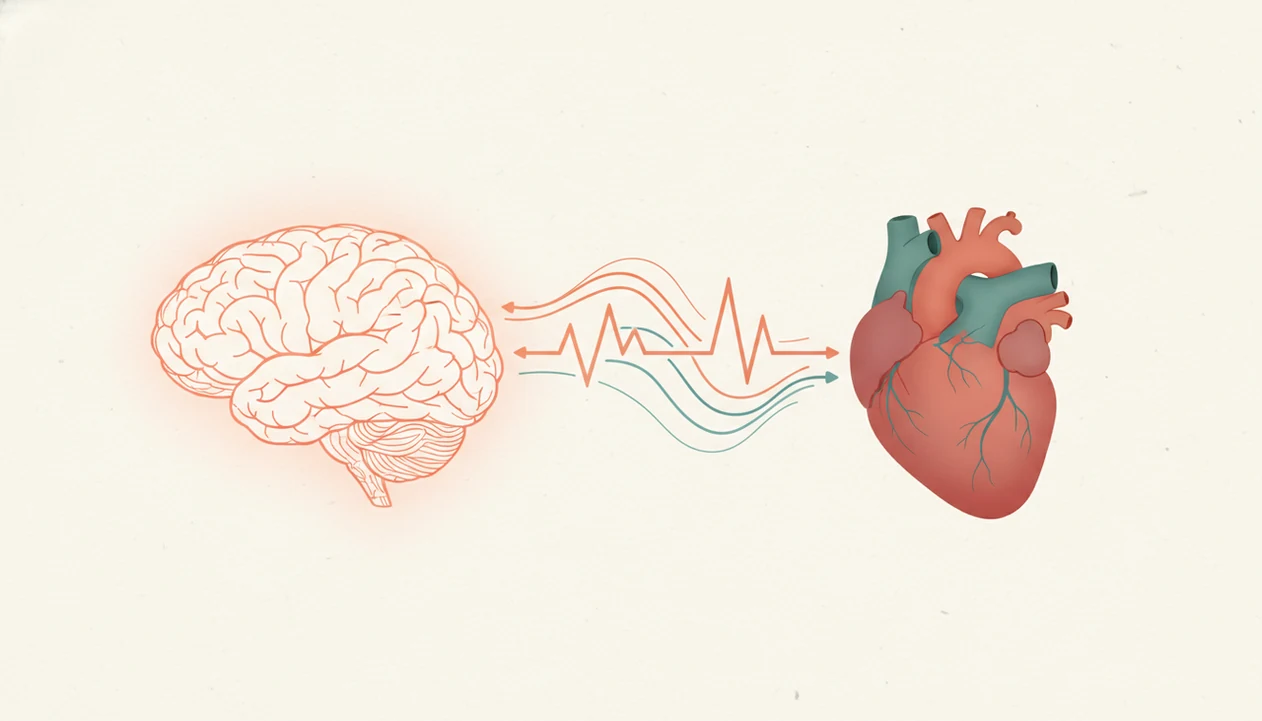


Chronic stress can affect the brain and heart through repeated nervous-system and hormone responses that raise heart rate and blood pressure, increase inflammation, and contribute to long-term cardiovascular risk. This brain-heart loop also affects mood, focus, and sleep. The connection is not a separate diagnosis or proof that stress alone causes heart disease. It describes how sustained psychological strain can add to existing cardiovascular risks.
The practical goal is to reduce repeated stress reactions, not eliminate every stressor. Breathing, meditation, movement, and a regular sleep routine can support that work alongside medical care when needed. Chest pain, shortness of breath, fainting, or sudden neurological symptoms need medical attention, not a calming exercise used to delay care.
What matters most
- Chronic stress is linked with higher blood pressure, inflammation, artery plaque buildup, heart rhythm changes, anxiety, depression, and poorer sleep.
- The brain and heart communicate through nerves, hormones, immune signals, and behavior, so stress can affect both cardiovascular health and emotional regulation. For broader research context, the Mindfulness Science Hub brings together evidence about attention, stress, and meditation.
- Use meditation, breathing, sleep routines, movement, and medical support together; urgent symptoms such as chest pain or shortness of breath need immediate care.
Stress Brain Heart Disease Quick Facts
- Chronic stress is associated with cardiovascular disease risk, not only temporary tension or a rough week.
- Stress activates brain threat circuits, then raises cortisol, adrenaline, heart rate, blood pressure, and inflammation.
- An estimated 805,000 people in the United States have a heart attack each year, per the CDC CDC guidance: facts.htm.
- In one large cohort, higher stress-related brain activity was tied to a 1.6-fold higher risk of major cardiovascular events, including heart attack and stroke ahajournals reference: CIRCIMAGING.120.010931.
- Stress management is supportive prevention; it does not replace diagnosis, cardiac treatment, emergency care, or prescribed medication.
The practical takeaway is simple: reduce repeat surges where you can. That may mean a walk, a clinician visit, a breathing break, or closing the laptop before the third late-night email check.
How Stress Brain Heart Disease Works
Stress brain heart disease works through a brain-heart loop: the brain detects threat, the nervous system prepares the body to react, and repeated activation can strain blood vessels and the heart.
The amygdala is one part of the brain’s threat-detection system. When stress feels constant, it can help keep the sympathetic nervous system switched on. In plain language, that means the body stays closer to fight-or-flight than rest-and-repair. Cortisol and adrenaline rise. Heart rate and blood pressure can climb. Inflammation may increase. The American Heart Association describes stress as a contributor to behaviors and physiological changes that can affect heart health heart reference: stress and heart health.
Over time, repeated stress activation may contribute to vascular damage, plaque buildup, and rhythm changes, especially when other risks are present. The loop also runs backward. A racing heart can make someone scan their body more closely, sleep worse, and lose focus the next day.
In the small hours, that stress loop can feel hard to interrupt. A quiet timer, steady posture, and a few slower breaths may make the next moment feel more manageable.
Meditation changes some stress markers, but that is not proof of heart protection
A 2026 review of 39 mindfulness-based stress-reduction studies, involving 2,059 participants, found a small average reduction in cortisol. Results varied substantially across studies. A 2017 review of 45 randomized trials also reported reductions in several physiological stress markers, including blood pressure and heart rate. These findings support a possible physiological benefit, but they do not establish that meditation prevents heart attacks or reverses cardiovascular disease.
Cortisol results also depend on how and when samples are collected. A 2021 review of mindfulness and biomarkers describes inconsistent findings and notes that sleep, medication, illness, caffeine, exercise, and acute events can affect cortisol measurements. A single result is therefore not a complete measure of psychological stress. For daily care, changes in sleep, symptoms, and routine consistency are more useful practice goals than trying to achieve a particular cortisol number.
How to Use Stress Management for Brain and Heart Health
Use stress management as a steady support layer for brain and heart health, not as a way to explain away symptoms. The safest plan starts by separating urgent warning signs from daily stress patterns, then building a routine you can repeat. Understanding the evidence and limits of mindfulness can help you set realistic expectations for this supportive practice.
- Rule out urgent symptoms first. If you have chest pressure, shortness of breath, fainting, one-sided weakness, severe headache, or a new irregular heartbeat, seek medical help instead of trying to calm it down at home.
- Choose one daily stress cue. Pick a moment that already happens, such as bedtime, commuting, opening email, or walking into meetings, and attach one calming practice to it.
- Pair several small supports. Use slow breathing, light movement, a predictable sleep routine, and clinician follow-up when symptoms, medications, blood pressure, or heart risk need review. For more ways to strengthen everyday coping, consider science-backed strategies for resilience alongside your existing support plan.
- Track what changes. Notice whether sleep, anxiety, palpitations, or chest sensations improve, worsen, or appear during exertion, and write down patterns before appointments.
- Escalate when symptoms repeat. Recurring chest discomfort, severe anxiety, worsening panic, or stress that disrupts daily life deserves a clinician’s input.
Stress Brain Heart Disease Warning Signs
“Is this stress, or is it something serious?” If symptoms could be a heart attack, stroke, or dangerous rhythm problem, treat them as medical until a clinician says otherwise.
Seek emergency care for chest pain, chest pressure, shortness of breath, fainting, one-sided weakness, sudden severe headache, jaw pain, arm pain, or a new irregular heartbeat. Do not use meditation, breathing, or a calming app to wait out these symptoms.
Common stress symptoms can include racing thoughts, muscle tension, insomnia, irritability, digestive discomfort, and occasional palpitations. They can feel intense. Still, new or worsening symptoms deserve evaluation, especially if they happen with exertion, dizziness, sweating, nausea, or a sense that something is very wrong.
Clinicians typically recommend urgent assessment for possible heart attack or stroke signs because early treatment can change outcomes. Breathing can wait. Emergency care cannot.
Daily Risk Factors in Stress Brain Heart Disease
Daily risk often builds through patterns, not one dramatic moment. Anxiety, depression, PTSD, burnout, loneliness, and chronic psychological distress can all keep the stress response more reactive.
These patterns also affect behavior. Poor sleep makes movement harder. Inactivity can raise cardiometabolic risk. Smoking, alcohol overuse, emotional eating, missed medication, and skipped preventive care can quietly stack up. None of this means blame belongs on the person who is stressed. It means the support targets are real and modifiable.
About 1 in 5 U.S. adults reported high psychological distress during the COVID-19 pandemic period, according to CDC data CDC guidance: mental health.htm. That matters because psychological distress is linked with higher blood pressure, inflammation, and coping behaviors that can worsen heart risk.
A useful stress brain heart disease guide should lower shame first. Then it should help you choose one next step that feels manageable.
5 Daily Stress Brain Heart Disease Tips
Use stress brain heart disease tips as a daily support routine, not as medical treatment. The goal is to reduce repeated stress reactivity and protect the habits that support heart health.
- Start with a morning check-in. Notice sleep, mood, body tension, and the one stressor most likely to hijack your day.
- Take a breathing break. Try five slow breaths before a meeting, after an argument, or before checking another message.
- Move your body. Walk, stretch, or do light activity you can repeat without turning it into a performance.
- Create an evening wind-down. Dim the phone screen, lower the lights, and choose calmer input before bed.
- Support sleep with guided audio. A guided meditation or sleep-audio app can offer breathing exercises, body scans, and calming narration when you want more structure than silent practice.
For someone who keeps losing the breath count after four, a guided session is often easier than silent meditation because the next instruction is already there. For basics, this how to meditate guide gives a simple starting point.
Stress Brain Heart Disease Self-Care: Best Fits and Red Flags
Self-care fits best when symptoms are mild, familiar, and not medically urgent. It does not fit when symptoms suggest a heart attack, stroke, severe depression, suicidal thoughts, or uncontrolled panic.
| Self-care tool | Best fit | Not fit |
|---|---|---|
| Breathing exercise | Daily tension, quick resets, pre-meeting nerves | Severe shortness of breath or chest pressure |
| Guided meditation | Sleep trouble, mild anxiety support, focus resets | Replacing therapy, medication, or cardiac care |
| Wind-down routine | Habit consistency and prevention routines | Sudden neurological symptoms or fainting |
| App support | Repeatable calm practice | Emergency symptoms or suicidal thoughts |
Best for daily stress support
MindTastik can be gentle daily support for sleep, anxiety, focus, and calm when symptoms are not urgent.
Not for urgent symptoms
Chest pain, suspected heart attack or stroke, severe depression, suicidal thoughts, uncontrolled panic, or medication questions need qualified care. The safer choice is boring but true: call for help.
Stress Brain Heart Disease Tips for Sleep, Anxiety, and Focus
Sleep, anxiety, and focus are practical intervention points because they shape how reactive the brain-heart loop feels the next day. Poor sleep raises stress sensitivity and makes heart-healthy choices harder.
- Sleep: A predictable wind-down routine can reduce late-night stimulation. Earbuds on a nightstand, one side tangled around a charging cable, are a small reminder to set up bedtime audio before exhaustion hits.
- Anxiety: Anxiety can amplify body scanning, racing heart sensations, and worry loops. Short grounding practices help some people stop checking every heartbeat.
- Focus: Brief focus practices reduce cognitive overload during the workday. A 5-minute breathing exercise may be more realistic than a 20-minute body scan on a crowded afternoon.
- Guided support: MindTastik bundles guided meditation, sleep tracks, breathing practice, and self-hypnosis audio for adults working on sleep, anxiety, and daily calm.
If you are comparing options, the best meditation app for sleep anxiety guide can help you match features to your routine. Image caption guidance: show a brain-heart stress loop with sleep, breathing, movement, and meditation icons; caption it “stress brain heart disease and everyday calming practices.”
Guided practice for daily tension, not cardiac symptoms
MindTastik’s breathing exercises and guided meditation library suit familiar daily tension, racing thoughts, and a regular evening wind-down. Following a voice can make practice simpler when choosing what to do feels like another task.
The app is not a medical treatment. New chest symptoms, fainting, or a new irregular heartbeat call for medical evaluation rather than an audio session. Persistent anxiety or sleep problems may also need clinical support, with meditation serving as an optional addition rather than the main plan.
What stress management cannot tell us about heart risk
Stress matters, but it is not the whole story. A careful stress brain heart disease guide should make room for uncertainty, medical evaluation, and individual risk.
- Stress is one risk factor among many, including age, genetics, cholesterol, diabetes, smoking, blood pressure, and existing disease.
- Meditation and breathing can support stress regulation, but they do not diagnose, treat, or reverse heart disease.
- Research often shows association and risk pathways, not a simple one-cause explanation for every person.
- Apps are not a substitute for emergency care, cardiology care, therapy, or prescribed medication.
- Some people need trauma-informed support, medication, or clinician-guided treatment beyond self-care.
- Heart symptoms should be medically evaluated even when they seem stress-related.
- A calm routine may help daily coping, but it cannot rule out coronary artery disease, arrhythmia, or stroke risk.
If stress feels tangled with panic, sleep loss, or persistent low mood, a meditation app for anxiety support may be one support layer. It should sit beside care, not replace it.
What Racing Thoughts Need
Racing thoughts usually do not need a debate; they need a simpler signal to follow. A steady breath, a shoulder drop, or a counted exhale can give the nervous system a low-effort anchor when stress feels mentally loud. The useful target is not a blank mind, but a repeatable shift from spiraling to noticing. A reality filter meditation offers another way to notice how thoughts and expectations shape your interpretation of the moment.
Stress, brain, and heart questions
Can chronic stress cause heart disease?
Chronic stress can contribute to cardiovascular risk through repeated nervous-system activation, higher blood pressure, inflammation, and disrupted habits such as sleep or medication routines. It is one factor among many, not a complete explanation. Age, genetics, cholesterol, diabetes, smoking, and existing disease also matter.
How does the brain's stress response affect the heart?
The brain detects threat and activates nervous-system and hormone responses that prepare the body to react. Adrenaline and cortisol rise, and heart rate and blood pressure can increase. When that response happens repeatedly, it can strain the cardiovascular system while also affecting sleep, attention, and emotional regulation.
Can anxiety cause chest pain, or could it be a heart attack?
Anxiety can involve physical tension and alarming body sensations, but symptoms alone cannot safely distinguish stress from a cardiac problem. Chest pain or pressure, shortness of breath, fainting, jaw pain, or arm pain should not be managed by waiting for meditation to work. Seek emergency care for possible heart attack symptoms.
Can one stressful event trigger a heart attack?
The stress-heart connection does not mean every intense argument or difficult day will cause a heart attack. Stress is one part of an individual's risk picture, and this guide cannot estimate the risk from a single event. Chest pressure, breathlessness, or other urgent symptoms need care regardless of what happened beforehand.
Does meditation reduce the risk of heart disease?
Research has found reductions in some stress-related markers, including cortisol, blood pressure, and heart rate, but results vary. Those changes do not by themselves prove that meditation prevents heart disease or heart attacks. Meditation is supportive stress management, not a replacement for prescribed treatment or cardiovascular risk assessment.
Why does poor sleep make stress harder to manage?
Poor sleep can increase stress sensitivity and make movement, regular meals, and other heart-supporting habits harder to maintain. A predictable evening wind-down can reduce late-night stimulation. Sleep support belongs alongside stress management, but persistent sleep problems deserve attention rather than being treated only as a failure to relax.
What can help with everyday stress without ignoring heart symptoms?
For mild, familiar tension, a repeatable routine can include a brief breathing break, walking, guided meditation, and a consistent bedtime wind-down. Attach one practice to an existing daily cue rather than waiting for stress to peak. New or worsening symptoms need evaluation, and urgent symptoms take priority over any calming routine.