
Mindfulness Practice for Sleep: A Practical Nightly Guide


A mindfulness practice for sleep is a short bedtime routine that uses breath, body sensations, or sounds to reduce pre-sleep arousal and make rest easier. The aim is not to empty the mind. It is to notice thoughts without judging them or following every worry, then return attention to a simple anchor. This can ease the struggle with bedtime thoughts rather than force sleep.
A practical starting point is 5 minutes, building toward 10 to 20 minutes if the routine feels comfortable. Regular practice and consistent sleep habits matter more than a single long session. Mindfulness may support sleep quality, but persistent insomnia, possible sleep apnea, severe anxiety, or trauma-related distress need professional attention rather than meditation alone.
The bedtime essentials
- Use mindfulness to relate differently to racing thoughts, not to force your mind blank.
- Start with 5 minutes of breathing, then add a 10-minute body scan or guided sleep meditation.
- Mindfulness can support sleep quality, but persistent insomnia, sleep apnea symptoms, trauma distress, or severe anxiety deserve professional care.
Mindfulness practice for sleep guide: bedtime thoughts, stress, and app support
Mindfulness practice for sleep is not about forcing sleep, emptying the mind, or winning a quiet-brain contest. It is a bedtime attention routine that helps you notice thoughts, body tension, and stress signals without turning them into another hour of worry.
That matters when the room is dark, the phone is dimmed, and one thought keeps opening ten more. Mindfulness can help with bedtime worry, rumination, screen overstimulation, and the awkward transition from doing mode to rest mode.
App-based audio can make this easier for beginners because the sequence is already laid out. You can pick a starting point, such as breath awareness, a body scan, or a guided sleep session. MindTastik offers wellness-focused audio with guided meditations, sleep support, breathing practices, and self-hypnosis sessions for adults seeking steadier evenings and everyday calm. For this page, treat app guidance as structure for a bedtime habit, not as a diagnosis, medical treatment, or promise that sleep will happen immediately.
Small structure helps at night.
Before you start a mindfulness practice for sleep
Before you start a mindfulness practice for sleep, make the setup safe, quiet, and low-pressure. The goal is to remove avoidable decisions so the practice can stay simple once you begin.
- Choose a safe time and place, after you are finished driving, cooking, work tasks, or anything that needs full attention.
- Set the phone first: dim the brightness, lower or test the volume, turn on Do Not Disturb, and choose the audio before you settle.
- Decide what feels safest for your nervous system tonight: eyes closed, eyes softly open, or guided audio with a calm voice.
- Practice somewhere other than bed if lying there makes you feel judged, frustrated, or pressured to “make sleep happen.” A chair, floor cushion, or edge of the bed can work.
- Skip self-help and seek professional care if sleep loss affects driving or work safety, if you have gasping or breathing pauses, severe panic, trauma distress, worsening depression, chronic pain, medication concerns, or insomnia that keeps persisting.
A good setup should feel almost boring: safe room, quiet phone, clear choice, no performance test.
2015 JAMA evidence behind mindfulness practice for sleep quality
Research on mindfulness practice for sleep is promising, but it should not be described as proof of a cure. The evidence is strongest when mindfulness is used regularly and compared with education or other behavioral sleep supports.
- In a 2015 JAMA Internal Medicine randomized trial, older adults with moderate sleep disturbance improved Pittsburgh Sleep Quality Index scores by 2.8 points with mindfulness meditation versus 1.1 points with sleep education JAMA Internal Medicine study: 2110998.
- A 2019 systematic review found “moderate evidence” that mindfulness meditation improves sleep quality in clinical populations, though the overall evidence quality was low to moderate NIH research: PMC6557693.
- Per the CDC, about 35.2% of U.S. adults reported sleeping less than 7 hours in a 24-hour period CDC guidance: adults.html.
- Mindfulness appears to help sleep indirectly by reducing pre-sleep arousal, not by acting like a sedative. To understand a deeper stage of rest, learn how slow wave sleep supports brain health.
- The safest takeaway is practical: mindfulness may improve sleep quality for some adults, but persistent sleep problems still deserve proper evaluation.
For many adults, mindfulness is often easier than “trying harder to sleep” because it gives the mind a repeatable task.
What sleep-app studies do and do not show
Evidence for digital mindfulness is not the same as evidence for every meditation app. A 2025 review of 18 randomized trials, involving 4,870 participants, found improved sleep outcomes, but rated the overall certainty of evidence as very low. Differences between programs, reliance on self-reported sleep, variable adherence, and risk of bias limit confidence in the result. A reported improvement does not necessarily mean objectively longer sleep.
A randomized trial of the Calm app found improvements in perceived sleep quality and pre-sleep arousal among adults with elevated insomnia symptoms. That finding applies to the program studied, not automatically to other apps. A 2024 review of sleep apps also found that much of the evidence concerned cognitive behavioral or multicomponent programs rather than meditation alone. These studies do not establish equivalence to clinician-delivered insomnia treatment. For meditation-based bedtime support, explore meditation for insomnia while keeping professional assessment central when sleep problems persist.
Brain and body mechanisms behind mindfulness practice for sleep
Mindfulness practice for sleep works by lowering pre-sleep arousal, the alert state that keeps the brain scanning, planning, and replaying. Rumination tells the body there is still a problem to solve, so the stress response stays slightly switched on.
In practice, you place attention on one steady anchor: breath, body sensations, or sound. The technical term is focused attention. In plain language, you give the mind one gentle place to return to when it wanders.
Acceptance is the other half. A thought like “I need to sleep now” is noticed as a thought, not treated as an emergency. That small shift can stop the second wave of frustration.
Repeated practice can also become a learned bedtime cue. If you use the same breath pattern after brushing your teeth, the body starts linking that routine with slowing down. Not instantly. More like a familiar path the nervous system learns to recognize.
5-step bedtime routine for mindfulness practice for sleep tonight
Use this five-step routine when you want something simple enough to follow in the middle of the night, with the room cool, the pillow turned over, and sleep still feeling just out of reach.
- Set a 5-20 minute timer or choose a guided session in an app such as MindTastik, Calm, or Headspace.
- Dim your screen, lower the volume, and place the phone face-down or just out of reach.
- Follow three slow breaths, noticing the inhale, the pause, and the full exhale without changing too much.
- Scan the body from forehead to toes, softening the jaw, shoulders, belly, hips, and feet.
- Return attention each time thoughts interrupt, using a phrase like “thinking” or “back to breathing.”
If the routine feels too long, cut it down. A 5-minute version is still a real practice. For a fuller evening structure, a bedtime routine for adults can pair mindfulness with light, temperature, and timing cues.
Best mindfulness practice for sleep by 5 bedtime problems
The best mindfulness practice for sleep depends on the problem keeping you alert. Racing thoughts need a different anchor than tight shoulders or screen-fried attention.
| Bedtime problem | Mindfulness practice to try | Why it fits |
|---|---|---|
| Racing thoughts | Mindful breathing or labeling thoughts | Gives the mind a simple anchor and reduces mental chasing |
| Body tension | Body scan | Moves attention through tight areas without forcing relaxation |
| Anxiety spike | Longer-exhale breathing | Extending the exhale can feel physically settling |
| Screen overstimulation | Sound awareness or guided sleep audio | Replaces scrolling with one calm listening task |
| Waking at 3 a.m. | Brief non-effortful breath practice | Keeps the reset quiet and low-pressure |
For racing thoughts, the aim is not to delete the thought stream. It is to stop joining every sentence it offers. If that is your main pattern, a calming night routine for racing thoughts may be a better first plan than a long silent meditation.
A good meditation app for sleep anxiety and everyday calm delivers guided structure, repeatable routines, and easier session choice, not a guaranteed knockout or replacement for care.
7 mindfulness practice for sleep tips for a repeatable bedtime habit
A repeatable mindfulness practice for sleep works better when it is boring in a good way. Same cue, same window, same low-pressure start.
- Choose a daily range: Practice 5-20 minutes, not only on the worst nights.
- Pair it with sleep hygiene: Keep a consistent schedule, cool dark room, caffeine limits, and reduced screens.
- Track patterns lightly: Mood, anxiety, and sleep notes can help you choose between breathing, body scan, or sleep audio.
- Practice earlier too: Daytime mindfulness can lower the stress load you bring into bed.
- Keep the setup easy: Put earbuds on the nightstand, even if one side is tangled around a charging cable.
- Use guidance when tired: Tools like MindTastik, mindful.org resources, and other guided libraries can reduce decision fatigue.
- Protect the routine: If you miss a night, restart without turning it into a scorecard.
For the basics that surround meditation, use a sleep hygiene checklist alongside the practice.
A 5-minute breathing micro-routine
Spend one minute settling your posture, three minutes following the breath, and one minute lengthening the exhale slightly.
A 10-minute body scan micro-routine
Move attention from the face to the feet, pausing at each area long enough to notice pressure, warmth, tingling, or tension.
Best-fit adults and red flags for mindfulness practice for sleep
Mindfulness practice for sleep is a good fit for adults whose nights are disrupted by stress, racing thoughts, mild anxiety, screen restlessness, or inconsistent wind-down habits. It is not a substitute for medical or mental health evaluation when symptoms are severe, dangerous, or persistent.
| Best for | Not ideal as a stand-alone approach |
|---|---|
| Bedtime stress after work | Possible sleep apnea symptoms, such as gasping or loud snoring |
| Racing thoughts without major safety concerns | Severe or long-lasting insomnia |
| Mild anxiety that responds to grounding | Depression, trauma symptoms, or panic that feels unmanageable |
| Screen-related restlessness | Chronic pain or medication-related sleep questions |
| Adults building a wind-down habit | Any sleep problem that is worsening despite routine changes |
Quiet eyes-closed practice can feel uncomfortable for some people with trauma histories. A gentler option may be eyes open, grounding through sound, or working with a trauma-informed clinician.
Clinicians typically recommend behavioral sleep strategies, consistent routines, and professional assessment when sleep loss is chronic or linked with other symptoms.
Seek prompt medical advice if sleep loss affects driving safety, work safety, mood stability, or if another person notices choking, gasping, or repeated breathing pauses during sleep.
8 common mistakes in mindfulness practice for sleep and anxiety
Does mindfulness practice for sleep fail if your mind keeps thinking? No. The most common mistake is treating thoughts as proof that you are doing it wrong.
Here are eight mistakes that make people quit too early:
- Trying to clear the mind completely.
- Judging the practice only by whether sleep happens immediately.
- Using guided audio passively while still scrolling.
- Turning meditation into another performance test.
- Starting with a 30-minute session when 5 minutes is more manageable.
- Practicing only during panic-level nights.
- Ignoring caffeine, light, room temperature, and bedtime timing.
- Giving up after two nights instead of testing several weeks.
Active mindfulness asks you to notice and return. Passive relaxing audio can be pleasant, but it may not train the same attention skill.
Wanting a steady voice to turn on when your mind feels crowded is completely understandable. Still, the practice works better when the audio gives you something simple to do.
Image caption and alt text for a mindfulness practice for sleep routine
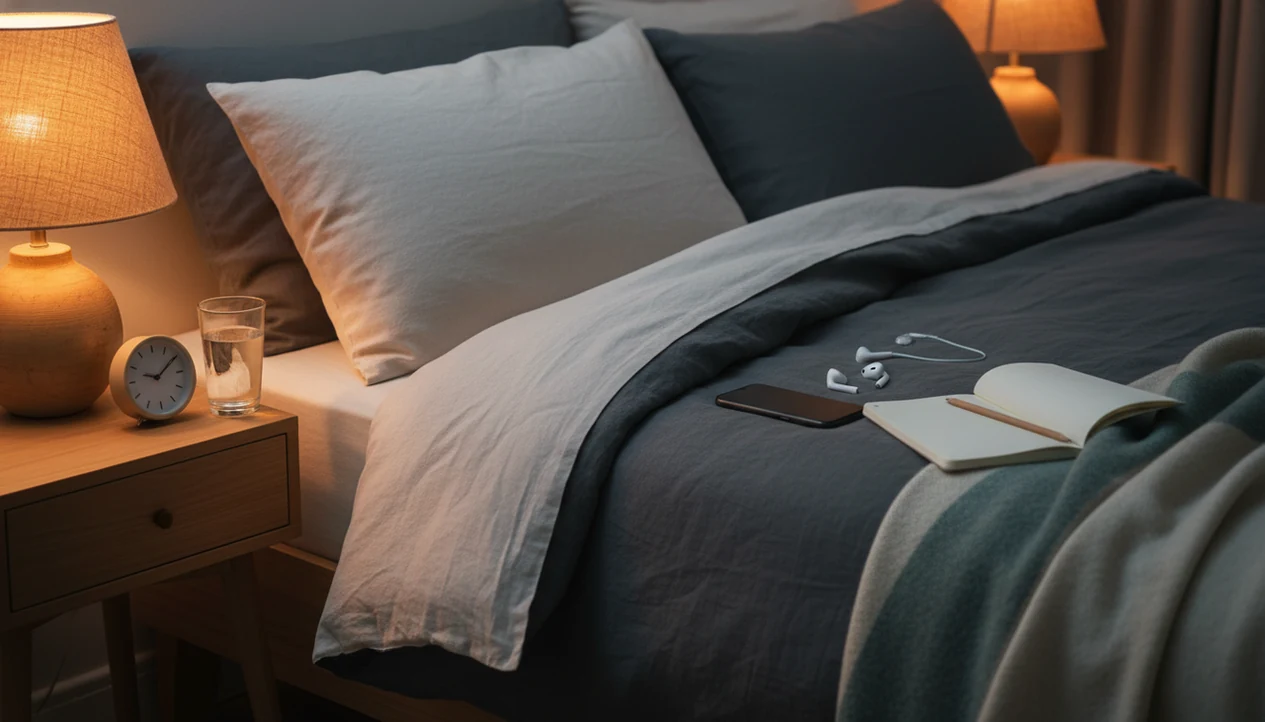
Use the image to show the routine, not a medical promise. A useful caption would be: “An adult begins a mindfulness practice for sleep with guided bedtime audio, a dim room, and a phone placed face-down on the nightstand.”
Good alt text should include the primary keyword naturally, such as: “Adult using a mindfulness practice for sleep with dimmed phone, quiet bedroom, and guided breathing audio.” Keep it plain and descriptive.
Avoid words like “cure,” “treatment,” “guaranteed sleep,” or “insomnia fixed.” The image should support breath awareness, body scan practice, and app-guided audio as part of a wind-down routine. Pajamas warm from the dryer can be a nice visual detail, but the main subject is the calm setup before sleep.
Guided audio for a repeatable bedtime practice
MindTastik’s guided meditation library suits adults who prefer spoken prompts to remembering a bedtime sequence. Breathing exercises offer another simple attention task, while sleep stories may suit nights when following a quiet narrative feels easier than focusing inward. Choosing one familiar session can reduce bedtime decisions. Adults who prefer silence may find an unguided routine sufficient. Persistent insomnia or distress during meditation calls for clinical support, not a different audio track. MindTastik is not a medical treatment.
When bedtime mindfulness is not enough
Mindfulness practice for sleep is useful for many adults, but it has limits. Treat those limits seriously, especially if sleep loss is affecting safety, mood, work, or health.
- Mindfulness does not work for everyone, and some people feel more alert when they first try it.
- The evidence is promising but not definitive; many studies are low to moderate quality.
- It is not a sedative, and it cannot guarantee instant sleep on a difficult night.
- Serious sleep symptoms need medical evaluation, including gasping, choking, loud snoring, extreme daytime sleepiness, or sudden sleep changes.
- Some people may need trauma-informed support, especially if quiet body awareness feels unsafe or overwhelming.
- Severe anxiety, depression, chronic pain, medication questions, or persistent insomnia should be discussed with a qualified professional.
- Sleep hygiene still matters. A consistent schedule, reduced screens, and a dark cool room can change how well the practice lands.
- App guidance can help, but it should not replace care when symptoms are escalating.
If screens are the hardest part, a screen-free bedtime meditation may be more useful than adding another app habit.
When Sleep Won't Come
Imagine the room is quiet, the dim lamp is off, and your head is on the pillow, but your mind keeps reviewing tomorrow. A beginner mistake is trying to force calm; a better move is to give attention a small job, such as following one slow exhale or noticing the contact points of the body. Sleep practice works best when it feels like a soft landing, not a performance test.
A Bedtime Decision Guide
| If you... | Try | Why | Note |
|---|---|---|---|
| Your thoughts are busy but not emotionally intense | A short sleep story or gentle guided meditation | A simple narrative can reduce decision-making and give the mind something low-effort to follow. | Choose familiar, quiet content rather than something suspenseful. |
| Your body feels tense after a long day | A body scan with slow exhale cues | Moving attention through the body may make tension easier to notice without wrestling with it. | Skip any area that feels uncomfortable to focus on. |
| You wake up and do not want to look at a bright screen | Offline audio prepared earlier in the evening | Starting from a saved session can keep the routine simple when you are already tired. | Set volume and playback before bed when possible. |
On nights when guided practice feels like too much effort, MindTastik sleep stories offers low-stimulus audio you can play in the background.
Bedtime mindfulness questions
How long should a mindfulness practice for sleep last?
Start with 5 minutes rather than making bedtime meditation another demanding task. A routine of 5 to 20 minutes can include breath awareness, a body scan, or guided audio. Longer is not automatically better. Choose a manageable length and practice regularly instead of saving it only for difficult nights.
Can I practice mindfulness in bed when I cannot sleep?
A brief practice in bed can be part of a wind-down routine, provided it does not become a test of how quickly sleep arrives. If lying there increases frustration or pressure, practice somewhere else. Persistent difficulty sleeping needs assessment rather than progressively longer meditation sessions in bed.
Why does meditation sometimes make me more awake or anxious?
Some people feel more alert when they begin, and focusing inward can bring distressing thoughts or sensations into sharper attention. Try a shorter practice, softly open eyes, or an external sound anchor. Stop if distress increases. Repeated anxiety, agitation, or sleep disruption during meditation deserves professional advice.
Which mindfulness practice is best for racing thoughts at bedtime?
Breath awareness or briefly labeling thoughts provides a simple place to return when the mind keeps planning or replaying events. A body scan may fit better when tension is the main problem. No technique is best for everyone. Choose an anchor that feels manageable rather than one that requires effortful concentration.
Can mindfulness replace CBT-I for chronic insomnia?
No. Cognitive behavioral therapy for insomnia, or CBT-I, is the guideline-supported initial treatment for adults with chronic insomnia. It addresses sleep-related thoughts and behaviors through a structured program. Mindfulness may help with pre-sleep arousal as an additional practice, but it should not replace assessment or established insomnia care.
Can mindfulness help me get back to sleep after waking at night?
A brief breath or body-awareness practice can offer a low-pressure attention task after waking. It cannot guarantee a return to sleep. Avoid treating each minute awake as a failure or turning the practice into a long exercise. Frequent awakenings, gasping, loud snoring, or marked daytime sleepiness need medical attention.