
Mindfulness for Teachers: A Practical Guide for Calm Classrooms
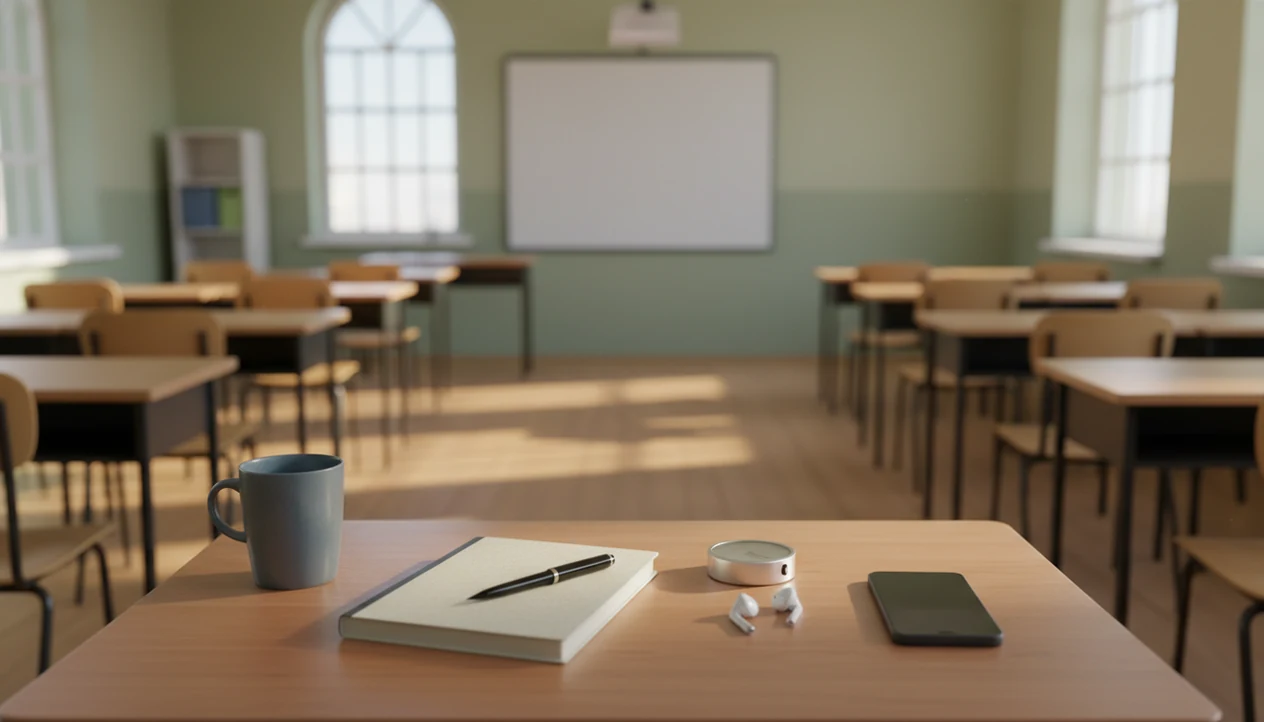


Mindfulness for teachers means using present-moment awareness to train attention, notice stress reactions, and respond to students more deliberately. Breathing, body scans, and mindful listening can support self-regulation and classroom presence. The starting point is the educator’s own response to pressure, not making students sit silently or treating a noisy classroom as a failure.
A workable routine fits into the school day: 30-60 seconds between transitions, 3-5 minutes before class, and a wind-down practice before sleep. A pause before answering a difficult question serves a different purpose from a bedtime body scan. Guided meditation, breathing exercises, sleep audio, and reflection prompts offer options when distraction, worry, or trouble settling at night makes quiet practice difficult.
The essentials for a school day
- Teacher mindfulness starts with the educator’s own nervous system, not with forcing students to be quiet.
- The most sustainable routine is brief: 30-60 seconds between transitions, 3-5 minutes before class, and a wind-down practice before sleep.
- Guided meditation, sleep audio, breathing exercises, and reflective prompts can support the habit when sleep, anxiety, or everyday calm are the main barriers.
Mindfulness for teachers guide: the five essentials
- Mindfulness is attention training for adults first. It helps teachers notice stress signals, reset attention, and choose a response before classroom pressure takes over.
- Short practice counts when it repeats. A 45-second breath at the classroom door can be more realistic than a long session teachers never start.
- Research is promising for stress and burnout. Teacher mindfulness studies have linked practice with lower stress, better emotion regulation, and healthier classroom climate.
- Useful practices are simple. Box breathing, a body scan, a sensory check-in, mindful listening, and gratitude reflection are enough to begin.
- Guided routines can reduce decision fatigue. Apps such as Calm, Headspace, and Insight Timer can help teachers choose sleep, anxiety, focus, or everyday calm sessions without searching at 10:47 p.m.
The key is not sounding serene all day. It is catching the moment when your jaw tightens before you answer a student, then giving yourself one breath of space.
Tiny counts.
How mindfulness for teachers works in the nervous system
Mindfulness for teachers works by training attention and body awareness so the nervous system has more chances to pause before reacting.
In school language, that pause matters when the projector fails, two students argue, and the next class is already lining up. Attention training interrupts rumination, threat scanning, and automatic reactions. Breath and body awareness give the brain a clear signal: notice what is happening, name it, and respond with intention. The technical term is emotion regulation, which simply means staying connected to choice during stress.
A 2016 randomized controlled trial of 224 elementary school teachers found that a mindfulness-based program reduced burnout and improved classroom organization and emotional support, with effects sustained at 3-month follow-up psycnet reference: 2016 30048 001.html. Mindfulness does not remove grading loads, parent emails, or hallway noise. It changes the teacher’s relationship to those stressors.
For teachers, a short body-based pause is often easier than “thinking positively” because it starts with the breath, shoulders, feet, and voice.
Evidence for mindfulness for teachers, stress, and burnout
The evidence for mindfulness for teachers is promising, but it is not magical. Studies suggest benefits for stress, anxiety, burnout, self-compassion, and emotion regulation, without proving that mindfulness solves every mental health or classroom challenge. Teachers can care without burning out by pairing compassion for students with clear boundaries and regular recovery time.
A 2019 review of 24 teacher mindfulness studies found significant reductions in stress and anxiety in 20 studies, along with improvements in mindfulness and well-being link reference: s10648 019 09483 1. A 2013 teacher mindfulness study reported decreases in psychological symptoms and improvements in self-compassion and emotion regulation after an 8-week course link reference: s12671 012 0072 4. A 2014 meta-analysis across broader populations found moderate evidence that meditation programs can improve anxiety, depression, and pain, which gives useful context but is not teacher-specific JAMA Internal Medicine study: 1809754.
Clinicians typically recommend mindfulness as a supportive practice, not a replacement for therapy, medication, diagnosis, or crisis care.
The copy machine jam may still happen. The difference is what happens in your chest before you speak.
Occupational burnout research is not proof of an app’s effect on teachers
Research from other professions can provide context, but it cannot establish the same results for teachers. A 2024 review of 49 randomized controlled trials found that 67% reported a significant benefit on at least one burnout measure. Emotional exhaustion was the dimension most often improved, and most participants were healthcare professionals. That percentage describes trials reporting a benefit, not the proportion of people who recovered from burnout.
Delivery matters too. A 2025 review of mobile-app interventions included 14 studies, with 11 randomized trials and three quasi-experimental studies. Results for mindfulness and resilience apps were mixed, while most meditation studies reported improvements in burnout. These findings do not establish that a particular app will help a particular teacher, or that a brief audio session has the same effects as a structured mindfulness course.
How to use mindfulness for teachers during a school day
Use mindfulness during the school day by attaching short practices to moments that already exist. Arrival, transitions, conflict recovery, directions, and end-of-day reflection are easier to remember than a separate “wellness block.” For school leaders, mindfulness and employee satisfaction can inform staff support alongside manageable workloads and protected breaks.
- Set a 3-minute arrival practice before students enter. Sit or stand, feel both feet, and take ten slow breaths.
- Breathe for 30-60 seconds during transitions or after a difficult interaction. Let the exhale be slightly longer than the inhale.
- Name sensations, emotions, and needs without judging them. Try, “tight shoulders, frustration, need for clarity.”
- Reset attention before giving directions or responding to behavior. Look at one steady object, then speak.
- Review the day with gratitude or self-compassion. Name one thing that helped and one thing you can release.
Teachers who prefer audio prompts can use optional guided support from MindTastik, especially when choosing between a 5-minute breathing exercise and a 20-minute body scan feels like too much after school.
Similar pressure patterns show up outside classrooms too; the routines overlap with meditation for managers who need a pause before responding to teams.
Mindfulness for teachers tips for sleep, anxiety, and focus
Teacher mindfulness works better when it includes sleep, anxiety, and focus routines, not only classroom pauses. Sunday-night worry is real, especially when lesson plans, unread messages, and student concerns start looping before bed.
- Sunday-night anxiety: Try a 5-minute breathing practice followed by one written “first step” for Monday morning.
- Racing thoughts at bedtime: Use a body scan and dim the phone screen before pressing play.
- Planning focus: Begin grading or lesson planning with a 3-minute attention reset.
- After-school decompression: Sit in the parked car for six breaths before driving home.
Between classes, the desk calendar can feel unforgiving.
MindTastik is a meditation app for guided meditation, sleep audio, breathing exercises, and self-hypnosis sessions, which can help teachers who want structure instead of scrolling.
For broader work stress patterns, the pacing also overlaps with meditation for women professionals balancing focus, recovery, and emotional labor.
Best mindfulness for teachers routines and not-for cases
The best mindfulness routine for teachers depends on the moment, the body state, and the level of pressure. Silent sitting is not the only option, and it is not always the kindest one.
| situation | best practice | why it helps | not ideal when |
|---|---|---|---|
| before school | 3-minute breathing arrival | steadies attention before students enter | you are late and need movement first |
| between classes | one-breath reset or Silent 60 | creates a clean transition | hallway supervision needs active scanning |
| after conflict | eyes-open grounding | lowers reactivity before follow-up | the situation requires immediate safety action |
| lunch break | mindful eating or short walk | gives the nervous system a real pause | lunch is also duty time |
| bedtime | body scan or guided sleep audio | supports a wind-down routine | lying still increases distress |
Silent practices may not suit everyone, especially in trauma-sensitive contexts. Eyes-open grounding, movement, shorter guided audio, or a simple sensory check-in can be better starting points.
Mindfulness supports classroom management systems, special education supports, and school support. It does not replace them.
Teachers under constant performance pressure may also find useful parallels in meditation for high performers, where recovery is treated as part of doing the work well.
Mindfulness for teachers in the classroom without forcing it
Can teachers use mindfulness in the classroom without forcing students to meditate? Yes, but the teacher models calm first, then invites brief, secular, opt-in practices where appropriate.
Classroom examples can stay very small. A Silent 60 gives everyone one quiet minute after a noisy transition. Mindful listening asks students to hear the bell, fan, or hallway sounds until they fade. A sensory check-in names one thing seen, heard, and felt. A one-breath reset can happen before a test. A gratitude exit ticket asks students to write one helpful moment from class.
A cluster randomized trial published in 2015 found that a school mindfulness program was associated with improvements in students’ executive function and stress physiology compared with controls psycnet reference: a0038454. That is encouraging, but it does not mean mindfulness will solve behavior problems.
Keep practices brief, secular, and sensitive to student needs. Some students need movement, choice, or a quiet alternative.
For leaders supporting adults, not students, a related approach appears in meditation for CEOs app routines focused on calm decision-making.
When teachers should seek professional support
Teachers should seek professional support when stress stops feeling like a hard season and starts interfering with safety, sleep, relationships, or daily functioning. Mindfulness can be supportive, but it is not diagnosis, treatment, therapy, medication, or crisis care.
Some signs deserve more than another breathing exercise: panic that feels unmanageable, trauma responses after school events or past experiences, persistent insomnia, depressive symptoms, feeling numb or hopeless, using alcohol or substances to get through the week, or thoughts of self-harm. A practice that increases distress is also useful information, not a failure.
- Stop any meditation, body scan, or breath practice that makes you feel more flooded, trapped, dissociated, or unsafe.
- Ground with eyes open, movement, cold water, naming objects in the room, or contacting a trusted person.
- Contact a qualified clinician, primary care provider, therapist, or psychiatrist if symptoms persist or intensify.
- Use an employee assistance program, union benefit, school counseling referral pathway, or local mental health service when available.
- Seek emergency or crisis support immediately if you may harm yourself or someone else, or if you cannot stay safe.
Calm matters. So does care.
Separating Classroom Incidents From Your Professional Identity
A difficult lesson can follow you into marking, parent correspondence, and the next morning’s register. In RAND’s 2023 teacher survey, managing student behavior, supporting academic learning, and administrative work were leading sources of job stress. These demands can overlap after an incident: you still need to record what happened, respond to concerns, and prepare to teach the same class again. A useful distinction is between the observable event, such as several pupils interrupting instructions, and the judgment that you are failing as a teacher.
When completing an incident record, keep the official account factual and follow your school’s reporting procedures. Separately, notice any self-critical thought without treating it as another fact to document. Then identify one teaching decision you can review, rather than replaying your entire professional worth. A pilot study of a teacher-adapted mindfulness program reported increased self-compassion among participating teachers. That supports making room for a less punitive response to yourself, not dismissing pupil needs, avoiding accountability, or replacing required safeguarding action with reflection.
Guided audio for planning periods and after school
MindTastik’s breathing exercises and focus sessions suit a brief reset before grading, lesson planning, or a staff meeting. Its guided meditation library also offers an option for teachers who prefer spoken instructions to silent sitting. Sleep stories and soundscapes provide a separate bedtime option. Teachers who need to supervise students should keep attention on the room rather than audio. Persistent insomnia, panic, or distress calls for professional support, not another app session.
Mindfulness cannot fix unsafe workloads or replace care
Mindfulness can support teachers, but it should not be used to make unreasonable working conditions look acceptable. A calm breathing practice cannot fix a schedule with no planning time or a class size that overwhelms safety.
- Mindfulness is not a substitute for reasonable class sizes, planning time, administrative support, or safer school systems.
- Research is promising, but results vary by program quality, sample size, facilitator skill, and school context.
- Some teachers find silence, body scans, or long practices uncomfortable, especially with trauma histories.
- Meditation apps are not medical devices and do not replace therapy, medication, diagnosis, emergency care, or a qualified clinician’s guidance.
- Benefits depend on consistent practice; occasional use may feel pleasant but may not change long-term habits.
- Mindfulness should complement, not replace, classroom management, special education supports, counseling referrals, and crisis protocols.
- Student-facing mindfulness should be secular, brief, and adapted for developmental, cultural, disability, and trauma-related needs.
If a practice makes you feel more flooded, stop. Choose grounding, movement, or professional support instead.
Desk Reset
For teachers, the useful choice is often not between meditating and pushing through; it is between a 60-second desk pause and carrying the last class into the next one. Closing the laptop, softening the jaw, and taking five slower breaths can create a small boundary before email, grading, or a meeting reset. A reset does not need to be dramatic to be repeatable. Apply mindful email management to parent messages and school updates, using focused check-in times instead of constant monitoring.
Teacher mindfulness questions
How can teachers practice mindfulness between classes?
Use a transition that already happens: finishing attendance, closing a lesson, or preparing the next set of materials. Feel both feet, soften the jaw, and take a few unforced breaths. Keep eyes open and attention available for students. A pause should not interrupt hallway supervision or a situation requiring immediate action.
How long should a teacher mindfulness practice last?
Start with a duration that fits the task: 30-60 seconds between classes or 3-5 minutes before students arrive. A longer wind-down may suit bedtime. These are practical starting points, not proven minimum doses. A repeatable brief practice is more workable than a long session that adds pressure to the day.
Can mindfulness prevent teacher burnout?
Mindfulness may support stress management and emotion regulation, but it cannot guarantee protection from burnout. It also cannot replace planning time, manageable class sizes, rest, or administrative support. Treat it as one support alongside changes to working conditions. Persistent exhaustion or difficulty functioning deserves professional attention.
What can a teacher do after a stressful classroom conflict?
Address immediate safety needs first. Once the situation is stable, try eyes-open grounding: feel the floor, notice shoulder tension, and name the emotion without judging it. Then identify the next necessary action. The pause is preparation for follow-up, not a reason to postpone a safety response or avoid a difficult conversation.
Should students have to join a classroom mindfulness exercise?
No. Classroom practices should be brief, secular, and optional where appropriate. A teacher can model a pause without requiring students to meditate. Mindful listening, a sensory check-in, or one breath before a test are possible invitations. Quiet participation should not become another measure of compliance or classroom success.
What is a Silent 60 in a classroom?
A Silent 60 is one quiet minute, often used after a noisy transition. It can create a pause before the next task, but it should not be presented as a guaranteed behavior intervention. If used as a mindfulness activity, explain its purpose and make participation optional rather than demanding a particular internal state.
Can mindfulness help with Sunday-night anxiety about school?
A short breathing practice followed by writing one concrete first step for Monday can give the evening a stopping point. A body scan or sleep audio may help with settling down afterward. These routines are support options, not treatments for anxiety or insomnia. Persistent sleep disruption deserves professional advice.
What if meditation makes a teacher feel more anxious?
Stop the practice rather than pushing through it. Silence, inward attention, and body scans can feel uncomfortable, especially with a trauma history. An eyes-open sensory check-in or a short walk may be a better option. If distress persists or interferes with daily functioning, seek professional support.