
Mindfulness at Work Benefits: A Practical Guide for Calmer, More Focused Workdays
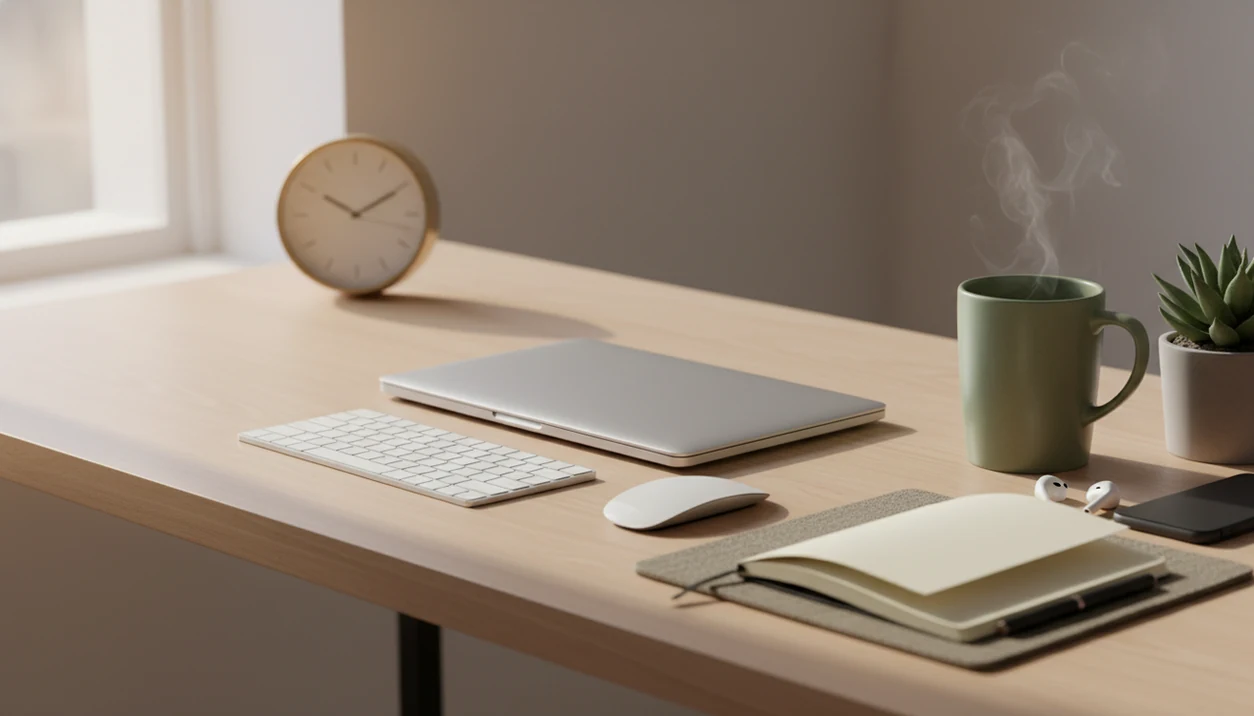
The main mindfulness at work benefits include lower perceived stress, better focus, stronger emotional regulation, and a calmer response to deadlines, meetings, and workplace conflict. The most practical way to start is with short breathing exercises or guided meditations repeated during predictable workday moments. Browse more calming audio before sleep.
> Definition: Mindfulness at work means paying attention on purpose to the task, conversation, or body sensation in front of you, rather than reacting automatically to stress, multitasking, or anxious thoughts.
TL;DR
- Research links workplace mindfulness programs with reduced stress, job strain, burnout, anxiety, and depressive symptoms when practiced consistently.
- Short sessions can help, but the strongest results come from repeatable routines such as a morning reset, pre-meeting pause, and end-of-day wind-down.
- Mindfulness is useful support for focus and calm, but it does not fix toxic workloads, poor management, or clinical mental health needs by itself.
Mindfulness at Work Benefits Backed by Employee Research
Workplace mindfulness research suggests consistent practice can reduce stress-related symptoms and improve how employees experience their work. The evidence is strongest when mindfulness is repeated over several weeks, not treated as a one-time wellness event.
- A 2018 randomized controlled trial of 238 employees found that an 8-week mindfulness app program reduced perceived stress, job strain, workplace social stressors, and depressive symptoms compared with a waitlist group NIH research: PMC6215525.
- The same trial reported improvements in well-being, job control, job satisfaction, and workplace social support.
- A 2023 UCSF randomized study found sustained gains in well-being, job enjoyment, work engagement, and mindfulness, with lower stress, job strain, burnout, depression, and anxiety at 4-month follow-up medconnection reference: can employees benefit from a digital mindfulness program.
- A workplace mindfulness meta-analysis found reduced psychological distress and improved well-being in working adults NIH research: PMC6433409.
- Results depend on practice. Downloading an app, attending one session, or saving a breathing exercise for “later” usually isn’t enough.
The calendar fills anyway.
What Mindfulness at Work Means During a Real Workday
Mindfulness at work means paying attention on purpose to the task, conversation, or body sensation in front of you, rather than reacting automatically to stress, multitasking, or anxious thoughts.
It is active attention training, not zoning out at your desk or forcing yourself to relax. You might notice your breathing before replying to a sharp email, listen fully in a meeting instead of planning your defense, or pause before jumping from Slack to a spreadsheet.
That pause matters because work stress often moves faster than judgment. A few seconds of attention can support focus, emotional regulation, communication, and clearer decisions. If you lead a team, the same skill shows up in tone, timing, and how you handle pressure; our guide to meditation for managers covers that workplace layer in more detail.
Guided audio can help when employees want structure for breathing, sleep, anxiety, or everyday calm support without designing a practice from scratch.
How Mindfulness at Work Benefits Your Brain and Behavior
Mindfulness at work works by training attentional control and emotional regulation. In plain language, you practice noticing where your mind has gone, then returning it to one chosen anchor, such as the breath, a sound, or the task in front of you.
The mechanism is simple, but not always easy. You notice the laptop fan during a five-minute pause, feel your shoulders rise, and return to breathing instead of opening another tab. Over time, that loop can make distraction more visible and less automatic.
Mindfulness also creates a small gap between trigger and response. That matters when a deadline moves, an email lands badly, or conflict starts in a meeting. For many employees, a short reset is easier than a long session because it fits the real workday.
For workplace stress, short mindfulness practices usually work best when they are tied to repeatable cues, while longer sessions fit people who already have protected time.
5 Daily Mindfulness Steps for Workplace Focus and Calm
Use mindfulness at work by choosing a few predictable moments and pairing each one with a short practice. Sessions can be 1 to 15 minutes, depending on the meeting, task, or energy you have.
- Set a morning intention. Choose one phrase before work, such as “one task at a time” or “pause before replying.”
- Pause before email. Take three slow breaths before opening your inbox, especially if you expect tension.
- Breathe before meetings. Use 60 seconds of quiet breathing before joining the call or entering the room.
- Reset between tasks. Stand, relax your jaw, and name the next task before switching screens.
- Close the day with a short wind-down. Use a 5 to 15 minute guided session so work does not follow you straight into bed.
A meditation app can make the routine easier by offering guided breathing, focus, anxiety support, or sleep sessions. Apps such as MindTastik, Calm, and Headspace can provide structure when a crowded app screen feels like one more decision.
6 Workplace Stress Moments and Matching Mindfulness Practices
Mindfulness is not one generic activity. Different work moments call for different practices, and the right match can make a short reset feel more realistic.
| Work moment | Mindfulness practice | Likely benefit | Session length |
|---|---|---|---|
| Pre-meeting nerves | Slow breathing with feet grounded | Less reactivity, steadier listening | 1-3 minutes |
| Overflowing inbox | Single-task email scan | Fewer impulsive replies | 3-5 minutes |
| Deep work block | Focus meditation before starting | Better task entry | 5 minutes |
| Difficult feedback | Body scan for tension | More space before responding | 3-10 minutes |
| Lunch reset | Silent breathing away from screens | Midday recovery | 5-10 minutes |
| End-of-day rumination | Guided wind-down or sleep audio | Easier work-to-home transition | 10-15 minutes |
Someone with headphones at a desk may only need one quiet minute before a hard call. Someone else may need a longer evening routine. Guided-audio tools can support breathing, sleep audio, anxiety support, and everyday calm without making the practice public.
Beginner Mindfulness at Work Routine Tips
Beginners do better with one reliable cue than with a plan to “be mindful all day.” A few minutes practiced often usually beats a long session done once and forgotten.
- The email cue: Before opening your inbox, breathe once and notice your posture. Small, almost boring, but repeatable.
- The meeting cue: Put both feet on the floor before speaking. This helps when your answer wants to arrive too fast.
- The calendar cue: Add a private 3-minute reset between demanding tasks. Label it plainly if your calendar is visible.
- The headphone cue: Use noise-canceling headphones or silent breathing if you do not want coworkers to know.
- The skeptical cue: Treat mindfulness like attention practice, not a personality change.
If your workdays are intense or self-directed, meditation for entrepreneurs may offer a better fit for irregular schedules. Keep it simple. Restlessness at the start does not mean you are doing it wrong.
Mindfulness at Work Guide for Sleep, Anxiety, and Focus
Can mindfulness at work support sleep, anxiety, and focus? Yes, as a supportive practice, especially when daytime resets connect with an evening wind-down routine.
Work stress often follows people home as replayed conversations, unfinished tasks, or the urge to keep checking what might be waiting tomorrow. A steadier evening wind-down can support next-day focus, mood, and patience at work. Breathing exercises can also create a brief reset before presentations, deadlines, or difficult conversations.
Short guided meditations can help before deep work or after heavy context switching. The point is not to erase pressure. It is to give the body and attention a clear next step.
Good meditation apps for sleep anxiety and everyday calm deliver guided sessions, breathing support, and wind-down structure, not a replacement for therapy, crisis care, or medical treatment. MindTastik can fit here as gentle support for sleep, anxiety, beginner meditation, and everyday calm. For founder-specific pressure, the related guide on meditation for founders may be useful.
Best-Fit Employees and Red Flags for Mindfulness at Work
Mindfulness at work is a good fit for employees who want calmer transitions, better focus, fewer reactive replies, and a repeatable stress reset. It is not a substitute for safety, fair workload, or qualified care.
| Best for | Not ideal for |
|---|---|
| Employees who want a short reset before meetings | Replacing therapy, diagnosis, or crisis support |
| Beginners who prefer guided audio or app-based sessions | Fixing harassment, discrimination, or unsafe conditions |
| People who need fewer impulsive email replies | Eliminating impossible workloads |
| Remote workers who need work-home boundaries | Compensating for poor leadership |
| High-pressure roles that benefit from pauses | Mandatory programs that expose personal wellness data |
If stress is severe, unsafe, or persistent, professional support and workplace escalation matter. For home-based routines, our meditation for remote workers guide focuses on boundary-setting when the office is also the living room.
Clinicians typically recommend using mindfulness as one supportive self-regulation skill, while seeking professional help for persistent anxiety, depression, trauma symptoms, or safety concerns; the National Institute of Mental Health advises getting help when symptoms are severe, persistent, or interfere with daily life nimh reference: caring for your mental health.
Limitations
Mindfulness can support calmer workdays, but it has real limits. Those limits should be named clearly, especially when employers present mindfulness as a workplace solution.
- Mindfulness is not a cure-all for toxic cultures, understaffing, discrimination, harassment, or excessive workloads.
- Benefits depend on regular practice and engagement; sporadic use is unlikely to create meaningful change.
- Some people feel frustrated, restless, or more aware of stress at first.
- Workplace privacy matters. Employees should not be forced to share meditation data or participate publicly.
- Research is promising, but questions remain about long-term outcomes, ideal dose, and which groups benefit most.
- Mindfulness apps can support well-being, but they do not replace therapy, diagnosis, crisis care, or medical treatment.
- Managers should not use mindfulness to shift responsibility for systemic problems onto employees.
A breathing exercise cannot repair a broken workload. For high-output roles, meditation for high performers should still be paired with realistic boundaries and recovery time.
A Field Note on Real Use
During our review, we often see workplace mindfulness work best when it is tied to visible cues: a closed laptop, a desk pause, or the first minute before a meeting starts. Many beginners seem to do better with short, repeatable instructions rather than ambitious sessions that compete with deadlines. The shift may be subtle, but a predictable reset can make the next choice feel a little less automatic.
Focus Without Force
- Myth: you need a long silent break to reset. Reality: a 90-second desk pause can be enough to notice tension, slow the exhale, and choose the next task with less reactivity.
- Close the laptop for one breath cycle before switching projects; the physical pause helps mark a clean boundary between tasks.
- Use a calendar gap as a cue, not a reward. A short breathing exercise before the next meeting may be easier to repeat than a longer practice saved for a perfect afternoon.
- If focus feels scattered, pick one anchor: breath, hands on the desk, or the sound in the room. One anchor usually works better than trying to calm everything at once.
- A meeting reset works best when it is specific: inhale before opening the invite, exhale before speaking, and notice whether your shoulders are bracing.
What People Usually Overestimate
- Myth: mindfulness at work should feel peaceful right away. Reality: it may feel ordinary or even awkward at first, especially when the day is already overloaded.
- People often overestimate how much motivation they will have between meetings. A preset reminder can be more reliable than waiting to remember a breathing break.
- A closed laptop does not automatically create calm; the useful part is the intentional pause that follows it.
- The goal is not to erase pressure before a deadline. The goal is usually to notice the pressure early enough to respond with a little more choice.
- More minutes are not always better during the workday. A repeatable two-minute reset can be more useful than a ten-minute session that never fits.
At-a-Glance Options
| Technique | Best for | Minutes |
|---|---|---|
| Closed-laptop breathing | task switching after focused work | 3 min |
| Meeting reset scan | settling before speaking or presenting | 5 min |
| Calendar-gap guided meditation | midday stress and attention recovery | 10 min |
The best workday mindfulness habit is the one that fits between responsibilities without needing perfect conditions.
Why MindTastik fits this specific need
MindTastik can support short workday resets with guided meditation, breathing exercises, reminders, and offline audio for calendar gaps or quiet desk breaks. The personalized plan can also help match session length to real moments, such as a meeting reset or a transition after closing the laptop.
Best Meditation App for Work Stress
MindTastik is a good fit for busy professionals who want short focus sessions, attention training, and quick meeting resets to recover from distractions, reduce work stress, and move into deeper work with a calmer mind.
Best for:
- work stress resets
- meeting recovery
- deep work preparation
- attention training at work
- calmer task switching
FAQ
Does mindfulness reduce work stress?
Consistent mindfulness practice can reduce perceived stress and job strain for many employees. It does not remove the workplace causes of stress, such as overload or poor management.
Can mindfulness improve focus at work?
Mindfulness trains attention by helping you notice distraction and return to the task more quickly. This can support focus during email, meetings, and deep work.
How long should a mindfulness session at work take?
A workplace mindfulness session can take 1 minute for a breathing pause or 10 to 15 minutes for a guided practice. Short sessions are easier to repeat during a normal workday.
Is mindfulness useful before meetings?
Yes, a short breathing reset before a meeting can reduce reactivity and improve listening. It is especially useful before feedback, negotiation, or high-pressure updates.
Can mindfulness help with work anxiety?
Mindfulness can support anxiety management by interrupting spirals around deadlines, presentations, or difficult conversations. It should not be treated as medical treatment for an anxiety disorder.
Do mindfulness apps work for employees?
Randomized studies suggest digital mindfulness programs can improve stress and work-related well-being when employees use them consistently. MindTastik is one app option for guided breathing, sleep, and everyday calm support.
When should I practice mindfulness during the workday?
Useful cues include before email, before meetings, between tasks, at lunch, and after work. Choose one cue first so the habit is easier to repeat.
Can mindfulness prevent burnout?
Mindfulness may reduce burnout symptoms for some employees, especially when practiced regularly. It cannot fix chronic overload, unsafe conditions, or poor workplace systems by itself.
Can I practice mindfulness privately at work?
Yes, you can practice privately with silent breathing, headphones, calendar reminders, or app-based sessions. Workplace mindfulness should be optional, and employees should not be pressured to share personal app data.