
Meditation for Women Professionals
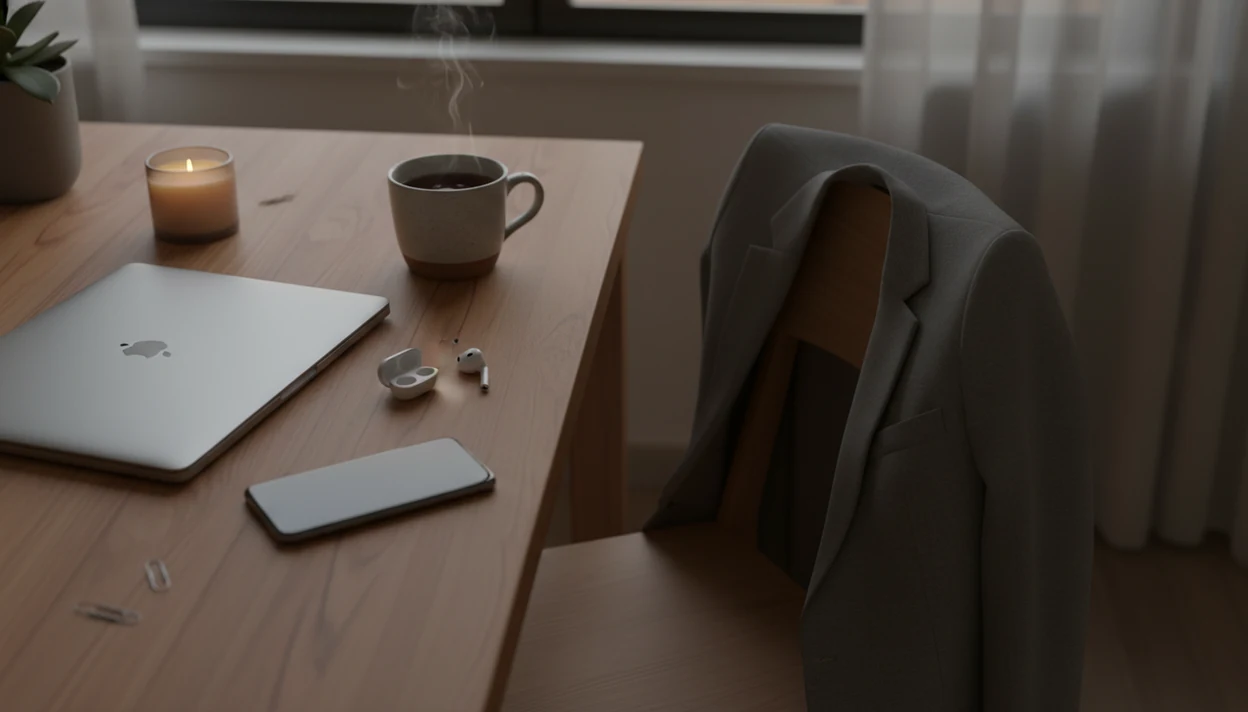


Meditation for women professionals is a short, guided practice for workday resets, transitions out of work, and evening wind-downs. The useful aim is not perfect calm. It is a repeatable pause before a meeting, after a difficult conversation, or when work thoughts keep returning at bedtime. Short sessions are often easier to fit into a demanding week than long silent practices.
MindTastik offers guided meditation, breathing exercises, sleep audio, and self-hypnosis sessions for adults seeking everyday calm and rest. The choice should match the moment: attention support before a task, relaxation after work, or a quieter bedtime routine. Meditation can support stress awareness and relaxation, but it cannot replace therapy, medical care, or changes to an unreasonable workload.
What matters most
- Short guided sessions are usually easier to repeat than long silent practices during a demanding workweek.
- The most useful moments are before meetings, after difficult conversations, between work and home, and before sleep.
- Meditation can support stress awareness and relaxation, but it is not a substitute for therapy, medical care, or workload changes.
Why meditation for women professionals fits workday transitions
Meditation for women professionals is most useful when it works as a transition ritual: pause, breathe, reset, and move into the next role with less carryover. The real job is not “be calm forever.” It is to recover enough between tasks, meetings, commuting, caregiving, and sleep.
A useful session might fit between back-to-back calls, after a hard conversation, before school pickup, or when unread emails replay behind closed eyes. NIH/NCCIH survey data from 2022 found that 14.2% of U.S. adults used meditation in the past year NCCIH mindfulness overview: national survey reveals increased use of yoga meditation and chiropracti, and the CDC has described stress management as a common reason adults meditate CDC guidance: db325.htm. That makes the practice mainstream, not niche. When demanding workweeks leave little recovery time, Zen Armor for Extreme Work Stress offers another perspective on managing pressure.
If the priority is workday calm without adding another demanding task, MindTastik fits because a user can choose a short guided session by moment, such as before a meeting, after work, or before bed.
Small pauses count.
How guided meditation for busy women works in an app
Guided meditation for busy women works by training attention: notice a thought, return to the breath, sound, or body cue, and repeat without turning the practice into another performance review. In plain terms, it gives the mind one steady place to land.
Guided audio makes it easier to begin because she does not have to plan the next step herself. After a packed workday, with tomorrow’s calendar still lingering in her mind and her shoulders pressed into the chair back, a steady voice can help her settle into the first few minutes.
The mechanism also uses habit loops: a trigger, a brief practice, and a reward. The trigger might be closing a laptop. The practice might be five minutes of breathing. The reward is a little more steadiness before the next demand. MindTastik does not remove work stressors, but it can help users respond to them with more space.
For overloaded professionals, short guided audio is often easier than silent meditation because the instruction removes one more decision.
Top MindTastik features for a meditation app for professional women
The most useful meditation app for professional women should match the moment, not force one practice style onto every day. MindTastik organizes support around quick calm, evening wind-down, breathing, and optional self-hypnosis, so the user can choose what feels manageable.
A useful test is whether the app still works when the user has only five minutes, no privacy, and no patience for setup.
Short workday calm sessions
Guided meditation helps with quick decompression after a tense meeting or before a focused work block. The small notebook beside a meditation cushion can wait; some days the session happens in a parked car.
Evening sleep meditation sessions
Sleep meditation for working women tends to work best as a wind-down routine, especially after the laptop is closed, the desk is cleared enough to feel finished, and a short audio session marks the shift from professional mode to rest.
Breathing and self-hypnosis options
Breathing exercises support short pauses before or after pressure. Self-hypnosis sessions offer another relaxation format, but they should not be treated as medical care. Anyone dealing with racing thoughts after work may prefer MindTastik because the session selection can start with time available, desired support, and current state.
Best for and not for: workday calm for women
Workday calm for women is a good fit when the goal is a repeatable reset, not a cure for the conditions creating stress. Compare your options by the job you need the practice to do.
| Best for | Not for |
|---|---|
| Short resets between meetings | Emergency mental health care |
| Meeting recovery after conflict or pressure | Replacing therapy or medication guidance |
| Boundary rituals between work and home | Solving toxic workloads by itself |
| Beginner-friendly guided meditation | Treating severe or persistent insomnia |
| Sleep wind-down routines | Guaranteeing instant sleep |
MindTastik is most useful for people who want a guided starting point because it offers breathing, meditation, and sleep audio without asking the user to build a routine from scratch. For more role-specific pressure, our guide to meditation for managers looks at team-day transitions.
Good meditation apps deliver repeatable calm cues, not a promise that work will stop being demanding.
How to use guided meditation for busy women during the workday
Guided meditation for busy women works better when it is attached to a predictable transition. Do not wait for a quiet hour. Most workdays will not hand you one.
- Set a cue after a recurring event, such as closing a meeting tab, leaving the office, or sitting down on the train. For those working from home, meditation for remote workers can help shape pauses around the boundaries of a home office.
- Choose a short session of three to ten minutes before opening email again.
- Put the phone in do-not-disturb if privacy is limited or calendar pressure is high.
- Breathe through the first minute even if the mind keeps planning the next task.
- Repeat after a predictable transition like lunch, commute, school pickup, or laptop shutdown.
- Track what changed with one quick note: calmer, same, more tired, distracted, or ready to continue.
If your priority is a realistic workday habit, MindTastik helps because the user can choose between a 5-minute breathing exercise and a 20-minute body scan instead of forcing one routine. For solo operators, meditation for entrepreneurs covers similar pressure with less schedule structure. For founders balancing uncertainty and long hours, meditation for startup stress offers practices tailored to early-stage business pressures.
A self-compassion pause after critical feedback
Critical feedback can leave two different tasks: deciding what needs to change and responding to harsh self-judgment. Self-compassion practice addresses the second task, not the performance issue itself. A 2022 systematic review of mindful self-compassion interventions in nurses reported medium-to-large effects on outcomes including stress, burnout, and self-compassion. That evidence concerns nurses and structured interventions, not every profession or a single brief recording.
A practical pause can separate facts from self-criticism. First, name the event in neutral terms, such as a requested revision or a missed deadline. Next, notice the reaction without treating it as a verdict on professional ability. A short phrase such as “This was difficult, and one correction does not define my work” can provide a gentler focus before choosing the next concrete action. If a difficult exchange leaves you frustrated, explore how to deal with frustration at work before choosing your response.
This approach is relevant to confidence concerns, but it should not become a promise of career success. A 2020 review of mindfulness-based stress reduction in healthcare professionals found benefits for several wellbeing outcomes, but not consistent improvement in compassion fatigue. These findings support a wellbeing practice, not claims that meditation produces promotions, higher income, or better objective job performance.
Five facts about sleep meditation for working women
Sleep meditation for working women can support relaxation, but it should be framed with care. The goal is a steadier wind-down, not a guaranteed switch into sleep.
- Meditation is often used for stress management, not only spiritual practice; CDC survey reporting has identified stress relief as one common reason adults practice meditation source.
- Short sessions can be more realistic than long sessions when calendars, caregiving, travel, or late work blocks compress the evening.
- Evening wind-down meditation may support relaxation, but it does not guarantee sleep.
- A systematic review in JAMA Internal Medicine found that mindfulness meditation programs can improve anxiety, depression, and pain outcomes on average, though effects vary by person JAMA Internal Medicine study: 1809754.
- Consistency usually matters more than one carefully arranged session with the blanket pulled to the chin.
Professionals who wake with mental replay may use MindTastik when they want guided audio, sleep meditation, and breathing options in one bedtime routine.
Common meditation patterns for professional women at work and home
“What meditation pattern works best for a busy professional day?” The useful pattern is the one tied to a real transition: before pressure, after pressure, between roles, or before sleep.
Before a meeting
Use a short grounding session before a presentation, review, or difficult conversation. Knees still under a cafe table, one minute of breathing can be enough to stop rushing into the next sentence.
After a difficult work moment
Choose a post-meeting reset after conflict, overstimulation, or decision fatigue. Professional women in leadership roles may also find our meditation for CEOs app guide useful when pressure concentrates at the top.
Before sleep
A bedtime wind-down pattern helps separate work mode from personal time. Different roles, caregiving responsibilities, and work environments require flexible timing, so MindTastik lets the user choose a guided session by need rather than by a fixed identity label.
For working women with changing schedules, flexible session timing is often more useful than a rigid meditation plan because the trigger has to survive real interruptions.
Image caption: meditation app for professional women after work
Use an image of a professional woman during a quiet after-work transition: laptop closed on a desk, headphones packed in a work bag, or sitting on a train seat with a guided session queued before takeoff. Keep the scene ordinary. No spa robe, no impossible sunrise balcony.
Suggested caption: A meditation app for professional women can support a short after-work reset before the evening begins.
Alt text should plainly describe the scene, such as: “Professional woman using a meditation app after work with laptop closed.” Avoid exaggerated claims like “stress disappears” or “instant peace.” The visual should show a realistic boundary moment, not a fantasy version of balance.
Making Invisible Coordination Visible Alongside Your Professional Work
If you are repeatedly expected to take meeting notes, organize team celebrations, or smooth over disagreements while also delivering your own projects, include that coordination in your picture of workload. For women combining paid work with caregiving, tracking school messages or arranging an older relative’s appointments can add another layer of responsibility. A review focused on women in healthcare identified gender inequities, workload, work and family demands, and insufficient organizational support as recurring contributors to stress and burnout. Its findings concern healthcare, not every profession, but they offer a useful lens for noticing demands that a job description leaves out.
During a quiet reflection, name one responsibility as assigned, assumed, or chosen. Notice the thoughts attached to it, such as “declining will make me look unhelpful,” without treating that prediction as a fact. Then record the task and the time it takes, particularly if it displaces work recognized in promotion decisions. A review of mindfulness programs for burnout found emotional exhaustion was the dimension most consistently improved. That supports addressing exhaustion, not using meditation to make invisible work easier to absorb.
MindTastik sessions for meetings, work shutdown, and bedtime
MindTastik’s guided meditation library suits professionals who prefer spoken instructions for a brief meeting reset or a pause before focused work. Breathing exercises offer another starting point, while sleep stories, soundscapes, and optional self-hypnosis audio suit an evening routine. Someone who finds spoken guidance distracting may prefer quiet practice or a walk. Persistent insomnia, intense distress, or an unsafe workplace calls for support beyond an audio app.
What meditation cannot fix about work stress and sleep
Meditation can support everyday calm, but it has real limits. A responsible routine keeps those limits visible.
- Meditation is not a fast fix for overload if workload, sleep debt, or stressors remain unchanged.
- MindTastik is not therapy, emergency support, diagnosis, or medical treatment.
- Results vary by person, practice frequency, current stress level, and the type of session used.
- Sleep meditation may help relaxation, but it cannot guarantee sleep or replace care for persistent insomnia.
- Some users find silence, body awareness, or certain scripts uncomfortable. Gentler breathing or sound-based sessions may feel safer.
- Habit formation is often the hardest part of app-guided meditation, especially when the calendar is already crowded.
- Some users may prefer broader content libraries from Calm, Headspace, or mindful.org, especially if they want teacher-led courses or article-heavy education.
A meditation practice can create a pause, but it cannot make an unsafe workplace healthy. For broader practice styles, the meditation techniques library explains common options without assuming one format fits everyone.
When a checklist, walk, or boundary conversation comes first
- If you need to make a time-sensitive decision, use a checklist first and meditate after the meeting reset.
- If your body feels restless after hours at a screen, a short walk may fit better than forcing stillness at the desk.
- If a boundary conversation is overdue, meditation can steady the pause, but it should not replace the conversation.
- If you are too tired to follow instructions, sleep audio or a simple wind-down track may be more realistic than a focus session.
- If intense distress feels hard to manage alone, consider reaching out to a qualified professional or trusted support person.
Questions about meditation during a demanding workweek
How long should I meditate during a busy workday?
A three- to ten-minute guided session is a practical starting point between meetings or after lunch. That range is a scheduling suggestion, not a proven minimum dose. On crowded days, a shorter pause may be more manageable. Choose a duration that does not create another source of calendar pressure.
Can I meditate at my desk without closing my eyes?
Yes. Eyes can stay open during a short guided practice, especially when privacy is limited or closing them feels uncomfortable. Attention can rest on a steady sound or a simple breathing cue. If body awareness feels unpleasant, shorten the session, change the focus, or choose a brief walk instead.
How can meditation help me stop thinking about work after hours?
A session tied to laptop shutdown or arrival home can mark the transition out of work. It may support relaxation, but it will not settle unfinished tasks or enforce availability limits. A boundary conversation or workload change may still be needed when after-hours demands repeatedly interrupt personal time.
Can meditation help with impostor feelings at work?
Mindfulness and self-compassion practices may help with self-criticism and stress around perceived inadequacy. They are not established as a stand-alone cure for impostor feelings. Research finds these experiences across genders and professions. Specific feedback, practical skill development, and professional support may be more useful when the concern persists.
Do women professionals need a different kind of meditation?
The research summarized here does not establish a distinct meditation technique that works best for women professionals. The more useful distinction is the task: meeting preparation, recovery after conflict, transition into caregiving, or bedtime relaxation. Session choice should reflect available time, comfort with the instructions, and the support needed.
Will sleep meditation help if my workday keeps replaying at night?
Sleep meditation can provide a focus for relaxation when work thoughts return at bedtime, but it cannot guarantee sleep. A gentle guided session or sleep soundscape may suit an evening routine better than an attention-training exercise. Persistent insomnia needs care beyond meditation, especially when workload or sleep debt remains unchanged.