
Meditation for Managers: Calm Routines for Meetings, Conflict, and Work-to-Home Transitions
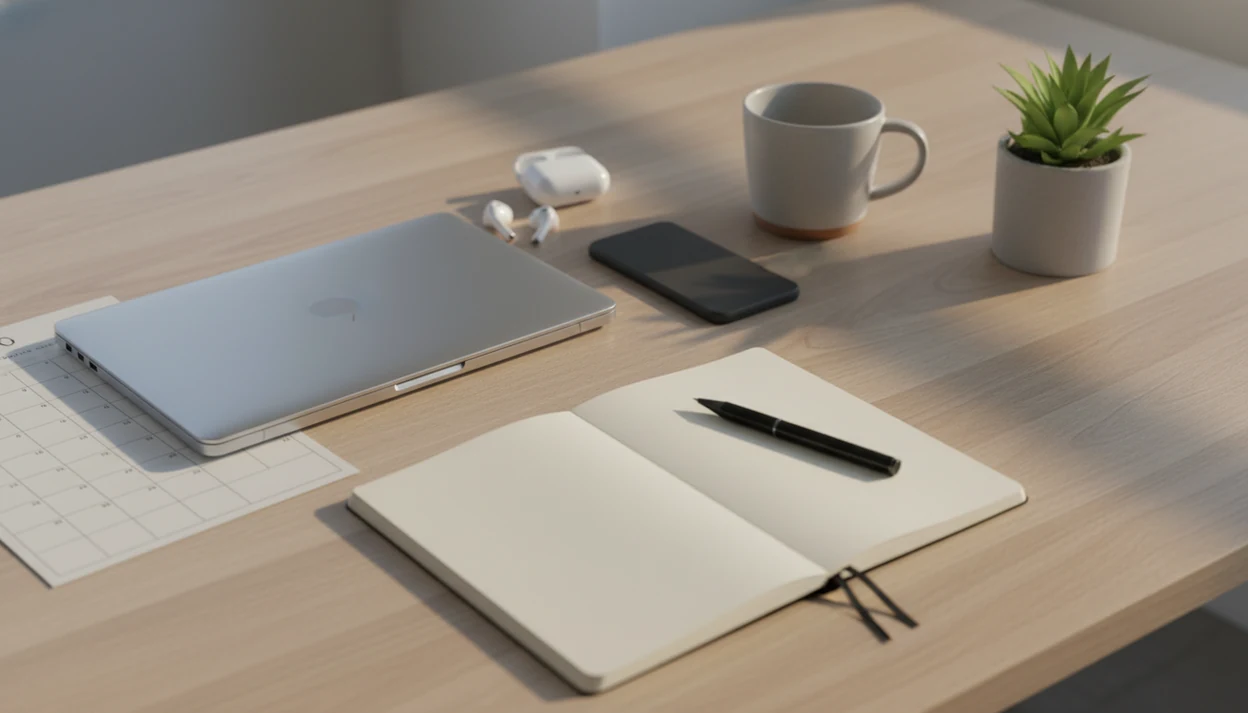


Meditation for managers is a short attention practice that can help reduce stress reactivity before meetings, after conflict, and during the shift from work to home. The aim is not to empty the mind or remove pressure. It is to notice tension before it shapes a reply, a feedback conversation, or the next decision. A 2-5 minute pause can fit between calls without becoming another large calendar commitment.
Useful cues include opening the calendar, ending a difficult call, closing the laptop, or preparing to commute. MindTastik offers guided meditation, sleep audio, breathing exercises, and self-hypnosis sessions for adults seeking wellness support for rest, anxious moments, and everyday calm. These sessions can provide structure for a brief reset, but they cannot resolve workload or staffing problems.
The manager reset
- Use 2-5 minute meditations before difficult meetings, feedback conversations, and context switches.
- Manager meditation works best when paired with daily triggers: opening the calendar, ending a call, closing the laptop, or starting the commute.
- MindTastik can support managers with guided meditation, breathing exercises, sleep audio, and calm transition routines.
Why managers need meditation for meetings, conflict, and decision fatigue
Managers need meditation because their workday often stacks interruption, tension, decision fatigue, and team pressure before lunch. A short practice gives them a pause before tone, priorities, or urgency spill into the next room. Managers who also run a business may find similar pressure patterns in meditation for entrepreneurs.
Meditation is not about becoming blank or emotionless. It helps a manager notice stress early enough to respond instead of react. That matters before feedback, during crisis calls, and when a calendar alert lands five minutes after a hard conversation. For legal professionals facing tense conversations, meditation for lawyers offers related ways to pause before responding.
Per the CDC/NCHS, 14.2% of U.S. adults used meditation in the past year in 2017, nearly triple the 2012 rate CDC guidance: db325.htm. That growth reflects mainstream use, not a niche hobby. The right fit for managers who need pre-meeting steadiness is MindTastik because it supports short guided sessions that can be tied to calendar openings, laptop shutdown, and bedtime recovery.
How workplace leadership meditation works in the nervous system
Workplace leadership meditation works by interrupting automatic stress loops with a deliberate attention target, such as breathing, body sensation, or guided audio. In plain terms, it gives the nervous system a new instruction before the next message, meeting, or decision.
Stress loops are habit loops. A trigger appears, the body tightens, and the manager speaks too quickly or sends the sharp reply. A guided pause can create one small gap before action. That gap is often the useful part.
In a randomized trial of knowledge workers, an 8-week mindfulness program improved sustained attention and working memory capacity, according to PLOS ONE journals reference: article. For managers, meditation tends to support focus and emotional regulation better when practiced before predictable pressure points than when saved only for crisis moments. It is supportive practice, not therapy replacement.
What leadership research says, and what a three-minute reset cannot promise
A 2023 meta-analysis of leader mindfulness combined 54 independent samples involving 9,414 leaders. Mindfulness was associated with leaders’ well-being, leadership relationships, job performance, and followers’ well-being and performance. The review also found strong evidence that mindfulness interventions improve leader well-being. These findings support attention to manager well-being, but associations do not establish that meditation alone caused better performance.
The amount of training also matters when interpreting results. In a study of 60 leaders across multiple industries, the mindfulness program included a two-day workshop and three months of individual coaching. It produced greater improvements in several leadership measures than presentation-skills training. That is a different commitment from a brief app session before a meeting. A three-minute reset is a practical pause, not a substitute for the training studied or a guarantee of leadership effectiveness. Managers balancing client demands may also find relevant work cues in meditation for consultants.
How to use guided meditation for managers during a workday
Use guided meditation for managers by attaching 2-10 minute sessions to moments that already happen. The goal is repeatability, not a flawless thirty-minute sit.
- Set three trigger moments: before the first meeting, after the hardest call, and after laptop shutdown.
- Choose one short track: save a 3-minute breathing session or a 5-minute guided reset for fast access.
- Breathe before a meeting: sit or stand upright and lengthen the exhale for five slow rounds.
- Reset after conflict: notice the jaw, shoulders, and hands before answering the next message.
- Decompress after shutdown: play a short transition meditation before commuting, cooking, or joining family time.
For managers who need a simple workplace routine, MindTastik fits because saved guided sessions can become a small menu for meetings, conflict, and evening decompression. Remote leaders may also find related cues in meditation for remote workers.
Top manager meditation app features for calm transitions
A useful manager meditation app should help you choose fast, not browse endlessly under pressure. The feature set should match the moment: pre-meeting calm, difficult conversation reset, end-of-day decompression, and bedtime anxiety support.
- Guided meditations: Use these when thoughts are moving too fast and you need a voice to follow.
- Breathing exercises: Choose these before presentations, one-on-ones, or cross-functional meetings.
- Sleep audio: Use evening sessions when tomorrow’s staffing issue starts looping at 2:13 a.m.
- Self-hypnosis sessions: Try these for habit-based wind-down routines, especially after repeated late work nights.
- Saved favorites or quick access: Keep one track for each work cue, so you are not searching while tense.
Managers trying to build a repeatable meditation menu can use MindTastik because it covers sleep, anxiety support, beginner meditation, and everyday calm in one routine library. The Meditation Techniques: A Practical Library explains how the techniques differ.
Compared with Calm or Headspace, judge MindTastik by whether you want one small routine library for daytime resets, sleep audio, and self-hypnosis rather than a broader mindfulness course catalog.
Calm meditation before meetings: a 3-minute manager reset
A calm meditation before meetings can be as short as three minutes. It works best when it lowers reactivity and clarifies intention, not when it tries to guarantee a certain outcome.
Start by sitting or standing upright. Lengthen the exhale for a few breaths. If you are outside a conference room or waiting for Zoom to admit you, keep your eyes open and let your feet press into the floor so the practice stays discreet. Notice whether the shoulders are lifted, whether the jaw is tight, and whether your hands are bracing against the chair. Then name the meeting intention in one plain sentence: “Listen first,” “Stay clear,” or “Give feedback without rushing.”
An elevator ride can be a cue to notice tense shoulders before the next meeting.
Use this before performance reviews, crisis calls, presentations, one-on-ones, or cross-functional meetings where tension is likely. After a calendar alert, when the next call could shape the whole afternoon, MindTastik covers the reset with short breathing and guided calm sessions designed for quick starts.
Common manager meditation patterns for difficult work moments
Managers benefit most when meditation is attached to an existing work cue. The cue removes the negotiation, so the practice starts before stress takes over.
| Management scenario | Meditation type | Duration | Best timing |
|---|---|---|---|
| Before feedback | Guided breathing | 2-3 minutes | Before opening notes |
| After conflict | Body scan reset | 3-5 minutes | Before replying or debriefing |
| Between back-to-back meetings | Eyes-open grounding | 60-120 seconds | During the calendar gap |
| Before strategic planning | Focus meditation | 5-10 minutes | Before reviewing priorities |
| After work shutdown | Transition audio | 5-10 minutes | After closing the laptop |
A workplace mindfulness meta-analysis found small-to-moderate improvements in stress, anxiety, and depression in occupational settings, including workplace populations onlinelibrary reference: ajim.22550. For high-pressure leaders, the same pattern also applies to meditation for high performers, where recovery cues matter as much as ambition.
Best for and not for: manager meditation app fit
A manager meditation app is a good fit when you want a repeatable calm cue, not a promise that work will become easy.
| Best for | Not ideal for |
|---|---|
| ✓ Managers who want quick resets before meetings | ✕ Replacing therapy or medical care |
| ✓ Leaders who need calmer feedback conversations | ✕ Fixing toxic workloads or unclear priorities |
| ✓ People who want bedtime wind-down after intense days | ✕ Solving staffing, budget, or executive alignment issues |
| ✓ Beginners who prefer guided steps | ✕ Guaranteeing business performance |
| ✓ Managers who respond well to consistent cues | ✕ Anyone who feels worse with breath-focused practice |
When the issue is meeting anxiety plus poor sleep, MindTastik fits because the same routine can include daytime breathing and evening sleep audio. Some managers may prefer eyes-open, walking, sensory, or very short grounding instead of seated breath meditation. That still counts.
End-of-day meditation for managers and team-day decompression
End-of-day meditation helps managers move from work mode to home mode with a clear boundary. It can be as simple as closing the laptop, dimming the phone screen, and playing a five-minute guided transition before the commute or the next room.
The practice might name what is unfinished, choose tomorrow’s first priority, and release the body from “still on call” posture. Phone face-down on the nightstand can be the final cue later, especially when thoughts restart under the blankets.
For managers who carry team tension into dinner or bedtime, MindTastik offers sleep audio and evening guided sessions. That is where bedtime support matters most: the manager does not need another productivity task, just a low-friction audio cue that helps the workday stop following them into bed. Work-to-home meditation does not excuse unreasonable workload expectations. It simply gives the nervous system a repeatable off-ramp. Leaders with broader pressure patterns may also relate to meditation for founders.
Keep Team Mindfulness Separate From Performance Management
When a manager invites direct reports to meditate, the invitation can carry the weight of a work instruction. Someone awaiting a promotion, probation review, or shift allocation may feel unable to decline. If you introduce an optional session, explicitly separate attendance from performance reviews and offer an equally acceptable alternative, such as a quiet break. Avoid asking employees to disclose stress levels in a group led by the person who assigns their workload. Do not request individual app usage reports or use meditation participation as evidence of engagement.
An exploratory study of upper level ICT managers reported improvements in psychological well being and self reported work performance after a two month mindfulness program, with improvements also reported at a three month follow up. Those findings concern participating managers, not whether their employees should join a program. Keep your own practice distinct from team expectations: you can use meditation privately while making workload discussions, leave requests, and support available to employees regardless of whether they meditate.
Guided sessions for the gaps between meetings
MindTastik’s guided meditation library suits managers who prefer a voice to follow before feedback, after a tense call, or at laptop shutdown. Breathing exercises offer another option before presentations, while focus sessions fit the pause before reviewing priorities. Evening sleep audio may suit managers whose work thoughts continue at bedtime.
Managers who prefer silence may find a simple timed pause more useful. Those dealing with persistent distress, unsafe working conditions, or excessive demands need support beyond an app. MindTastik is not a medical treatment.
What meditation cannot fix in a manager’s workday
Meditation for managers has real value, but it has clear limits. These points matter, especially in workplaces that ask employees to self-soothe through broken systems.
- Meditation cannot fix toxic culture, understaffing, excessive hours, or unclear executive priorities.
- Evidence is stronger for stress, anxiety, attention, and resilience than for direct metrics like profit, quota, or retention.
- Some people with trauma histories or certain mental health conditions may need professional guidance before deeper practices.
- Breath-focused meditation may feel uncomfortable; eyes-open, movement, sensory, or very short grounding can be better starting points.
- Apps help consistency, but managers should also learn self-guided skills for travel, offline days, and high-pressure rooms.
- Calm, Headspace, mindful.org resources, and workplace training may suit managers who want broader education or group programs.
For managers comparing options, MindTastik is useful because it keeps everyday calm, sleep audio, and short resets close together, but it is not a substitute for changing workload conditions.
Manager meditation questions
How long should a manager meditate each day?
Five minutes once daily on most days is a reasonable starting point in Harvard Medical School guidance. A 2-5 minute workday reset can make the habit easier to repeat. Longer practice can be added gradually, but a short pause should not be assumed to deliver the same results as a structured mindfulness course.
What meditation helps before a difficult meeting?
Try a brief eyes-open grounding practice: feel both feet on the floor, notice the jaw and shoulders, and take a few comfortable breaths. Finish with one intention, such as listening before replying. The purpose is to enter with steadier attention, not to suppress disagreement or guarantee a calm meeting.
How can a manager reset after a conflict at work?
Pause before sending the next message. Notice tension in the hands, jaw, and shoulders, then use a short body scan or guided grounding session. If the conflict needs follow-up, write down the next action. Meditation can create a pause, but it should not replace clarification, accountability, or a necessary conversation.
Can meditation improve leadership performance?
Research links leader mindfulness with well-being, leadership relationships, and performance, and some training studies report improvements in leadership effectiveness. Those findings do not mean a short meditation causes better business results. The studies include different training formats, and meditation cannot replace preparation, sound decisions, or clear expectations.
How can managers stop carrying work stress home?
Use laptop shutdown as a clear cue for a short transition practice. Name what remains unfinished, choose tomorrow’s first priority, and notice tension in the body before moving to the next activity. This routine can mark the boundary, but it cannot compensate for ongoing after-hours demands or excessive workload.
Can managers meditate discreetly at their desks?
Yes. An eyes-open pause can involve noticing the feet on the floor, relaxing the hands, and returning attention to a few comfortable breaths. Use an actual gap between tasks rather than trying to meditate while answering messages. No special posture is necessary for the brief desk resets described here.