
Science of Breaking Bad Habits: A Practical Brain-Based Guide
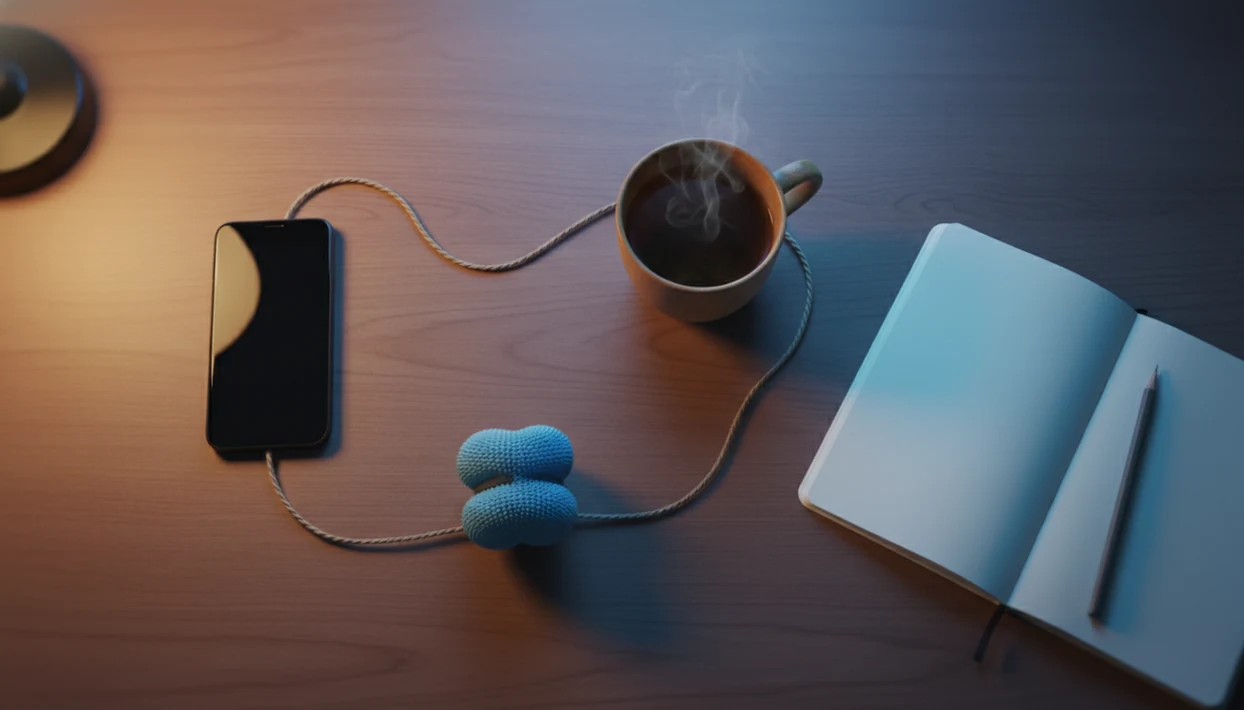


The science of breaking bad habits points to changing the cue, routine, and reward loop rather than relying on willpower alone. Breaking a bad habit means identifying what starts an unwanted behavior, what the behavior does, and what relief or satisfaction keeps it going. A useful replacement still meets that need but makes the response less harmful.
The practical starting point is one routine, one recognizable trigger, and one small alternative that is easy to repeat. Moving a phone away from the bed can reduce the pull of scrolling; a brief breathing practice can offer another response to worry. Stress and poor sleep can make familiar routines harder to interrupt. Mindfulness helps make urges visible, but awareness needs a concrete next action.
What matters most
- Bad habits are automatic loops shaped by cues, rewards, repetition, stress, and environment.
- Mindfulness helps by making urges visible before they turn into behavior, especially when paired with tiny replacement actions.
- Sleep, anxiety, and stress regulation matter because a tired or activated brain defaults to familiar routines.
Five Brain-Based Facts About Bad Habits
- About 40% of daily activities are repeated in the same environment and function more like habits than fresh decisions, according to a 2012 habit research review NIH research: PMC3505409.
- A habit loop has three parts: cue, routine, and reward. The cue might be boredom at 10:45 p.m.; the routine is late-night scrolling; the reward is quick relief.
- Emotional snacking, checking notifications, and avoiding a task often persist because they solve something in the moment, even if they create a problem later.
- Mindfulness can support awareness and self-regulation, but it does not erase an old routine instantly. One eye may still peek at the timer during a beginner session.
- Sleep debt, anxiety, and stress make automatic behavior more likely because the brain reaches for familiar relief when planning feels harder.
The 21-day rule is too tidy. Habit change can take weeks or months, depending on the behavior, reward, environment, and pressure around it.
Habit Loops: Cues, Rewards, Dopamine Learning, and Stress
A habit loop is a learned pattern where a trigger leads to a behavior, the behavior delivers a reward, and repetition makes the pattern more automatic.
The brain does not repeat a routine only because it is “bad” or “good.” It repeats what it has learned to predict as useful. Dopamine learning is part of that process; it helps the brain notice when a cue predicts relief, stimulation, comfort, or escape. That is why a timer, a familiar chair, or one app icon can start the loop before you have made a clear choice.
Stress changes the equation. The prefrontal cortex helps with planning, inhibition, and “pause before acting” decisions, but fatigue and emotional overload make that system less reliable. Research on stress and executive function links acute stress with weaker prefrontal control and stronger habitual responding, which helps explain why old routines feel easier under pressure NIH research: PMC2907136. Understanding chronic stress and brain aging adds context to why managing ongoing pressure matters beyond changing one routine.
In the middle of the night, tomorrow’s meeting can replay in the quiet. You reach for the phone, feel a brief drop in tension, then give the brain another lesson: anxiety paired with scrolling can feel like a way out.
Tiny loop. Big repetition.
5-Step Bad Habit Replacement Plan
Use this bad habit replacement plan on one routine at a time. For most people, one clear loop is easier to change than five vague goals.
- Map one habit only. Write the cue, routine, and reward: “After I get into bed, I scroll, and I feel distracted from worry.”
- Name the real reward. Choose the closest word: relief, stimulation, comfort, escape, connection, or delay.
- Choose a tiny replacement under 3 minutes. Try ten slow breaths, a short walk to another room, or a two-minute guided session. For more replacement ideas, consider activities that rewire your brain through regular practice rather than relying on willpower alone.
- Change the environment. Put the phone across the room, leave a book on the pillow, or open the breathing audio before bedtime.
- Review setbacks without shame. Ask whether the cue was too strong, the replacement was too hard, or the reward was not close enough.
For a mindfulness-based version of this plan, our guide to how to break a bad habit mindfulness goes deeper into the pause between urge and action.
Urges and Cravings Protocol for Bad Habits
How do you stop a bad habit when the urge is already happening? Use a short protocol: notice, label, locate, and choose.
First, notice the urge without arguing with it. Second, label it in plain words: “checking urge,” “snack urge,” “avoidance urge.” Third, locate it in the body. Maybe it is tightness in the jaw, heat in the chest, or restless hands. Fourth, choose one tiny action that changes the next 60 seconds.
That is urge surfing. You are not trying to crush the craving. You are observing it rise, peak, shift, and fall while doing something small enough to repeat.
A randomized smoking cessation trial found mindfulness training reduced cigarette use more than the American Lung Association’s Freedom From Smoking program at 4 weeks, though the study was small and not proof that mindfulness cures addiction NIH research: PMC3191261. Addiction-level cravings, withdrawal, danger, or loss of control deserve qualified support.
Try the small move first. Then get help when the stakes are higher.
Sleep, Anxiety, and Focus Triggers in Bad Habit Loops
Poor sleep lowers self-control because a tired brain has less patience for planning, delay, and discomfort. Per the CDC, more than 1 in 3 U.S. adults report sleeping less than 7 hours per night on average, a pattern linked with higher risk of unhealthy behaviors CDC guidance: mm6703a1.htm.
Anxiety is another common trigger. It can start checking, snacking, avoidance, reassurance seeking, or rumination habits. Someone who wants a steady audio guide when worry takes over may be naming a real reward: relief.
Guided meditation, sleep audio, breathing exercises, and self-hypnosis can support calmer transitions. They work best as part of a specific loop, not as vague self-improvement.
MindTastik is a meditation and mindfulness app that offers guided meditations, sleep sounds, breathing exercises, self-hypnosis, and focus support. For bedtime specifics, compare the evidence in does sleep meditation work.
Self-Guided Habit Change: Best Fit Cases and Clinical Red Flags
Self-guided habit change fits everyday routines that are frustrating but not dangerous. It is not the right level of care for addiction, crisis, or symptoms that need clinical attention.
| Best for | Not for |
|---|---|
| Mild to moderate routines | Addiction or withdrawal risk |
| Late-night scrolling | Severe depression or severe anxiety |
| Procrastination loops | Self-harm thoughts or immediate danger |
| Stress checking and notification habits | Eating disorders or compulsive behaviors |
| Beginner meditation support | Situations requiring urgent clinical help |
| Sleep routine improvement | Loss of control that affects safety, work, or relationships |
Meditation apps can support consistency, reminders, and calm practice. They are not substitutes for therapy, medical care, or crisis support.
Clinicians typically recommend professional evaluation when a behavior causes harm, withdrawal, danger, or major loss of control. That line matters.
5 Common Habit Change Myths
Bad habit change gets harder when the advice is wrong. These five myths cause people to quit too early.
- “It is only willpower.” Cues, rewards, stress, sleep, and environment often drive behavior before conscious choice catches up.
- “It takes 21 days.” Habit strength can take weeks to months. In one real-world habit-formation study, automaticity varied widely and averaged about 66 days, with some behaviors taking much longer than others onlinelibrary reference: ejsp.674.
- “Insight fixes it.” Knowing why you scroll, snack, or avoid helps, but the brain still needs repeated replacement behavior.
- “Meditation deletes habits.” Meditation supports awareness and emotional regulation over time. It is not a delete button. For a different perspective on meditation and habit change, explore the ideas associated with Dr. Joe Dispenza.
- “A setback means failure.” A slip usually shows that the cue was stronger than the plan.
For people building a practice alongside habit change, a realistic meditation benefits timeline can keep expectations steadier.
Measure an easier response, not a deadline
Research on forming a new habit does not provide a countdown for eliminating an old one. In a 2010 prospective habit-formation study, participants repeated a chosen eating, drinking, or activity behavior in a consistent daily context. Modeled time to reach 95% of each person's automaticity plateau ranged from 18 to 254 days. That measured the development of a new response, not the disappearance of an unwanted habit. Explore meditation research and habits for evidence on how regular practice supports awareness and behavior change.
A practical record can track three things: whether the cue occurred, whether the replacement happened, and whether starting it felt easier. The study found that automaticity generally increased quickly at first, then more slowly, and occasional missed opportunities did not materially derail the process. One lapse therefore need not mean starting from zero. Return to the same cue and action, and review the pattern rather than judging a single day.
MindTastik Support for Habit Loop Replacement
A meditation app fits habit change best when it is inserted directly into the trigger moment: “When I feel the urge, I play a 3-minute breathing or craving meditation.” That makes the app part of the replacement loop, not another thing to remember.
For readers whose habit starts with bedtime scrolling, MindTastik is most relevant when one short session of sleep sounds or breathing replaces the first swipe.
- Sleep wind-down instead of scrolling. Dim the phone screen, place earbuds on the nightstand, and start a short bedtime guided session before the old app opens.
- Calming breathwork during anxious checking. Use one breathing exercise before refreshing email, messages, or news.
- Focus meditation before a hard task. Choose a 5-minute focus session before opening the document you have been avoiding.
Tools like MindTastik, Calm, Headspace, and mindful.org can help with structure. Streaks and tracking are useful only when they encourage consistency rather than perfectionism. If a missed day becomes another reason to quit, reset the plan.
For a broader app question, do meditation apps actually help covers what these tools can and cannot do.
Habit Loop Diagram Caption and Alt Text
Caption: A simple habit loop diagram showing cue, routine, reward, and replacement behavior. Example: a stress cue leads to phone scrolling, the scrolling gives a short relief reward, and the replacement is a 3-minute breathing exercise before opening the phone.
Useful alt text: “Science of breaking bad habits diagram showing stress cue, phone scrolling routine, relief reward, and breathing exercise replacement.”
Keep the image plain. The point is not decoration; it is helping the reader see where to interrupt the loop. A diagram works best when someone can glance at it and say, “That is exactly what happens after dinner.”
Using audio at the moment a habit starts
MindTastik's breathing exercises can serve as a small replacement when tension triggers checking or scrolling. Guided meditation suits a pause to notice an urge, while sleep stories or soundscapes fit an evening routine that otherwise starts with phone use. Choose the audio before the usual trigger so starting it requires little effort.
An app adds little if the main obstacle is an unchanged environment. Addiction, withdrawal risk, severe distress, or dangerous compulsive behavior needs clinical care, not an audio-only plan.
When habit replacement needs more than self-help
The science of breaking bad habits is useful, but it has limits. Self-help works best when the habit is manageable and the person still has room to choose.
- Self-help strategies may not be enough for addiction, severe anxiety, depression, eating disorders, or compulsive behaviors.
- No single number of days guarantees habit change. Timelines vary by behavior, reward, stress level, and environment.
- Meditation apps require consistent use. They do not work passively in the background.
- Some habits are shaped by work schedules, family conflict, money stress, caregiving, or social pressure.
- Setbacks are normal. Use them as data, not proof that you are broken.
- If a habit causes harm, withdrawal, danger, or loss of control, seek qualified professional help.
- Meditation can feel uncomfortable for some people, especially when strong emotions surface.
If practice feels worse, pause and read about meditation side effects before forcing longer sessions.
Timing a replacement before the usual trigger
| If you... | Try | Why | Note |
|---|---|---|---|
| The urge appears during a predictable transition, such as after closing a laptop or leaving a meeting | Attach a 60-second steady breath practice to that transition | The brain gets a clear alternative routine at the exact moment the old loop usually starts. | Keep it short enough that it does not feel like another task. |
| The habit is strongest when attention is scattered | Choose a short session with a guided voice and one simple instruction | A narrow focus may reduce decision fatigue and make the replacement behavior easier to repeat. | Avoid stacking several new rules at once. |
| The replacement habit keeps failing late in the day | Move the practice earlier or use a reminder before the usual trigger window | Tired brains tend to follow familiar routines, so timing can matter as much as motivation. | This is habit support, not a substitute for clinical care when red flags are present. |
Questions about breaking habit loops
How do I identify the trigger for a bad habit?
Record what happened immediately before the behavior: the time, place, activity, emotion, and body sensation. Then note what the behavior provided, such as relief, stimulation, or delay. A useful cue is specific enough to recognize again, such as getting into bed with a phone, rather than simply feeling stressed.
Is it better to stop a bad habit or replace it?
Replacement is often more practical because the old behavior serves a need. Removing scrolling without another response to bedtime worry leaves that need unanswered. Choose a small alternative that offers a similar reward, then make it easier to start. Replacement still requires repetition and does not guarantee that urges disappear.
How long does it take to break a bad habit?
There is no reliable deadline. A habit-formation study found modeled timelines of 18 to 254 days for new daily behaviors, but it did not measure how long unwanted habits take to disappear. Progress is better judged by how consistently a replacement happens and how much less effort it requires.
What can I do when a craving is already happening?
Notice the urge, give it a plain label, and locate the sensation in the body. Then choose one small action for the next minute, such as slow breathing or moving away from the trigger. This creates a pause without requiring the craving to vanish. Dangerous urges or withdrawal symptoms need professional support.
Does meditation actually help break bad habits?
Mindfulness may help people notice cues and urges before acting automatically. That pause is most useful when paired with a specific replacement behavior. It is not a way to erase a habit, and evidence for mindfulness-based relapse prevention in substance-use disorders is mixed and low-certainty. Meditation should not replace needed treatment.
Does one slip mean I have lost all my progress?
No. In a study of new habit formation, occasional missed opportunities did not materially derail increasing automaticity. That finding does not make every lapse harmless, particularly with dangerous behaviors. For everyday routines, review the cue, reward, and circumstances, then resume the replacement at the next opportunity rather than abandoning the plan.
Why do bad habits feel harder to resist at night?
Fatigue, worry, and familiar evening cues can make the usual response harder to interrupt. Bedtime scrolling may provide distraction from worry as well as stimulation. Prepare the alternative before that trigger window: move the phone, set out a book, or select a calming audio session. Sleep support alone may not resolve the habit.