
Meditation Room Ideas for Sleep, Anxiety, and Everyday Calm
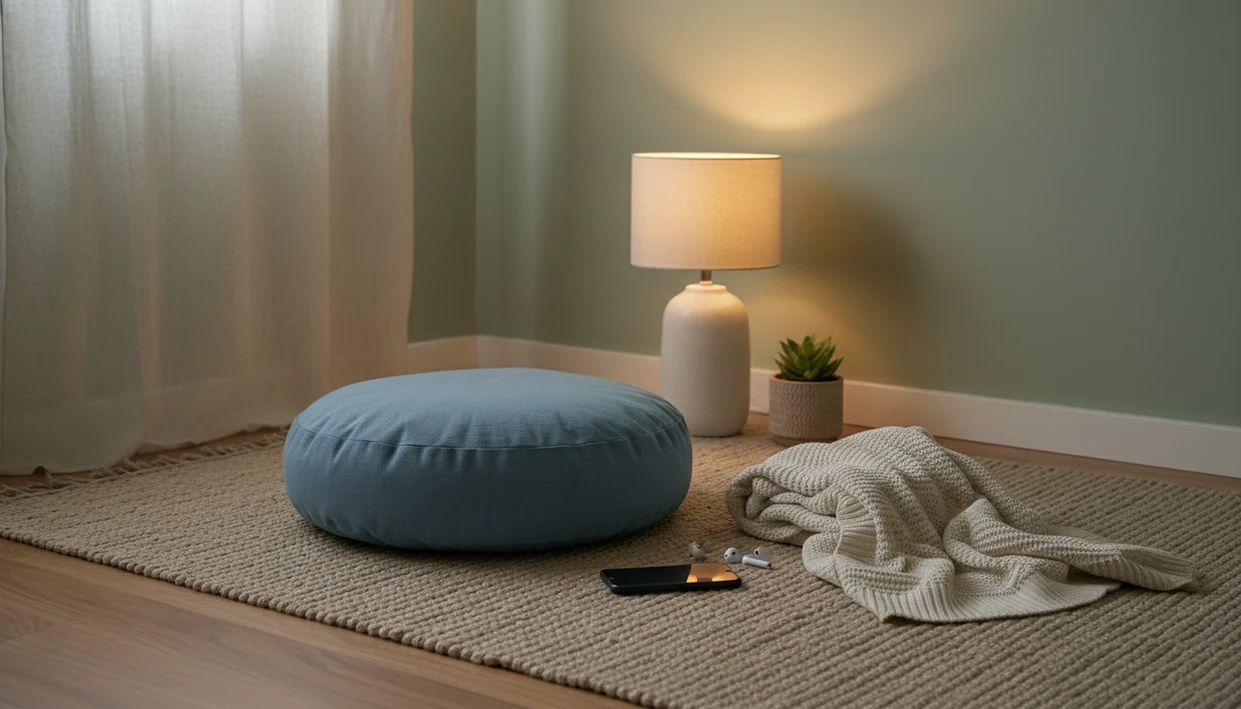


The best meditation room ideas start with a quiet, repeatable spot, comfortable seating, soft adjustable lighting, and little clutter. A full room is optional: a bedroom corner, closet nook, desk-side chair, or small rug can serve the same purpose. These are practical design and habit choices that make space for guided meditation, breathing, sleep wind-downs, anxiety support, or focus practice.
Start with the seat and light already available, then remove anything that brings work or chores into view. Add one clear routine cue, such as opening a guided session after sitting down. A familiar setup can make starting simpler, but the space does not need to look finished. Comfort and a practice that fits the day matter more than matching cushions, special objects, or expensive decor.
The essentials
- Start with a small dedicated spot, not a perfect room.
- Prioritize comfort, low distraction, soft light, and repeatable cues.
- Pair the space with a consistent guided practice, such as sleep audio, breathing exercises, or anxiety-support meditations.
5 meditation room essentials for sleep, anxiety, and everyday calm
- A small, consistent corner is enough; a full meditation room is optional.
- The five essentials are a comfortable seat, soft light, low clutter, a calming natural element, and a routine cue.
- Meditation use has grown: NCCIH reported that 14.2% of U.S. adults used meditation in 2017, up from 4.1% in 2012 NCCIH mindfulness overview: statistics use of complementary health approaches in the us.
- The space should support sleep, anxiety support, focus, or everyday calm, not impress visitors.
- A routine cue can be as simple as dimming the phone screen, sitting down, and starting the same guided session.
For beginners, the room matters less than the repeat. Sock feet on a bedroom rug, same lamp, same cushion. That tiny pattern can make starting feel less like a decision.
For a broader view of consistency, the habit side is covered in what happens when you meditate daily.
Meditation room habit cues for calmer daily practice
A meditation space works through environmental cueing: the same place, seat, light, and audio become a repeated signal that it is time to wind down.
That does not mean the room has magic in it. It means your brain has less sorting to do. Reduced visual noise, predictable sound, and familiar posture lower the friction for beginners who already feel restless. The chair cushion beneath a stiff back becomes part of the routine, not a design statement.
MindTastik offers guided sessions for adults seeking everyday wellness support, including meditation, rest-focused audio, breathing practices, and self-hypnosis for sleep, anxiety, and calmer routines.
A good meditation app for sleep anxiety and everyday calm delivers repeatable guidance and clear starting points, not a cure, diagnosis, or replacement for care.
A familiar corner does not create a habit in 21 days
A dedicated corner is a useful cue, but there is no universal deadline for making practice automatic. In a 2010 prospective habit-formation study, 96 adults repeated a chosen behavior in a consistent context for 12 weeks. Estimated time to reach 95% of eventual automaticity ranged from 18 to 254 days. This was not a study of meditation rooms, so it supports stable routines rather than any particular layout.
Missing one opportunity did not materially disrupt habit formation in that study. For a home meditation space, the practical implication is to leave the basic setup ready and return at the next usual cue rather than restart a streak count. The chair, lamp, and audio can stay the same after a missed day. Judge the arrangement by how easy it makes returning, not by whether practice feels automatic after three weeks. If a missed day brings up old self-criticism, learning how to let go of regret can support a kinder return.
5-step home meditation room setup for any space
- Choose a low-traffic spot, such as a bedroom corner, closet nook, living room chair, or desk-side setup.
- Clear the area of bills, laundry, work devices, and anything that pulls your mind into tasks.
- Set one comfort base, such as a cushion, chair, folded blanket, or small rug.
- Add one sensory cue, like a warm lamp, plant, eye mask, or quiet pair of headphones.
- Pair the space with a guided session, breathing exercise, sleep audio, or focus timer.
Keep it simple.
The most useful setup is the one you can repeat on a tired Tuesday night. If you are choosing between a 5-minute breathing exercise and a 20-minute body scan, the room should make that choice easier, not more dramatic. If you are testing app support, our guide on do meditation apps actually help explains what guided tools can and cannot do.
Small meditation room ideas for bedrooms, apartments, and shared homes
Does a small bedroom corner work as a meditation room? Yes, if it has a cushion or chair, a lamp, headphones, and enough space to sit without bumping into clutter.
Shared homes need flexible tools. Try a foldable mat, basket storage, a room divider, an eye mask, or noise-cancelling headphones. A 3-by-3-foot layout can hold a small rug, one cushion, a narrow side table, a lamp, and a plant in the back corner.
Avoid placing your meditation spot where chores, work, or arguments usually happen. The kitchen counter beside unpaid bills may be convenient, but it will not feel neutral for most people.
Waking in the middle of the night can make a glowing screen tempting. If that habit keeps repeating, a quiet bedroom corner with a soft reading light can offer a gentler place to return to your breath.
Budget meditation room ideas: what to buy and skip
Comfort and consistency matter more than expensive aesthetics. A chair with back support may help more than a floor cushion, especially if sitting cross-legged makes your hips ache.
| item | worth buying | skip if |
|---|---|---|
| Cushion or chair | You need stable, comfortable seating | You already have a supportive chair |
| Lamp | Overhead light feels harsh | Your room already has dimmable light |
| Blanket | You get cold during evening practice | It becomes another clutter item |
| Plant | Natural texture feels calming | You forget to water plants |
| Speaker or headphones | Audio helps you stay with the session | Silence works better for you |
| Candles or scent | Gentle scent feels safe and tolerated | Strong smells trigger headaches |
| Wall decor | One image helps the space feel settled | It turns into visual clutter |
| Crystals or gadgets | They feel personally meaningful | You are buying them to “fix” the practice |
Accessibility counts. Clear pathways, chair-based practice, and voice-guided audio can matter more than any floor setup. For low-effort options, how to be mindful without meditating may fit busy homes.
Meditation room decor ideas for sleep, anxiety, and focus
Sleep Wind-Down: Choose low light, a comfortable blanket, restful audio, and a screen-free stretch before bed. A simple timer can mark the session so the space feels intentional without becoming complicated.
Anxiety Soothing: Leave open floor space, choose one grounding object, and use gentle scent only if you tolerate it well. Pair the space with a breathing exercise before messages, calls, or bedtime.
Focus Reset: Use an upright chair, a simple desk-side setup, a timer, and minimal visual clutter. A conference room chair between meetings can work too, if the cue is repeatable.
About 8% of U.S. adults reported using meditation to improve sleep, according to CDC National Health Statistics Reports data CDC guidance: nhsr.htm. For bedtime-specific evidence, read does sleep meditation work.
Best-fit and not-fit meditation room ideas for real-life needs
| fit | works well for | use caution when |
|---|---|---|
| Beginner cue | You need a visible reminder to practice | The space becomes another project |
| Sleep wind-down | You use guided audio before bed | You have chronic insomnia needing care |
| Anxiety support | You want a short reset during stress | Symptoms feel severe or unsafe |
| Everyday calm | You need a repeatable pause | The room is noisy or emotionally tense |
| Focus break | You want a desk-side timer routine | Work clutter dominates the setup |
Mindfulness programs have shown moderate improvements in anxiety, depression, and pain compared with usual care in a 2014 JAMA Internal Medicine review JAMA Internal Medicine study: 1809754. That evidence supports regular practice, not a specific paint color or decor style.
For people who need a visible cue, a small meditation corner is often easier than relying on willpower because the environment reminds them what to do next.
Meditation room image caption and 3-by-3 layout notes
Suggested image caption: A small home meditation corner with a floor cushion, soft lamp, plant, blanket, and phone ready for a guided meditation session.
Alt text guidance: Use natural wording such as “meditation room ideas for a small bedroom corner with cushion, lamp, plant, and guided audio.”
Build the visual from the floor up: rug first, then seat, side table, light source, plant, and storage basket. Keep it realistic. A half-empty water glass by the bed, cool sheets nearby, and a folded blanket on the chair will feel more useful than a luxury-spa scene most homes cannot copy.
Tools like MindTastik, Calm, and Headspace can sit quietly inside the routine if guided audio helps you begin.
Choose audio that matches the purpose of the corner
MindTastik’s guided meditation library can provide a repeatable starting cue for a bedroom corner, living room chair, or desk-side pause. Guided meditation and breathing sessions suit a structured reset; sleep stories and soundscapes are options for an evening wind-down.
Adults who prefer silence can use the same space without an app. Audio also cannot compensate for painful seating or a spot that feels unsafe. Persistent insomnia or severe anxiety calls for professional support, not a different room arrangement or meditation recording.
What a meditation room cannot fix
A beautiful meditation room will not help much if it is not used consistently. The practice matters more than the styling.
- Lighting, scent, plants, and decor can support relaxation, but they are not medical treatment.
- Severe anxiety, depression, trauma symptoms, or chronic insomnia may require professional support.
- Strong scents, very dim light, crowded spiritual objects, and uncomfortable floor seating can backfire.
- Evidence is stronger for regular meditation practice than for specific decor colors, crystals, or room styles.
- Beginners may still feel restless, bored, or physically uncomfortable during the first few weeks.
- If meditation increases distress, stop and consider guidance from a qualified professional.
A 2015 JAMA Internal Medicine trial found mindfulness meditation improved sleep quality compared with sleep hygiene education in older adults with sleep disturbance JAMA Internal Medicine study: 2110998. That supports mindfulness practice, not room decor as insomnia treatment. If discomfort comes up, meditation side effects explains common reactions.
Desk Reset
- Close the laptop fully before you begin; a half-open screen keeps the workday mentally unfinished.
- Use a calendar gap as the cue, not your motivation level. If the pause is already scheduled, the practice asks for fewer decisions.
- Keep the reset short enough that you would still do it before a meeting, even on a crowded workday.
- Try one simple sequence: close laptop, place both hands on the desk, take five slower breaths, then choose the next task.
- A desk pause works best when it feels like a reset button, not another productivity assignment. If you feel stuck beyond work, learning how to get unstuck can help you choose a manageable next step.
Focus Without Force
- If your mind feels scattered after back-to-back calls, choose a breathing exercise over a long silent sit; structure may help the transition feel less awkward.
- If the next task requires writing or planning, a two-minute meeting reset can create a cleaner boundary than immediately opening another tab.
- If you are already behind schedule, do not turn meditation into a catch-up project. A realistic reset is one you can complete without resenting it.
- If your desk is noisy or shared, use a visual cue such as a closed laptop or turned-over notebook rather than expecting perfect quiet.
- Focus usually returns more easily when the practice lowers friction instead of demanding a dramatic mood change.
Meditation room setup questions
How do I make a meditation space in a small bedroom?
Use a corner with enough room for a comfortable chair or cushion and a soft lamp. Clear nearby laundry, bills, and work items from view. A folded blanket and headphones may be enough to finish the setup. The space needs to be usable, not permanently separate from the rest of the bedroom.
What do I actually need in a meditation room?
Start with comfortable seating, adjustable light, and a spot with few distractions. Add a blanket if the room is cold and headphones if guided audio helps. Plants, candles, rugs, and decorative objects are optional. One reliable routine cue matters more than a long shopping list.
Is a chair or floor cushion better for meditation?
Choose the option that allows a stable, comfortable position. A supportive chair may be more useful than a floor cushion when sitting cross-legged causes hip or back discomfort. Floor seating is not a requirement. Uncomfortable posture can make an otherwise quiet, carefully arranged space difficult to use.
What colors are best for a meditation room?
There is no established best color for a meditation room in the research summarized here. Evidence is stronger for regular meditation practice than for particular decor colors or styles. Choose a color that feels unobtrusive, and prioritize comfortable seating, manageable light, and fewer distracting objects before repainting.
How can I create a meditation space in a shared or noisy home?
Use a portable setup: a foldable mat or familiar chair, a blanket, and headphones stored together in a basket. A divider or eye mask can reduce visual distractions. Choose a predictable pause in household activity when possible. Perfect silence is not required, but an emotionally tense spot may be a poor choice.
Can I use my meditation corner for sleep and work breaks?
Yes, but keep the setup simple enough to adjust. An upright chair, timer, and closed laptop suit a desk reset. Low light, a blanket, and restful audio suit an evening wind-down. If visible work items keep drawing attention at bedtime, a separate bedroom corner may be more practical.
Can a meditation room help with anxiety or insomnia?
A comfortable space can support a repeatable breathing or wind-down practice, but the room itself is not treatment. Decor, scent, and lighting should not be presented as cures. Severe anxiety, trauma symptoms, or chronic insomnia may need professional care alongside, or instead of, a home meditation routine.