
Mindful Workplaces: A Practical Guide for Calmer, More Focused Teams
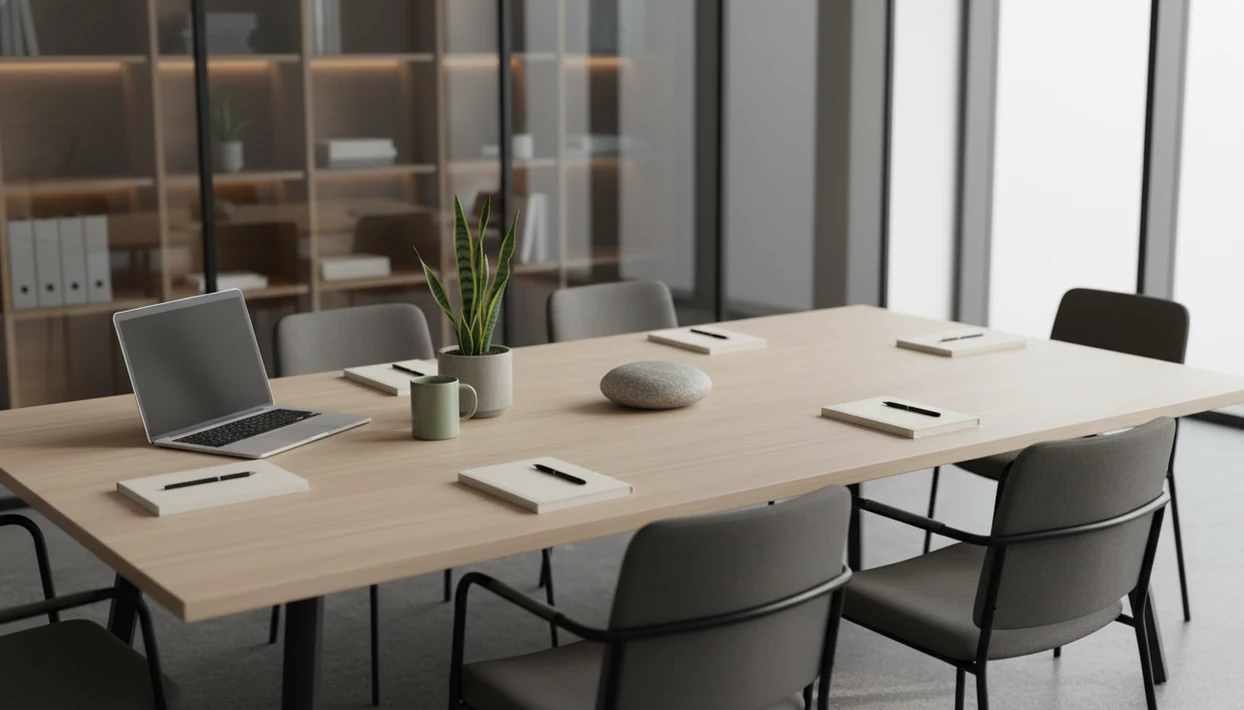


Mindful workplaces build present-moment awareness, emotional regulation, and focused attention into daily tasks, team norms, and leadership practices. The practical version combines short breathing breaks, guided meditation, mindful communication, realistic workloads, and optional support for sleep, anxiety, focus, and everyday calm. It is not simply a meditation perk or an expectation that employees stay calm under every condition.
Useful habits are short, voluntary, and repeatable: a pause before a meeting, time for uninterrupted work, or a moment to reconsider a tense reply. These practices belong alongside healthier team systems, including manageable schedules and respectful communication. Mindfulness can support stress reduction and attention, but it cannot make chronic overwork, unsafe conditions, or poor management acceptable.
What matters most
- Mindful workplaces are not just meditation perks; they combine individual practices with healthier team systems.
- The best workplace mindfulness habits are short, voluntary, repeatable, and easy to use before meetings, deep work, transitions, and sleep.
- Mindfulness can support stress reduction and focus, but it should not be used to excuse chronic overwork, unsafe culture, or poor management.
Mindful workplaces guide: what the term really means
A mindful workplace is a work environment that intentionally builds present-moment awareness, emotional regulation, and focused attention into daily habits, team norms, and leadership practices.
In practice, mindful workplaces are not rooms with cushions and a poster about calm. They show up in how meetings begin, how emails are handled, how people switch between tasks, and how leaders respond when pressure rises. The goal is not to feel calm all day. That would be unrealistic for most jobs. Recognizing ego in mindful leadership can help managers listen openly rather than react defensively under pressure.
The useful goal is smaller: pause, notice, and respond with more control.
A team might take one quiet minute before a planning call. A manager might listen fully before correcting a draft. Someone with headphones packed in a work bag might use a guided session between a commute and a hard conversation. Guided meditation, breathing, and sleep-support tools can help individuals practice consistently, but the workplace norms matter just as much.
Mindful workplaces evidence for stress, focus, and job satisfaction
A six-week workplace mindfulness training trial found reduced work-life conflict and improved job satisfaction and ability to focus compared with a wait-list group. The evidence is not magic, but it is strong enough to take seriously when programs are consistent and voluntary. Explore the benefits of mindful leadership to connect individual attention habits with everyday team practices.
Five useful research facts:
- A 2016 randomized workplace mindfulness trial reported better focus, higher job satisfaction, and less work-life conflict after six weeks.
- A 2018 meta-analysis of 23 randomized controlled trials found small to moderate improvements in worker stress, anxiety, depression, and well-being.
- A systematic review of workplace mindfulness interventions found significant perceived stress reductions in 9 of 10 randomized controlled trials.
- The American Psychological Association reported that 57% of U.S. workers experienced negative effects of work-related stress, including cognitive weariness and emotional exhaustion. Learn how leaders can prevent emotional exhaustion through practical habits that support healthier workplace boundaries.
- NIOSH has noted that stress-related conditions cost U.S. employers an estimated $221 million per year in injury and illness costs.
For high-pressure roles, mindfulness works better as a repeatable routine than a one-off seminar; our guide to meditation for managers covers that leadership angle more directly.
What longer programs and newer workplace trials show
The six-week comparison needs a precise description. In a 2019 trial of 60 employees at a marketing firm, researchers compared a six-week mindfulness program with a half-day seminar, not a wait-list group. The longer program produced greater improvements in attentional focus and work-life conflict. Job satisfaction improved marginally, while both groups reported comparable improvements in perceived productivity. Those findings do not establish an increase in objective output.
Digital programs also have evidence beyond small workplace studies. A 2025 randomized trial involving 1,458 employees found greater reductions in perceived stress after eight weeks of employer-provided digital mindfulness meditation than in a wait-list group. This supports digital delivery as one option for workplace stress support. It does not establish that every meditation app has the same effects or that a brief meeting pause reproduces the intervention.
A 2026 review covering 132 randomized trials reported improvements in stress, distress, anxiety, wellbeing, resilience, and sleep, with most effects sustained for up to three months. However, pooled effects on blood pressure, cortisol, heart-rate variability, and inflammatory markers were not statistically significant. Differences between studies and risk of bias limited certainty. Employee reports of feeling better should therefore not be presented as proof of measurable physiological change.
How mindful workplaces work during a busy workday
Mindful workplaces work by training attention, downshifting the nervous system, and reinforcing calmer team habits. The basic mechanism is simple: notice distraction, return to the chosen task, and reduce automatic reactivity.
Attention training is the core skill. You start writing a proposal, notice the urge to check chat, and return to the paragraph. That loop builds metacognition, which means noticing your own mental state while it is happening. Nervous-system downshifting uses breathing, body scans, and short pauses to lower physical arousal. In plain language, your body gets a chance to stop sprinting.
Then comes emotional regulation. Naming stress, irritation, or worry can create enough space to choose a response instead of firing back. A breathing exercise before a presentation is not a personality change. It is a reset.
Organizational reinforcement matters too. Leaders model pauses, meetings begin with clarity, and workloads stay realistic.
How to use mindful workplaces tips in five daily steps
Use mindful workplaces tips by attaching short practices to moments that already happen. The easier the cue, the more likely people are to repeat it.
- Set a 60-second breathing reset before the first meeting, with both feet on the floor and the next agenda item visible.
- Choose one focused work block and single-task without extra tabs, inbox checking, or side messages.
- Pause before replying to a tense email or chat message; read it once, breathe, then write the response.
- Use a short guided meditation or breathing exercise during a transition break, especially after back-to-back calls.
- Close the workday with a brief reflection and, when needed, use evening sleep audio or a calming meditation to separate work stress from rest.
An employee sitting at a desk with a closed laptop and cooling coffee does not need another speech about toughness. They may need a calmer transition out of the workday, along with a simple routine that makes the next morning feel more organized.
Mindful workplaces examples for meetings, email, and deep work
Mindful workplaces become real when teams use them in normal work moments. The strongest examples are brief, practical, and almost invisible from the outside.
- Meeting arrival pause: Start with one quiet minute, name the decision needed, and ask people to close unrelated tabs. The meeting feels less like everyone sprinted in from five different rooms.
- Email or chat reset: Read the message, breathe once, assume a reasonable intent, then respond. Short pause. Better reply.
- Deep work block: Set a timer, choose one task, silence notifications, and take a short reset afterward.
- Manager listening practice: Hear the full concern before correcting, assigning, or defending a decision.
- Remote-work transition ritual: Use a walk, stretch, or breathing cue between home mode and work mode.
For distributed teams, meditation for remote workers can be especially useful because home and work boundaries often blur quietly.
Best-fit teams and red flags for mindful workplaces programs
Mindful workplaces fit teams that face high cognitive load, constant context switching, meeting fatigue, remote-work stress, or everyday anxiety. They are not enough when the real problem is unsafe culture, chronic understaffing, or leadership that refuses accountability.
| Fit category | Best for | Not ideal for |
|---|---|---|
| Team conditions | High-focus work, frequent decisions, heavy meetings, remote collaboration | Roles where workload is unsafe or breaks are punished |
| Culture | Voluntary, respectful, culturally sensitive practice | Mandatory sessions that feel intrusive or performative |
| Support needs | Short resets, focus habits, sleep-support routines, communication pauses | Replacing therapy, medical care, HR protections, or psychological safety work |
| Leadership | Managers willing to model realistic pacing | Leaders using mindfulness to quiet complaints |
MindTastik can help individuals choose a starting point for breathing, focus, or sleep support. It cannot fix a workload that should have been redesigned. Founders facing constant pressure may also benefit from meditation for founders, but the same boundary applies.
Mindful workplaces measurement for stress, sleep, and focus
Measure mindful workplaces with simple baseline and follow-up checks, not only output metrics. Stress, focus, meeting quality, and work-life boundaries are better early signals than raw productivity.
Start with a short pulse survey before the program begins. Ask people to rate stress, ability to focus, meeting overload, after-hours recovery, and psychological safety. Repeat the same questions four to six weeks later. Add one open-text question so people can name what actually changed.
Participation data should stay aggregate. Never use individual meditation, breathing, or sleep-audio activity to judge performance. If an app is used, privacy-respecting indicators might include total completed breathing sessions, focus meditations, or bedtime audio use across a group.
The most useful measurement combines self-reported stress, attention quality, and meeting behavior because workplace mindfulness is partly personal and partly cultural. For intense early-stage teams, meditation for startup stress support may offer more targeted routines.
Image caption for mindful workplaces visual
Use a realistic work image: a team taking a short breathing pause before a meeting, or one employee sitting quietly between tasks with a notebook, laptop, and muted phone nearby. Avoid spa stones, incense, yoga poses in office clothes, or anything that makes mindfulness look removed from actual work.
The visual should feel ordinary. Conference table. Calendar invite. People arriving with half-finished thoughts.
Suggested caption: “Mindful workplaces use short breathing pauses, focused meetings, and everyday calm practices to help teams reset attention during the workday.”
Alt-text guidance: Describe the scene plainly and include the keyword once, such as: “Team practicing a one-minute breathing pause before a meeting in a mindful workplace.” Do not repeat the phrase several times. Descriptive alt text helps people first; search benefit is secondary.
Scheduling Workplace Mindfulness Without Extending the Workday
For workplaces with rotating shifts, customer queues, or continuous production, a lunchtime meditation session can exclude the employees with the least control over their schedules. Offer equivalent opportunities during each shift, within paid working time, and arrange coverage before inviting participation. A cashier cannot leave an active checkout, and a machine operator needs a safe stopping point rather than an audio prompt while equipment is running. Employees who spend their shift standing may need a seated option, while shared workstations require a way to participate without installing an app on a personal phone. Make sessions optional, and avoid treating attendance as evidence of commitment.
Keep evening invitations and practice reminders from becoming another work notification. An employee MBSR review found some reductions in sleep difficulty, but improvements were not consistent across sleep measures. That supports offering practice as an option, not promising better sleep after every session. For employees finishing late or starting early, provide materials they can access on their own schedule without a deadline, attendance streak, or expectation to respond outside working hours.
Guided support for meeting breaks and task transitions
MindTastik’s guided meditations, focus sessions, and breathing exercises offer optional support for pauses before meetings or between demanding tasks. A guided session suits employees who prefer spoken instructions to an unstructured quiet break. Others may prefer silence or a walk. Teams facing unsafe workloads need organizational changes, not another wellness activity. Persistent anxiety or sleep problems may need clinical support; MindTastik is not a medical treatment.
What mindfulness cannot fix at work
Mindfulness can support calmer work habits, but it is not a cure-all for burnout, chronic overwork, unfair policies, or unsafe workplace culture. It should sit beside better systems, not cover for broken ones.
Key limitations to keep in view:
- Benefits vary by person, role, workload, psychological safety, and practice consistency.
- Forced mindfulness can feel intrusive, especially when employees already feel watched or judged.
- One- to five-minute resets may help attention, but they may not be enough for severe stress, trauma, insomnia, or anxiety symptoms.
- Research is encouraging, but results vary by sector, program length, delivery quality, and participant self-selection.
- Mindfulness should not replace therapy, medical care, HR protections, fair scheduling, or workload redesign.
- Meditation and sleep-support tools can support everyday calm, but they do not replace professional medical or mental health care.
- Privacy matters whenever organizations review app participation or well-being data.
Clinicians typically recommend professional support when stress, anxiety, sleep disruption, or low mood becomes persistent, severe, or hard to manage safely.
Mindful workplace questions
What makes a workplace mindful rather than just offering meditation?
A mindful workplace makes room for attention and thoughtful responses in ordinary work. That includes focused meetings, manageable workloads, respectful listening, and voluntary pauses. Meditation can be one tool, but a meditation benefit alone does not change a culture that rewards constant availability or punishes breaks.
How can a team start a meeting with mindfulness?
Offer an optional quiet minute before discussing the agenda. People can settle into their seats, breathe normally, and set aside unrelated messages. Then state the decision or task the meeting needs to address. Keep the pause simple, without requiring closed eyes, personal disclosures, or a particular emotional response.
How long should mindfulness breaks at work last?
A one- to five-minute pause can fit between calls, before a difficult reply, or after focused work. Treat that as a practical starting point, not a proven dose for every outcome. Research on structured programs cannot be assumed to show that a single short break produces the same benefits.
Should employees be required to join workplace mindfulness sessions?
Participation should be voluntary. Required sessions can feel intrusive, particularly where employees already feel watched or judged. Offer alternatives such as a quiet break or time away from messages. Avoid asking employees to share personal feelings, and do not use attendance or meditation activity in performance evaluations.
Can mindfulness prevent burnout in an overworked team?
Mindfulness is not a substitute for correcting chronic understaffing, unrealistic deadlines, or unsafe working conditions. Research findings on burnout are not uniform. A pause may help someone respond more deliberately, but managers still need to address workload, breaks, expectations, and accountability rather than making employees responsible for tolerating overload.
How should an employer measure a mindfulness program?
Use the same brief questions before the program and four to six weeks later, covering stress, focus, meeting overload, recovery, and psychological safety. Include an open-text question about what changed. Keep participation data aggregate, assess productivity separately, and check again later rather than relying only on immediate feedback.