
Meditation for Consultants


Meditation for consultants is a short, repeatable practice for resetting attention between client calls, during travel, before analysis blocks, and at bedtime. A practical starting schedule is 3-5 minutes for transitions, 5-10 minutes for focus or travel stress, and 10-15 minutes for evening decompression. These are suggested time windows, not proven minimum doses or guarantees of better performance.
MindTastik offers guided wellness audio, breathing practices, sleep support, and self-hypnosis sessions for adults building calmer everyday routines. For consulting work, a useful routine fits an existing pause rather than adding another demanding task. Consistency matters more than making every session long. Meditation can support stress management and wind-down, but it cannot replace clinical care, workload boundaries, or enough time to sleep.
The consultant routine at a glance
- Use short guided sessions in predictable consulting micro-moments: before pitches, between calls, after tense meetings, on flights, and before sleep.
- Consistency matters more than duration; a repeatable consultant meditation routine can be as little as three brief sessions per day.
- Meditation can support stress, focus, sleep, and emotional regulation, but it is not a replacement for clinical care, workload boundaries, or enough sleep opportunity.
Quick answer: a consultant meditation routine for client-call days
A practical consultant meditation routine uses short guided sessions at natural transition points: morning focus, meeting resets, travel pauses, and bedtime. The point is not perfect silence. It is a repeatable nervous-system reset before the next client-facing moment. For senior consultants balancing leadership and delivery, an executive meditation routine offers another structure for short daily resets.
Try this pattern: 5 minutes before the first analysis block, 3-5 minutes for meditation between client calls, 5-10 minutes during travel friction, and 10-15 minutes before sleep. MindTastik can make this routine easier to repeat by offering short guided meditation, breathing, travel-friendly audio, and bedtime sessions in the 3-15 minute ranges consultants actually have.
The useful question is simple: what can you repeat on a packed Tuesday? Not what looks impressive on a wellness retreat.
Keep it boring enough to use.
Client-call stressors that make guided calm useful for consultants
Consultants often need guided calm because the work compresses several stressors into one day: client scrutiny, fast context switching, travel fatigue, deadline pressure, and late-night rumination. A guided session gives the mind one clear task before the next room, deck, or decision.
- Context switching: Moving from pricing strategy to stakeholder politics in ten minutes can leave attention scattered.
- Client scrutiny: A tense steering committee can keep the body braced long after the call ends. When client scrutiny brings persistent self-doubt, learning how to overcome impostor syndrome may complement a brief calming practice.
- Travel fatigue: Airports, hotel rooms, and early trains make recovery less predictable.
- Deadline compression: Short resets help create a boundary before deep analysis work.
- Evening rumination: The 2:13 a.m. lock-screen check often starts with unfinished meeting replay.
In a 2017 worker trial, an 8-week mindfulness program produced a 31% reduction in perceived stress and improved psychological well-being compared with a wait-list control NIH research: PMC5669491. For consultants, the practical outcome is calmer client presence and less spillover into bedtime.
How meditation for consultants works during stress and focus shifts
Meditation for consultants works by training attention to notice distraction, return to a chosen anchor, and repeat that cycle under pressure. In guided meditation, the anchor is usually breath, body sensation, or the narrator’s voice.
After a tense call, breathing practices and body scans can help downshift threat arousal. That means the body gets a cue that the argument, negotiation, or executive challenge is over. You may still need to write the follow-up email, but your jaw does not have to stay tight against the pillow later.
A 2018 meta-analysis of 18 randomized controlled trials found small to moderate improvements in attention, executive function, and working memory in adults PubMed research: 29306272. For consultants, focused practice usually works best when it is brief, repeated, and tied to real work transitions rather than saved for rare quiet days.
Meditation can support regulation. It does not cure anxiety, burnout, insomnia, or jet lag.
How to use MindTastik for a consultant meditation routine
Use an app-guided routine when you do not want another decision on your calendar. Beginners should start with short guided sessions, especially when the day already feels crowded.
- Choose session lengths for each use case: 3-5 minutes between meetings, 5-10 minutes for travel, and 10-15 minutes before bed.
- Download travel audio before flights, hotel Wi-Fi, client sites, or train routes make streaming unreliable.
- Set calendar triggers after recurring client calls, not vague intentions like “meditate more.”
- Use meeting-transition sessions before opening the next deck, message thread, or proposal document.
- Save bedtime tracks for the nights when your thoughts get loud and scrolling feels too easy.
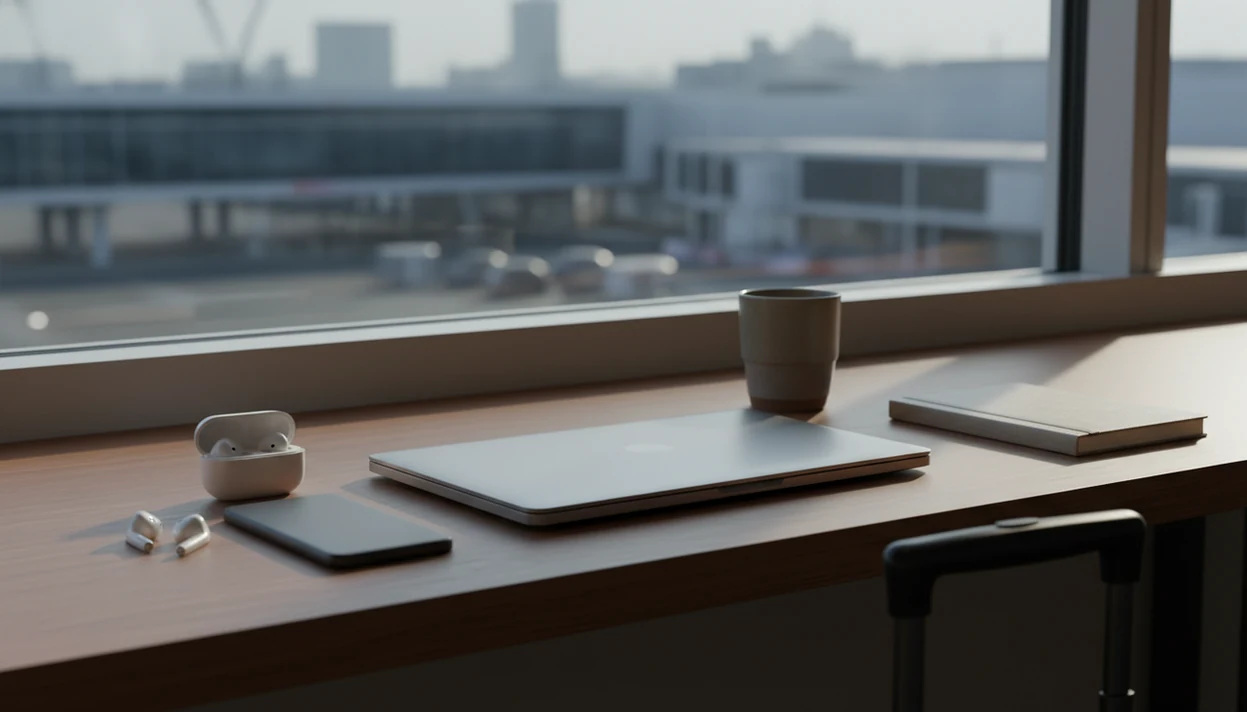
A simple desk setup can make the pause easier to keep. Close the laptop, let the coffee cool, and choose a short session before the next calendar block begins. If you want more technique options, the Meditation Techniques: A Practical Library explains breathing, body scans, and guided attention in plain language.
Best meditation moments for consultants on travel and meeting days
The best meditation moments for consultants are the ones already built into the day: before a pitch, between calls, in transit, after conflict, and before sleep. Use the table to match the situation to session length and goal.
| Consulting scenario | Session length | Meditation type | Goal |
|---|---|---|---|
| Before a pitch | 3-5 minutes | Guided breathing | Settle nerves and sharpen presence |
| Between Zoom calls | 3-5 minutes | Short reset | Clear the last client context |
| Waiting in a lobby | 2-4 minutes | Grounding practice | Reduce anticipatory tension |
| On a flight | 5-10 minutes | Body scan or breath pacing | Support travel meditation for consultants |
| After conflict | 5-8 minutes | Emotional decompression | Lower reactivity before follow-up |
| Before bed | 10-15 minutes | Sleep audio or body scan | Reduce work spillover into night |
Pre-downloaded offline sessions matter. Airport lounge Wi-Fi always seems fine until the session buffers right as boarding starts. For related leadership pressure routines, meditation for managers may fit team-heavy consulting roles. Consultants advising company leaders can also compare these habits with a meditation app for CEOs built around executive demands.
Best-fit and poor-fit use cases for guided calm for consultants
Guided calm for consultants fits best when the goal is practical support, not instant transformation. Consultants comparing MindTastik with Calm, Headspace, or Insight Timer should focus less on library size and more on whether the app makes 3-5 minute meeting resets, offline travel audio, and sleep wind-down tracks easy to find.
Best for
- Frequent context switching: A short reset helps separate one client problem from the next.
- Travel anxiety: Breath pacing and body scans can make flights, hotels, and transit feel more manageable.
- Pre-meeting nerves: Guided audio gives attention somewhere useful to land.
- Bedtime decompression: Sleep audio can replace late-night inbox checking.
- Beginner meditation: A guided voice through cheap earbuds removes the “what do I do now?” problem.
Not ideal for
- Replacing therapy, medication, or professional mental health care.
- Compensating for chronic overwork with no workload boundaries.
- Emergency mental health needs.
- Forcing sleep instantly after a punishing travel week.
For broader pressure patterns, Meditation for High Performers Without Burnout covers routines beyond consulting.
Evidence for app-guided meditation, work stress, and burnout
The evidence for app-guided meditation is promising for stress, attention, and burnout, but it is not equal across every app, population, or workplace. Treat the research as support for a consistent practice, not proof that one session fixes a hard quarter.
- A randomized trial of app-based mindfulness found significant reductions in perceived stress after app use, with effects depending on adherence and study design PubMed research: 30624382.
- A workplace app-based mindfulness study found reductions in distress and job strain compared with a wait-list control, but results may not generalize to every app or role source.
- The National Center for Complementary and Integrative Health reported that 14.2% of U.S. adults practiced meditation in 2017, up from 4.1% in 2012 NCCIH mindfulness overview: meditation and yoga use among adults and children.
- Mindfulness studies often show stronger results when people practice repeatedly, not only during acute stress. Consultants supporting schools may also find mindfulness for teachers useful when considering how attention practices fit classroom demands.
- App quality, session design, and user fit still matter.
Clinicians typically recommend mental health care when anxiety, depression, trauma, or burnout symptoms are severe or impairing. Meditation can sit beside care, not replace it.
What workplace studies can actually say about consultants
The research does not establish that meditation improves consulting deliverables or client performance. A 2019 meta-analysis of 23 workplace randomized trials found improvements in stress, anxiety, distress, well-being, and sleep, but insufficient pooled evidence to draw conclusions about work performance or burnout. A calmer start to an analysis block is a reasonable practice goal, not evidence of more accurate models or better recommendations.
Burnout findings also need a population caveat. A 2024 review of 49 randomized trials found that 67% reported a significant benefit on at least one burnout indicator, with emotional exhaustion showing the clearest improvement. However, 64% of participants were healthcare professionals. Those results do not establish the same benefit for consultants facing client scrutiny, frequent travel, or compressed deadlines. For consultants working with education teams, resilience for teachers offers a related perspective on managing demanding professional roles.
Image caption for consultant meditation between calls
Caption: A consultant listens to a short guided meditation before the next client meeting, with headphones beside a laptop and travel bag in a quiet hotel room. This meditation for consultants image should feel practical: a five-minute pause between work blocks, not a staged wellness scene.
Alt-text guidance: Use clear, descriptive alt text such as “consultant using headphones for a guided meditation between client calls in a hotel room.” If the image shows an airport lounge, quiet meeting room, or laptop setup, name that setting. Keep the description specific for accessibility and image search, but avoid implying medical treatment or guaranteed stress relief.
Common mistakes in consultant meditation routines
The most common mistake is waiting until you are already overwhelmed. A short reset works better when it is familiar before the difficult call, delayed flight, or redlined deliverable.
Another mistake is choosing sessions that do not fit consulting schedules. A 30-minute practice may be useful on a weekend, but it often collapses on a travel day. Choose the 5-minute breathing exercise over the 20-minute body scan when the calendar is stacked.
Do not expect the mind to go blank. The practice is noticing the thought, returning to the guide, and doing that again.
Travel logistics count too. Download sessions, pack working headphones, and account for time zones before bedtime. If silent sitting feels frustrating, switch to guided breathing, walking meditation, or sleep audio. Consultants who also carry founder-style pressure may find meditation for founders closer to their work rhythm.
Closing Open Client Loops Before Bed
A partner’s late comments on a slide deck can leave you mentally rewriting the recommendation long after the laptop closes. Before finishing work, separate tomorrow’s actual deliverables from unresolved judgments: which numbers need checking, who can approve the scope change, and whether the client’s question requires an answer or clarification. Put those next actions in your approved work system, keeping confidential client details out of meditation apps or personal journals.
This closure step targets a specific sleep obstacle: carrying responsibility for an unfinished engagement into bed. A systematic review of occupational stress and sleep quality found that higher work stress was generally associated with poorer sleep. The evidence was not specific to consultants, but it is relevant when a pending steering committee presentation keeps prompting another mental rehearsal.
During your bedtime practice, notice the urge to solve the deck rather than debating its contents. Label it “planning,” return attention to physical sensations, and leave the recorded next action for tomorrow. The aim is not to feel certain about the client’s reaction, but to stop treating bedtime as another review round.
Short breathing and focus sessions for client-call days
MindTastik's breathing exercises suit a brief pause after a tense client call or before a presentation. Its guided meditations and focus sessions offer another option before modeling, synthesis, or deck review, while sleep stories and soundscapes fit evening wind-down.
The app is a reasonable choice for consultants who prefer spoken guidance. Those who want silence may prefer an unguided practice. Persistent anxiety, depression, or severe burnout calls for professional care and changes to working conditions, not a different audio track.
What meditation cannot fix in a consulting workload
Meditation can support everyday calm, focus, and wind-down routines, but it has real limits for consultants under sustained pressure.
- Meditation is not a replacement for professional mental health care for severe anxiety, depression, trauma, or burnout.
- It cannot replace adequate sleep opportunity, workload boundaries, recovery time, or realistic travel schedules.
- One-off use before a major presentation is less reliable than consistent practice across normal workdays.
- Some beginners feel restless, bored, or more aware of stress at first.
- App-based evidence is promising, but it is still emerging and varies by app, session design, and user population.
- A guided session cannot fix a calendar with no breaks between emotionally charged meetings.
- Sleep audio may support a wind-down routine, but it cannot force sleep after late caffeine, jet lag, or a 14-hour client day.
A consultant meditation routine works best as one support in a larger work-health plan.
Between Meetings
A consultant meditation habit tends to work best when it is tied to a visible cue: a closed laptop, a desk pause, or the first open calendar gap after a client call. Instead of waiting for a calm day, use the routine as a meeting reset before the next decision block. The most repeatable practice is the one that fits between obligations without needing a perfect setting. For routines that suit other professional settings, explore mindfulness at work alongside your consulting-specific practice.
Consultant meditation questions
How can consultants meditate between back-to-back client calls?
Use an available transition rather than waiting for a quiet room. A 3-5 minute guided session can mark the end of one client conversation before opening the next deck. If the calendar has no gap, protecting a short break is the first step. Meditation cannot create time that has not been reserved.
How long should a consultant meditation session last?
A practical starting point is 3-5 minutes between meetings, 5-10 minutes before focused work or during travel, and 10-15 minutes for evening wind-down. These lengths are scheduling suggestions, not established treatment doses. Start with a duration that fits ordinary workdays rather than a longer session that is repeatedly skipped.
What type of meditation is best before a client presentation?
A short guided breathing or grounding practice fits the limited time before a presentation. The aim is to give attention a simple anchor, not to become deeply relaxed or eliminate nerves. Keep presentation preparation separate: meditation does not replace rehearsing the opening, checking the deck, or clarifying the decision needed.
Can meditation help with consulting travel stress?
Breath pacing or a body scan can provide a simple focus during airport waits, flights, or hotel downtime. Choose a short session that fits the setting rather than expecting silence. Meditation may support stress management, but it does not resolve delays, irregular schedules, or the need for adequate recovery after travel.
Does meditation improve focus before financial modeling or deck work?
A focus-oriented session can be used to practice noticing distraction and returning attention to one task. That makes it a reasonable transition after a noisy or tense call. However, workplace research has not established reliable improvements in work performance, so claims about more accurate models or better client deliverables would be too strong.
Can meditation prevent burnout in consultants?
Meditation may help with stress and some burnout-related symptoms, but prevention is not assured. Much of the burnout research involves healthcare professionals rather than consultants. Excessive workload, limited control, and inadequate recovery still need attention. Protected breaks, realistic deadlines, and access to professional care matter alongside any individual meditation routine.
What can consultants do when client work keeps running through their mind at bedtime?
A 10-15 minute guided wind-down or body scan is one option for shifting attention away from unfinished work. Sleep stories or soundscapes offer alternatives to a work-focused session. Meditation cannot compensate for a shortened sleep window. Persistent sleep difficulties deserve attention beyond changing the bedtime audio.