
Executive Meditation Routine for Calm Work Transitions


An executive meditation routine is a repeatable sequence of brief guided or self-led practices used to manage stress, reset between work demands, and prepare for sleep. It works best when sessions are short, predictable, and attached to transitions such as waking, finishing a meeting, arriving after travel, or closing work for the night.
A practical starting point is three daily anchors: morning centering, a 2-5 minute pause between demanding tasks, and bedtime decompression. Silent breathing can fit an office chair or airport gate; guided audio can suit a hotel room or bedside. The aim is steadier attention and a calmer handoff from work to rest, not guaranteed performance gains. Meditation complements, rather than replaces, medical care, therapy, workload boundaries, and healthy sleep habits.
The daily anchors
- Use three daily anchors: a morning centering practice, 2-5 minute transition meditations, and a bedtime decompression session.
- Keep the routine discreet enough for offices, airports, cars, and hotel rooms so it survives unpredictable executive schedules.
- Treat meditation as calm and sleep support, not a replacement for medical care, therapy, workload boundaries, or healthy sleep habits.
Executive Meditation Routine Quick Start for Busy Leaders
Quick answer: Start with three touchpoints: morning, transition moments, and bedtime. A realistic executive meditation routine can fit into 10-20 total minutes when it is split into small sessions instead of saved for one long sit.
Use 3 minutes after waking to settle attention, 2-5 minutes before or after demanding meetings, and 5-10 minutes before sleep. The purpose is calm, stress regulation, and sleep preparation, not guaranteed productivity or sharper deal-making.
Keep it ordinary.
MindTastik offers guided meditations, sleep audio, and breathing exercises for adults who prefer spoken instructions for workday resets and bedtime routines. The app should not become another task to manage. It should make the first choice easier when the calendar is already crowded.
When comparing Best Meditation App for Sleep options for an executive routine, prioritize short sessions, offline-friendly audio, and a no-pressure queue you can start in a hotel room without browsing.
Executive Meditation Routine Mechanics During Work Transitions
An executive meditation routine works by turning role changes into reset cues. Instead of carrying meeting tension, travel friction, or late-night email into the next moment, the leader uses a brief breath, grounding, or guided audio practice to close one demand before starting another.
Breath awareness gives the mind one simple object. Grounding brings attention back to the body and room. Guided attention reduces the need to invent instructions when you are already tired. Think of it as closing one mental tab before opening another.
According to the 2017 National Health Interview Survey, 14.2% of U.S. adults reported using mindfulness meditation in the past year, up from 4.1% in 2012. That shift matters because meditation is no longer a niche retreat habit; many working adults now use it as a daily regulation tool NCCIH overview: mind body.
Consistency matters more than silence. A quiet office helps, but so does one minute in a parked car before walking inside.
Six Setup Steps for a Meditation Routine for Executives
Here is how to use an executive calm routine without making it fragile:
- Choose event anchors based on waking, the first meeting, the last email, and lights out.
- Select one guided session for morning or bedtime, ideally 5-10 minutes and easy to repeat.
- Pick one silent fallback such as six slow breaths, feet on the floor, or counting exhales.
- Build a travel version for airport waits, rideshares, delayed check-ins, and hotel rooms.
- Place reminders lightly in your calendar, but label them “reset,” not “meditate perfectly.”
- Review weekly and remove any step you skipped three times.
A guided meditation for leaders helps when attention is scattered. Silent breathing works when headphones would feel awkward. For adjacent work roles, routines for meditation for managers can be adapted with the same event-based structure.
What Makes an Executive Meditation Routine Sustainable?
A sustainable executive meditation routine survives because it bends around the day instead of demanding a perfect day. It uses practical cues, discreet practices, and short repeatable sessions that still work when the calendar breaks.
The routine should feel like a recovery tool, not another performance metric. If it only works at 6:00 a.m. in a silent room, it will fail during travel, board weeks, and late calls. Leaders who support others can explore how to care without burning out while protecting their own recovery time.
- Anchor sessions to events such as waking, closing a meeting, entering a car, checking into a hotel, or turning off email.
- Keep each practice discreet enough for an office chair, airport gate, parked car, train seat, or hotel bed.
- Choose one guided option for tired moments and one silent fallback for public or awkward settings.
- Limit the default session to a length you can repeat during pressure weeks, even if that means two minutes.
- Measure success by whether you recover faster and prepare for sleep more reliably, not by an unbroken streak.
The best routine is the one you can restart without drama after a missed day.
Executive Calm Routine Table by Workday Moment
An executive calm routine works better when each workday moment has a matching practice. Flexible anchors beat fixed clock times because leadership days rarely stay neat.
| Workday moment | Recommended practice | Duration | Discreet setting | Guided or silent? |
|---|---|---|---|---|
| Morning centering | Breath plus intention for the day | 3-5 minutes | Bedside, office chair, parked car | Guided if groggy |
| Pre-meeting reset | Slow exhales and posture check | 1-3 minutes | Desk, hallway, conference room | Silent |
| Post-meeting decompression | Body scan or jaw-and-shoulder release | 2-5 minutes | Office chair, elevator wait, car | Silent or guided |
| Travel meditation | Eyes-open grounding or headphones-only audio | 3-8 minutes | Airport gate, rideshare, train seat | Guided with headphones |
| Bedtime wind-down | Sleep-focused guided session | 5-20 minutes | Hotel room or bedroom | Guided |
Five Facts About Guided Meditation for Leaders
- Meditation does not require a blank mind; noticing distraction and returning is the practice.
- Brief mindfulness practice has been studied for perceived stress, anxiety, and sleep-related outcomes, but effects vary by population, program length, and adherence NCCIH mindfulness overview: meditation and mindfulness effectiveness and safety.
- A JAMA meta-analysis found moderate evidence that mindfulness programs can improve anxiety and depression, with low-to-moderate evidence for stress and distress JAMA Internal Medicine study: 1809754.
- A randomized clinical trial in adults with sleep disturbances found that a mindfulness-awareness program improved sleep quality compared with sleep-hygiene education JAMA Internal Medicine study: 2110998.
- Guided meditation for leaders should avoid promising guaranteed productivity, better decisions, or constant calm.
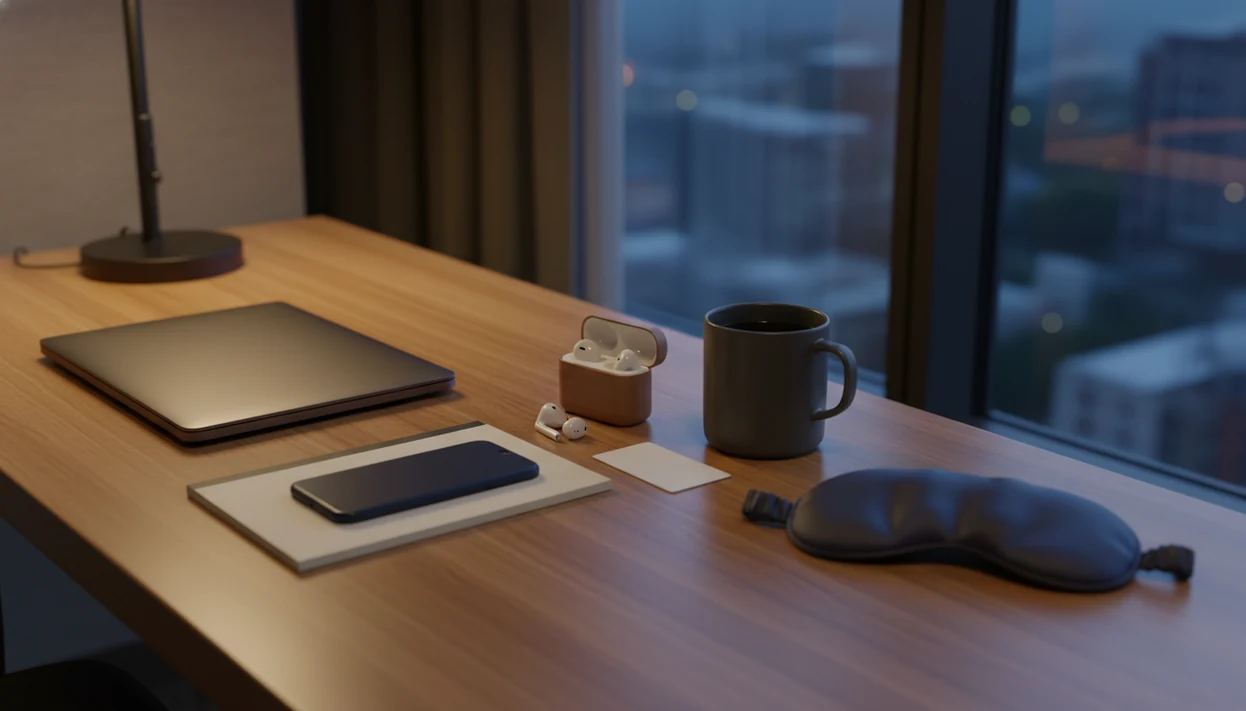
For busy executives, short guided practice is often easier than long unguided meditation because it removes the need to decide what to do next. That matters after a demanding day, when a closed laptop and a supported chair can make the next calm step feel clear.
What leadership research supports, and what it does not
A 2023 meta-analysis of leader mindfulness combined 54 independent samples involving 9,414 leaders. Mindfulness was significantly associated with leaders’ well-being, leadership relationships, job performance, and followers’ well-being and performance. The review also found strong evidence that mindfulness interventions improve leader well-being. These findings support meditation as a recovery habit, but associations alone do not establish that meditation caused better performance. For a team-level perspective, consider how mindfulness and employee satisfaction relate to everyday workplace support and relationships.
The training studied is not necessarily equivalent to a brief meeting reset. In a quasi-experimental study of 60 leaders, a two-day mindfulness workshop followed by three months of individual coaching produced greater improvements in several leadership measures than presentation-skills training. That is a substantially larger commitment than a few minutes of breathing. A short routine is a practical starting point, not a proven substitute for the programs evaluated in leadership research. For another performance-focused context, meditation for athletes shows how brief practices can fit around demanding training schedules.
Business Travel Meditation for Flights, Hotels, and Jet Lag
Business travel meditation should fit public spaces and strange rooms. The useful windows are airport gate waits, taxi rides, hotel check-in pauses, and the first ten minutes after entering a room.
Airport gate reset
Use an eyes-open practice: feel both feet, soften the jaw, and count six longer exhales. Noise-canceling headphones at a desk are one kind of privacy; at a gate, even one earbud can create enough boundary.
Hotel room sleep transition
After a late dinner or time-zone jump, soften the display, set down only what you need, and start a short sleep session before email reopens the day. A quiet hotel desk, cooling coffee, and a brief guided track can still be enough.
Meditation can support adjustment, but it cannot erase red-eyes, chronic sleep loss, or overwork. Travelers who live in founder mode may also find meditation for founders useful.
Executive Meditation Routine Fit for Stress, Sleep, and Burnout Boundaries
This routine fits leaders who need discreet stress regulation, calmer transitions, and bedtime decompression. It is not a substitute for clinical care when symptoms are severe, persistent, or worsening.
| Best for | Not ideal for |
|---|---|
| Leaders who need a 2-minute reset between meetings | Replacing treatment for severe anxiety or depression |
| Executives who want a calmer bedtime handoff | Managing clinical insomnia without professional support |
| Travelers who need airport and hotel routines | Treating trauma symptoms with long eyes-closed practices |
| Adults who prefer guided structure | Solving burnout caused by unsafe workloads |
People with trauma histories may prefer eyes-open grounding, shorter practices, or support from a qualified clinician. Apps such as MindTastik, Calm, and Headspace can offer guided meditation, sleep audio, breathing exercises, and self-hypnosis sessions without claiming to treat a condition. The phrase Best Meditation App for Sleep is only useful if the tool also respects these limits.
Executive Meditation Routine Image: Calm Transition Map
Use an educational image that shows a day split into four simple zones: morning centering, meeting reset, travel reset, and bedtime decompression. The settings should look normal, not luxury-coded: an office chair, an airport gate, a hotel room, and a bedside table.
Caption: Executive meditation routine map showing morning, meeting, travel, and bedtime calm transitions.
The image should help readers choose a starting point quickly. A small arrow from “last email” to “bedtime audio” says more than a staged skyline photo. If the reader is looking for one steady track to carry them out of mental overdrive, the visual has done its job. For technique options, a plain meditation techniques library can help narrow the choice.
Mindful Preparation for Confidential Personnel Decisions
Before approving a restructuring, compensation exception, or senior hire, use a private pause to separate the decision criteria from the pressure surrounding them. Keep confidential names and business details out of meditation apps or recorded voice notes. Sit with your eyes open, notice jaw tension and breathing, then silently name the strongest pull: urgency, loyalty, frustration, or fear of board criticism. Return to the documented criteria before reviewing the proposal. The purpose is not to feel comfortable about a difficult decision, but to notice when discomfort is pushing you toward premature agreement or avoidance.
An eight week study involving 152 office based middle managers reported improvements in work related stress, job satisfaction, and employer rated performance following Meditation Awareness Training. Those findings do not establish that a brief pause improves executive personnel decisions. Treat the pause as preparation for scrutiny, not a substitute for it: check whose perspective is missing, request the relevant HR or legal review, and document the rationale. For decisions affecting livelihoods, feeling calmer should never become evidence that the decision is fair.
Guided audio for meeting resets and bedtime
MindTastik’s breathing exercises and guided meditations suit brief pauses before or after demanding meetings. Its sleep stories offer a different option for bedtime, when following a narrative may feel less demanding than a focus practice. Choose the audio by the transition rather than trying to use one session for every situation.
Silent breathing may be simpler when headphones are impractical or a meeting could start at any moment. Persistent anxiety, insomnia, or burnout calls for support beyond an app; MindTastik is not a medical treatment. When work strain persists, burnout relief techniques can help you identify practical recovery steps and appropriate support.
What a short routine cannot fix about executive stress
Meditation is useful, but it has boundaries. Clinicians typically recommend professional support when anxiety, depression, insomnia, trauma symptoms, or burnout interfere with daily functioning.
- Meditation is not a replacement for clinical treatment of severe anxiety, depression, insomnia, trauma, or burnout.
- Benefits usually appear gradually over weeks, not instantly after one high-stress day.
- Meditation cannot fully counteract chronic overwork, constant late-night email, repeated red-eye travel, or unsafe workload expectations.
- Some practices may feel uncomfortable for people with trauma histories; eyes-open grounding or shorter sessions may be better.
- Executive-specific evidence is limited. Most research studies general mindfulness, stress, and sleep practices.
- Sleep-focused meditation works better when paired with regular wind-down habits, lower evening stimulation, and realistic recovery time.
- If meditation increases distress, stop the session and consider guidance from a qualified mental health professional.
No app should become a pressure meter.
Focus Without Force
- If this sounds like you after a tense call, start with a closed laptop and one minute of breathing before you check the next agenda item.
- Use the first calendar gap of the day as a reset cue, not as extra email time; the cue matters more than the length. Pair this pause with mindful email management to keep inbox demands from consuming every available workday break.
- A desk pause works best when it has one instruction: soften the jaw, slow the exhale, and let attention return to the room.
- The goal is not to become perfectly calm; the goal is to create a repeatable bridge between pressure and the next decision.
- For executives, a short routine tends to work better when it is attached to transitions you already have, such as meeting reset moments.
Executive meditation routine questions
How long should executives meditate each day?
Start with five minutes on most days, then add time if the routine remains manageable. A split routine can include morning centering, a brief meeting reset, and bedtime practice. Ten to fifteen minutes daily is a practical target, not a minimum required for every person or a guarantee of results.
What is a discreet meditation before a difficult meeting?
Sit with both feet on the floor, keep the eyes open, and notice the contact with the chair. Relax the jaw and follow a few comfortable breaths. When attention moves to the upcoming conversation, return to the breath. One to three minutes can fit a calendar gap without headphones or a separate room.
How can executives meditate during business travel?
Use an airport wait or hotel arrival as the cue. At a gate, keep the eyes open, feel both feet, and notice room sounds or comfortable breathing. In a hotel, a guided session can mark the end of work. These practices support decompression; they are not established treatments for jet lag.
Should bedtime meditation be different from a workday reset?
A workday reset needs a clear stopping point before the next task. Bedtime practice can be longer and less focused on preparing for action, using a body scan, sleep story, or gentle guided attention. Meditation can support the transition to rest, but persistent insomnia needs assessment rather than increasingly long sessions.
What if meditation becomes another task on an overloaded calendar?
Reduce the routine to one cue and one short practice, such as a few minutes after closing the last email. Keep a silent fallback for disrupted days. If the routine repeatedly feels burdensome, simplify it rather than adding reminders. Meditation cannot compensate for chronic overwork or replace changes to workload expectations.
Can meditation help with decision fatigue at work?
Meditation may help you notice mental overload and pause before reacting, but it does not replace rest or a manageable workload. Try focusing on your breathing for a few minutes between demanding tasks. Afterward, identify the next decision that truly needs your attention and postpone less urgent choices when possible.
How can executives meditate when their minds keep racing?
You do not need a quiet mind to meditate. Sit comfortably, notice your breathing, and gently return your attention whenever work thoughts appear. If an important reminder keeps interrupting, write it down before continuing. The practice is noticing distraction and returning, not forcing thoughts to disappear or solving problems during the session.
Can meditation help executives manage anger at work?
Meditation may help you recognize early signs of anger, such as a tight jaw, tense shoulders, or rapid breathing. Practice noticing these sensations without immediately acting on them. When frustration rises, pause and take a few comfortable breaths before responding. This can create space for a deliberate response, though workplace problems may still require direct action.