
Mindful Driving Guide
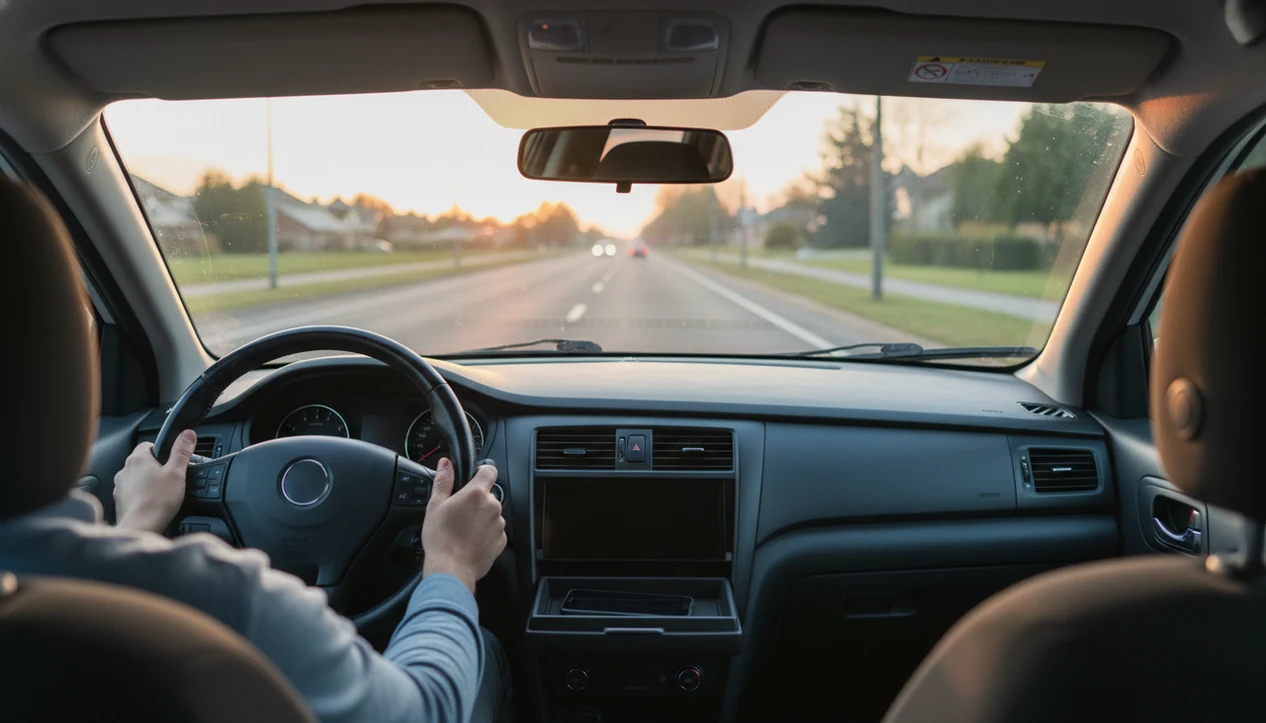


Mindful driving is present-moment attention to the road, traffic, and signs of distraction or tension, with safe vehicle operation always taking priority. It is not eyes-closed meditation behind the wheel. The aim is to notice when attention drifts and return it to driving, rather than follow thoughts, phone notifications, or frustration.
Structured breathing and body-awareness exercises belong before departure or after arrival, while safely parked. During the trip, attention stays on mirrors, speed, lane position, signals, and nearby road users. Mindfulness cannot replace road rules, adequate sleep, or defensive driving. A useful starting routine is a one-minute parked pause, a silenced phone, and navigation set before moving. MindTastik sessions fit the parked parts of that routine, not active driving.
The safety essentials
- Use mindfulness to support safer attention, not to replace road rules, sleep, or defensive driving.
- Start with a one-minute pre-drive breathing pause, silence your phone, and return attention to the road whenever your mind wanders.
- Use MindTastik before or after driving for sleep, anxiety, breathing, and everyday calm support, not for immersive meditation while the car is moving.
Mindful driving definition and safety boundary
Mindful driving is attention training applied to driving, not formal meditation behind the wheel. Your eyes stay open, your hands stay available, and traffic laws override every breathing cue, body scan, or calming technique. You can practice mindfulness without formal sessions; learn whether you need to meditate to be mindful in everyday settings.
> Mindful driving means using present-moment awareness, breathing, body cues, and non-reactive attention while keeping your eyes open and your full priority on safe vehicle operation.
A simple boundary helps: if a practice pulls attention away from mirrors, speed, lane position, signals, or nearby road users, don't do it. Silence the phone before shifting into drive. Enter the destination and check the route before moving the vehicle. Let the playlist wait.
The habit is small but concrete. Notice the wheel. Feel the seat. Look far enough ahead. Return. For broader context, related meditation techniques can be useful off the road, where attention does not compete with safety.
Distracted driving deaths, anxiety, and focus risks
Distracted driving is not a small lapse in concentration; it is a serious safety concern. Mindful driving tips matter because attention can drift during routine moments, such as glancing at a notification while stopped or replaying a tense conversation on the freeway.
- In 2022, an estimated 3,308 people were killed and 289,310 were injured in U.S. crashes involving distracted drivers, according to NHTSA nhtsa reference: distracted driving.
- In 2019, more than 1 in 3 U.S. drivers reported reading or sending a text or email while driving at least once in the past 30 days, according to the CDC CDC guidance: distracted driving.html.
- A 2016 meta-analysis found that cell-phone secondary tasks raised crash or near-crash risk by about 2 to 3 times compared with attentive driving pnas reference: pnas.1513271113.
- Anxiety can narrow attention. Irritation can make drivers speed up, close gaps, or react before thinking.
- Mind-wandering can turn a familiar commute into “autopilot,” where you arrive with little memory of the last few miles.
For anxious but functional drivers, a short reset is often easier than trying to “think calm” because the body gives attention something simple to follow.
Mindful driving attention loop in the nervous system
Mindful driving works through a simple loop: notice distraction, redirect attention, and regulate your response. In plain language, you catch the drift before it becomes a risky habit.
The mechanism uses attentional control and interoception. Attentional control means choosing where attention goes. Interoception means sensing body cues, such as a tight jaw, raised shoulders, or fast breathing. When traffic slows and frustration rises, one breath plus a wider view of the road can reduce the urge to react sharply.
Broader mindfulness research supports this logic, but direct mindful-driving outcome research is limited. A systematic review in JAMA Internal Medicine reported small to moderate anxiety reductions from mindfulness-based interventions JAMA Internal Medicine study: 1809754. A randomized trial by Mrazek and colleagues found that brief mindfulness training reduced mind-wandering and improved working-memory performance during attention-heavy tasks journals reference: 0956797612459659.
Mindful driving usually works best when it stays light, eyes-open, and tied to driving cues, while deeper meditation fits parked, quiet settings. For quiet, off-road sessions, learning how to meditate longer can help you extend practice without bringing it into driving.
5-step mindful driving routine before, during, and after a trip
Use this mindful driving routine as a safety-first sequence, not as an in-car meditation session. No step should pull attention away from the road.
- Pause before starting. Take three slow breaths while parked, with both feet grounded and the destination set.
- Silence your phone before departure. While parked, enable Do Not Disturb, set navigation, and put the phone out of reach.
- Check your posture and grip. Sit upright, relax your jaw, and hold the wheel firmly without squeezing it.
- Return to traffic awareness. When the mind wanders, name one driving cue: “mirror,” “speed,” “lane,” or “space.”
- Decompress after parking. Before opening the door, take one breath and notice whether your body is still braced.
Tiny ritual. Real effect.
If you like structured off-road practice, short meditation techniques can help you learn the reset before using a lighter version in the car. For practice while safely parked or at home, consider which meditation technique to use based on your needs and comfort.
Mindful driving tips for traffic, anger, and autopilot
Mindful driving does not mean becoming passive, slow, or overly cautious. It means staying awake to what is happening inside you and around the vehicle.
In practice, it may feel as ordinary as noticing your knuckles whitening on the wheel, unclenching your jaw at a red light, or catching the urge to glance at a buzzing phone before your hand moves.
- Red lights: Relax the jaw, feel the seat, and keep your eyes open. The light is not a meditation bell; it is a brief check-in.
- Congestion: Soften your grip and widen visual awareness to include brake lights, mirrors, and side lanes.
- Tailgating: Create space when safe. Naming “pressure” can stop the body from matching the other driver’s urgency.
- Honking: Notice the startle response before reacting. Shoulders drop first.
- Missed exits: Keep driving safely. Rerouting is cheaper than a sudden lane dive.
Image caption idea: A driver pauses before starting the car, hands relaxed on the wheel, phone silenced, and eyes open for mindful driving.
For drivers who get overwhelmed by body sensations, grounding meditation techniques can build the same “feel the present moment” skill off the road.
A red light is not a parked practice break
Being stopped in traffic is different from being safely parked. A red light still requires attention to signals, pedestrians, nearby vehicles, and changing conditions. The National Highways guide to driver roadworthiness places formal sensory and breathing exercises in a physically safe parked setting. A traffic stop is not the time for counted breathing, a body scan, or guided meditation.
During driving, keep any reset tied to the task: notice that attention has drifted, then return to the road, mirrors, speed, and available space. There is no need to finish a breathing pattern or inspect each body sensation. If a structured exercise feels necessary, first pull over safely and legally, park the vehicle, and only then begin.
Best-fit and poor-fit scenarios for mindful driving practice
Mindful driving fits ordinary attention and stress moments. It is not the right tool when the safe choice is to stop driving, get help, or avoid the trip.
| Scenario | Best for | Not ideal for |
|---|---|---|
| Daily commute | Commuters who want calmer transitions between home and work | Drowsy driving after too little sleep |
| Mild driving anxiety | Anxious but functional drivers who can stay oriented to the road | Active panic, tunnel vision, or feeling unable to control the car |
| Familiar routes | Drivers who slip into autopilot on repeated roads | Intoxicated driving or medication impairment |
| Emotional traffic moments | People who want space before reacting to honking or congestion | Reckless behavior, racing, or aggressive driving |
| Post-drive reset | People who carry road stress into the next task | Emergencies requiring immediate action |
Pull over safely when distress or distraction becomes unsafe. That is mindful, too.
When to stop driving or seek professional help
Stop driving when your body or judgment is no longer reliable enough to operate the vehicle safely. Pulling over is not a mindfulness failure; it is one of the clearest safety skills a driver can practice.
Use a simple action plan when symptoms rise on the road:
- Signal and move safely. If panic, dizziness, dissociation, tunnel vision, or a sense of losing control appears, check traffic, signal, and pull over to a safe legal place as soon as you can.
- Stop the vehicle. Put the car in park, keep yourself visible and safe, and let the immediate wave settle before deciding what comes next.
- Avoid driving impaired. Do not start or continue a trip when you are sleepy, intoxicated, affected by medication, emotionally flooded, or too overwhelmed to track the road. If illness affects your readiness, consider whether you can meditate with a cold during rest, rather than before driving.
- Call for help. Use emergency services if symptoms or road conditions create immediate danger, or if you cannot safely continue or exit the situation.
- Seek support. If anxiety repeatedly disrupts necessary driving, consider clinical help, skills-based therapy, or another qualified professional who can work with driving fear.
The goal is not to push through. The goal is to arrive safely, even if that means pausing the trip.
MindTastik support for mindful driving routines
MindTastik supports adults with guided practices for meditation, sleep, breathing, self-hypnosis, anxiety, and everyday calm. For driving, the safest place to use any audio or reflection practice is before you leave, after you arrive, or when the vehicle is parked completely off the road.
A driver might use a two-minute breathing session while parked before a stressful commute. After getting home, a short wind-down routine can help the body stop replaying traffic. At night, sleep audio may support better rest, which can affect how ready someone feels the next day.
Do not use eyes-closed, immersive, or highly absorbing sessions while the vehicle is moving. If you want beginner-friendly practice for non-driving settings, meditation techniques for beginners are a safer starting point.
Breathing sessions before departure, not behind the wheel
MindTastik's guided breathing exercises suit a brief preparation period while safely parked before a stressful commute. Guided meditation can also provide a separate pause after arrival, when traffic no longer needs attention. Keep the session separate from operating the vehicle.
Drivers who need continuous road awareness should leave guided audio off. Someone who is sleepy, impaired, or too distressed to drive safely needs to stop or avoid the trip, not choose a more calming session. MindTastik is not a medical treatment.
What mindful driving cannot make safe
Mindful driving has clear limits, and those limits matter more than the technique.
- Safety rules and traffic laws always come first.
- Mindful driving cannot compensate for sleep deprivation, intoxication, handheld phone use, or reckless behavior.
- Mindfulness is not a replacement for professional care for severe driving phobia, panic disorder, trauma symptoms, or other mental health conditions.
- Direct mindful-driving outcome research is limited compared with broader mindfulness, anxiety, and attention research.
- Meditation apps must not be used in immersive modes while driving.
- A breathing cue will not fix unsafe weather, poor visibility, mechanical problems, or road rage from another driver.
- If panic, dizziness, dissociation, or intense fear appears while driving, pulling over safely is more appropriate than trying to “mindfulness” through it.
Clinicians typically recommend professional support when anxiety repeatedly interferes with driving, daily responsibilities, or basic safety decisions.
For structured sessions beyond this page, MindTastik guided meditation app is the main MindTastik hub for guided meditation.
Mindful driving questions
What is mindful driving?
Mindful driving means noticing where attention is and returning it to the driving task when it wanders. The focus stays on traffic, mirrors, speed, lane position, and hazards. It is an attention habit, not a formal meditation session, and it does not replace road rules or defensive driving.
Can I meditate while driving?
Formal meditation belongs outside active driving. Closing the eyes, following guided imagery, scanning the body, or concentrating on breathing counts can compete with road awareness. While moving, limit mindfulness to ordinary task-focused attention. Pull over to a safe, legal place and park before starting a structured practice.
Is it safe to do breathing exercises at a red light?
A red light is still part of driving, not a practice break. Signals, pedestrians, and nearby vehicles need attention even when the car is stationary. Save deliberate breathing counts and other structured exercises for a safe parked location. Noticing tension should not become an inward-focused exercise that delays a driving response.
How can I prepare for a drive when I feel anxious?
Before departure, remain safely parked, set the route, silence the phone, and take a brief pause to notice breathing and tension. This may suit mild anxiety when driving ability remains intact. If distress makes safe vehicle control doubtful, delay the trip or arrange another driver rather than trying to push through.
What should I do if I panic while driving?
Prioritize stopping safely rather than completing a calming exercise. Check traffic, signal, and pull over to a safe, legal place as soon as possible. Park before attempting a structured practice. Do not continue while unable to operate the vehicle safely. Recurring panic or severe driving fear calls for professional help.
How do I stop driving on autopilot on familiar roads?
When attention drifts into planning or replaying conversations, return it to concrete driving information: road position, mirrors, speed, traffic, and hazards. Avoid turning this into a demanding mental checklist. Familiarity does not remove the need for continuous attention, and mindfulness cannot compensate for sleepiness or phone distraction.
Can mindfulness help with road rage?
Noticing rising tension or the urge to react can provide a cue to return attention to safe driving decisions. Create space when safe and avoid engaging with another driver's behavior. If anger becomes overwhelming or interferes with control, pull over safely or let someone else drive. Calmness is not a substitute for safe conduct.
Does mindful driving reduce crashes?
Direct evidence on mindful-driving outcomes is limited, so a claim that it prevents crashes would be too strong. Broader research links mindfulness with aspects of attention, but that is not proof of safer driving. Treat it as a supporting attention habit, alongside distraction avoidance, adequate sleep, traffic laws, and defensive driving.