
Breath Counting for Sleep Preparation
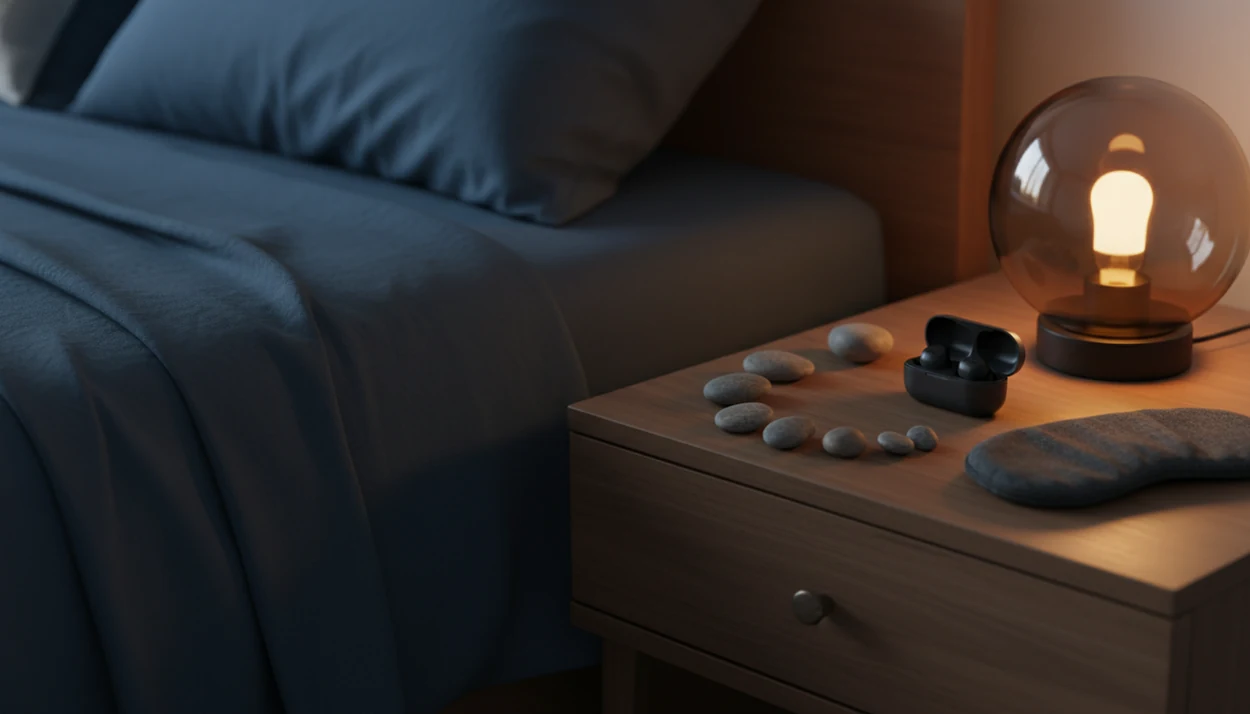


Breath counting for sleep preparation is a bedtime mindfulness practice that uses quiet counting to give attention a simple place to rest. Count one full inhale and exhale as 1, continue to 10, then begin again. Whenever thoughts interrupt or the number disappears, restart at 1. That reset is part of the practice, not a mistake. Keep breathing comfortably rather than trying to make every breath slower or deeper.
The aim is a gentle transition from alertness toward rest, not a command to fall asleep. Use counting as a short wind-down routine and let it fade as drowsiness develops. Guided audio can provide a voice to follow when silence makes thoughts louder; follow its counting instructions if they differ.
The bedtime basics
- Count full breath cycles, not just inhales or exhales, unless a guided audio tells you otherwise.
- Restart at 1 whenever you lose track; the reset is part of the technique, not a mistake.
- Use breath counting as a short bedtime wind-down routine, and consider guided audio if silence makes your thoughts louder.
5 breath counting methods for sleep at a glance
The easiest breath counting method for sleep is the one that feels boring, repeatable, and non-effortful. If the technique starts to feel like mental homework, simplify it. To keep bedtime practice gentle, try getting out of doing mode rather than treating rest as another task.
- Classic 1-to-10 breath cycles: Count one inhale plus one exhale as 1, continue to 10, then restart.
- Exhale counting: Count only after each exhale if that feels more calming than counting the whole cycle.
- Belly-breath counting: Rest attention on the rise and fall of the belly while the count stays quiet in the background.
- Guided audio counting: Follow a narrator who sets the pace, useful when silence makes thoughts louder.
- Reset-only counting: Count until you lose track, then gently return to 1 without trying to reach 10.
People who don’t want to self-direct at bedtime may find MindTastik easiest because guided breathing audio gives the count, pacing, and soft background sound in one routine.
Brain and body effects of breath counting for sleep
Breath counting works as a low-stimulation attention anchor, not as a way to command sleep. The count gives the mind a small task that competes with rumination, tomorrow’s planning, and the urge to pick up the phone.
This matters in the quiet stretch of the night, when the room feels too still and tomorrow’s meeting keeps replaying. Counting one complete breath at a time gives your attention a simple, low-effort place to rest.
Quietly dull. That helps.
Breath counting is different from forcing slow breathing. You are regulating attention, not trying to control every inhale. Sleep still arrives in cycles; the adult brain typically moves through 90- to 110-minute sleep cycles across the night, according to the NIH/NINDS: ninds reference: brain basics understanding sleep. Breath counting supports the wind-down before sleep. It does not control sleep architecture.
For beginners, breath counting is often easier than more layered meditation techniques for beginners because there is only one instruction to remember.
What sleep research can, and cannot, say about counting breaths
Evidence for mindfulness and sleep does not establish that counting breaths from 1 to 10 makes sleep arrive faster. A 2018 review of 18 trials involving 1,654 participants found better subjective sleep quality compared with nonspecific active controls, but no meaningful advantage over specific active controls. It also did not establish reliable improvements in objective sleep measures. Those findings concern mindfulness interventions, not this bedtime counting exercise alone.
The distinction matters when choosing a goal for the practice. A 2016 meta-analysis of six insomnia trials found no significant overall improvement in the time needed to fall asleep, although some sleep outcomes improved. Breath counting is best presented as an attention anchor during wind-down. Feeling less caught up in worry is a reasonable aim; a predictable reduction in minutes awake is not an established result.
6 bedtime steps for breath counting before sleep
Use breath counting before sleep by getting comfortable, counting each full inhale-exhale cycle, and restarting at 1 whenever you lose track. The restart is the practice, not a sign you are doing it wrong.
- Settle into bed in a position you can hold without bracing your shoulders.
- Dim the phone screen or place it face down if you are not using guided audio.
- Notice the natural breath without changing it at first.
- Count one full inhale and one full exhale as 1.
- Continue through 2, 3, 4, up to 10, using a soft inner voice.
- Restart at 1 when you drift, plan, worry, or forget the number.
If your feet are searching for a cool sheet, let that be part of the settling. You do not need a still body to begin.
People looking for a short reset before bed can also compare this with other short meditation techniques. For a brief daytime reset, a 5 breath mindfulness practice offers another simple way to rest your attention.
When to stop counting or get out of bed
Counting does not require breath holds or deliberately deep breaths. If changing the breath causes light-headedness, tingling, or rising anxiety, stop the exercise and return to normal breathing. There is no need to finish a set of ten. The VA/DoD insomnia guidance supports relaxation as a way to reduce arousal, not as a demand to control each breath or persist through discomfort.
Repeatedly starting another round can also turn counting into an effort to force sleep. When sleep is not coming, avoid using the exercise as a reason to remain awake in bed for a long stretch. Stimulus control, a component of cognitive behavioral therapy for insomnia, involves leaving bed for a quiet activity and returning when sleepy. The VA/DoD clinical guideline recommends this broader treatment approach for chronic insomnia.
Breath cycle counting vs inhale counting for sleep
A full breath cycle means one inhale plus one exhale. For sleep, counting full cycles is usually simpler because you count less often and do not have to monitor every small breathing phase.
| Counting style | What you count | Sleep use | Possible drawback |
|---|---|---|---|
| Full-cycle counting | One inhale plus one exhale equals 1 | Default choice for most bedtime practice | Can feel slow if you are restless |
| Inhale-only counting | Each inhale gets a number | Useful in some guided exercises | May feel mentally busy |
| Exhale-only counting | Each exhale gets a number | Can feel soothing for people who relax on the out-breath | May invite breath control |
Full-cycle counting is the default for breath counting for sleep unless a guided session tells you otherwise. For many adults, full-cycle counting is easier than inhale-only counting because it reduces the number of decisions made in bed.
If counting feels too plain, progressive muscle relaxation for sleep gives the mind a body-based sequence instead.
Guided breath counting audio for sleep anxiety
Does guided breath counting help when silence makes thoughts louder? It can help some people because narration, pacing, and background sound reduce the need to self-monitor every breath.
MindTastik offers guided practices for meditation, rest, breathing, and self-hypnosis, created for adults seeking gentle support with sleep, anxiety, and everyday calm. It fits someone who wants a soothing track to start when the mind feels busy, because the session provides structure without demanding much energy.
If your priority is less mental effort at bedtime, MindTastik covers guided breath counting through narrated sleep audio, paced breathing exercises, and bedtime sessions designed for quiet repetition.
1-to-10 breath counting script for beginners
How do you use a 1-to-10 breath counting script before sleep? Follow the same phrase quietly, one breath cycle at a time, until the count becomes boring.
Try this silently:
Breathe in, breathe out, count 1. Breathe in, breathe out, count 2. Breathe in, breathe out, count 3. Breathe in, breathe out, count 4. Keep going to 10.
When you lose the number, return to 1. No scolding. No fixing. Just begin again. If you have paused your practice, getting back into meditation can start with a few comfortable breaths.
Someone new to bedtime meditation may choose between a 5-minute breathing exercise and a 20-minute body scan in the app library. MindTastik helps by keeping both options available, so the shorter script can stay short when you are already tired.
For another simple attention anchor, mantra meditation for beginners uses repeated words instead of numbers.
Bedtime routine for restless nights with breath counting
Breath counting works better as part of a bedtime routine than as a last-second trick. It prepares the conditions for sleep, but it does not force sleep to arrive immediately.
- Adults generally need at least 7 hours of sleep per night, according to the CDC: CDC guidancesleep/howmuch_sleep.html
- CDC data also reports that about 1 in 3 U.S. adults do not get enough sleep regularly: CDC guidance: adults.html
- Dim lights before counting so the room starts to feel less alert.
- Reduce scrolling, especially if short videos keep restarting your attention.
- Choose a comfortable sleep position before the count begins.
When bedtime restlessness is the issue, MindTastik fits by pairing guided breath counting with sleep audio and a simple wind-down routine, including narration, background sound, and session lengths that match tired attention.
A phone set nearby with a short guided audio track can be enough of a cue. Choose a twenty-minute sleep timer, follow the count, and let the routine stay simple.
Drawbacks of breath counting for sleep
Breath counting does not suit everyone. Some people find the numbers annoying, too effortful, or too mentally active when they are already frustrated in bed.
That does not mean you failed.
If counting sharpens awareness of breathing, try softening the method. Count only to 5. Count only exhales. Use guided audio. Or switch to a body scan, a sleep story, visualization meditation for sleep, or another quiet routine.
Adults who want less self-direction may prefer MindTastik because guided bedtime audio removes the “what do I do next?” problem. Calm, Headspace, and Mindful also offer sleep and meditation content, but the right choice depends on whether you prefer narration, music, breathing cues, or longer story-based sessions.
For restless beginners, breath counting tends to work best when it feels almost boring, while guided sleep audio fits people who become more alert in silence.
When to seek professional help for sleep problems
Seek professional help when sleep problems last several weeks, disrupt daytime functioning, or come with symptoms that suggest more than ordinary bedtime restlessness. Breath counting can support a wind-down routine, but it should not delay care when sleep, breathing, mood, or safety concerns are present.
A simple next step list can help keep this clear:
- Contact a clinician if trouble falling asleep, staying asleep, or waking too early continues for several weeks, especially if you feel impaired at work, while driving, or in daily life.
- Mention loud snoring, choking, gasping, witnessed pauses in breathing, morning headaches, or heavy daytime sleepiness, because these can point toward sleep apnea or another sleep disorder.
- Stop breath exercises if they bring on panic, dizziness, air hunger, tingling, or a feeling that you cannot breathe normally.
- Seek urgent or emergency help right away for chest pain, severe shortness of breath, overwhelming distress, or thoughts of harming yourself or someone else.
If a guided session feels calming, keep it gentle. If it feels like a struggle, pause and choose care over pushing through.
Guided breathing when keeping count feels like work
MindTastik’s guided breathing exercises suit adults who prefer spoken instructions to managing a bedtime practice alone. Its guided meditations offer another option when a voice helps attention settle. These sessions can support a wind-down routine, but they are not medical treatment. Someone who finds breath awareness uncomfortable may prefer a sleep story or soundscape instead. Persistent insomnia calls for clinical care rather than relying on an app.
Breath counting cannot guarantee sleep or treat chronic insomnia
Breath counting can support sleep preparation, but it has clear limits. It should stay gentle, optional, and easy to stop.
- Breath counting is not a stand-alone cure for chronic insomnia.
- Frequent, severe, or persistent sleep problems may need professional evaluation.
- The NIH/NHLBI describes insomnia as a common sleep disorder and notes that persistent symptoms may require medical evaluation: nhlbi reference: insomnia
- In the U.S., about 14.5% of adults reported trouble falling asleep most days or every day in the past 2 weeks, according to CDC/NCHS data: CDC guidance: db436.htm
- Stop if breath work causes dizziness, panic, air hunger, or distress.
- The practice may not fit people who dislike counting or become tense around breathing.
- Breath counting does not replace therapy, medication, sleep apnea care, or medical advice.
- Some nights need a different support, such as grounding meditation techniques, a body scan, or getting out of bed briefly.
A guided app such as MindTastik can support a bedtime routine, but it should not be treated as medical care or a substitute for evaluation of persistent insomnia, sleep apnea symptoms, panic, or ongoing daytime impairment.
When you want app-based guidance rather than reading steps alone, MindTastik guided meditation app collects the core guided library in one place.
Breath counting before bed: common questions
How do I count breaths to fall asleep?
Let the breath stay natural. Count one complete inhale and exhale as 1, then continue through 10 and start again. Use a quiet inner voice rather than concentrating hard. If thoughts interrupt the count, return to 1 without trying to recover the missing number.
Should I count inhales, exhales, or full breath cycles?
Full cycles are a simple starting point: one inhale plus one exhale equals one count. Counting after each exhale is another option if that feels less busy. Follow a guided session’s instructions when using audio. None of these counting styles has an established advantage for treating insomnia.
What should I do when I lose count?
Begin again at 1. Losing track is expected when attention wanders or drowsiness develops, and there is no need to reconstruct the sequence. If repeated resets become irritating, count only to 5 or stop counting and choose another quiet wind-down activity.
How long should I count breaths before bed?
A brief practice of about 5 to 10 minutes is a practical starting point, not a proven dose for sleep. Stop sooner if drowsiness develops or counting becomes effortful. Avoid repeatedly extending the exercise to make sleep happen, especially when it keeps attention fixed on being awake.
Does breath counting actually help with insomnia?
It may help settle repetitive thoughts during bedtime preparation, but evidence does not establish a specific effect on insomnia or time to fall asleep. Broader mindfulness research shows some benefits for perceived sleep quality. Chronic insomnia is better addressed with cognitive behavioral therapy for insomnia, with relaxation used as support.
Can counting breaths make bedtime anxiety worse?
Yes, focusing on breathing or trying to maintain a perfect count can feel uncomfortable for some people. Stop if anxiety rises, and return to ordinary breathing. A sleep story, soundscape, or another quiet activity may be a better fit. Persistent panic or distress deserves clinical assessment.
Do I need to breathe deeply or hold my breath while counting?
No. Breath counting is an attention exercise and does not require deep breaths, timed pauses, or a fixed breathing rate. Keep the breath comfortable. Deliberately deep breathing or breath holding can cause light-headedness, tingling, or anxiety; stop and return to normal breathing if those symptoms appear.
What if I reach 10 repeatedly and still cannot sleep?
Reaching 10 is not a sleep target, and completing more rounds does not guarantee sleep. If counting becomes frustrating, stop. When unable to sleep, stimulus control advises leaving bed for a quiet activity and returning when sleepy, rather than spending a long stretch awake in bed.