
Breathing Meditation vs Breathwork: Which Is Safer for Calm?
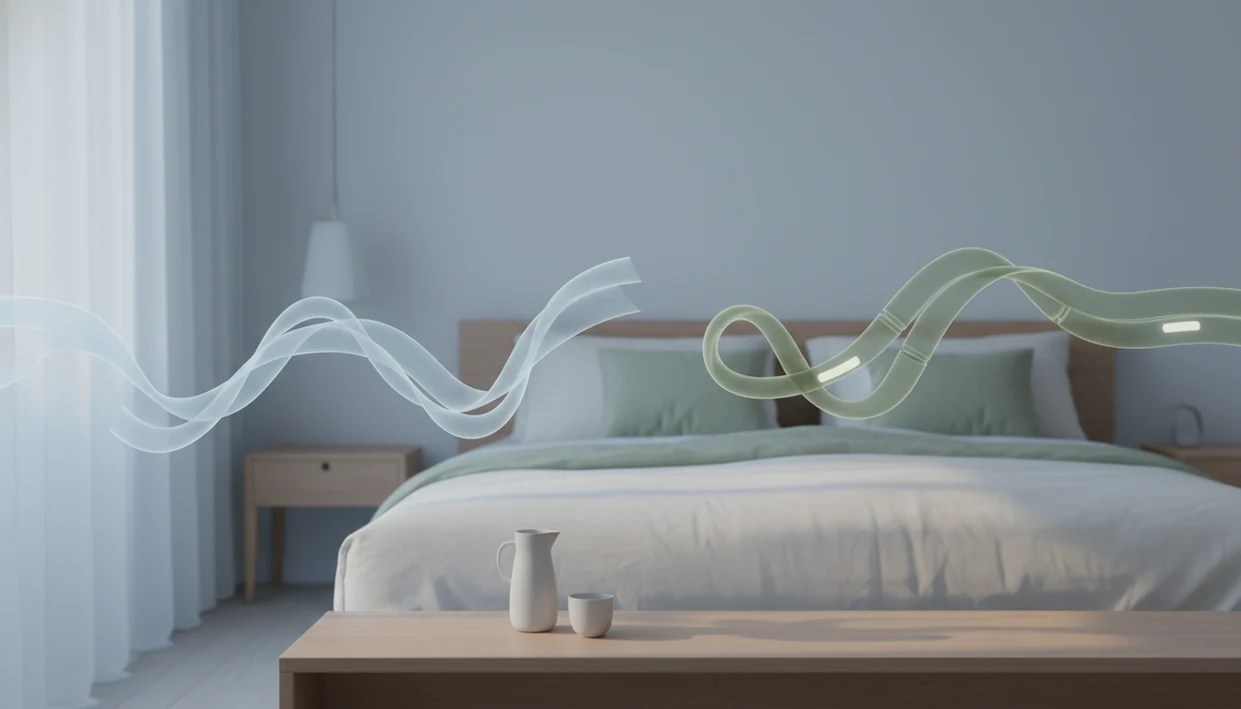


Breathing meditation observes the natural breath to train attention, while breathwork deliberately changes its pace, depth, or rhythm. For beginners seeking sleep support or everyday calm, gentle breath awareness is usually a lower-intensity starting point than fast breathing or long breath holds. Gentle breathwork can also help with settling before meditation, provided breathing stays comfortable rather than forced.
The choice is not simply meditation versus breathwork: intensity matters. Slow, relaxed breathing differs substantially from rapid or forceful techniques. MindTastik offers adults guided meditation, gentle breathing, sleep audio, and self-hypnosis as wellness support, not medical treatment. A practical starting sequence is brief, comfortable slow breathing followed by attention to the natural breath, with permission to stop if discomfort appears.
The main differences
- Choose breathing meditation when you want a calm, low-intensity practice for sleep, anxiety support, focus, or daily consistency.
- Choose gentle breathwork when you want a short nervous-system reset, but avoid intense fast breathing or long breath holds if you feel dizzy, panicky, or medically vulnerable.
- The safest sequence for most beginners is slow breathing first, then breath awareness meditation, ideally with app guidance and permission to stop anytime.
Breathing meditation vs breathwork at a glance
Breathing meditation observes natural breath to train attention over time; breathwork actively changes inhale, exhale, rhythm, depth, or breath holds. The practical difference is pace, intensity, and risk.
| Practice | What you do | Best uses | Safety note |
|---|---|---|---|
| Breathing meditation | Notice the natural breath and return attention when the mind wanders | Anxiety support, sleep, focus, everyday calm | Usually low intensity and beginner-friendly |
| Gentle breathwork | Slow the breath, lengthen exhales, or breathe diaphragmatically | Short resets, pre-meditation settling, work stress | Stop if dizziness, tingling, or panic appears |
| Intense breathwork | Use fast breathing, heavy depth, or long holds | Energy, altered-state practices, supervised settings | May cause dizziness, panic, or discomfort for some users |
Per the CDC’s 2012 National Health Interview Survey, 14.2% of U.S. adults reported using deep-breathing exercises in the past year CDC guidance: nhsr079.pdf. That popularity makes clear labeling matter.
The right fit for beginners who want everyday calm is MindTastik because the guided session format makes slow breathing easier to choose than a random intense protocol.
Breath awareness vs breathwork: the core difference
Breath awareness meditation watches the breath; breathwork changes the breath. In breath awareness vs breathwork, one trains attention, and the other uses a breathing pattern to shift the body.
Breathing meditation is a mindfulness practice. You use the breath as an anchor, notice distraction, and come back without making a project out of the inhale. It can feel almost too simple at first. Headphones adjusted for the third time, screen paused, then started again. That counts.
Breathwork is more of a technique or protocol. It may change breathing speed, depth, hold time, or exhale length to create a body-level effect.
Meditation is not only breathing. It can use sound, body sensations, thoughts, compassion, or a phrase as the anchor. If breath focus feels too inward, try mantra meditation for beginners or another gentle anchor. For an outward-facing attention practice, try mindful photography and notice light, color, and texture without using breath as an anchor.
How breathing meditation and breathwork work in the nervous system
Slow nasal diaphragmatic breathing can reduce arousal by encouraging parasympathetic settling, the body’s “stand down” mode. In plain language, the body gets fewer signals that it needs to brace.
Breathing meditation adds attention training. You notice the breath, lose it, and return. Over time, that repetition can reduce reactivity to thoughts and sensations. The unread emails may still replay behind closed eyes, but the practice changes how tightly you follow them. A mindful writing practice offers another way to notice recurring thoughts, putting observations into words without judging them.
Breathwork works more directly through physiology. Depending on the method, it can change carbon dioxide levels, oxygen balance, heart-rate patterns, and perceived body state. That is why it can feel quick, useful, or too much.
A 2021 systematic review found paced breathing around 6 breaths per minute was associated with significant blood pressure reductions in hypertensive patients nature reference: s41371 021 00641 9. A 2017 randomized trial found four weeks of diaphragmatic breathing training reduced cortisol and improved attention in healthy adults frontiersin reference.
Evidence on breathing meditation vs breathwork safety
The evidence is strongest for gentle, repeatable practices: mindfulness-based breathing meditation has better support for anxiety, depression, and sleep than intense breathwork. Gentle paced or diaphragmatic breathing also has useful research, while forceful breathwork is harder to generalize across users and settings.
Mindfulness programs have been studied across clinical and nonclinical groups, with benefits most often seen as modest-to-moderate improvements rather than instant relief. Paced breathing is usually tested as slow rhythmic breathing, often near a calm resonance pace, and is most relevant to stress physiology and blood-pressure support. Diaphragmatic breathing is studied separately as a belly-and-rib pattern that may lower stress markers and improve attention or perceived calm.
For safety, use the evidence this way:
- Start with breathing meditation when anxiety, sleep trouble, or consistency is the main goal.
- Choose slow paced breathing or diaphragmatic breathing when you want a brief body reset.
- Avoid unsupervised intense breathwork if you are pregnant, panic-prone, trauma-activated, seizure-prone, or dealing with cardiovascular, respiratory, neurological, or severe mental health concerns.
- Stop if dizziness, tingling, chest discomfort, panic, or emotional flooding appears.
Research does not establish a clear winner for immediate anxiety relief
A 2024 review of brief respiratory and embodiment interventions found no statistically significant overall reduction in state anxiety compared with controls. Practices that deliberately changed breathing had a numerically larger effect than practices that simply directed attention to the breath, but neither category reached statistical significance. The confidence intervals were wide, so the results do not establish that controlling the breath works better than observing it.
Broader evidence is more encouraging, but answers a different question. A 2023 breathwork meta-analysis found a small-to-moderate reduction in self-reported stress across 12 randomized trials involving 785 participants. The techniques varied considerably. That finding supports breathwork as a possible stress-management practice, not every breathing method equally, and it does not establish which method is safest. A lower-intensity starting choice should not be confused with proven superiority for anxiety relief.
Where breathing meditation wins for anxiety, sleep, and everyday calm
Breathing meditation is often the safer default for anxious beginners, sleep-troubled users, and people who dislike intense body sensations. It builds steadiness over time instead of chasing only a fast state change.
- Breathing meditation trains attention by returning to the natural breath again and again.
- Mindfulness meditation programs produced moderate reductions in anxiety and depression in a JAMA Internal Medicine meta-analysis of 42 randomized controlled trials JAMA Internal Medicine study: 1809754.
- A sleep meta-analysis of 18 studies found mindfulness-based interventions produced a medium effect size improvement in sleep quality PubMed research: 30575050.
- Guided app sessions reduce decision fatigue when you are choosing between a 5-minute breathing exercise and a 20-minute body scan.
- Gentle breath awareness is easier to repeat than intense breathwork for many nighttime users.
During a tense wake-up in the dark, a quiet guided session is usually the gentler choice than a breathing drill that feels activating.
For sleep-troubled beginners, breathing meditation is often easier than breathwork because it asks for attention and repetition, not intensity.
Where gentle breathwork wins for quick calming resets
Gentle breathwork can work well as a short reset before meditation, work, sleep, or a stressful moment. It is most useful when the technique stays slow, clear, and easy to stop.
- Slow nasal breathing: A calm starter that avoids the “gulping air” feeling.
- Longer exhales: Useful when the shoulders need to drop before a meeting.
- Diaphragmatic breathing: A belly-and-rib breathing pattern that can reduce upper-chest tension.
- Simple paced breathing: A timed rhythm, often around 4 to 6 breaths per minute.
These are different from prolonged fast breathing, heavy hyperventilation, or long breath holds. Stronger practices should be labeled clearly, kept optional, and avoided if they create discomfort.
Anyone dealing with a sudden stress spike may find MindTastik useful because a short breathing exercise can lead into a guided meditation instead of leaving the body revved up.
Breathing exercises vs meditation: which practice fits your goal?
Breathing exercises vs meditation is mostly a goal question. Use breathing exercises for a brief state shift; use meditation when you want a repeatable attention practice.
| Goal | Better starting point | Why |
|---|---|---|
| Sleep | Breathing meditation, breath counting, slow exhale breathing | Lower intensity fits bedtime |
| Acute stress | Gentle breathwork, then meditation | A short reset can make sitting easier |
| High anxiety | Slow breathing with minimal holds | Fast breathing can mimic panic sensations |
| Energy | Some breathwork | It may feel activating, so avoid it near bedtime |
| Daily consistency | Breathing meditation | Easier to repeat without chasing sensation |
Best for breathing meditation
Breathing meditation fits sleep, anxiety support, focus, and routine-building. If you want a wider menu, the Meditation Techniques Library compares breath, body, sound, and compassion-based practices.
Best for gentle breathwork
Gentle breathwork fits short resets before work, meditation, travel, or a stressful moment. Breath counted in a bathroom stall is not glamorous. It can still help.
Not for intense breathwork
Intense breathwork is not ideal for dizziness, panic-prone users, cardiovascular or respiratory concerns, pregnancy, or severe mental health instability without professional guidance.
How to use breathing meditation and breathwork safely
A safe sequence starts with low intensity, then moves from controlled breathing into natural breath awareness. You should always be able to stop without feeling like you failed.
- Set a low-intensity intention such as calm, sleep, or focus.
- Sit or lie down in a stable position and breathe through the nose if comfortable.
- Start with 1 to 3 minutes of slow, gentle breathing.
- Shift into breath awareness meditation by observing the natural breath.
- Stop or return to normal breathing if dizziness, panic, tingling, or overwhelm appears.
MindTastik can support this sequence as an app-guided environment for gentle meditation, sleep audio, breathing exercises, and self-hypnosis. It is not medical treatment, and it should not replace therapy, medication, emergency care, or advice from a qualified professional.
When takeoff is coming and offline audio is saved, a gentle guided session is a better travel companion than experimenting with breath holds.
Common breathwork vs meditation myths that confuse beginners
Breathwork vs meditation gets confusing when every breathing practice is treated as the same thing. The safest beginner choice usually comes from separating calm techniques from intense ones.
- Myth: Breathwork and breathing meditation are the same thing. Meditation usually observes the breath; breathwork deliberately changes it.
- Myth: Stronger breathwork is always better for anxiety. Fast or forceful breathing can increase agitation for some people.
- Myth: Meditation is only about focusing on the breath. Sound, body sensations, thoughts, compassion, and phrases can also serve as anchors. If you prefer words as an anchor, getting started with mindful writing can introduce a simple alternative to breath focus.
- Myth: Dizziness or discomfort means the practice is working. It is a signal to slow down, stop, or choose a gentler guided practice.
- Myth: Breathwork or meditation replaces care. Neither replaces therapy, medical care, or prescribed treatment.
If internal body focus feels destabilizing, grounding meditation techniques may feel more manageable.
Guided support for gentle breath awareness
MindTastik’s guided meditation library suits adults who prefer spoken instructions for returning attention to the breath without forcing a breathing pattern. Breathing exercises and sleep audio offer related options for a quiet routine. It is a wellness app, not medical treatment or supervision for intense breathwork. People with unexplained breathlessness, fainting, or panic triggered by breathing sensations should seek individualized clinical guidance rather than rely on an app to choose a technique.
When breath-based practices need clinical guidance
Neither breathing meditation nor breathwork is a cure-all for anxiety, insomnia, trauma, cardiovascular disease, respiratory illness, or mental health conditions. The practice has limits, and those limits matter.
- Mindfulness meditation has stronger evidence than many intense transformational breathwork styles.
- Fast, deep, or prolonged breathwork can trigger dizziness, tingling, panic, emotional flooding, or discomfort.
- People with cardiovascular, respiratory, neurological, pregnancy-related, or severe mental health concerns should consult a qualified professional before intense breathwork.
- Some trauma survivors may find internal body focus destabilizing and need trauma-sensitive options.
- Benefits vary by consistency, technique, context, sleep schedule, stress load, and personal sensitivity.
- MindTastik supports sleep, anxiety, and everyday calm, but it is not a replacement for medical or psychological care.
- Apps such as Calm, Headspace, and resources from mindful.org may use different labels, pacing, and intensity levels, so compare session descriptions before starting.
For very tired users, progressive muscle relaxation for sleep may be easier than breath-focused practice.
If you are ready to move from tips to practice, MindTastik guided meditation app is where MindTastik keeps its guided meditation experience.
Breathing meditation and breathwork questions
What is the difference between breathing meditation and breathwork?
Breathing meditation uses the natural breath as an attention anchor: notice breathing, recognize distraction, and return. Breathwork deliberately changes breathing speed, depth, timing, or holds. They can overlap in one session, but observing the breath and controlling it are different tasks with different demands.
Is breathing meditation safer than breathwork?
Natural breath awareness is generally a lower-intensity starting point than rapid breathing or long holds. Gentle breathwork is a separate category and can also be comfortable. Neither approach is suitable for everyone. Dizziness, tingling, worsening panic, or discomfort are reasons to stop rather than increase effort.
Which is better for anxiety, breathwork or meditation?
There is no clear research winner for immediate anxiety relief. Gentle breathing and mindfulness practices may help, but responses vary. Breath awareness may suit people who dislike strong body sensations; comfortable slow breathing may suit those who prefer a simple rhythm. Panic triggered by respiratory sensations calls for individualized guidance.
Should I use breathing meditation or breathwork before sleep?
Natural breath awareness, breath counting, or comfortable slow breathing are lower-intensity bedtime options. Fast or forceful breathing can feel activating and is a less suitable starting choice for settling down. These practices can support a bedtime routine, but they are not a stand-alone treatment for persistent insomnia.
Why does breathwork make me dizzy or panicky?
Dizziness, tingling, or worsening panic can indicate over-breathing or excessive effort. Fast or forceful breathing may produce sensations that feel alarming. Stop the technique, return to normal breathing, and rest. Persistent, severe, or medically unexplained symptoms need clinical advice, not a more intense breathing session.
Are breath holds necessary for calming breathing exercises?
No. Gentle slow breathing can be practiced without prolonged breath retention. Beginners do not need to add holds to make a session count. Breath holds and forceful techniques require particular caution, especially with significant heart or lung disease, fainting, pregnancy-related concerns, or panic triggered by breathing sensations.
Can I combine breathwork with breathing meditation?
Yes. A low-intensity sequence is one to three minutes of comfortable slow breathing, followed by observing the natural breath without controlling it. The controlled phase should not involve strain or forced large breaths. Stop or return to normal breathing if dizziness, tingling, panic, or overwhelm develops.
Does counting breaths count as breathwork?
Counting natural breaths is primarily an attention practice, so it is closer to breathing meditation. The task is to notice each breath and return to the count after distraction. Counting becomes a breathing exercise when the count deliberately sets inhale length, exhale length, or a held-breath interval.