
Meditation for Beginners Who Fall Asleep
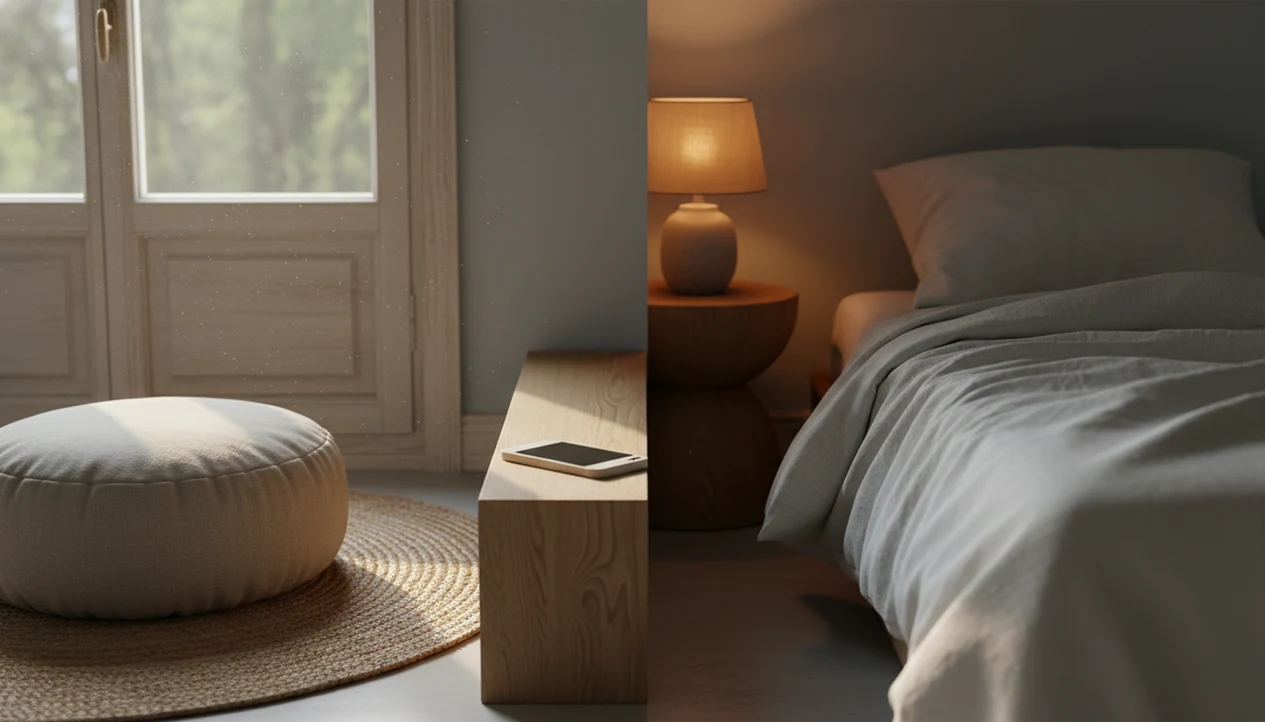


Meditation for beginners who fall asleep works best when the format matches the goal: short, seated practice for daytime calm, or lying-down sleep meditation for bedtime. Falling asleep is common and often reflects relaxation, not failure. But drowsiness alone does not show that a technique is working, and persistent exhaustion deserves attention beyond a change of audio.
For daytime practice, posture, timing, eye position, and session length can help preserve wakefulness. At bedtime, drifting off during a body scan or sleep talk-down may be the intended result. MindTastik offers guided mindfulness, sleep audio, breathing practices, and self-hypnosis tracks for these different purposes. Research suggests mindfulness can moderately improve sleep quality over several weeks, but it is not a guaranteed treatment for sleep problems.
The awake-or-asleep distinction
- If your goal is sleep, dozing off during meditation is usually fine and may be the point.
- If your goal is daytime calm, adjust posture, timing, eyes, and session length to stay relaxed but awake.
- Research suggests mindfulness meditation can moderately improve sleep quality, especially when practiced consistently over several weeks.
4 meditation formats for beginners who fall asleep
The right meditation format depends on whether you want alert calm or actual sleep. Falling asleep is useful at bedtime, but during the day it’s usually a sign to change posture, timing, or audio style.
- Seated everyday calm meditation: Use this for focus, stress recovery, or a reset before work. Sit upright and choose light guidance.
- Breathing reset: Pick a 3 to 5 minute breath count when your mind is loud but you still need to function.
- Body-scan sleep meditation: Use this in bed when you want the body to soften from head to toe.
- Sleep talk-down audio: Choose this when the goal is to stop negotiating with your thoughts at 2:13 a.m.
MindTastik keeps everyday calm, anxiety support, and sleep audio in one place, so beginners can choose the right lane instead of guessing. For broader options, compare these with other meditation techniques.
Falling asleep during meditation: 5 beginner facts
Falling asleep during meditation is common, especially when stress, anxiety, sleep debt, or late-night timing are already in the room. It is not automatic proof that your technique is bad.
- Beginner meditation sleepiness is normal: Many people get drowsy as soon as they stop scrolling, talking, and problem-solving.
- Sleepiness can mean downshifting: Your body may be moving from alert tension into rest, especially after a hard day.
- Meditation can support sleep quality: Systematic reviews suggest mindfulness-based practices may improve sleep quality, though effects vary by population and program design NCCIH mindfulness overview: meditation and mindfulness effectiveness and safety.
- Clinical trials show promise: In a 2015 randomized clinical trial, mindfulness awareness practices improved sleep-quality scores more than sleep-hygiene education in older adults with sleep disturbance JAMA Internal Medicine study: 2110998.
- Consistency matters: One perfect session matters less than repeating a manageable practice over several weeks.
Tiny sessions count.
How meditation for beginners who fall asleep works
Meditation for beginners who fall asleep works by changing the body’s cues: attention narrows, posture signals either alertness or rest, timing affects energy, and the nervous system downshifts. That downshifting means the body moves from bracing toward settling, which can feel like calm focus or sleep depending on the setup.
The key is to separate two wins. At bedtime, falling asleep during a body scan or sleep talk-down can mean the practice succeeded. During the day, success is more like alert-calm: steadier breathing, less reactivity, and enough wakefulness to return to the next task. Lying down increases sleep cues for many beginners because the brain already associates bed, darkness, stillness, and closed eyes with drifting off. Technique helps, but it does not override everything; sleep debt, medication effects, pain, high stress, or an irregular schedule can pull even a careful session toward sleep.
- Choose bedtime audio when sleep is the intended outcome.
- Use upright posture and shorter guidance when you want daytime focus.
- Change timing, eyes, or format before deciding you are “bad” at meditation.
Beginner meditation sleepiness in the nervous system
Beginner meditation sleepiness often happens when the nervous system shifts from stress activation toward parasympathetic calming. In plain language, your body stops bracing and starts acting like rest is finally allowed. If physical tension makes settling difficult, progressive muscle relaxation offers a structured way to tense and release muscles.
During a busy day, the brain keeps scanning, planning, and reacting. Breath focus, body scans, and guided voices reduce that mental stimulation. For anxious or hyperaroused beginners, the quiet can feel less like “calm focus” and more like a trapdoor into sleep.
That doesn’t mean meditation treats anxiety disorders or medical insomnia. It means the format needs to match the goal. A soft sleep voice at midnight and a seated breath count at lunch are different tools. That distinction matters: a sleep-meditation app only helps if bedtime audio is not confused with daytime practice.
For people who get sleepy but want steadier focus, meditation techniques for beginners can help you choose a simpler starting point. For a different approach, ACT for beginners introduces acceptance skills that can support practice without demanding perfect focus.
5 steps to use meditation when you fall asleep easily
Use meditation by choosing the outcome first, then shaping the session around it. The same drowsy response can be a feature at bedtime and a problem during a workday reset.
- Choose the goal: Decide between daytime calm and bedtime sleep before you press play.
- Set posture: Sit upright for alertness, or lie down when sleep is the goal.
- Pick session length: Use 3 to 10 minutes for daytime practice and 10 to 30 minutes for sleep.
- Adjust the room: Keep eyes softly open for alertness, dim lights for sleep, and set audio volume low enough to stop monitoring it.
- Review the result: Notice whether you stayed awake or slept, then shorten, move, or change the next session.
When the issue is choosing between a 5-minute breathing exercise and a 20-minute body scan, MindTastik fits because it separates short resets from longer bedtime audio by use case.
Attach daytime practice to an awake part of the day
A useful routine cue is an activity that already happens while alert, rather than the moment of getting into bed. In a randomized study of personalized meditation routine anchors, linking practice to an existing daily activity increased the odds of daily meditation during the intervention. This finding concerns consistency, not proof that routine cues prevent falling asleep.
For this page’s daytime goal, the practical application is a brief seated session after an existing morning or lunchtime activity. Keep the cue separate from the bedtime routine. Daily practice still declined over the study’s eight weeks, so a missed session need not end the plan. If the chosen cue repeatedly coincides with drowsiness, change it rather than extending the meditation.
Seated daytime meditation for beginners who get sleepy
Does seated meditation help beginners stay awake? Yes, sitting upright gives the brain more alertness cues than lying in bed, especially if you practice in the morning, at lunch, or early evening.
Use eyes softly open or half-open if closed eyes turn every session into a nap. Keep the audio light: focused breathing, counting breaths, or a calm beginner guide. Avoid heavy sleep talk-downs when you need to answer emails afterward. The office door closed for ten minutes can be enough.
For beginners who want daytime calm, seated meditation is often easier than lying down because posture tells the body to stay available, not shut down.
Best for
✓ Calm focus before work ✓ Short anxiety resets ✓ Beginners who nap during longer sessions ✓ People practicing short meditation techniques
Not for
✕ Falling asleep on purpose ✕ Severe exhaustion ✕ Bedtime wind-downs where sleep is the goal are reasons to choose rest or bedtime support instead of an alert daytime practice.
Bedtime sleep meditation when falling asleep is the goal
Is it okay to fall asleep during bedtime meditation? Yes. Lying-down sleep meditation is valid, and when the goal is sleep, drifting off is not lesser meditation.
Choose body scans, sleep stories, gentle breathwork, low-volume guided audio, or a self-hypnosis-style session. Before bed, dimming the phone screen and setting a 20-minute sleep timer often matters more than finding one ideal track. You can also try visualization meditation for sleep, using gentle mental images as part of your bedtime routine.
MindTastik sleep audio and self-hypnosis-style sessions can support a wind-down routine because the guidance stays simple enough to follow when you’re tired. An NCCIH summary of an NIH-funded trial found greater improvements in sleep quality and daytime impairment after mindfulness meditation than sleep education NCCIH mindfulness overview: mindfulness meditation improves sleep quality.
Best for
✓ Racing thoughts at night ✓ Body tension in bed ✓ Beginners who want permission to drift ✓ Practices like progressive muscle relaxation for sleep
Not for
✕ Staying sharp ✕ Work breaks ✕ Driving, commuting, or any task needing attention should not be paired with sleep-focused audio.
Everyday calm versus sleep audio for beginner meditation sleepiness
Everyday calm meditation and sleep audio use similar attention skills, but they aim for different outcomes. Beginner sleepiness becomes inconvenient when you wanted focus and helpful when you wanted rest.
| Format | Goal | Best posture | Best time | Best audio style | Success signal |
|---|---|---|---|---|---|
| Seated everyday calm | Relaxed alertness | Upright chair | Morning, lunch, early evening | Breath counting, light guidance | You feel steadier and stay awake |
| Breathing reset | Quick nervous-system settling | Seated or standing | Stress spike | Simple paced breathing | You can return to the next task |
| Body-scan sleep track | Bedtime release | Lying down | Night | Slow body awareness | You stop checking the clock |
| Sleep talk-down | Drifting off | Lying down | Bedtime or wake-up at night | Soft voice, low stimulation | You fall asleep or stop struggling |
If you want a steady voice ready at bedtime when your mind will not settle, MindTastik can help because its library keeps daytime calm sessions separate from sleep tracks. Calm, Headspace, and mindful.org also offer meditation resources, but clear organization matters when you are tired.
5 mistakes when meditation makes beginners sleepy
Most unwanted sleepiness comes from a mismatch between the session and the situation. Fix the setup before you judge your ability.
- Meditating only in bed: Move daytime practice to a chair, cushion, or quiet corner.
- Practicing too late: Try morning, lunch, or early evening if you want alert calm.
- Starting too long: Use 3 to 10 minutes first. Long sessions can become accidental naps.
- Using sleep audio for daytime focus: Save body scans and sleep talk-downs for night.
- Calling every nap a failure: If it happened at bedtime, it may have done its job.
Caffeine timing, screen time, inconsistent sleep schedules, and sleep debt can blunt the benefits of meditation. Headphones adjusted for the third time may not be the real issue. The schedule might be.
For a daytime alternative that keeps attention more active, try grounding meditation techniques.
Measuring Progress When You Sleep Through the Recording
If you wake to the closing music with no memory of the middle, the audio completion counter cannot tell you how much attention you practiced. For your first few sessions, keep two separate notes: what you remember noticing before dozing, and how rested or sleepy you felt afterward. A remembered moment of distraction followed by a return to the breath gives you something concrete to record. Sleeping through the remaining instructions is a different outcome, not evidence that you learned every technique in the recording.
Research also separates sleep benefits from learning meditation. A review of 18 randomized controlled trials found improved sleep quality compared with nonspecific comparison activities, but it did not establish how beginners who repeatedly doze acquire attention skills. An eight week meditation app study in adults with sleep disturbance reported reduced daytime sleepiness and fatigue. Those participants were not specifically beginners who fell asleep during practice. Use these findings as context for possible sleep benefits, rather than a promise that finishing recordings asleep will build the same skills as following them awake.
Choosing MindTastik audio for daytime or bedtime
MindTastik’s guided meditation library offers follow-along sessions for beginners practicing attention. For daytime calm, a brief breathing or focus session is a closer match than a sleep story. Sleep stories, body scans, and self-hypnosis audio suit a bedtime wind-down instead.
An app is less suitable when instructions repeatedly feel confusing or distressing, and a teacher may provide more useful support. Persistent exhaustion or severe insomnia calls for clinical assessment, not simply a different recording.
When changing the meditation setup is not enough
Meditation can support sleep and calm, but it has clear limits. It should sit beside good sleep habits and clinical care when needed, not replace them.
- Meditation does not replace medical evaluation for sleep apnea, severe insomnia, major depression, severe anxiety, or trauma-related distress.
- Some people feel bored, frustrated, or more aware of racing thoughts before meditation feels easier.
- Evidence suggests moderate sleep-quality benefits, not a guaranteed cure.
- Benefits may be limited if caffeine, screens, irregular schedules, pain, caregiving demands, or major stressors remain unchanged.
- A small number of people may feel more distressed during meditation. Shorter guided sessions or support from a clinician may be safer.
- Falling asleep every time during daytime practice may point to sleep debt, medication effects, or a schedule problem worth addressing.
- MindTastik can guide a wind-down routine, but it cannot diagnose why sleep is disrupted.
Beginners trying to sleep more easily may prefer MindTastik because it includes bedtime audio without requiring every session to be used the same way.
When you want app-based guidance rather than reading steps alone, MindTastik guided meditation app collects the core guided library in one place.
Questions about falling asleep during meditation
Is it okay to fall asleep during meditation?
At bedtime, yes. Falling asleep during a body scan or sleep meditation can match the purpose of the session. During daytime attention practice, it means the session ended before the intended practice was complete. That is a reason to adjust the setup, not a reason to call the attempt a failure.
Why do I fall asleep as soon as I start meditating?
Quiet, reduced stimulation, and a relaxed posture can make existing tiredness more noticeable. Late-night timing and sleep debt can also contribute. Sleepiness does not prove unusually deep meditation. If it happens repeatedly, compare an earlier seated session with the usual setup before deciding that meditation itself is the problem.
How can beginners meditate without falling asleep?
Start with 3 to 5 minutes in an upright chair, with eyes softly open if closing them brings on sleep. Choose breath counting or light guidance rather than a sleep talk-down. Practice earlier in the day. If drowsiness continues, end the session and reconsider timing rather than forcing a longer sit.
Should I meditate sitting up or lying down?
Sitting is the better starting point when the goal is calm attention. A supported chair with feet flat on the floor avoids making floor posture another challenge. Lying down suits bedtime practice when sleep is welcome. Neither posture is a measure of meditation ability, and discomfort is not a requirement.
Does falling asleep mean I still get the benefits of meditation?
Falling asleep may help achieve a bedtime session’s aim, but it does not establish that attention practice continued during sleep. For daytime meditation, the useful outcome is relaxed wakefulness. Sleep-quality research describes effects of meditation programs over time, not a guarantee that sleeping through any recording produces the same benefits.
What meditation should I use before bed if I fall asleep easily?
A gentle body scan, sleep story, or low-volume sleep talk-down fits that goal. There is no need to finish the recording once sleep arrives. Dim the screen and consider a sleep timer. Keep these tracks separate from daytime focus practice, and never use sleep-focused audio while driving or doing tasks that require attention.
When should I seek help for sleepiness during meditation?
Persistent exhaustion, severe insomnia, significant pain, or worsening symptoms deserve medical attention rather than repeated changes to meditation tracks. Meditation should not delay evaluation or replace care. If a session increases distress or racing thoughts, shorten it, change the practice, or pause and seek appropriate support.