
Soft Focus Meditation for Calm: An Eyes-Open Guide
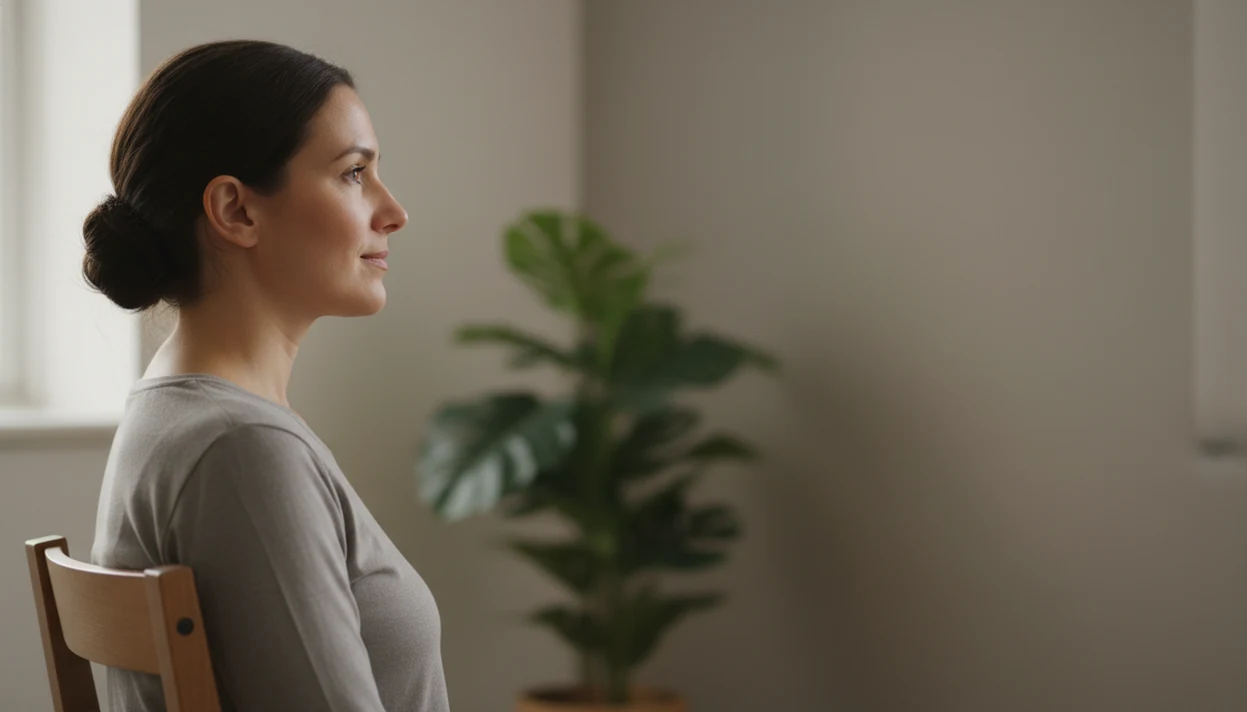


Soft focus meditation is an eyes-open practice that uses a relaxed, unfixed gaze and steady breathing to support calm attention. Rather than staring at one point, the practice involves easing the muscles around the eyes, noticing the edges of the visual field, and blinking normally. The aim is less visual effort, not deliberately making the room look blurry.
This approach can suit daytime meditation, desk breaks, and moments when closing the eyes feels uncomfortable or brings on sleepiness. A plain wall or quiet spot across the room gives attention somewhere simple to rest. Breath and contact with the floor provide additional anchors. Guided meditation or breathing audio can supply prompts when following the practice alone feels difficult.
The essentials
- Soft focus means relaxing the muscles around the eyes, widening peripheral vision, and avoiding a hard stare.
- It is often best for daytime calm, anxiety support, desk breaks, and people who prefer eyes-open meditation.
- MindTastik can provide guided alternatives using breathing, sleep audio, and self-hypnosis for adults seeking sleep, anxiety, and everyday calm support.
4 soft focus meditation options for calm
The best soft focus meditation option depends on what you need: alert calm, anxiety grounding, sleep preparation, or a quick break. Choose the version that fits the moment, not the one that sounds most impressive.
- Wall-gaze practice: Rest your eyes on a plain wall and let the edges of the room stay in awareness. This fits daytime calm and beginner practice. For a calming practice built around imagined scenes, try guided imagery meditation for calm instead of visual observation.
- Candle-style soft gaze: Look near a candle flame without staring into it. Keep blinking. Use this for a slower evening wind-down.
- Desk reset: Pick a floor spot or object across the room after a hard meeting. Hands unclenched after a video call is often the real starting point.
- Guided MindTastik session: Use guided breathing, sleep audio, or self-hypnosis when self-guiding feels like too much.
For quick breaks, soft gaze often pairs well with short meditation techniques.
What makes a good soft focus meditation option?
A good soft focus meditation option fits your nervous system in that moment and keeps the eyes, neck, and breath easy. It should make attention feel steadier, not turn the practice into a staring contest.
Use the option that matches your state rather than forcing one style every time.
- Check your alertness first: choose a wall or desk reset when you need daytime clarity, and choose a slower candle-style or guided wind-down when evening is already pulling you toward rest.
- Notice your anxiety level: if attention feels jumpy, use breath, feet, hands, or belly cues so the soft gaze stays anchored instead of going blank.
- Keep blinking, jaw, forehead, and neck position comfortable; the right practice should feel simple in the face, not tight around the eyes.
- Choose guided audio when decision fatigue is high and self-directing every breath feels like another task.
- Stop or switch practices if the method increases eye strain, panic, dissociation, migraine sensitivity, or a spaced-out feeling.
How soft focus meditation works in the eyes and attention
Soft focus meditation works by reducing visual effort and shifting attention from narrow concentration to open monitoring. In plain language, you stop “grabbing” one point with your eyes and let seeing become less forceful.
The practice starts with the muscles around the eyes. You soften the brow, loosen the cheeks, and allow the gaze to become gentle rather than fixed. Peripheral vision matters here. When the visual field widens, attention can feel less trapped in one object and more aware of breath, belly, back, and feet.
Small change. Big difference.
The evidence is strongest for mindfulness meditation broadly, not for soft focus as a separate technique. A 2014 JAMA Internal Medicine meta-analysis of 47 trials found mindfulness programs produced moderate improvements in anxiety and depression, with smaller stress benefits JAMA Internal Medicine study: 1809754.
How to use soft focus meditation in 5 minutes
Use soft focus meditation by placing your gaze somewhere simple and letting attention settle without forcing blur. A wall, floor spot, object, or candle at a comfortable distance works.
- Set a 5-minute timer and sit where your neck can stay easy.
- Rest your gaze on one spot, such as a wall mark, low shelf, or candle.
- Soften the eyes by widening peripheral vision; don’t stare, squint, or force the scene to blur.
- Breathe slowly and notice the belly, ribs, back, or feet touching the floor.
- Return to the soft gaze whenever thoughts pull you away.
If the screen is crowded with choices, choose between a 5-minute breathing exercise and a 20-minute body scan before you begin. MindTastik can guide the breathing track when you don’t want to self-direct. For more starting points, use our meditation techniques for beginners.
Soft focus meditation for eyes-open anxiety grounding
Some people feel safer, less sleepy, or more grounded when the eyes stay open. Soft focus meditation can support calm during anxiety spikes, desk breaks, daytime meditation, passenger commuting, and transition moments.
- Eyes-open practice can feel steadier for people who dislike closing their eyes during stress.
- Soft gaze keeps orientation available, which may help when the room feels more reassuring than darkness.
- Mindfulness research is broader than this technique, so anxiety benefits should be described as possible support, not a cure.
- A 2010 meta-analytic review found mindfulness-based therapy was associated with reduced anxiety and depression symptoms across clinical samples PubMed research: 20088627.
- Soft focus is most useful when paired with breath and body cues, not blank staring.
A guided session may help when anxious attention needs a track to follow; MindTastik is one option for breathing cues and body relaxation, but it should not be treated as anxiety treatment.
Soft focus meditation versus closed-eye meditation
Soft focus and closed-eye meditation are both valid; neither is inherently superior. The better choice depends on alertness, comfort, safety, and time of day.
| Feature | Soft focus meditation | Closed-eye meditation |
|---|---|---|
| Alertness | Often keeps you more awake | May feel sleepier |
| Safety and grounding | Keeps the room in view | Can feel private or inward |
| Eye comfort | Good if gaze stays relaxed | Good if eyes need rest |
| Ideal use | Desk breaks, daytime calm, passenger commuting | Bedtime, body scans, deep rest |
| Risk | Straining or staring | Drowsiness or unease |
For daytime calm, soft focus is often easier than closed-eye practice because you stay oriented to the room. For bedtime, closed-eye sleep audio or self-hypnosis may fit better. MindTastik supports both styles through eyes-open breathing and sleep-focused guided audio.
If you need more body-based grounding, compare this with grounding meditation techniques.
Guided alternatives to soft focus meditation
Guided meditation, sleep audio, breathing exercises, and self-hypnosis can help adults who want sleep, anxiety, or everyday calm support when self-guiding feels too effortful. It can be useful when soft focus meditation sounds simple, but your mind keeps wandering after ten seconds.
Guided audio can remind you to soften your gaze, ease your breathing, drop your shoulders, and settle into a calmer evening without having to plan each step. When someone wants a steady voice to lean on during a busy mental loop, they often need fewer decisions, not a bigger explanation. If listening feels easier than visual attention, sound meditation for relaxation offers another way to settle into practice.
On nights when the phone gets checked and locked again at 2:13 a.m., MindTastik can offer a closed-eye alternative through sleep audio or self-hypnosis. Best Meditation App for Sleep is the intended lane here: supportive routines, not therapy replacement or medical treatment.
Good meditation apps deliver repeatable cues for breath, body, and attention, not a promise that one session will fix anxiety or sleep.
4 soft focus meditation drawbacks to know
Soft focus meditation can feel calming, but it does not work smoothly for everyone. The most common drawbacks are eye strain, boredom, sleepiness, and frustration.
Forcing blur is the big mistake. If you try to make the room look hazy, the forehead and eye muscles may tighten instead of settling. Blink normally. Let clarity change on its own.
People with dry eye, double vision, migraine sensitivity, or eye-muscle issues may need shorter sessions. Two minutes may be plenty. If discomfort persists, stop and ask an eye-care professional.
If your eyes feel gritty, watery, or tight within the first minute, switch to a shorter practice or close the eyes instead. Calm should feel easier in the face and forehead, not more clenched.
For people with severe anxiety, panic, dissociation, or trauma responses, eyes-open meditation may still feel too exposed or strange. More structured support may help, including therapy, crisis support when urgent, or steadier practices like progressive muscle relaxation for sleep.
When eyes-open meditation increases distress
Keeping the eyes open does not guarantee that meditation will feel comfortable. The NCCIH guidance on stress and relaxation practices notes that some people experience increased anxiety, intrusive thoughts, or fear of losing control during relaxation. Research on harms remains limited. A brief, comfortable attempt is a better starting point than treating a timer as something that must be completed.
If distress builds, stop the meditation and switch to an ordinary activity rather than pushing through. Eyes-open practice is an option when visual contact with the room feels safer, not a requirement. Repeated distress, severe symptoms, or symptoms that persist beyond the session warrant qualified clinical support. Changing the gaze or choosing different audio is not a substitute for that support.
Guided breathing for an eyes-open desk break
MindTastik’s breathing exercises can provide a simple audio anchor while the eyes rest on a neutral spot. This suits adults who want prompts rather than having to remember each step of a desk-break practice. The audio need not be a dedicated soft focus session to support attention to breathing.
A quiet, self-guided practice may suit people who find spoken instructions distracting. Persistent eye discomfort calls for an eye-care professional, and severe or ongoing anxiety needs clinical support rather than an app alone. Compare guided vs unguided meditation to decide whether spoken prompts or quiet practice better suit your attention today.
Limits of soft focus evidence and eye comfort
Soft focus meditation is a practical calming method, but the evidence and use cases have limits. Keep expectations modest and adjust the practice to your body.
- Rigorous large-scale research specifically on soft focus meditation is limited.
- Broader mindfulness evidence should not be overstated as proof for this exact technique.
- It is not a substitute for therapy, medication, emergency help, or medical evaluation when needed.
- Eye conditions, dry eye, double vision, or visual strain may make long sessions uncomfortable.
- Some people with panic, trauma histories, or dissociation may need more grounding or professional support.
- Sleepy users may drift rather than stay aware, especially in a dark bedroom.
- Meditation popularity does not prove effectiveness; CDC/NCHS survey data estimated U.S. adult meditation use rose from 4.1% in 2012 to 14.2% in 2017, but use is not the same as clinical benefit CDC guidance: db325.htm.
- Apps such as calm.com, headspace.com, and mindful.org may offer different styles, teachers, or pricing that some users prefer.
A soft gaze reset between meetings
A workday soft focus practice can fit after closing the laptop following a meeting or during a short gap before the next task. If you only have a desk pause, let your eyes rest on a neutral spot across the room, keep the gaze broad rather than fixed, and take a few slower breaths before reopening your task list. A calm reset is easier to repeat when it attaches to something you already do.
If you are ready to move from tips to practice, MindTastik guided meditation app is where MindTastik keeps its guided meditation experience.
Soft focus meditation questions
How do I soften my gaze without making my vision blurry?
Rest the eyes on a plain wall or a neutral object at a comfortable distance. Ease the brow and jaw, blink normally, and notice the edges of the room without searching for details. There is no need to force blur. If the eyes tighten, release the effort or stop.
Where should I look during soft focus meditation?
A plain wall, a floor spot, or a quiet object across the room can work. Choose somewhere that allows the neck to stay comfortable and does not demand close inspection. A screen with messages or notifications is a poor anchor because it keeps inviting reading and task-focused attention.
How long should a beginner practice soft focus meditation?
Five minutes is a practical starting point, but a shorter session is reasonable if the eyes become uncomfortable or attention feels strained. The goal is a relaxed gaze, not endurance. Stop rather than completing the timer if discomfort or distress builds, and adjust the next attempt accordingly.
Can soft focus meditation help with anxiety?
It may offer a calming attention practice, particularly when keeping the room in view feels more comfortable than closing the eyes. Evidence for mindfulness is broader than evidence for this exact technique. Soft focus is not an anxiety treatment, and worsening distress is a reason to stop and seek appropriate support.
Can soft focus meditation cause eye strain?
It can become uncomfortable if the gaze turns into a fixed stare or an effort to blur the scene. Keep blinking and avoid squinting. Dry eye, double vision, or other eye problems may make longer sessions unsuitable. Persistent discomfort should be assessed by an eye-care professional rather than managed by extending the practice.
Is soft focus meditation the same as zoning out?
The intended difference is continued awareness. During soft focus practice, attention includes the room, breathing, or contact with the floor, even when thoughts wander. It is not an effort to go blank. If the gaze feels vacant, use a concrete anchor such as the feet or breath instead.
Is eyes-open meditation better than closing the eyes?
Neither approach is inherently better. Eyes-open practice keeps the room visible and may suit daytime breaks or people who feel uneasy with closed eyes. Closing the eyes may suit rest or bedtime. Choose according to comfort and alertness, and change approaches if strain, sleepiness, or unease gets in the way.