
Focus Meditation for Work
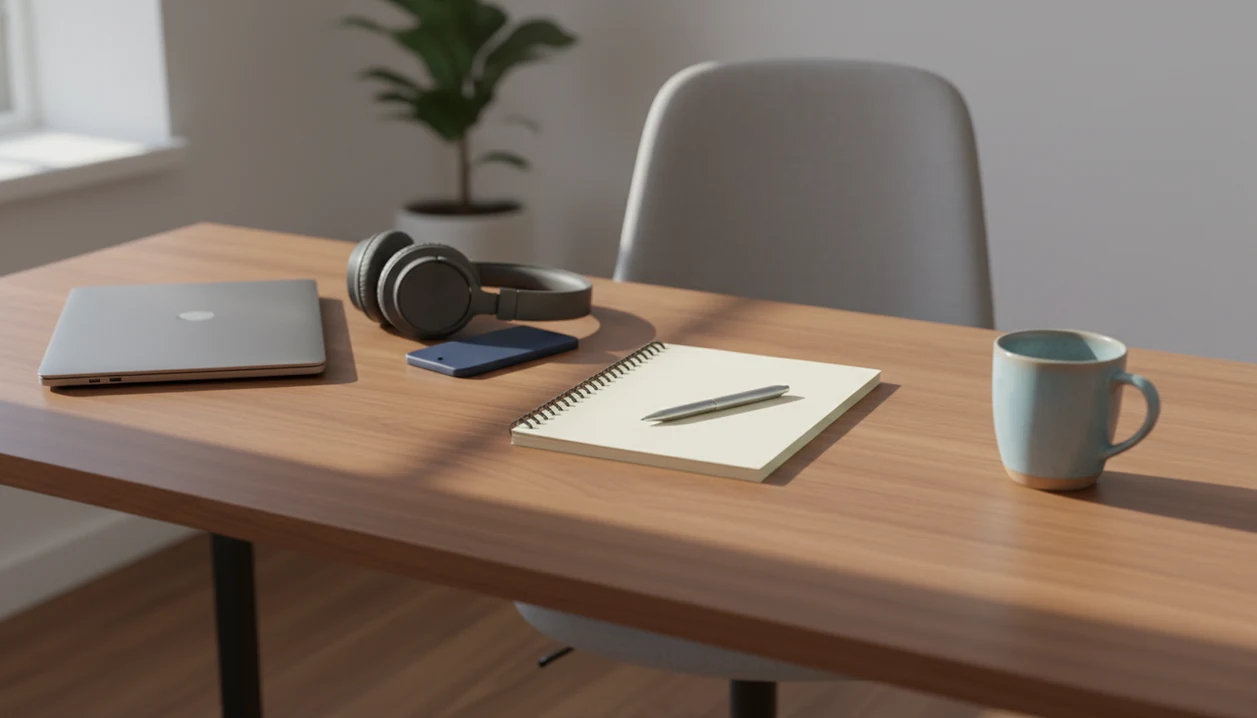
Focus meditation for work is a short guided or silent practice that helps you settle attention before a task, meeting, or context switch by returning to one focus point, such as the breath, a sound, or body sensation. It is not about forcing productivity or emptying the mind; it is a practical reset for calmer work transitions. Browse more sleep hygiene and meditation.
A meditation app can make the routine easier by offering short guided sessions, breathing exercises, sleep audio, and calming tracks, but the work habit should still be usable without audio.
- Use work focus meditation before a task, between meetings, or after interruptions to reduce scattered attention.
- The basic method is simple: sit upright, choose one focus point, notice distractions, and gently return.
- Short sessions can support attention over time, but they do not replace sleep, breaks, workload boundaries, or professional care when needed.
Work focus meditation routines for common workday transitions
Work focus meditation fits best at three workday points: before work begins, before a deep-focus task, and between meetings. Each moment needs a different cue, length, and level of guidance.
Before work, a 5 to 10 minute guided meditation before work can help you move from home mode into task mode. Before deep-focus work, a shorter breath practice can mark the start of writing, coding, planning, or analysis. Between meetings, a 3-minute focus reset at work is often enough to stop carrying one conversation into the next.
The laptop fan during a five-minute pause can become the cue. Not dramatic. Just repeatable.
Workday meditation audio can help when self-guiding feels hard. Tools like Calm, Headspace, and Insight Timer offer short sessions, but no audio can guarantee performance, creative flow, or a distraction-free afternoon. For longer single-tasking routines, deep work meditation gives the practice more structure.
How focus meditation for work trains attention
Focus meditation for work trains attention by asking you to choose one object, notice when attention wanders, and return to that object without turning the distraction into a problem.
In focused-attention practice, the object might be breathing, a sound, or the feeling of the body in the chair. The technical term is attentional control. In plain language, you are practicing the moment of coming back. Mind-wandering is not failure; the return is the training.
That loop can make task starts feel less jagged. You open the document, notice the urge to check messages, and come back to the first sentence. Research on mindfulness training suggests small-to-moderate benefits for attention-related outcomes, including working memory and reduced mind-wandering, but productivity is shaped by sleep, workload, tools, and interruptions too.
For most workers, focus meditation usually works best when it is tied to a clear task transition, while general “be more focused” intentions are easier to ignore.
How to use a guided meditation before work
Use a guided meditation before work as a short bridge into the first task, not as another item to perfect. Five to 10 minutes is enough for most work mornings.
- Set a timer or choose a 5 to 10 minute guided session, using audio only if it genuinely helps; choose silence if audio is awkward.
- Sit upright with both feet supported, letting the chair hold some of your weight.
- Choose one focus point, such as breath at the nose, sound in the room, or hands resting on your lap.
- Notice distractions without arguing with them, then return to the focus point.
- Name the first work task in one plain sentence, such as “I am opening the proposal.”
- Start with one visible action, not a whole plan.
If your phone has a guided focus track queued beside the keyboard, start it before opening email. A little setup can protect the routine from getting skipped.
A 3-minute focus reset at work between tasks
How do you do a focus reset at work between tasks? Use a 3-minute routine that marks the transition from one work mode to the next without pretending stress has disappeared.
Try it between email, meetings, writing, coding, calls, or admin work:
- Stop what you are doing and place both feet on the floor.
- Exhale slowly once, longer than usual.
- Feel contact points: feet, seat, back, hands.
- Name the next task in five words or fewer.
- Begin with one action, such as opening the file or writing the first line.
This is useful after a call where your hands finally unclench, but your attention is still in the meeting. Silent practice works well in shared offices, hallways, or a bathroom stall where audio would feel odd. The point is a clean handoff, not an erased nervous system.
Workday meditation audio for meetings and interruptions
Workday meditation audio helps most when the environment is noisy, the meeting was emotionally loaded, or you are too scattered to self-guide. A calm voice can reduce decision-making when your attention is already thin.
Keep the setup simple. Use one earbud if you need to stay aware of the office. Keep the volume low. Sit tall enough to breathe without strain. Dim or flip the phone screen so the session does not become another scroll. The screen paused after a restless start is common; restart once, then continue without grading yourself.
Audio should not become required for every transition. Silent micro-practices matter because meetings, flights, client sites, and open offices do not always give you privacy. A good meditation app for sleep, anxiety, and everyday calm should provide guided sessions, breathing support, and bedtime audio without promising to fix every workday strain. MindTastik can support everyday calm, anxiety support, and sleep support without replacing care.
Best-fit and poor-fit scenarios for focus meditation at work
Focus meditation at work is most useful when the problem is scattered attention during normal transitions. It is a poor fit when the real issue is workload, safety, clinical distress, or lack of rest.
| Scenario | Best fit | Poor fit |
|---|---|---|
| Task starts | Settling before writing, planning, coding, or analysis | Expecting a session to create motivation from exhaustion |
| Meeting transitions | Resetting after back-to-back calls | Using meditation to tolerate harmful management |
| Attention quality | Mild scattered attention and phone-check urges | Treating severe anxiety, depression, burnout, or panic |
| Desk use | Quiet 3-minute resets at a workstation | Replacing sleep, food, breaks, or workload boundaries |
| Productivity | Supporting calmer single-tasking | Guaranteeing output, speed, or creative results |
For people who need structure but not hype, meditation for productivity without hype is a better frame than chasing an ideal focus state.
Five facts about work focus meditation evidence
Research on work focus meditation is promising, but it is not a productivity guarantee. The evidence is strongest when claims stay modest.
- A randomized controlled trial found that 4 days of 20-minute mindfulness meditation training was associated with measurable gains in attention and working memory compared with a control group. Source: PubMed research: 20363650
- A meta-analysis of randomized controlled trials found small-to-moderate improvements in attention-related outcomes after mindfulness-based interventions. Source: frontiersin reference
- Some workplace studies have reported that mindfulness programs were associated with lower self-reported distress and improvements in concentration and task performance.
- A randomized trial of a 10-day app-based mindfulness program found reduced mind-wandering and increased focus compared with an active control condition. Source: nature reference: s41598 019 44019 3
- Some workplace studies have reported improvements in employees’ ability to focus and work engagement after brief daily meditation.
Clinicians typically recommend meditation as a supportive practice, not as a replacement for sleep, therapy, medication, or workplace changes when those are needed.
Desk setup cues for work focus meditation
A desk cue makes work focus meditation easier because it removes the small decisions that stop people from starting. The cue can be as simple as silencing notifications, turning the chair slightly away from the monitor, or placing the phone face down after choosing audio.
Posture matters, but it does not need to look formal. Sit with the chair supporting you, feet steady, shoulders not forced back, and hands resting where they do not keep reaching for the keyboard. Clear only the visual clutter directly in front of you. One notebook and one pen are fine.
Caption idea for the future image: “A quiet desk setup for focus meditation for work, with a chair, phone, headphones, and a simple 5-minute reset.”
If sound is part of your cue, concentration music for meditation may fit better than spoken guidance during repetitive tasks.
Limitations
Focus meditation for work has real limits. It can support steadier transitions, but it cannot repair every condition that makes attention difficult.
- Effects on attention are usually modest and vary by person, practice style, sleep, workload, and consistency.
- Workplace meditation studies may rely on self-selected participants, self-report measures, or programs that motivated employees chose to complete.
- Meditation does not fix unrealistic workload, constant interruptions, unclear priorities, or harmful management practices.
- Some people with trauma histories or certain mental health conditions may find closed-eye or body-focused meditation uncomfortable.
- Workday meditation audio should not replace professional care for clinical anxiety, depression, burnout, panic, or severe stress.
- Overusing guided audio can create dependence on a voice or app, so silent micro-practices are worth learning too.
- A short session before work cannot undo a 2:13 a.m. lock-screen check after hours of poor sleep.
If attention struggles are persistent, intense, or tied to ADHD symptoms, ADHD meditation app support may be a more relevant starting point.
What Changes After One Week
After a week of brief focus meditation at work, the most realistic change is not flawless concentration; it is usually a cleaner start to the next task. A closed laptop, a desk pause, or a two-minute calendar gap can become a cue to reset instead of a place where attention keeps spinning. Small transitions often matter more than dramatic sessions because they are easier to repeat.
Common Mistakes People Make Here
- Starting only when the day is already overloaded can make the practice feel like a rescue tool instead of a steady routine.
- Choosing a long session before a meeting often backfires; a shorter reset tends to fit better when the calendar is tight.
- Trying to empty the mind can create unnecessary pressure; returning to one simple anchor is usually the more practical goal.
- Leaving the laptop open during a desk pause makes it easier to drift back into messages before attention has settled.
- Using the same practice for every moment may not fit; a meeting reset, deep work start, and post-interruption recovery can need different lengths.
Between Meetings
The space between meetings is often too short for deep recovery but long enough for a nervous-system-friendly reset. Treat the calendar gap as a boundary: close the laptop, let the last conversation end, and give attention one clear place to land before the next call. A meeting reset works best when it asks for less effort than the meeting itself.
At-a-Glance Options
| Technique | Best for | Minutes |
|---|---|---|
| One-breath desk pause | interruptions and quick context switches | 3 min |
| Guided meeting reset | settling before a call or presentation | 5 min |
| Single-anchor focus meditation | starting a longer deep work block | 10 min |
A Practical Observation
In our experience reviewing guided sessions, short work-focused practices seem to perform best when the first instruction is simple and concrete, such as noticing the breath or relaxing the jaw. Many people may find the opening minute awkward, especially when they are switching from a fast meeting into quiet attention. A realistic session tends to make room for distraction rather than treating it as failure.
The best work meditation is the one that fits between obligations without becoming another obligation.
Why MindTastik fits this specific need
MindTastik can fit workday focus practice when you need guided meditation, breathing exercises, reminders, or offline audio for a quick desk pause. A personalized plan may help you choose shorter sessions for calendar gaps and slightly longer ones before deep work, without turning the routine into another complicated task.
Best Focus Meditation App
MindTastik is a good fit for starting work sessions with short focus meditations that support calmer transitions, single-tasking, attention training, and quick distraction recovery during deep work blocks.
Best for:
- work session starts
- deep work blocks
- single-tasking practice
- distraction recovery
- work stress resets
FAQ
Does meditation improve work focus?
Meditation may support work focus over time by training attention to return after distraction. Effects are usually modest and variable, so it should not be treated as a guaranteed productivity tool.
How long should work meditation be?
Work meditation can be as short as 3 minutes between tasks or 5 to 10 minutes before work. Longer sessions are optional, not required for a useful reset.
Can I meditate at my desk?
Yes, desk meditation is practical if you sit upright, reduce obvious distractions, and choose either silent practice or low-volume audio. You do not need to close your eyes if that feels uncomfortable at work.
Why does my mind wander during focus meditation?
Mind-wandering is normal during focus meditation. Noticing the wandering and returning to the breath, sound, or body sensation is the core practice.