
20-20-20 Rule Mindfulness Guide for Screen Fatigue
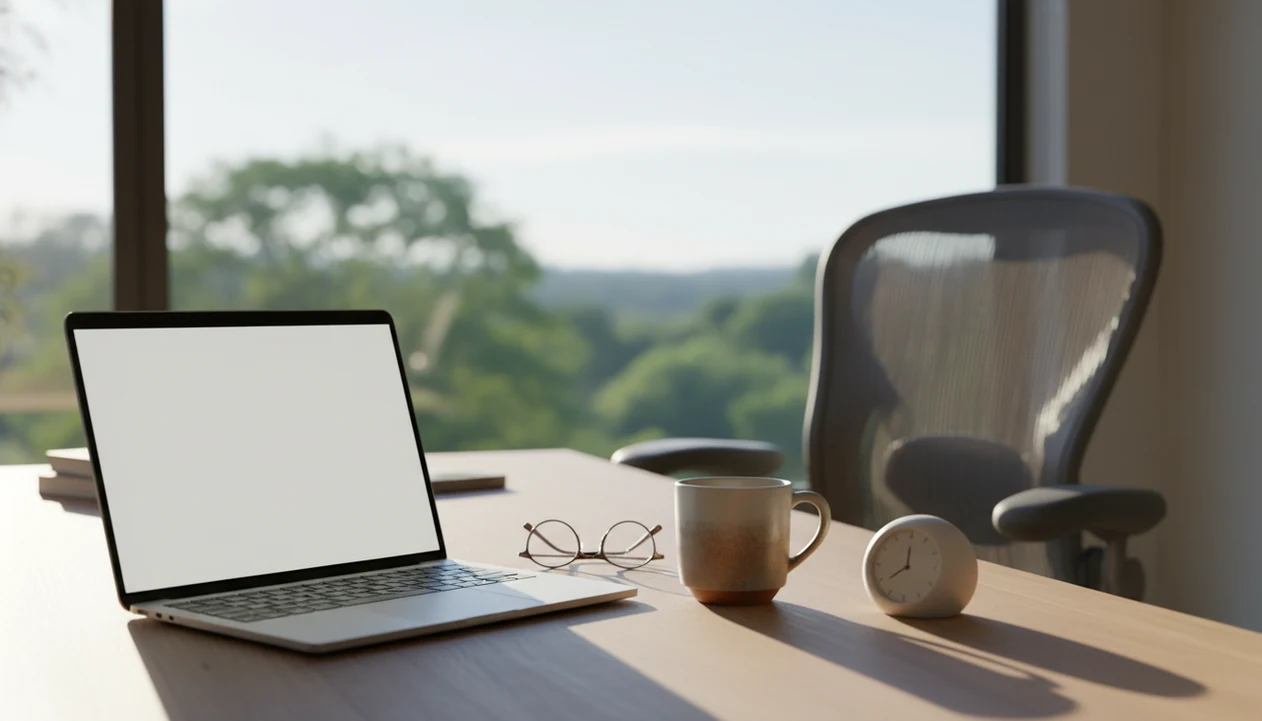


20-20-20 rule mindfulness is a screen-break habit: every 20 minutes, look about 20 feet away for 20 seconds while noticing the breath, jaw, shoulders, and mental tension. The eye break comes first. Adding deliberate attention makes it a brief mindful pause, not a full meditation session. The American Optometric Association recommends the distance-looking rule to help reduce digital eye strain.
During work or study, that pause can interrupt an unbroken stretch of close-up viewing. A few comfortable breaths, a relaxed jaw, and lowered shoulders give the break a clear purpose before returning to one task. Guided breathing can support the mindfulness part, but neither meditation nor a timer replaces proper eye care when symptoms persist.
The essentials
- Use the 20-20-20 rule as a tiny reset: pause, look far, breathe, soften your body, and return to the task.
- The mindfulness part is intentional; without breath and body awareness, it is mainly an eye-break habit.
- MindTastik can support the habit with guided meditation, breathing exercises, sleep audio, and calm reminders, but persistent eye symptoms need proper eye care.
20-20-20 Rule Mindfulness Definition for Screen Breaks
20-20-20 rule mindfulness is the 20-20-20 eye-break rule with a brief layer of breath and body awareness added. The basic rule is simple: after about 20 minutes of screen or near-focus work, look at something about 20 feet away for about 20 seconds.
The mindful part starts during that pause. Notice whether your breathing is shallow. Let your jaw loosen. Drop your shoulders if they have crept toward your ears. Check your mental state before you dive back into the spreadsheet, article, code window, or study notes.
Small pause. Real reset.
This is not a cure for eye problems, and it is not a complete meditation practice. It is a practical break habit that can support comfort when screens fill the day.
How 20-20-20 Rule Mindfulness Works
20-20-20 rule mindfulness works by changing both the visual task and the attention state for a brief moment. Looking far away reduces near-focus demand, while breath awareness turns the same eye break into a small nervous-system reset.
During screen work, the eyes keep adjusting for close detail. That near-focus effort uses accommodation, the focusing change that helps near objects look clear, and convergence, the inward teaming of the eyes. Looking across the room or out a window asks less of that close-work system. Twenty seconds will not fix dry eye, change a prescription, erase a headache, or undo hours of poor posture. It can, however, interrupt the strain loop before it becomes your whole afternoon.
The mindfulness part is simple: you notice one breath, blink fully, soften your jaw, and let your shoulders drop. Blinking helps refresh the eye surface. Posture changes reduce the hunched, locked-in screen shape. A longer exhale may help the body downshift from task urgency into a calmer state. Then you return to the screen with one cleaner next move.
20-20-20 Rule Mindfulness During Near-Focus Screen Work
Long screen sessions keep the eyes working at a close distance, often with fewer natural breaks. Brief far-viewing gives the focusing system a change of demand, which is the main reason the 20-20-20 rule is used during digital work.
Digital eye strain can show up as eye fatigue, dry eyes, blurred vision, or headaches, according to the American Optometric Association's overview of computer vision syndrome aoa reference: computer vision syndrome. A 2019 randomized trial tested 20 seconds of far-viewing every 20 minutes during near work as a visual fatigue break pattern PubMed research: 30561762.
The mindfulness layer adds a second benefit: interruption. You stop the task loop, lengthen the exhale, soften one tight muscle group, and return with a clearer next move. For longer concentration blocks, pair this with deep work meditation rather than trying to force attention for hours.
Conference room chair between meetings. Same eyes, different screen.
Five 20-20-20 Rule Mindfulness Facts Readers Should Know
- The original 20-20-20 rule is an eye-break habit. It is usually described as 20 minutes of near work followed by 20 seconds looking about 20 feet away.
- The purpose is comfort during digital device use, not medical treatment. It may support screen comfort, but it does not diagnose or correct eye conditions.
- Mindfulness requires attention. Add slow breathing, jaw release, shoulder softening, and a quick check of your mood.
- Timers make the habit easier. Most people do not naturally stop during deep work, especially when a deadline is close.
- Persistent symptoms should be evaluated. Ongoing dryness, pain, blurred vision, headaches, or vision changes deserve proper eye care.
For students, the same break can sit beside study meditation for students, especially during long reading or exam-prep blocks.
How to Use 20-20-20 Rule Mindfulness at a Desk
Use 20-20-20 rule mindfulness as a short desk ritual, not another complicated productivity system. The goal is to interrupt strain before you notice yourself squinting at the same paragraph.
- Set a 20-minute timer on your phone, watch, computer, or focus app.
- Look at a distant object for about 20 seconds, such as a window, hallway sign, tree, or far wall.
- Take two or three slow breaths and make the exhale slightly longer than the inhale.
- Unclench your jaw and lower your shoulders before returning to the screen. You can bring this same body awareness to mindful exercise when you step away from your desk.
- Choose one clear next action, such as finishing one paragraph or replying to one message. For a more structured approach to concentration, try these 12 steps to achieve deep focus during your next work block.
If you lose the breath count after four, that still counts. Just come back. For work blocks that need more structure, focus meditation for work can help you set a calmer starting point.
Short eye breaks do not replace longer device breaks
The 20-second pause is only one part of screen-break guidance. The American Optometric Association also recommends a 15-minute break after two hours of continuous device use. A desk routine therefore needs both brief distance-looking pauses and longer time away from devices. Completing the short pauses does not remove the need for that longer break, and adding mindful breathing does not change the recommendation. For a broader perspective on recovery, explore how rest supports creative thinking beyond brief screen breaks.
An eye break also need not become a change of work task. A review of laboratory task-switching research found that responses immediately after a switch were substantially slower and usually more error-prone; preparation reduced but did not eliminate those costs. Keeping messages and email for a separate communication window is a practical application of that finding, not proof that the 20-20-20 rule improves productivity. Look away briefly, then resume the same task.
20-20-20 Rule Mindfulness Tips for Focus, Anxiety, and Sleep
- Focus: Use the break to catch autopilot scrolling. Look away, breathe once, then name the next task before touching the keyboard again.
- Anxiety support: Pair the distant gaze with slower exhales and a body tension scan. Back against a hallway wall can make the pause feel more grounded.
- Sleep: In the evening, let the break remind you to dim the screen, stop opening new tabs, and move toward a wind-down routine.
- App support: Tools like MindTastik, Calm, and Headspace can offer guided meditation, breathing exercises, sleep audio, and self-hypnosis sessions after screen-heavy days.
Best Uses and Poor Fits for 20-20-20 Rule Mindfulness
20-20-20 rule mindfulness fits people who need a low-friction calm habit during screen work. It is less useful when symptoms point to a medical, ergonomic, or sleep-related issue.
| Use case | Better fit | Why it helps |
|---|---|---|
| Desk workers and remote workers | Best use | Interrupts long near-focus blocks without leaving the desk |
| Students and exam prep | Best use | Adds a repeatable pause during reading, writing, and revision |
| Gamers and designers | Best use | Creates a break from intense visual attention |
| Persistent pain or vision changes | Poor fit | Needs professional eye care, not just a reminder |
| Chronic headaches or severe dry eye | Poor fit | May require eye exams, hydration, sleep changes, ergonomics, or treatment |
Best for
✅ Desk workers, students, gamers, remote workers, and people who want a tiny reset instead of a long guided session.
Not for
✗ Treating persistent pain, severe dry eye, blurred vision, chronic headaches, or new vision changes.
20-20-20 Rule Mindfulness App Reminders with MindTastik
Most people forget breaks during deep work because the task feels more urgent than the body signal. A reminder matters because it removes the need to remember, especially when the coffee is cooling beside the keyboard and the tab count keeps growing.
MindTastik offers guided sessions for adults who want support with rest, anxious moments, breathing, and daily calm. Short practices can fit between focused work blocks, after a long stretch of screen time, or in the evening when the day still feels busy in your head.
For 20-20-20 rule mindfulness, use MindTastik as the calm layer around the reminder: a short breathing exercise before a focus block, a guided reset after heavy screen work, or sleep audio when late-night device use keeps your nervous system switched on.
For people choosing between a 5-minute breathing exercise and a 20-minute body scan, start short. The most repeatable calm habit is often the one that feels easy enough to do on a normal Tuesday.
Common 20-20-20 Rule Mindfulness Mistakes to Avoid
Are you doing the 20-20-20 rule wrong if you glance at your phone instead of looking far away? Yes, usually. The break works better when your eyes leave near-focus work, so staring at another nearby screen defeats the point.
Do not treat 20 feet as a tape-measure requirement. A window view, far shelf, hallway, or opposite wall is usually good enough. The exactness matters less than shifting away from close visual demand.
Do not skip the breathing and body check if mindfulness is your goal. Without that, it is mostly an eye break. Also, do not expect the rule to replace glasses, dry-eye care, ergonomic changes, hydration, or sleep.
If you miss a break, do not double up later. Restart the timer. For attention routines beyond eye breaks, meditation for productivity without hype gives a broader way to reset work rhythm.
Guided breathing between screen-heavy work blocks
MindTastik’s breathing exercises suit a slightly longer pause after a meeting or between demanding work blocks. They can provide structure for noticing breath and releasing jaw and shoulder tension. A guided session does not need to accompany every 20-second eye break.
For the distance-looking habit alone, a simple timer may be enough. People with persistent eye pain, dryness, or blurred vision need eye care rather than a meditation session. MindTastik is not a medical treatment.
What a 20-second eye break cannot fix
The 20-20-20 rule is useful, but it is small. That is part of why it works, and part of why it gets overhyped.
If symptoms are one-sided, sudden, painful, or paired with new vision changes, treat the break as irrelevant and seek professional eye care promptly.
- Evidence is limited for using the rule as a standalone fix for chronic eye problems.
- It is not a substitute for an eye exam when symptoms keep returning.
- It is not formal meditation unless you add breath, body awareness, and attention.
- It may not solve dry eyes, blurred vision, headaches, neck tension, or poor ergonomics.
- It only works if you remember it and practice it consistently.
- It should be combined with screen setup, blinking, hydration, sleep habits, and appropriate vision correction.
- Clinicians typically recommend professional evaluation for persistent pain, vision changes, or symptoms that interfere with daily life.
If you notice you are awake deep into the night, that is usually more than a simple screen-break issue. A broader wind-down routine, steadier sleep habits, or professional guidance when appropriate may be more helpful.
20-20-20 screen-break questions
Does the 20-20-20 rule actually reduce eye strain?
The American Optometric Association recommends it to help reduce digital eye strain and refocusing discomfort. It is eye-health guidance, not a guaranteed treatment or a proven productivity technique. Persistent dryness, blurred vision, headaches, or eye pain need assessment rather than repeated reliance on short breaks.
Does the object have to be exactly 20 feet away?
The formal guidance is to look at something at least 20 feet away. The practical aim is to stop focusing on a nearby screen, not to measure every pause. A distant window view or hallway target is useful; checking a phone keeps the eyes on another close-up task.
How often should I take a 20-20-20 break?
During prolonged screen use, take a 20-second distance-looking break every 20 minutes. A timer can make the pattern easier to remember. These brief pauses do not replace longer breaks: the American Optometric Association also recommends a 15-minute break after two hours of continuous device use.
How do I add mindfulness to the 20-20-20 rule?
During the distant gaze, notice the breath without forcing it. Check for a clenched jaw or raised shoulders, and let that tension ease. Notice the next task before returning to the screen. This adds attention and body awareness to an eye break, but it is not a complete meditation practice.
Can the 20-20-20 rule fix dry eyes or blurry vision?
No. A distance-looking pause changes the visual demand, but it does not diagnose or correct the cause of dryness or blurred vision. The rule should not replace glasses, dry-eye care, or an eye examination. Recurring symptoms deserve professional assessment even when breaks provide some temporary comfort.
Can I use my phone during a 20-20-20 break?
A phone can provide the reminder, but reading messages or scrolling is not the eye break itself. The eyes remain focused on a nearby screen. Once the reminder sounds, look toward a distant object for about 20 seconds, then return to the original task rather than opening another activity.
When should screen-related eye symptoms be checked?
Persistent dryness, blurred vision, headaches, or eye pain should be evaluated by an eye-care professional. Seek care promptly when symptoms are sudden, one-sided, painful, or accompanied by new vision changes. A timer, breathing exercise, or longer screen break is not a substitute for assessment in those situations.