
Feeling Like There Is Not Enough Time
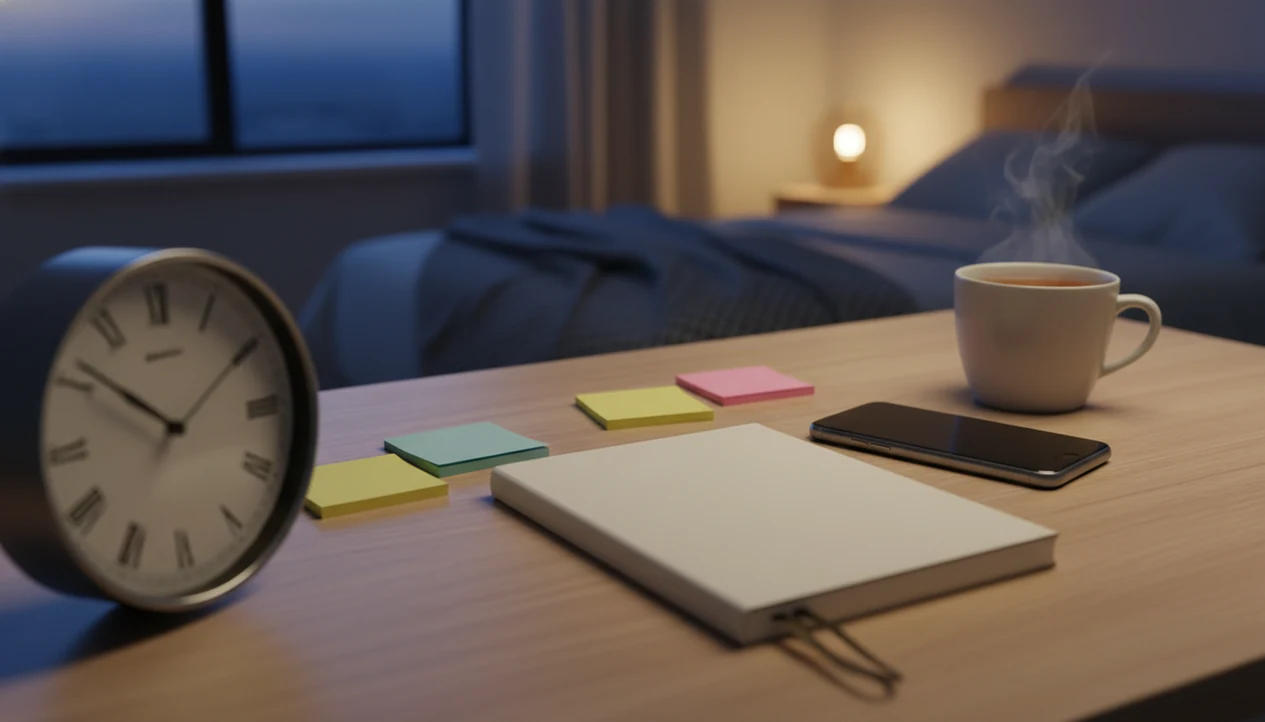


Feeling like there is not enough time is the persistent sense of being rushed, behind, or unable to fit life in, even when parts of the schedule are manageable. Sometimes the workload really exceeds the available hours. Sometimes time feels scarce and unsafe, so ordinary tasks take on an urgency that the calendar alone cannot explain.
The useful first step is to separate real overload from time anxiety. An overloaded day needs fewer demands, help, or a clearer boundary. A manageable day that still feels frantic may call for a priority filter and a brief calming pause. Planning and emotional support serve different purposes: one makes the work visible, while the other helps address the pressure around it.
What matters most
- The feeling often comes from both real demands and perception: urgency bias, perfectionism, guilt around rest, and fear of falling behind.
- Practical fixes work best when calendar tools are paired with emotional skills like boundaries, self-compassion, and short mindfulness resets.
- MindTastik can support the calm side of the plan with guided meditation, sleep audio, breathing exercises, and self-hypnosis for adults who want sleep, anxiety, and everyday calm support.
Feeling Like Not Enough Time: The 5 Facts That Matter Most
- Time scarcity is common, not a personal failure. In 2022, 53% of U.S. adults said they often or always feel they do not have enough time to do what they want, according to Pew Research Center’s American Time Use analysis Pew Research report: how americans spend their time.
- There are two layers. Objective overload means the workload is genuinely too large; perceived time pressure means the body reacts as if everything is urgent.
- The cost is real. Chronic time pressure can feed stress, anxiety, irritability, poor sleep, and burnout risk; the American Psychological Association links ongoing stress with sleep disruption, mood changes, and difficulty functioning APA research.
- The feeling often spikes at transitions. A calendar alert before a guided reset can feel like relief, or like one more demand.
- The core fix has two parts. Reduce demands where possible, and calm the nervous system where possible.
For most people, the first win is not a new planner. It is seeing which pressure is real, which pressure is learned, and which pressure needs a boundary.
What Feeling Like Not Enough Time Means in Daily Life
Feeling like there is not enough time means your mind keeps reading normal life as a race, even when the day has a few workable spaces.
The thoughts are usually blunt: “I am behind,” “I cannot catch up,” or “there is no time to rest.” The body may join in with shallow breathing, rushed walking, fast clicking between tabs, and guilt during downtime. At night, the same pressure can become tomorrow’s meeting looping at midnight.
Cold side of the pillow. Still awake.
People also search for “not enough time meaning,” “never enough time meaning,” and “time anxiety” because the experience is hard to name. It can show up on impossible days, yes. But it can also appear on a quiet Sunday afternoon when your nervous system still believes you are late for something.
How Feeling Like Not Enough Time Works in the Brain
The brain predicts danger and scarcity, then labels too many tasks as urgent. Once that alarm turns on, the mind starts scanning ahead: the unread message, the laundry, the appointment, the half-finished document.
A useful idea here is the mere urgency effect. Urgent-feeling tasks can crowd out important tasks because they offer faster relief. Researchers describe this as the mere urgency effect, where people may prioritize time-sensitive tasks even when less-urgent tasks are objectively more important academic reference: 4970262. Answering a low-value message may feel safer than starting the one project that would actually reduce pressure. That is why productivity tools alone can fail. A color-coded calendar does not help much if the body still feels chased.
Unfinished tasks can keep attention circling. Late at night, a quiet room may feel busier than the workday, with tomorrow’s errands, emails, and loose ends lining up as if they all need an answer right now.
Mindfulness trains attention to return to the present moment instead of rehearsing future demands. For focused work, a short deep work meditation can support single-tasking before the calendar gets loud again.
Switching tasks can consume the time that feels missing
A packed day is not the only reason work can feel slow. A review of laboratory task-switching research found that responses immediately after a switch were substantially slower and usually more error-prone. Preparing for the switch reduced the cost but did not remove it. This does not measure time anxiety, but it explains why repeatedly moving between a document, messages, and administrative tasks can make demanding work harder to finish. For study sessions, strategies for learning faster using neuroscience can complement efforts to reduce distractions and protect attention.
The practical implication is to group communication into designated windows where work responsibilities allow, rather than checking it throughout a demanding task. Before returning to the document, identify one concrete next action and silence nonessential notifications. This is an application of task-switching evidence, not a proven schedule with a fixed productivity gain. It also cannot substitute for reducing a workload that already exceeds the hours available. A brief single-tasking meditation can help you settle your attention before returning to one demanding task.
How to Use a Feeling Like Not Enough Time Guide Today
A feeling like not enough time guide works best when it turns the vague panic into visible choices. Do this before you open another app, inbox, or planner tab.
- Dump every open loop onto paper or notes, including chores, messages, deadlines, errands, and worries.
- Sort tasks into four groups: must-do today, can-wait, can-delegate, and can-delete.
- Block one realistic focus window and one recovery window, even if each is only 15 minutes.
- Set a stopping rule for work or chores, such as “I stop at 8:30” or “I stop after this load of laundry.”
- Reset with a 3 to 10 minute practice using breathing, meditation, or grounding before the next task.
For people who feel frozen by a long list, one small next action is often better than reorganizing the entire system because it lowers friction fast.
Feet on the floor. One task named.
Feeling Like Not Enough Time Tips for Urgency, Guilt, and Overthinking
Use these feeling like not enough time tips when urgency keeps pulling you into another task before you have finished the first.
- The 1-2-Optional Filter: Choose one must-do, two should-do tasks, and make everything else optional for today.
- The Not-Today Script: Say, “I can’t take that on today, but I can revisit it on Friday.” Keep it plain.
- The Rest Permission Line: Tell yourself, “Rest is part of staying functional, not proof that I am falling behind.”
- The Transition Pause: Take three breaths between tasks before opening the next tab, room, or conversation.
- The System Limit: Add one new tool at a time. Too many productivity systems can become another unfinished project.
If focus is the main friction point, focus meditation for work can pair well with a short task block.
Best For and Not For: Feeling Like Not Enough Time Support
Self-guided support can help when the pressure is real but still workable. It is not enough when the situation is unsafe, clinically intense, or structurally impossible.
| Best for | Not for |
|---|---|
| Mild to moderate time anxiety | Unsafe workloads |
| Bedtime racing thoughts | Severe anxiety or panic that disrupts daily life |
| Task transitions between work, chores, and family demands | Untreated depression or trauma symptoms |
| Focus resets before a work block | Crisis situations or safety concerns |
| Beginners who want calm routines | Medical sleep disorders or persistent insomnia |
MindTastik offers guided meditation, sleep-focused audio, breathing practices, and self-hypnosis sessions for adults seeking support with rest, anxiety, focus, and everyday calm. It may help with a steadier wellness routine, but it is not a substitute for therapy, medical care, sleep evaluation, or practical workload changes.
If the workload is unfair, the solution may need a manager, partner, clinician, or support system. Not another timer.
MindTastik Micro-Routines for Feeling Like Not Enough Time
Guided practices work best when they are placed into tiny repeatable moments. A three-minute grounding before email, one breathing exercise after meetings, a focus meditation before deep work, or sleep audio as a nightly off switch can be enough to change the next decision.
The useful question is not “Can I meditate for 30 minutes?” It is “Where does my day reliably tighten?” For one person, that is opening the inbox. For another, it is sitting in dim light with a phone queued to guided audio, noticing the first steady breath before the next part of the evening begins.
MindTastik can fit these moments with guided meditation, breathing exercises, sleep audio, and self-hypnosis sessions. The goal is anxiety support and sleep support, not a promise to cure anxiety or force sleep. If concentration is the issue, a focus meditation app may also help you choose a starting point.
When to Seek Professional Help for Time Anxiety
Seek professional help when time anxiety stops being ordinary busyness and starts interfering with sleep, work, relationships, health, or safety. Meditation can support steadier routines, but it should not replace therapy, medical care, ADHD evaluation, or sleep treatment when symptoms are persistent or intense.
Watch for signs that the problem has moved beyond a hard week: panic attacks, dread that feels unmanageable, avoiding basic responsibilities, feeling hopeless, using alcohol or substances to cope, or lying awake night after night while exhaustion builds. Depression also deserves support when low mood, loss of interest, guilt, appetite changes, or thoughts of self-harm show up.
- Contact a licensed clinician if anxiety, depression, ADHD symptoms, or overwhelm disrupt daily functioning for more than a short stretch.
- Talk with a medical provider if insomnia, frequent waking, panic symptoms, or physical stress symptoms keep repeating.
- Use urgent or emergency services if you might harm yourself or someone else, feel unable to stay safe, or have severe symptoms that feel out of control.
- Reach crisis support immediately if safety is involved; a breathing exercise can wait.
Visible Questions About Feeling Like Not Enough Time
Does feeling rushed always mean you need better time management? Not always. Sometimes the schedule is overloaded, but sometimes the nervous system is treating normal tasks like emergencies.
Is feeling rushed always time management?
No. Time management helps when tasks are unclear, scattered, or poorly sequenced. But if you feel unsafe whenever you pause, the issue may also involve anxiety, perfectionism, guilt, or work-life conflict. APA’s Stress in America reporting also notes that many adults experience stress as overwhelming or hard to manage APA research.
Why does rest feel guilty?
Rest can feel guilty when your worth has become tied to output. The couch posture says “off,” but the mind says “behind.” Self-compassion helps because it treats recovery as maintenance, not laziness.
Can meditation help a full schedule?
Meditation cannot remove tasks, but it can change how you meet them. Mindfulness-based interventions have shown moderate reductions in anxiety symptoms in a JAMA Internal Medicine meta-analysis JAMA Internal Medicine study: 1809754. For students, study meditation for students can be a practical entry point.
What should you do first when everything feels urgent? Write it all down, choose one must-do task, and make the next action small enough to begin.
Short sessions for rushed workday transitions
MindTastik’s focus meditations and guided breathing exercises are options for a pause before opening email, starting a demanding task, or leaving work for the evening. Sleep stories and soundscapes offer a separate listening option when tomorrow’s tasks keep occupying bedtime. These sessions suit adults looking for self-guided calm alongside practical workload changes. They are not medical treatment, and cannot resolve an impossible workload. Persistent insomnia, severe anxiety, or panic calls for professional assessment rather than another app routine.
What calming tools cannot fix about time pressure
Self-guided tools can help, but they have clear limits. Be honest about the problem you are facing.
Use this guide as education and self-support, not as medical or mental-health advice. If time pressure comes with panic attacks, persistent insomnia, depression, trauma symptoms, substance misuse, or thoughts of self-harm, contact a licensed clinician or local crisis support immediately.
- Meditation cannot create more hours in the day.
- Self-guided tools cannot fix structural overwork, caregiving overload, poverty pressure, or unfair workload expectations.
- Severe anxiety, depression, ADHD, trauma symptoms, or persistent insomnia may require professional support.
- Trying too many systems at once can increase failure feelings and make the list feel heavier.
- Not every meditation style works for every person; silence may feel calming for one person and stressful for another.
- Urgent health, safety, or crisis concerns need immediate appropriate help, not a breathing exercise alone.
- Sleep audio may support a wind-down routine, but ongoing sleep problems deserve medical guidance.
Clinicians typically recommend professional help when anxiety, sleep loss, panic, depression, or attention problems disrupt daily functioning. A meditation for productivity without hype approach is most useful when it stays practical and does not pretend every barrier is mindset.
Between Meetings
The space between meetings is not always a real break; sometimes it is just a faster lane into the next demand. If your laptop is still open and your attention is already rehearsing the next call, a 90-second meeting reset may be more realistic than a full meditation. A pause counts when it changes the speed of your next decision.
Desk Reset
- Close the laptop for one minute if possible; the visual boundary can make the pause feel more real.
- Pick one next action, not a full plan, because urgency tends to grow when every task competes at once.
- Use a short breathing exercise when you have a calendar gap, but skip it if you are using it to avoid an urgent conversation.
- Name the task you are not doing right now; a clear no often reduces the mental noise around the yes.
- If a desk pause makes you more agitated, try standing, walking to refill water, or resetting the meeting notes instead.
Questions about feeling short of time
Why do I feel like there is never enough time, even on quiet days?
A quiet calendar does not necessarily quiet the sense of urgency. Unfinished tasks, perfectionism, guilt about rest, or fear of falling behind can keep attention fixed on what remains undone. Compare the actual demands with the available hours before assuming the answer is either better planning or more relaxation.
How can I tell time anxiety from an overloaded schedule?
Write down the necessary tasks, deadlines, and available work periods. If the essentials cannot reasonably fit, the problem includes real overload and needs fewer demands or more support. If they fit but every pause still feels threatening, anxiety may also be involved. Both problems can occur on the same day.
What should I do first when I feel rushed and behind?
Make the pressure visible before adding another planning tool. List the open tasks, choose one that genuinely needs attention today, and mark what can wait, be delegated, or be removed. A brief pause before starting can be part of the routine, but it does not make an unrealistic task list realistic.
Why do I feel guilty when I stop working?
Rest can feel guilty when being productive has become a measure of personal worth, or when unfinished work seems to demand constant attention. A clear stopping rule separates the end of work from the completion of everything. If the workload is impossible, that rule also needs a conversation about expectations.
Does multitasking help when there is not enough time?
Switching repeatedly between demanding tasks has costs. Laboratory research finds slower responses and often more errors immediately after a switch, even when people can prepare. Grouping messages and administrative work into separate windows is a reasonable application of that evidence, but it does not guarantee a particular amount of time saved.
Can meditation help with feeling short of time?
Meditation can be used as a calming pause alongside planning, boundaries, and workload changes. The research cited here does not establish a numerical productivity benefit from mindfulness. A short session is an option before the next task, not a way to create extra hours or a replacement for treatment when symptoms are severe.
When should I seek help for time anxiety?
Professional help is appropriate when the pressure persistently disrupts sleep, work, relationships, or basic responsibilities. Panic attacks, unmanageable dread, substance use to cope, or repeated sleepless nights deserve assessment. Thoughts of self-harm or immediate safety concerns require urgent crisis support, rather than relying on a self-guided calming routine.