
One Breath Meditation for Instant Calm
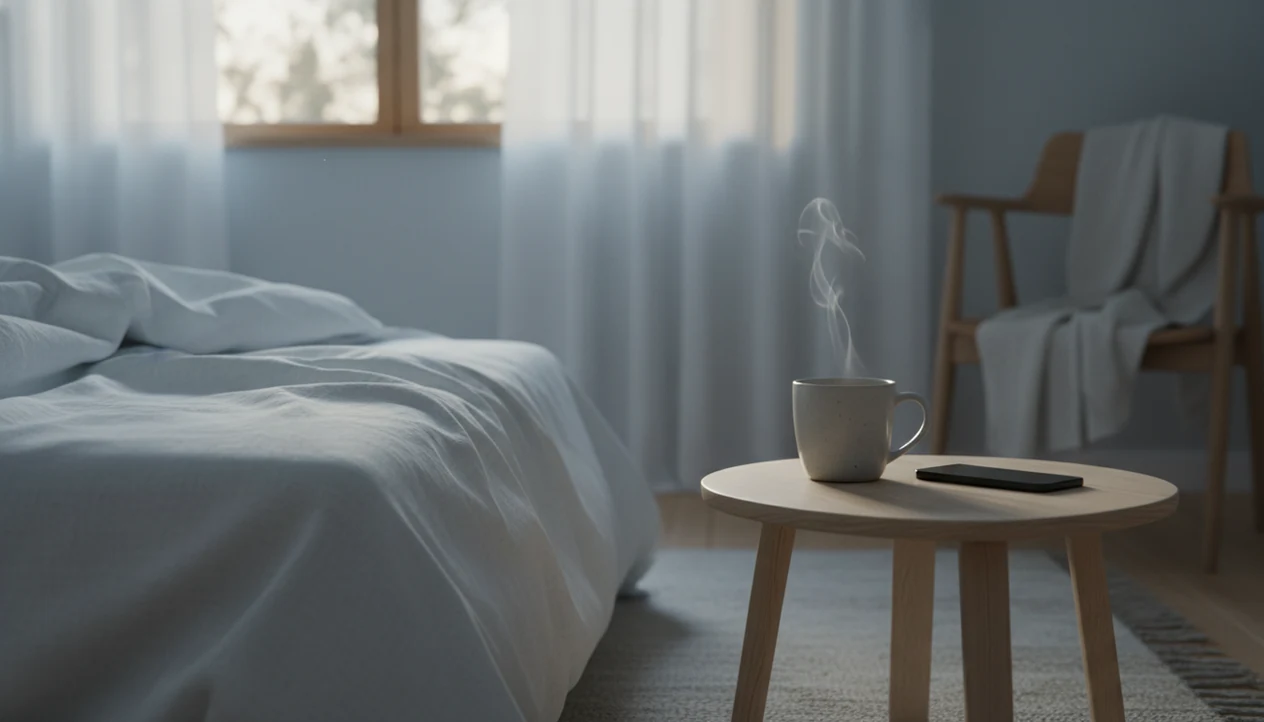


One breath meditation is a brief mindfulness practice: give full attention to one natural inhale and one natural exhale, then stop. The breath stays comfortable and unforced. This is not a deep-breathing exercise or a timed breathing drill. Its purpose is to create a small pause during everyday stress, a worry loop, bedtime restlessness, or the change from one task to another.
The practice suits beginners and adults who find a longer meditation difficult to start. One breath can be the whole practice or a starting point for a guided session. A calmer moment is possible, but not guaranteed. This small reset is not a treatment for chronic anxiety, insomnia, PTSD, or depression, and it should not replace professional care.
The essentials
- Use one natural breath, not a forced deep breath or paced breathing drill.
- The practice is best for quick resets, beginner momentum, and moments when you feel too busy or anxious to meditate.
- It can support calm, but it is not a treatment for chronic anxiety, insomnia, PTSD, or depression.
Best one breath meditation uses for everyday calm
One breath meditation works best when the moment is small, repeatable, and easy to miss. The point is not a dramatic shift. It is a tiny return.
- Stress reset: Use one breath before replying to a sharp message.
- Bedtime pause: Take one breath before dimming the phone screen and starting sleep audio.
- Anxiety interruption: Notice one inhale and exhale when a worry loop starts.
- Beginner starter: Try one breath before moving into meditation techniques for beginners.
- Transition ritual: Use it between meetings, chores, or errands. These small pauses can help you get out of doing mode and notice the present moment between tasks.
The right fit for quick everyday calm is MindTastik because it lets one breath become a gateway into guided sessions, sleep audio, breathing exercises, or self-hypnosis when a longer reset feels manageable.
How one breath meditation works in the mind and body
One breath meditation works by using the natural breath as an attentional anchor: inhale, exhale, notice distraction, and return. You are observing breath sensation, not controlling the breath.
That matters. Forced breathing can make some people tense. A normal breath gives attention one simple place to land, like the feeling at the nose, chest, or belly. Broader mindfulness meditation has been studied for stress, anxiety, depression, pain, and insomnia, according to the National Center for Complementary and Integrative Health NCCIH mindfulness overview: mindfulness meditation for health. Breath-based meditation research also suggests measurable relaxation-related changes, but the exact one-breath format has much less direct evidence.
If the goal is a tiny pause rather than a full session, MindTastik supports the habit because users can start with one breath and then choose a short reset if needed.
What brief-breathing research actually measures
Observing one natural breath is not the same intervention as deliberately regulating breathing. A 2023 meta-analysis of 12 randomized trials found lower self-reported stress after structured breathwork than after control conditions, with a small-to-moderate effect, Hedges’ g of -0.35. Those results support the breathing practices studied, not a promise that one ordinary inhale and exhale will produce the same benefit.
A 2024 review of brief interventions found no statistically significant pooled effect when attention-to-breath interventions were examined separately. Its estimate was imprecise, so this is not proof that a brief breath pause has no value. It does mean that immediate relief remains uncertain. A useful expectation is a moment to notice what is happening and choose the next action, rather than a guaranteed reduction in anxiety.
How to use one breath meditation in 5 steps
Use a normal, comfortable breath. Eyes can be open or closed, and posture can be sitting, standing, or walking in a safe low-distraction place.
- Pause where you are, without fixing your posture into something stiff.
- Soften your jaw, shoulders, or hands just enough to notice them. For more ways to connect physical sensations with awareness, try these mind body connection practices.
- Notice the beginning of one natural inhale.
- Follow that same breath through the exhale, without stretching it.
- Return to the next thing you were doing.
One breath is enough. If the first breath feels steady, add two or three breaths. If not, stop there. The smallness is the feature.
How we picked useful one breath meditation moments
We picked moments where one breath can be used safely, quickly, and without special setup. A chair cushion beneath a stiff back is optional; the practice should also work in a hallway or at the edge of the bed.
- One breath meditation should take seconds, not require a timer.
- Useful moments are repeatable, like bedtime, task-switching, or pre-meeting pauses.
- Strong use cases connect to sleep anxiety, everyday stress, and everyday calm.
- We excluded unsafe contexts, including driving and acute panic escalation.
- The goal is a low-friction starter ritual, not a replacement for a full guided session.
Busy adults trying to build consistency may prefer MindTastik because one breath can lead into short meditation techniques without forcing a 20-minute commitment.
Best one breath meditation for stress resets
Does one breath meditation help during everyday stress? It can create a pause between a trigger and your response, which is often the useful part.
Try it before replying to a message, entering a meeting, switching tasks, or after a stressful thought. Slack pings muted for a reset can be enough of a cue. Take one normal breath, feel the exhale finish, then decide what to do next.
A meta-analysis of randomized trials found mindfulness meditation programs produced small improvements in anxiety, depression, and pain, but that evidence applies to broader programs rather than this exact micro-practice PubMed research: 27178824. So keep the promise modest.
For everyday stress, one breath meditation is often useful because it interrupts automatic reaction before it becomes a full response.
Best one breath meditation for bedtime anxiety
One breath meditation can fit before turning off the lights, starting sleep audio, or noticing the first loop of bedtime worry. It is a small gate into rest, not a cure for insomnia.
When the room is quiet and the mind feels pulled awake, one breath can offer a clear next step: notice this inhale, then notice this exhale. If the cycle keeps repeating, a longer guided sleep meditation may feel more supportive. A randomized clinical trial of mindfulness-based therapy for insomnia found improvements in insomnia symptoms after an eight-week intervention, but that does not prove one breath alone treats insomnia PubMed research: 24497667.
When bedtime restlessness is the issue, MindTastik fits because sleep audio and guided meditation can follow the one-breath pause without asking the user to search a crowded app screen. For a body-based wind-down, progressive muscle relaxation for sleep may also help.
Best one breath meditation for anxious beginners
One breath is a good starter ritual for people who think they “can’t meditate.” Thoughts are expected. They are not proof that you failed. If you are returning after a break, these ways to get back into meditation offer a gentle restart.
Begin with one breath. Add a second if that feels okay. Add a third only if the practice still feels easy to stay with. Someone looking for gentle audio when their mind will not settle often needs a simple entry point, not a speech about willpower.
The CDC reported that about 17% of U.S. adults practiced meditation in the past year, which shows meditation is common CDC guidance: db490.htm. It does not mean everyone sits for long sessions. MindTastik and other sleep meditation apps make more sense when beginners can choose between one breath, a 5-minute breathing exercise, and a 20-minute body scan.
One breath meditation vs breathing exercises
One breath meditation usually observes natural breathing, while many breathing exercises deliberately pace or change the breath. That difference matters if deep breathing feels uncomfortable.
| Method | Goal | Breath style | Duration | Best use | Caution |
|---|---|---|---|---|---|
| One breath meditation | Brief attention reset | Natural inhale and exhale | Seconds | Stress, transitions, bedtime pause | Do not force calm |
| Box breathing | Rhythm and regulation | Timed inhale, hold, exhale, hold | 1 to 5 minutes | Structured calming practice | Holds may feel hard |
| 4-7-8 breathing | Slow-down routine | Inhale, hold, long exhale | Several cycles | Wind-down practice | Avoid strain |
| Guided breathing app session | Instruction and pacing | Varies by session | 2 to 10 minutes | Support and consistency | Pick a comfortable pace |
Good meditation apps deliver a clear starting point and a safe next step, not a promise to erase every anxious thought. MindTastik sits in that practical lane. For more options, compare short meditation techniques.
If you compare app-supported follow-up, test MindTastik against Headspace, Calm, and Insight Timer on session length, sleep-audio style, privacy settings, and whether the first screen makes a one-breath reset easy to start.
Best and worst fit for one breath meditation
One breath meditation is best for ordinary moments that need a pause. It is not enough for emergencies or persistent symptoms that need professional support.
| Best for | Not ideal for |
|---|---|
| Beginners who feel resistant | Emergency distress |
| Busy adults between tasks | Trauma flashbacks |
| Everyday calm practice | Severe panic escalation |
| Pre-sleep wind-down | Chronic insomnia treatment |
| Transition moments | Therapy replacement |
If symptoms are severe, persistent, or frightening, seek qualified mental-health or medical support. One breath can still be a supportive practice, but it should not carry more weight than it can hold.
If a beginner wants one calm action before choosing a longer practice, then MindTastik covers that step because guided meditation, sleep audio, and breathing sessions are organized by need.
Honest cons of one breath meditation
One breath meditation may feel too small if you expect dramatic relief. Sometimes it is just one calmer second.
It can also become mechanical when rushed. If you “do the breath” while still arguing in your head, the reset may not land. Highly activated moments can be different too. Breath focus may feel unpleasant for some people, especially if panic symptoms make the body feel loud. When competing thoughts crowd your attention, learning how to declutter your mind may offer another useful starting point.
There is also a research gap. The exact one-breath format has less direct evidence than broader mindfulness programs, longer meditation courses, or structured breathing practices. For people who prefer visual anchors instead of breath, grounding meditation techniques may feel steadier.
When to seek professional support
Seek professional support when distress is persistent, worsening, frightening, or interfering with sleep, work, relationships, or safety. One breath meditation can be supportive, but it is not a diagnosis, treatment plan, or substitute for care from a licensed clinician.
Use the practice as a small stabilizing tool, not the whole answer. Red flags include panic that keeps escalating, trauma flashbacks, severe insomnia, or any thoughts of self-harm. If breath focus makes symptoms sharper, stop using the breath as the anchor and choose something more neutral, such as feeling your feet, naming objects in the room, listening to a steady sound, or holding a cool glass of water.
- Notice whether symptoms are becoming more intense, more frequent, or harder to recover from.
- Contact a licensed mental-health or medical professional if anxiety, insomnia, panic, trauma symptoms, or depression continues.
- Use non-breath grounding when the breath feels triggering, tight, or uncomfortable.
- Seek emergency or crisis support immediately if there is a risk of harm to yourself or someone else.
From one breath to a short guided session
MindTastik’s guided meditation library is an option when one breath feels manageable but a longer practice needs spoken instructions. A guided session can follow the pause rather than replace it. For bedtime, sleep stories or soundscapes offer another way to continue winding down.
Someone who wants only a single quiet breath does not need an app, timer, or subscription. If attention to breathing increases discomfort, a neutral sound or visual anchor may suit better. MindTastik is not a medical treatment.
What one breath cannot reliably change
One breath meditation is useful, but it has clear limits.
- It is too brief to be a standalone treatment for chronic anxiety, depression, PTSD, panic disorder, or insomnia.
- Benefits are usually immediate but modest.
- It does not require a blank mind; distraction may be part of the practice.
- Breath-focused practices may feel uncomfortable for people with panic symptoms or trauma triggers.
- Evidence is stronger for broader mindfulness meditation than for this exact micro-practice.
- Do not practice when attention must stay on safety, such as driving.
- Apps like calm.com, headspace.com, mindful.org, and MindTastik can support practice, but none should replace professional care.
- Best Meditation App for Sleep comparisons should still consider privacy, cost, offline access, and whether the audio style actually helps you rest.
For structured sessions beyond this page, MindTastik guided meditation app is the main MindTastik hub for guided meditation.
One breath meditation questions
How do I do one breath meditation?
Pause in a safe place and notice the start of a normal inhale. Follow its sensations at the nose, chest, or belly through the end of the exhale. Do not lengthen the breath or hold it. Then return to the activity at hand. No timer or special posture is required.
Should I take a deep breath or just breathe normally?
Breathe normally. One breath meditation is about noticing breathing, not making it deeper, slower, or more regular. A forced deep breath can feel uncomfortable or tense for some people. Counted breathing and breath holds belong to different exercises and are not necessary for this practice.
Can one breath meditation reduce anxiety?
It may create a brief pause during an ordinary worry loop, but relief is not guaranteed. Research on broader mindfulness and structured breathwork does not establish that one breath treats anxiety. Persistent anxiety, escalating panic, or symptoms that interfere with daily life need more support than this practice alone.
Does it count as meditation if my mind wanders during one breath?
Yes. The practice asks for attention, not a blank mind. If a thought appears, notice it and return to whatever part of the breath is still happening. There is no need to restart until the breath feels perfect. Stopping after one breath is part of the method, not a failure.
Can I do one breath meditation in bed?
Yes, lying down is an option. Notice one comfortable inhale and exhale before turning off the light or starting sleep audio. Treat it as a bedtime pause, not a test of how quickly sleep arrives. One breath has not been shown to treat chronic insomnia; persistent sleep problems deserve professional attention.
How many times a day should I practice one breath meditation?
There is no established optimal daily number for this exact practice. A repeatable cue, such as finishing a task or preparing to answer a message, can make it easier to remember. Research suggests practice frequency may matter, but it does not establish a prescription for single-breath pauses.
Is one breath meditation the same as box breathing?
No. One breath meditation observes an ordinary inhale and exhale without changing their timing. Box breathing deliberately uses a counted inhale, hold, exhale, and hold. The first is an attention practice lasting seconds; the second is a structured breathing exercise. Breath holds are unnecessary for one breath meditation.