
Ambient Audio vs Focus Meditation: Which Helps You Concentrate?
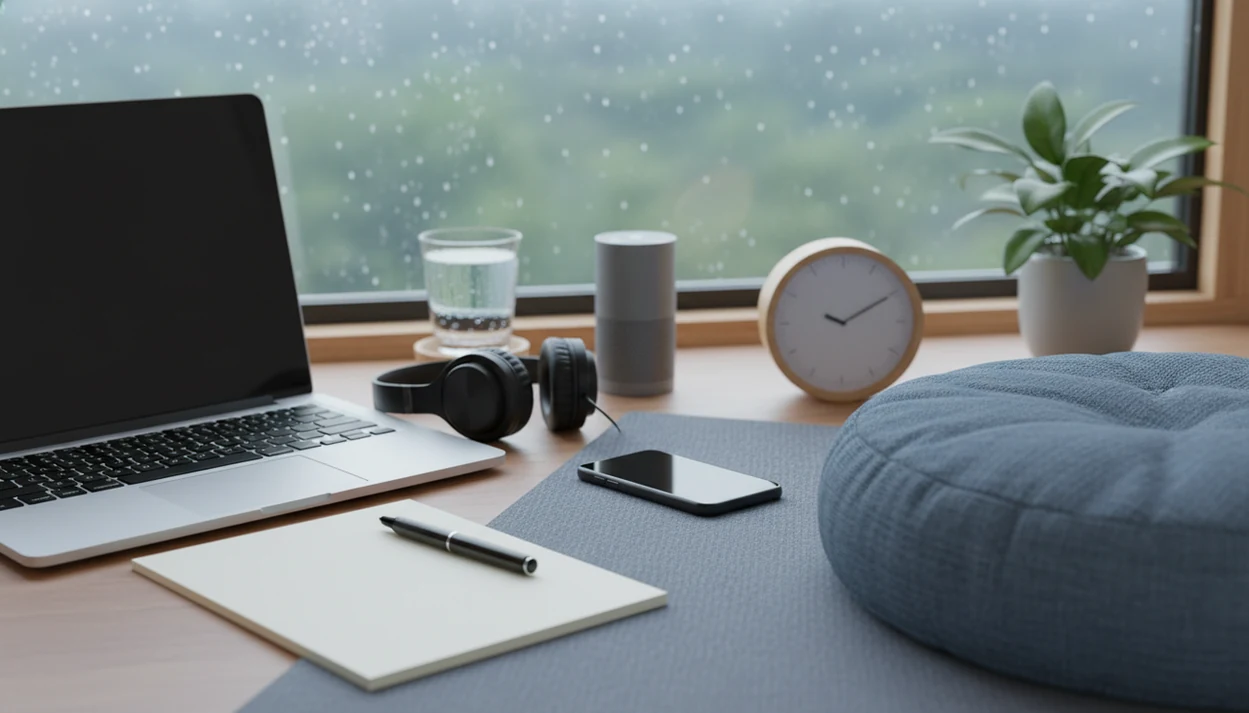


Choose ambient audio to mask outside distractions during work or study; choose focus meditation when stress, anxiety, or racing thoughts are making attention difficult. In the ambient audio vs focus meditation comparison, soundscapes support the task, while guided meditation provides structured attention practice. Ambient sound can suit reading, writing, coding, and repetitive work, especially in noisy rooms.
Focus meditation asks the listener to return attention to an anchor, such as breathing or body sensations. It is often better placed before work than played over a demanding task. A soundscape can accompany meditation, but passive listening is not the same practice. MindTastik offers guided sessions for adults, alongside sleep audio, breathing exercises, self-hypnosis, and sessions for anxiety support and everyday calm.
Which to choose
- Ambient audio is best for reading, writing, coding, repetitive work, and noisy environments where you want fewer distractions.
- Focus meditation is best when mental chatter, stress, anxiety, or attention fatigue is the real obstacle.
- A soundscape can support meditation, but passive listening is not the same as a guided focus meditation practice.
Ambient Audio vs Focus Meditation Comparison Table
Ambient audio is passive background sound, while focus meditation is guided or structured attention practice. The winner depends on whether your main problem is outside noise or inside distraction.
| Situation | Ambient audio | Focus meditation | Better fit |
|---|---|---|---|
| Noisy office or dorm | Rain, white noise, nature sounds, soft music | Less useful during active work | Ambient audio |
| Reading, writing, coding | Masks interruptions without requiring response | Can interrupt the task if instructions continue | Ambient audio |
| Stress before a hard task | May soothe the room | Directs breath, body, counting, mantra, or awareness | Focus meditation |
| Beginner meditation | Can be too unstructured | Gives clear prompts and timing | Focus meditation |
| Creative session | Useful if subtle and steady | Useful before starting, not always during | Depends on state |
In a U.S. workplace survey, 76% of employees said noise affected concentration, according to CDC/NIOSH CDC guidance: default.html. For many people, that makes sound masking practical, not fancy.
How Ambient Audio and Focus Meditation Work
Ambient audio helps by shaping the environment around the task, while focus meditation helps by training where attention goes. One is mostly passive support; the other is deliberate mental-state regulation.
With sound masking, a steady layer of rain, brown noise, or soft nature sound makes sudden voices, clicks, and hallway noise feel less sharp. The brain still hears the room, but the contrast is lower. Repeated sound cues can also become an attention anchor: you press play, open the same document, and the ritual tells your mind that work has started.
Guided focus meditation works differently. It asks you to place attention on the breath, body, counting, or a phrase, then notice wandering and return without turning it into a fight. That return is the training. Results change with task complexity, stress level, volume, and fatigue. Simple admin work may pair well with background audio; complex reasoning may need silence or a short meditation first.
Ambient Sounds for Work Focus and Noise Masking
Ambient sounds for work focus use masking: steady background sound can make sudden noises feel less sharp. They also use anchoring, where the same soundscape becomes a cue to begin focused work.
That cue matters on scattered days. You open the laptop, put on the same low rain track, and the brain gets a small “we’re starting now” signal. Not magic. Just repetition.
Ambient audio does not create mindfulness benefits automatically. Passive listening can help you work, but it is not the same as noticing breath, posture, thought loops, or attention drift. The CDC/NIOSH has also noted that workplace noise can contribute to stress and reduced performance, not only hearing loss. Still, personal fit is real. Rain may steady one person and irritate another after three minutes.
For a closer look at sound used inside practice, compare concentration music for meditation.
10-Minute Guided Focus Meditation Sessions
A 10-minute guided focus meditation is active attention placement, not background listening. The audio tells you where to rest attention, then helps you return when the mind wanders.
Common anchors include breath, body sensations, counting, a short mantra, or simply noticing distractions without chasing them. That structure can bridge everyday calm, anxiety support, and daytime concentration. It can help someone who wants a steady voice in a quiet room when attention starts to scatter.
Mindfulness evidence is broader than direct head-to-head research on soundscapes vs focus meditation. A 2014 review found small to moderate reductions in anxiety symptoms across clinical and nonclinical samples. The review was published in JAMA Internal Medicine and is indexed at PubMed PubMed research: 24395196. A 2021 randomized trial also found that a 10-minute guided mindfulness audio reduced acute stress measures in healthy adults compared with control audio PubMed research: 34103189.
For stress-heavy work blocks, a focus meditation app can make the starting point easier.
Evidence Behind Ambient Audio vs Focus Meditation
The evidence is useful, but uneven: workplace noise research supports the case for ambient audio, while mindfulness research supports guided focus meditation. Direct head-to-head studies comparing the two for everyday concentration are still limited. Understanding common misconceptions about focus helps distinguish evidence-based attention support from promises of effortless productivity.
CDC and NIOSH materials treat noise as more than a hearing issue; distracting sound can interfere with concentration, communication, stress, and performance. That supports the practical idea behind soundscapes: reduce the contrast of disruptive noise so the task feels easier to stay with. Mindfulness research comes from a different lane. Reviews and trials generally test guided attention, breathing, body awareness, or brief mindfulness audio, with stronger evidence for stress and anxiety reduction than for guaranteed productivity gains.
A fair reading separates the outcomes:
- Measure focus separately. Ask whether you stayed with the task longer or returned faster after distraction.
- Measure stress separately. Notice whether tension, worry, or emotional reactivity changed before work.
- Measure productivity separately. Track output, accuracy, or completion, not just whether the session felt calm.
- Compare within your own routine. Try ambient audio during work and meditation before work, then judge by the task result.
Best Tasks for Soundscapes vs Focus Meditation
Task type and mental state matter more than the audio format alone. Ambient audio often supports active work, while focus meditation helps when attention feels emotionally tangled. For sustained engagement in everyday tasks, explore how flow state for daily focus differs from simply feeling relaxed.
Ambient Audio Is Best For
- Reading dense material, writing drafts, coding, design work, admin work, and repetitive tasks.
- Noisy spaces where voices, doors, or traffic keep pulling you away.
- Self-directed workers who do not want spoken guidance during the task.
Focus Meditation Is Best For
- Starting difficult work after stress, conflict, or attention fatigue.
- Moments when mental chatter is louder than the room.
- Beginners who need a guide instead of a blank timer.
For students, the same rule applies before exams or long reading blocks; study meditation for students is more useful when worry is the blocker.
Neither Option Is Best For
- Severe sleep loss, overload, crisis-level anxiety, or tasks needing silence.
- Situations where calmer feelings replace actual progress. Calm does not always mean productive.
How to Use Ambient Audio and Focus Meditation in a 25-Minute Routine
Use focus meditation first when you feel scattered, then use ambient audio for the work itself. This keeps the guided session from competing with reading, writing, coding, or deep thinking. A flow state meditation practice can provide another structured way to prepare your attention before a demanding work block.
- Choose your state. If you feel tense or mentally noisy, start with a 3 to 5 minute guided focus meditation.
- Set the work block. Pick one task for 20 minutes, such as editing a report or solving one coding problem.
- Switch the audio. Move from spoken guidance to low-volume rain, brown noise, or another steady soundscape.
- Keep volume modest. Set it low enough that it supports attention without becoming the main event.
- Repeat one cue. Use the same soundscape when it helps your brain recognize work-start time. For a broader habit-building perspective, consider how meditation supports success through consistent attention practice rather than quick productivity promises.
- Review the result. Ask whether the audio improved focus, calm, both, or neither.
For single-task routines, deep work meditation pairs well with this kind of short reset.
When a focus meditation needs to stop or change
Meditation is not always calming. The NCCIH summary of meditation safety cites a review of 83 studies involving 6,703 participants in which approximately 8% experienced a negative effect, most commonly anxiety or depression. That estimate covers varied meditation practices, not just brief focus recordings. If a session increases distress, stopping is more appropriate than treating discomfort as something that must be overcome.
A shorter session, different posture, less sensory input, or mindful movement may be a better option when standard instructions feel uncomfortable. These adjustments can matter for sensory sensitivity, disability, or trauma history. For ADHD, NCCIH describes the evidence as mixed and inconclusive. Meditation can be an additional self-regulation practice, but it should not replace prescribed treatment or delay professional assessment when concentration problems persist.
Five Facts About Ambient Audio vs Focus Meditation
- Ambient audio reduces distraction; focus meditation trains attention.
- Soundscapes can feel calming, but they are not automatically meditation.
- Beginners often benefit from guided structure because it tells them what to do next.
- Self-directed workers may prefer ambient sound during active tasks because there are no spoken prompts.
- The same rain track can be a productivity aid in one context and a meditation aid in another.
For anxious attention, focus meditation usually works better before the task, while ambient audio usually works better during the task because it does not compete with working memory.
Meditation apps for sleep anxiety and everyday calm should deliver clear routines and supportive practice, not cure claims or pressure to perform.
Guided sessions for racing thoughts before work
MindTastik’s focus sessions and breathing exercises suit a pause before demanding work, particularly when meeting tension or racing thoughts are the main distraction. Its guided meditation library provides spoken structure for people who prefer instructions to an unguided pause. Someone already absorbed in reading or coding may prefer quiet or a steady soundscape instead. Guided audio is not the best fit when spoken prompts compete with the task, and the app is not a medical treatment.
What soundscapes and focus meditation cannot fix
Ambient audio and focus meditation can support concentration, but neither solves every focus problem. Use them as tools, not as proof that you are “doing productivity right.”
- Ambient audio can mask distractions, but it does not fix overload, poor sleep, or severe anxiety by itself.
- Guided focus meditation can feel frustrating when someone is very restless, time-pressed, or already being interrupted.
- Soundscape benefits vary by task, mood, headphones, volume, room noise, and personal preference.
- Claims about specific frequencies, healing sounds, or universal productivity effects are often overhyped.
- There is less direct research comparing ambient audio against guided focus meditation head-to-head for everyday work performance.
- Silence may outperform both when the task is complex or the audio becomes another stimulus.
- MindTastik supports sleep, anxiety, and everyday calm, but it is not a replacement for medical care, therapy, or emergency support.
Clinicians typically recommend professional support when anxiety, insomnia, or distress disrupts daily life.
When adjusting the audio becomes another distraction
A useful sign you picked the wrong tool is that you keep adjusting it instead of returning to the task. Ambient audio tends to work best when it disappears into the background, while focus meditation is better when your attention needs a deliberate meeting reset. If the sound becomes another thing to manage, a short guided breathing exercise may be the cleaner choice.
Ambient audio and focus meditation questions
Is listening to rain sounds the same as meditating?
No. Rain sounds played during work are usually passive background audio. Meditation involves deliberately noticing an anchor and returning attention when it wanders. The same rain recording can serve either purpose: masking room noise during writing, or acting as a sound anchor during a separate attention practice.
Is ambient audio or guided meditation better for studying?
Ambient audio is often the more practical choice during reading or problem-solving because it does not require responding to instructions. Guided meditation fits better before studying when stress or racing thoughts are the obstacle. Neither is guaranteed to improve learning, and silence remains a reasonable option when sound adds distraction.
Can I combine focus meditation with background sounds?
Yes. A soundscape can accompany a meditation, or the two can be used in sequence. The page’s work routine starts with 3 to 5 minutes of guided practice, then switches to low-volume ambient audio for a 20-minute task. This keeps spoken instructions from competing with reading or writing.
Is silence better than background audio for concentration?
It can be. Ambient audio is most useful when it makes disruptive room noise less noticeable without becoming another distraction. In a quiet setting, adding sound may serve no purpose. The better choice depends on the task, room, and personal preference, rather than a rule that concentration always requires audio.
Does focus meditation help with ADHD?
Evidence that meditation manages ADHD symptoms is not conclusive. It may be used as an additional self-regulation practice, with shorter sessions or adjusted instructions when needed. Neither meditation nor ambient audio replaces ADHD assessment, prescribed medication, or other recommended care. Persistent concentration difficulties deserve attention beyond choosing a recording.
Does concentration music actually improve attention?
Some evidence is encouraging, but it does not establish a universal benefit. A 2024 experiment found that preferred background music was associated with greater task focus and less mind-wandering during a vigilance task. That finding does not mean every playlist improves sustained attention, or that results transfer to every kind of work.