
How To Stop Procrastinating: A Practical Guide to Starting Now
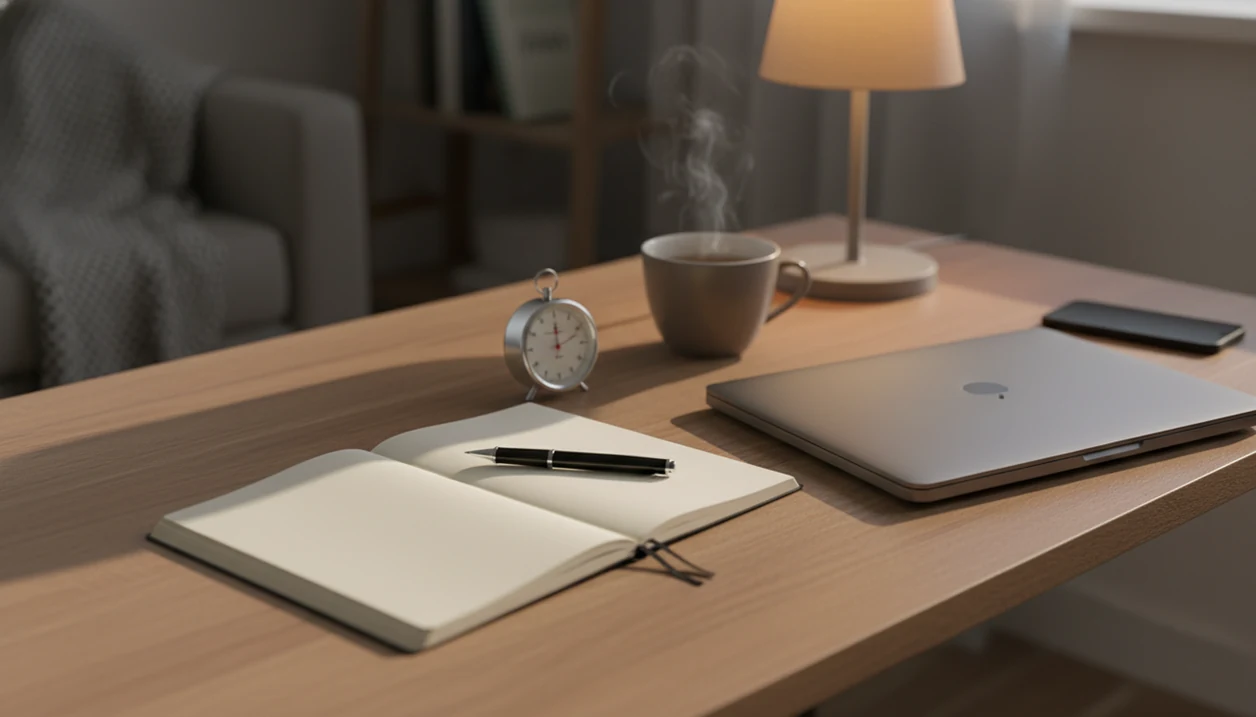


To stop procrastinating, choose an action small enough to begin within five minutes, address the feeling that makes the task unpleasant, and remove the easiest distraction. Procrastination means delaying an intended task despite expecting that delay to make things harder later. It is usually not simply laziness: avoiding an uncomfortable task provides immediate relief, even when the unfinished work creates more pressure tomorrow.
A useful starting plan combines a concrete next step, a short timer, and fewer opportunities to switch away. Anxiety, perfectionism, boredom, and poor sleep can each make starting harder, so the response needs to match the obstacle. Calming practices can help with task anxiety, while clearer instructions help with ambiguity. The first goal is contact with the task, not a finished project or a perfect productivity system.
Start here
- Start with a 5-minute action, not a full task or a perfect plan.
- Use focus timers, distraction barriers, and accountability to make starting easier.
- Address anxiety, perfectionism, boredom, and poor sleep because emotions often drive procrastination more than time management does.
Procrastination Definition And 20-25% Adult Prevalence
Procrastination is a self-regulation problem, not a simple laziness problem. It happens when the relief of avoiding a task wins over the longer-term plan to finish it.
A large meta-analysis in Psychological Bulletin found that procrastination is closely tied to task aversiveness, delay, impulsiveness, and self-regulation; prevalence estimates commonly describe roughly one in five adults as chronic procrastinators (doi reference: 0033 2909.133.1.65). That matters because the person staring at an unopened document at 9:42 p.m. is not rare, broken, or uniquely undisciplined. They are dealing with a common pattern.
Avoidance works briefly. You skip the email, close the assignment tab, or check your phone, and your body relaxes for a minute. Later, the same task returns with more pressure attached.
The realistic goal is not to eliminate delay forever. The goal is to procrastinate less often, notice it sooner, and recover faster when you drift.
Five Procrastination Facts For Faster Task Initiation
- Procrastination is short-term mood repair beating long-term planning. The task feels unpleasant, so the brain chooses relief now.
- Tiny first steps beat vague motivation goals. “Open the file and write one rough sentence” works better than “be productive.”
- Anxiety, perfectionism, boredom, and fear of failure are common triggers. The problem often starts before the timer does.
- Focus timers, app blockers, and accountability reduce digital distraction loops. A phone across the room changes the decision.
- Mindfulness can support starting by improving awareness, attention, and anxiety regulation. One randomized trial found that two weeks of mindfulness training reduced procrastination and increased task initiation. Cite the specific trial inline here, or replace with: 'Early mindfulness research suggests meditation training may reduce avoidance and improve self-regulation, but effects vary by population and study design (doi reference: s12671 012 0159 9).'
Students see this pattern often. University student procrastination rates have been reported as high as 50-60%, with most students procrastinating at least sometimes. For study-specific routines, study meditation for students can pair calm breathing with a short work block.
Procrastination Mechanics In The Brain And Body
Procrastination works through a tug-of-war between emotional avoidance and executive planning. In plain language, one part of you wants relief, and another part knows the task still matters.
Hard, boring, ambiguous, or high-stakes tasks trigger avoidance because they create discomfort before they create progress. A blank slide deck can feel bigger than it is because there is no obvious first move. A tense email can feel dangerous because it might lead to conflict.
Stress and anxiety make the first step feel heavier. Poor sleep does the same. The CDC says most adults need at least seven hours of sleep, and short sleep is associated with worse health and daily functioning, which can make task initiation harder (CDC guidance: index.html).
The body keeps score here.
If you are trying to build longer focus blocks, deep work meditation can help you practice returning attention without turning that practice into another productivity performance.
Before You Start: Pick The Right Procrastination Trigger
Before you use a timer or reset plan, choose the task and the reason you are avoiding it. The right tactic depends on whether the delay is fueled by anxiety, boredom, perfectionism, ambiguity, or low energy.
- Choose one delayed task. Do not pull your whole backlog into the room. Pick the email, form, chapter, invoice, or decision that matters most right now.
- Name the main trigger. Say it plainly: “This feels anxious,” “This is boring,” “I do not know the next step,” “I want it to be perfect,” or “I am tired.”
- Set a first block under ten minutes. Make the opening round small enough that your brain cannot turn it into a full-day commitment.
- Remove the most likely distraction. Move the phone, close the extra tab, mute notifications, or put the snack, app, or inbox out of reach before the timer starts.
- Get extra help when the pattern is severe. If procrastination is damaging work, school, health, money, or relationships, or appears with ADHD, depression, anxiety, trauma, burnout, or sleep symptoms, professional support is part of the plan.
5-Minute Procrastination Reset Plan
Use this reset when you are stuck, scrolling, or circling the task without touching it. The goal of the first session is starting, not finishing.
- Name the exact task and why it matters. Say, “I need to outline the client email because it prevents a rushed reply tomorrow.”
- Shrink the task to a 5-minute starting action. Open the draft, title the page, list three bullets, or find one source.
- Set a timer for 5 to 10 minutes. Keep the timer visible enough to trust it, but not so prominent that you watch every second.
- Block or move the most tempting distraction. Put the phone in another room, mute Slack pings, or close the shopping tab.
- Review what happened and choose the next small action. If you started, continue for another short block. If not, shrink the action again. For a more structured approach, try these 12 steps to achieve deep focus after completing your first short block.
Start embarrassingly small.
For workdays where attention keeps scattering, focus meditation for work can sit before the timer rather than replacing the work itself.
Protect the first work block from repeated switching
Starting is only part of the problem if every message pulls attention away again. A review of laboratory task-switching research found that responses immediately after a switch were substantially slower and usually more error-prone. Preparation reduced these costs but did not remove them. This supports protecting a short work block, although it does not establish a particular improvement in everyday productivity.
For the first block, keep a scrap of paper beside the task. Record unrelated reminders instead of opening another tab to handle them. Group messages into a later communication window where responsibilities allow. These are practical applications of the switching evidence, not a tested cure for procrastination. At the timer’s end, record the next concrete action before deciding whether to continue, so returning does not require planning from scratch. During screen-heavy work blocks, use the 20-20-20 rule as a mindful pause to rest your eyes.
Procrastination Tips By Trigger Type
Diagnose the trigger before choosing the tactic. A boredom problem, a fear problem, and a sleep problem need different fixes.
| Trigger type | What it feels like | Corrective action |
|---|---|---|
| Overwhelm | “This is too big.” | Choose one tiny step that takes five minutes or less. |
| Boredom | “I cannot make myself care.” | Add novelty, change location, or pair the task with a focus playlist. |
| Perfectionism | “If I can’t do it well, I won’t start.” | Make a rough draft that is allowed to be awkward. |
| Fear of failure | “What if this proves I’m not good enough?” | Take three calming breaths, then create a low-stakes first version. |
| Phone distraction | “I’ll just check one thing.” | Use blockers, grayscale, distance, and timed access windows. |
| Low energy | “My brain feels slow.” | Improve sleep routines and schedule demanding tasks earlier. |
For many people, a 5-minute breathing exercise beats a 20-minute planning session because it lowers the barrier to movement. If boredom keeps you stuck, a mindful exercise workout can provide a brief movement break before returning to your task.
MindTastik Procrastination Support For Calm, Focus, And Sleep
It can support a procrastination system, but it should not replace planning, accountability, therapy, or medical care.
If you are comparing guided meditation options, Calm, Headspace, and Insight Timer are the closest alternatives; compare them by sleep-library depth, voice preference, session length, and whether you still need separate blockers or timers.
Helpful use cases include:
- Pre-work calming session: Use a short guided session before a task that feels threatening.
- Focus breathing before a timer: Breathe for two minutes, then start the 5-minute reset.
- Sleep audio for next-day concentration: Try bedtime audio when racing thoughts make tomorrow’s focus harder.
Mindfulness research suggests training can reduce procrastination and anxiety for some people. Self-hypnosis sessions may also support habit reinforcement, as long as they are treated as supportive practice, not medical treatment. The practical question about using MindTastik at bedtime is simple: does the session help you begin tonight’s routine?
Common Procrastination Mistakes And Corrective Actions
Waiting for motivation is the first trap. Correct it by starting before you feel ready, using a task so small that motivation is optional.
Building a complicated productivity system can become another form of delay. Correct it by choosing one timer, one task list, and one next action. The setup should take less time than the work block.
Shame is unreliable fuel. It may create one frantic sprint, but it often increases avoidance the next time the task appears. Correct it with a neutral review: “What blocked me, and what is the next smaller move?”
Vague goals also keep procrastination alive. “Work on project” is foggy. Correct it with “write the first paragraph,” “rename the file,” or “send the meeting note.”
Ignoring sleep, anxiety, and digital distraction makes the plan brittle. Correct it by protecting bedtime, using blockers, and adding calming support when your body feels keyed up. For a plain-language overview, meditation for productivity without hype explains where meditation helps and where it does not.
A short calming session before an avoided task
MindTastik’s focus sessions and guided meditations suit a brief pause before work that feels stressful. Its breathing exercises are another option before opening an avoided email or draft. Give the pause a clear endpoint: the next step should be contact with the task, not another session.
When the obstacle is unclear instructions, competing deadlines, or constant notifications, task planning and distraction controls are the better first choice. Persistent difficulties may need professional support. MindTastik is not a medical treatment, and calmer feelings do not by themselves complete the work.
When smaller steps are not enough
Self-help strategies can reduce procrastination, but they do not solve every cause. Be honest about what is underneath the delay.
- Procrastination linked to ADHD, depression, severe anxiety, trauma, or burnout may need professional support.
- Meditation apps can support focus and calm, but they are not stand-alone cures.
- Productivity apps can create a novelty effect that fades after the first week or two.
- Some tasks remain boring, stressful, or unfair even when your system is good.
- Strategies need personalization. You may need several experiments before one fits.
- Poor sleep, heavy workload, caregiving, pain, or health issues can limit results.
- Accountability helps some people, but it can feel shaming if the relationship is harsh.
- If procrastination is damaging school, work, money, or relationships, extra support is reasonable.
Clinicians typically recommend looking at persistent procrastination in context, especially when it appears with mood, anxiety, attention, or sleep symptoms.
Choose the first screen before reopening the laptop
- If the task is already clear, do not start with a long meditation; use a 60-second desk pause and write the first visible action.
- If procrastination shows up after a tense meeting reset, choose breathing exercises before planning, because a calmer body often makes the next step feel less loaded.
- If your laptop is closed and you keep reopening easier tabs, leave it closed for two minutes and decide on paper what screen should appear first.
- If you only have a calendar gap between calls, pick a short guided meditation rather than a full productivity routine; the win is re-entry, not reinvention.
- If you are avoiding a task because it is vague, meditation alone may not be the best choice; define the smallest deliverable first.
Questions about stopping procrastination
Why do I procrastinate even when a task matters to me?
Importance does not make a task comfortable. Anxiety, boredom, uncertainty, or fear of doing it badly can make avoidance feel better in the moment. Identify the immediate obstacle, then choose a response that fits it: clarify an unclear instruction, allow a rough draft, or reduce the opening action to a few minutes.
How do I start a task I have been avoiding for weeks?
Choose one visible action rather than trying to recover all the lost time. Open the document, locate the form, or write three rough bullets. Set a five-minute timer and put the main distraction out of reach. Afterward, note what blocked progress and choose the next small action. Finishing is not required in that first block.
What is the two-minute rule for procrastination?
The two-minute rule makes the opening action short enough to begin without a large commitment. For a report, that might mean opening the file and writing its working title, not completing the report. It is a starting tactic, not a guarantee of continued focus. If the action still feels too large, make it more specific.
How do I stop procrastinating on studying?
Replace “study” with a small, observable action, such as answering one practice question or outlining one section of notes. Choose the materials before starting the timer and move the phone away. If the obstacle is confusion about the assignment, clarify what is required first. A longer study schedule will not resolve an undefined task.
How do I stop checking my phone instead of working?
Make checking less convenient before the work block begins: put the phone in another room, silence nonessential alerts, or use a blocker. Keep one task visible and write down urges to check rather than acting on them immediately. Where work responsibilities allow, reserve a separate time for messages instead of checking continuously.
How can I stop procrastinating because of perfectionism?
Define what a deliberately rough first version will contain. An email may need only its purpose and three points; a presentation may begin with slide titles. Separate drafting from editing so quality decisions do not block the first sentence. The aim is not careless work, but a version that can be revised once it exists.
Can meditation help with procrastination, or become another distraction?
A short calming practice can support starting when task anxiety is the obstacle, but it cannot choose priorities or complete the task. Set a clear endpoint and follow it by opening the relevant file or message. If repeated sessions keep replacing work, shorten the pause and clarify the next action instead.
When should I get help for procrastination?
Consider professional support when delay repeatedly disrupts work, study, finances, or daily responsibilities, especially alongside severe anxiety, depression, possible ADHD, or burnout. Procrastination alone does not establish a diagnosis. Small-step strategies may still be useful, but they should not replace assessment or care when the underlying difficulty extends beyond task planning.