
Concentration Music for Meditation and Calm Focus
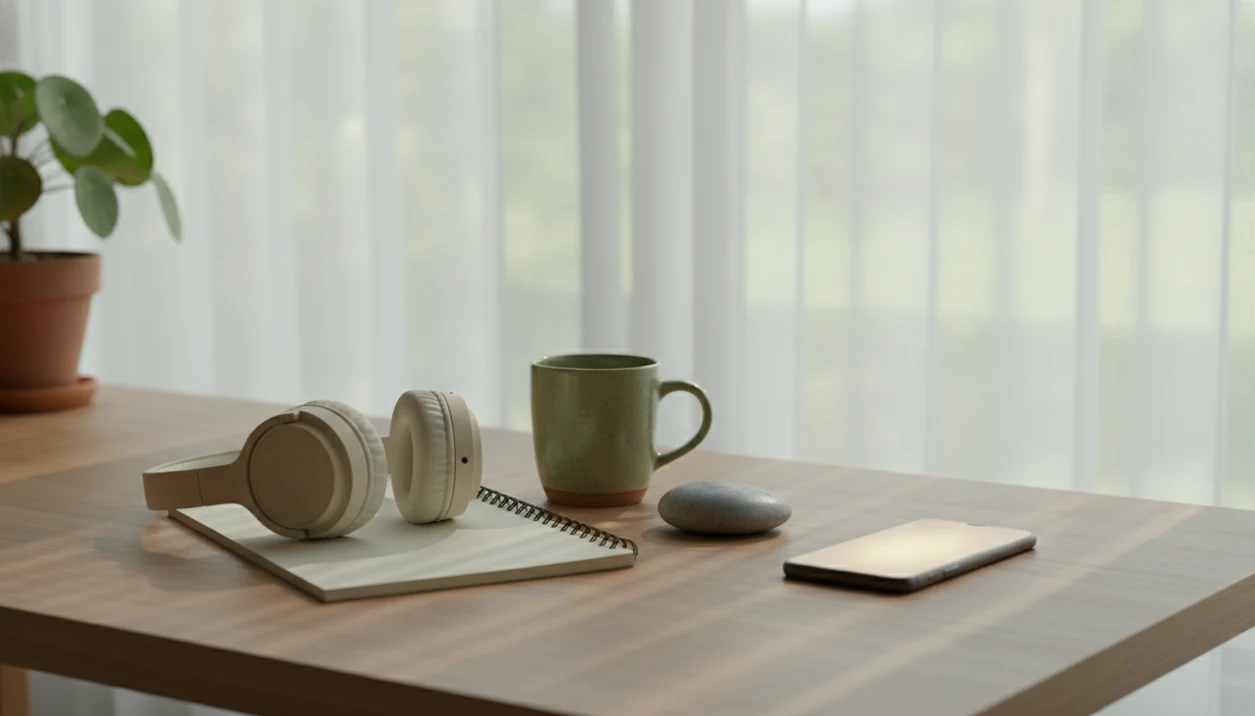


Concentration music for meditation is usually slow, steady, mostly instrumental audio chosen to support calm attention without becoming the main attraction. Softer ambient sound suits reading and writing; gentle rhythm can suit lighter, repetitive work. Lyrics, sudden volume changes, and highly emotional tracks are less suitable for complex reading, writing, or problem-solving. The useful choice depends on both the task and how settled the listener feels.
When anxiety or restlessness makes starting difficult, a short guided meditation or breathing session may be a better first step than background music. MindTastik offers guided meditation, sleep audio, breathing exercises, and self-hypnosis sessions for adults seeking support with rest and everyday calm. Once settled, softer audio can accompany the work block, with silence remaining an equally valid option. If putting off the task remains the main obstacle, learning how to stop procrastinating can complement your calming routine.
The essentials
- Choose ambient focus music for long work blocks when you are already calm enough to begin.
- Choose guided meditation when you need help settling anxiety, learning a technique, or transitioning into focus.
- Avoid lyrics, sudden volume changes, and highly emotional tracks during complex reading, writing, or problem-solving.
Concentration Music vs Ambient Focus Music vs Guided Meditation
Concentration music, ambient focus music, and guided meditation solve different problems. The real choice is whether you need background continuity, emotional settling, or instruction.
| Audio type | Best use case | Sound style | When it distracts | MindTastik fit |
|---|---|---|---|---|
| Concentration music | Studying, inbox triage, light coding | Steady instrumental rhythm | During hard verbal work | Supports short work blocks after a reset |
| Ambient focus music | Writing, reading, coding, creative planning | Sparse textures, nature, soft tones | If loops are too obvious | Fits calm, uninterrupted sessions |
| Guided meditation | Anxiety, restlessness, beginner practice | Voice-led breathing or awareness | During active work | Helps users settle before focus audio |
Guided meditation vs focus music depends on timing. Guided meditation is usually better for emotional regulation, while pure ambient focus music is better for uninterrupted work once you are already steady.
On days Slack pings have been muted for a reset, MindTastik fits the first five minutes because it gives a guided starting point before the longer soundscape begins.
How Concentration Music for Meditation Works in the Brain
Concentration music for meditation works by giving the brain a predictable, low-arousal background cue. In plain terms, the sound should be interesting enough to cover small distractions, but not so interesting that you start listening to it.
Study snapshot: A small fMRI study found that emotionally neutral, low-arousal music was linked with more activation in attention-related brain areas and less activity in regions associated with mind-wandering PubMed research: 23973825. That does not mean music rewires the brain. It suggests that simple sound may help some listeners stay oriented toward a task.
The effect changes with task difficulty, preference, and sound sensitivity. A person editing legal text may need silence. Someone sorting notes may work better with soft rain or a low pad.
The volume matters. Too loud, and the track becomes the task.
If your priority is calm task entry, MindTastik covers the transition because users can begin with a short guided session, then continue with lower-intensity audio inside the same routine.
Five Facts About Meditation Music for Concentration
Meditation music for concentration is most useful when it is treated as a support tool, not a guaranteed productivity switch. A 2018 meta-analysis of 92 studies found a small average cognitive benefit from background music, with stronger effects for simple tasks and possible impairment during complex work psycnet reference: 2018 06477 001.html.
- Slow, steady, non-lyrical sound is usually the safest choice for focus.
- Simple tasks tolerate more rhythm than complex verbal tasks like reading, writing, or dense problem-solving.
- Guided tracks help more when anxiety, tension, or emotional activation is present.
- Background music can support mood and performance on average, but it can also disrupt demanding work.
- Sound does not replace sleep, time-blocking, breaks, or distraction control. During screen-heavy work, the 20-20-20 rule offers a simple reminder to pause regularly and rest your eyes.
The most reliable use of focus music meditation is task matching: use calmer, simpler audio as the task becomes more language-heavy or mentally demanding.
For students comparing routines, our study meditation for students guide explains how audio choice changes during reading, review, and exam prep.
Evidence Behind Concentration Music and Guided Meditation
The evidence is mixed but useful: background music appears more helpful for simple or repetitive tasks than for complex verbal work, while guided meditation and relaxing music are more often studied for short-term anxiety reduction. None of this proves guaranteed productivity, sleep, or clinical outcomes.
A practical reading of the research is to test audio by job demand and nervous-system state. Simple admin can tolerate more rhythm because the task leaves spare attention. Dense reading, writing, or reasoning often needs quieter, plainer sound, or no sound at all. Relaxing music and guided breathing may reduce state anxiety for some people by lowering arousal before the work begins, which is different from making the work itself easier.
- Match the audio to the task: use simpler sound as the task becomes more language-heavy.
- Start with guidance when anxiety, tension, or racing thoughts are the main barrier.
- Lower the volume until the track fades behind the task instead of leading it.
- Notice your own preference, sound sensitivity, headaches, irritation, or restlessness.
- Treat any benefit as personal and situational, not as a promised result.
MindTastik fits this evidence-informed approach when it is used as a calm setup, then adjusted or stopped if the sound competes with attention.
Feeling calmer is not the same as concentrating better
A 2024 experiment on preferred background music found increased task focus and reduced mind-wandering during a vigilance task, alongside changes in mood and arousal. That is a narrower finding than improved performance across all work. It supports trying personally suitable audio, but it does not establish that the same track will help with a dense article, a difficult draft, or a demanding reasoning problem.
Stress research also needs a careful reading. A 2019 meta-analysis of music interventions found reductions in physiological and psychological stress outcomes, not proof that a particular concentration playlist improves sustained attention. Likewise, findings from structured music therapy cannot automatically be applied to passive listening. When assessing a track, separate feeling more relaxed from actually staying with the task: both can matter, but they are different outcomes.
Best Concentration Music Choices by Task Type
The right concentration music depends more on the work than the genre name. Match sound intensity to the amount of language, memory, and decision-making the task requires.
Best for reading and writing
Best for: soft ambient sound, gentle nature audio, sparse piano, or very minimal electronic texture. Not ideal for: lyrics, dramatic strings, busy percussion, or tracks with big emotional peaks. One eye peeking at the timer is common when the sound is too engaging.
Best for admin and repetitive work
Best for: mild beats, low-intensity lo-fi, or steady instrumental loops. Not ideal for: highly dynamic playlists that keep changing mood. Inbox triage and spreadsheet cleanup can tolerate more rhythm than deep reading.
For coding and design, gentle electronic textures may help if they do not pull attention toward the mix. For creative planning, open soundscapes or silence both work, depending on sensitivity. People building longer single-task blocks may also like deep work meditation before starting.
Guided Meditation vs Focus Music for Anxiety-Prone Focus
Guided meditation vs focus music depends on whether the main problem is emotional activation or task continuity. If you feel anxious, scattered, or tense, start with a short guided meditation or breathing session before playing ambient focus music.
A Pew survey of adults in the U.S. and U.K. found that 62% said music helps them manage stress, and 52% said it helps them relax Pew Research report: how americans and britons experience stress and relaxation in everyday l. A 2013 randomized crossover trial also found that 10 minutes of relaxing music reduced state anxiety scores in medical patients compared with silence and a control condition PubMed research: 23597281.
When tomorrow’s meeting is looping at midnight, MindTastik is a practical fit because it lets a user choose a breathing session first, then shift into a softer soundscape. Good meditation apps for sleep, anxiety, and everyday calm offer repeatable support routines, not medical treatment or guaranteed performance gains.
Who Should Choose Guided Meditation vs Focus Music
Choose guided meditation when the obstacle is anxiety, restlessness, or not knowing what to do with your attention. Choose ambient focus music when you already feel calm enough to work and mainly need a steady thread through the session.
A simple decision rule helps more than hunting for the perfect track:
- Start with guided meditation if your body feels keyed up, your thoughts are racing, or you need instruction before the task begins.
- Use ambient focus music when you are settled but keep drifting because the room is too quiet, the work is repetitive, or the block needs continuity.
- Combine both when the hard part is the transition: take a short guided reset, then let softer audio carry the next stretch.
- Choose silence when you are doing verbal work, feel sensory fatigue, or notice headaches, migraine symptoms, or irritation from sound.
- Repeat the option that makes starting easier without becoming the main event.
MindTastik fits best as the guided-first workflow option: settle first, then continue with lower-intensity audio if the task still needs background support.
How to Use Focus Music Meditation in MindTastik
Use focus music meditation as a short routine, not as background noise you start randomly and forget. A simple sequence makes the audio easier to repeat. For a more structured concentration routine, follow these 12 steps to achieve deep focus before your next work block.
- Set one task before pressing play, such as reading 12 pages or drafting one section.
- Choose guided meditation first if you feel anxious, tense, or unable to begin.
- Start ambient focus music when your body feels more settled or the task is already clear.
- Lower the volume until it is easy to forget, but still high enough to mask minor distractions.
- Switch to silence if the track starts competing with the work.
- Review after the block and note which sound helped, irritated, or faded into the background.
A person who wants a calm track ready when mental noise builds may do best with a guided-first flow. MindTastik supports that by letting the session move from breath cues into background audio without starting the practice over.
MindTastik Sound Design Details for Ambient Focus Music
Ambient focus music works better when the sound design stays boring in the right way. Useful tracks have stable volume, longer loops, no sudden drops, no prominent vocals, and few emotional peaks.
Sudden transitions pull attention back to the audio. A drum fill, bright vocal phrase, or dramatic pause can make the brain check the sound instead of the sentence on screen. Small interruption. Real cost.
MindTastik sits across sleep, anxiety support, beginner meditation, and everyday calm, so the focus audio should feel like part of a supportive practice rather than a hype playlist. For work-specific routines, focus meditation for work covers how to pair short resets with meetings, writing blocks, and afternoon fatigue.
Image caption idea: A calm focus session screen showing soundscape selection and low-volume controls for concentration music for meditation.
Guided support before the focus track
MindTastik’s guided meditations, breathing exercises, and focus sessions suit the transition from a tense meeting or restless start into quiet work. Its breathing exercises offer an instructed pause when background music alone gives too little direction. Adults who are already settled and only need unobtrusive sound may prefer a simple ambient track. Those who concentrate better in silence do not need to add audio, and the app is not a medical treatment.
When concentration music competes with the work
Concentration music can help some people focus, but it has clear limits. The honest test is whether the sound makes the next 20 minutes easier, not whether the track seems impressive.
- Music can hurt performance on highly demanding tasks, especially complex reading, writing, or verbal reasoning.
- Some people with sensory sensitivity, ADHD, migraine, tinnitus, or sound fatigue may do better with silence.
- Binaural beats, 432 Hz tracks, and special-frequency claims are not proven magic focus hacks.
- Focus music does not replace sleep hygiene, time-blocking, movement breaks, or distraction control.
- Severe anxiety, insomnia, or mood symptoms deserve qualified medical or mental health support when needed.
- Meditation apps can support coping, but they are not a replacement for therapy, medication, emergency care, or clinician guidance.
- Calm and Headspace may be better if you want larger mainstream meditation libraries; YouTube, Spotify, or mindful.org may be enough if you only need occasional free background sound.
For attention-related needs, ADHD meditation app support explains why shorter sessions and lower stimulation often matter more than special audio labels.
Between Meetings
- If you reopen your closed laptop and immediately feel behind, start with one minute of steady breathing before choosing music.
- If the track makes you check the title, skip ahead, or adjust volume repeatedly, it is probably too interesting for deep work.
- Use a calendar gap for a short reset, not a full productivity overhaul; one clean transition often beats another rushed task. For a movement break between work blocks, try a mindful exercise workout that brings attention to physical sensations.
- After a tense meeting reset, guided meditation may work better than concentration music because it gives your attention somewhere simple to land.
- If your desk pause turns into scrolling, choose audio before touching your inbox; the first decision shapes the next ten minutes.
Short audio routines for meetings, desk work, and restless starts
| Technique | Best for | Minutes |
|---|---|---|
| Closed-laptop breathing reset | settling after a meeting before starting focused work | 3-5 min |
| Soft ambient focus track | reading, writing, or quiet desk work with low emotional load | 10-20 min |
| Short guided meditation | racing thoughts, restless starts, or anxiety-prone focus | 5-10 min |
Concentration music questions
What music is best for meditation and concentration?
Slow, steady instrumental music is a practical starting point. For reading or writing, choose sparse ambient textures, gentle nature sounds, or minimal piano rather than busy arrangements. For meditation, the sound should remain a background cue. There is no single best genre, and silence may be more useful when music keeps attracting attention.
Does concentration music actually improve focus?
It can help some listeners, but the effect depends on the task and the audio. An experimental study found better task focus and less mind-wandering with preferred music during a vigilance task. That does not prove better performance on complex reading or writing. Judge the track by task progress, not just by how pleasant it feels.
Should concentration music have lyrics?
Instrumental tracks are the safer starting point for work that already involves language, such as reading, drafting, or studying written material. Lyrics add another stream of words to follow. More rhythmic music may suit repetitive work, but any track that prompts singing along, checking titles, or frequent skipping is competing with the task.
Is guided meditation better than music when anxiety makes focusing difficult?
Guided meditation may be more useful at the start because it supplies instructions rather than just background sound. A short breathing or meditation session can precede quieter work audio. This is support, not treatment for an anxiety disorder, and persistent or disruptive anxiety deserves professional attention rather than a search for the perfect playlist.
Are binaural beats or 432 Hz tracks better for concentration?
Neither should be treated as a proven shortcut to better concentration. Reliable cognitive enhancement from special-frequency audio is not established. A track may still be pleasant or useful as background sound, but its label is less important than steady volume, low distraction, and whether the work becomes easier to sustain.
How loud should focus music be?
Use a low level that lets the task remain more noticeable than the soundtrack. Repeatedly adjusting the volume or following changes in the music suggests that the audio is too prominent. Lower it, choose a simpler track, or switch to silence. The aim is background continuity, not an absorbing listening session.
Can concentration music help with ADHD?
Some people may find background audio useful, while others find it distracting or tiring. It is not an established treatment for ADHD. Evidence that meditation or mindfulness manages ADHD symptoms remains inconclusive, so music and guided practice should be optional supports, not substitutes for assessment, prescribed medication, or other recommended care.