
ADHD Meditation App Support for Calm, Restless Focus


ADHD meditation app support means using short, flexible guided audio to reset attention, settle racing thoughts, and support daily routines without long silent sits. Spoken cues give attention a place to return after distraction. Breathing exercises, body awareness, and permission to move can make practice more manageable for adults who find stillness frustrating.
A meditation app can support routines around stress, bedtime restlessness, and task transitions, but it does not diagnose, treat, or cure ADHD. MindTastik offers guided meditation, sleep audio, breathing exercises, and self-hypnosis sessions for everyday calm. ADHD mindfulness research remains limited and inconclusive, according to NCCIH’s evidence summary. Audio practice belongs alongside appropriate care, not in place of assessment, therapy, coaching, or prescribed medication.
What matters most
- ADHD-friendly meditation works best when sessions are short, guided, flexible, and easy to restart after distraction.
- Mindfulness research for ADHD is promising but best understood as an adjunct support, not a replacement for diagnosis, therapy, coaching, or prescribed medication.
- MindTastik is a meditation app for sleep, anxiety support, beginner meditation, and everyday calm, with non-medical boundaries around ADHD.
ADHD meditation app support in one practical answer
ADHD meditation app support is practical help for calm focus, stress reduction, sleep routines, and emotional reset moments. It works best when the app offers short guided audio, not only long silent meditation.
For many distractible or restless users, a voice cue is easier to follow than an empty timer. The cue gives the mind somewhere to return when it wanders during the first minute. That matters when you’re choosing between opening a message thread and taking one quiet exhale first. If spoken guidance feels distracting, try concentration music for meditation as a quieter background for a short focus session.
MindTastik may support ADHD-related stress, bedtime restlessness, and everyday calm routines. It does not diagnose ADHD, medically treat ADHD, cure symptoms, or replace care from a qualified professional. For restless attention, short guided sessions are often easier than trying to sit still in silence for 20 minutes.
ADHD-friendly meditation app features compared early
ADHD-friendly meditation app features reduce friction before the session starts. The goal is support, not ADHD treatment.
| Feature | Why it matters for ADHD-style restlessness | Supportive-app fit |
|---|---|---|
| Short guided sessions | A brief starting point feels less impossible than a long sit. | Guided audio can support everyday calm and reset moments. |
| Flexible timing | Time-blindness can make rigid routines hard to keep. | Flexible sessions can fit before work, sleep, or task transitions. |
| Voice cues | Spoken prompts reduce the need for self-directed attention. | Guided meditation uses voice prompts and calming instruction. |
| Breathing exercises | Breath pacing gives the body a concrete anchor. | Breathing exercises give calm and sleep routines a concrete anchor. |
| Sleep audio | Nighttime thoughts often make focus worse the next day. | Sleep audio can support bedtime wind-down routines. |
| Restart-friendly use | Missing a day should not feel like failure. | A simple return point reduces all-or-nothing pressure. |
The useful meditation apps for sleep anxiety and everyday calm deliver repeatable cues, short reset options, and bedtime structure, not a medical plan for ADHD.
How ADHD-friendly meditation works for restless focus
ADHD-friendly meditation works by lowering the attention demand of practice. Guided audio gives the brain an external cue, so the user does not have to hold a silent focus target alone.
Breathing cues, body awareness, and voice prompts can interrupt stress loops and mind-wandering. In plain language, they give attention a handle. A prompt like “notice the next breath” is easier to use than “clear your mind,” especially when unread emails are replaying behind closed eyes.
Short repetition can also support habit loops. The same five-minute session before a study block, meeting, commute, or sleep routine becomes a familiar transition cue. For distractible adults, a guided reset before a task is often easier than waiting to feel focused first.
Research on meditation-based therapies for ADHD suggests modest to medium benefits, but the evidence supports meditation as an adjunctive practice. It should sit beside appropriate care, not replace evaluation, therapy, coaching, or medication decisions.
Five facts about meditation app for ADHD support
- Meditation-based therapies have shown modest to medium effects in ADHD research, but they are not considered stand-alone ADHD treatment (see the 2019 systematic review in Frontiers in Psychology: frontiersin reference).
- Digital mental-health tools have mixed but promising evidence for ADHD support when used alongside care (see this systematic review of digital interventions: NIH research: PMC8397997).
- App-based mindfulness studies often report improvements in stress, anxiety, mood, and sleep, though many studies are not ADHD-specific (see JMIR mHealth and uHealth review: mhealth reference).
- ADHD-friendly meditation usually needs shorter sessions, more guidance, clearer pacing, and easier restarts than standard meditation formats.
- MindTastik supports calm routines, breathing practice, sleep audio, and daily reset moments, but it does not diagnose or treat ADHD.
A meditation app for ADHD support is most realistic when it is used as a repeatable routine cue. The small win is not perfect stillness. It is returning sooner.
Evidence behind meditation app support for ADHD
The evidence behind meditation app support for ADHD is promising but limited. Mindfulness-based approaches may help attention, emotion regulation, and impulsivity for some people with ADHD, while app-based practice is best viewed as a practical delivery format, not a proven treatment by itself.
A 2019 systematic review of meditation-based therapies for ADHD found encouraging effects, but the research base still includes small samples, varied session lengths, different teacher-led and self-guided formats, and mixed outcome measures. That matters because ADHD-specific findings should not be blended too quickly with broader mindfulness results. General app studies often report improvements in stress, anxiety, mood, or sleep; those benefits can still be useful, but they are not the same as showing direct ADHD symptom control.
A realistic way to use the evidence is:
- Treat meditation as support for calmer transitions, not a cure.
- Keep clinical ADHD care separate from general wellness claims.
- Choose short guided sessions if restlessness makes silent practice hard.
- Track what changes, such as sleep, stress, task starts, or recovery after distraction.
- Discuss major ADHD symptoms, medication questions, or impairment with a qualified professional.
Best-fit and poor-fit uses for ADHD meditation app support
ADHD meditation support fits adults who want brief calming audio before tasks, meetings, bedtime, or emotional reset moments. It does not fit situations that require diagnosis, medication advice, crisis help, or professional treatment planning.
Best for
- ✓ Adults who want a short reset before focused work, studying, chores, or commuting transitions.
- ✓ Beginners who dislike long silent meditation or feel restless on the couch.
- ✓ People who need a bedtime cue, such as earbuds on a nightstand, one side tangled around a charging cable.
- ✓ Users comparing calm routines with tools like focus meditation for work.
Not for
- ✕ ADHD diagnosis, medication decisions, or deciding whether symptoms “count.”
- ✕ Replacing therapy, coaching, school accommodations, or clinical care.
- ✕ Crisis support, severe impairment, safety concerns, or worsening symptoms.
Clinicians typically recommend professional evaluation for ADHD concerns, especially when symptoms disrupt work, school, relationships, sleep, or safety.
How to use short focus meditation ADHD sessions
Short focus meditation ADHD sessions work best when they are simple enough to repeat on messy days. Start with a tiny routine, then adjust. For a more structured work routine, explore 12 steps to achieve deep focus and choose one manageable change to try.
- Choose a short session before opening the app library too long. A 3-minute or 5-minute guided session is enough.
- Set a visible cue near the task, such as headphones beside the laptop or a note on the planner.
- Start before a transition, like work, studying, a meeting, chores, or bedtime.
- Let movement be acceptable if stillness makes the session harder. You can sit, stand, stretch, or hold a pen. If sitting feels frustrating, a mindful exercise workout can bring attention practice into movement instead of another stationary session.
- Restart without judgment when attention drifts. That restart is the practice.
- Review what helped after the session, then save the length, voice, or category that felt manageable.
Ten to 20 minute sessions can help some users, but they are optional. For ADHD-style restlessness, consistency usually matters more than duration because repetition builds the cue.
Guided meditation for restless focus before work and sleep
Can guided meditation for restless focus help before work and sleep? It can support calmer transitions before focused work, studying, meetings, chores, commuting, and bedtime, but it should not be treated as clinical symptom control.
Sleep and anxiety support matter because overwhelm often spills across the day. A rough night can make the next morning feel more demanding. In a quiet room, following a steady breath for a few minutes can be a gentler bridge back toward focused work.
MindTastik includes guided meditation, sleep audio, breathing exercises, and self-hypnosis sessions for supportive practice. Apps such as MindTastik, Calm, Headspace, and Mindful can all help users compare what feels usable. If the main problem is task focus, a focus meditation app routine may pair well with shorter reset audio.
When to seek professional help for ADHD symptoms
Seek professional help when ADHD-like symptoms are regularly disrupting work, school, relationships, sleep, or basic follow-through. A meditation app can support calmer moments, but it should not be the only plan when the pattern is affecting daily life.
If you already use ADHD medication, therapy, coaching, or accommodations, talk with a qualified clinician before changing doses, stopping treatment, or replacing care with audio practice. Meditation can sit beside those supports: a short breathing session before a meeting, therapy for emotional patterns, coaching for planning, accommodations for school or work, and medical care when symptoms need clinical review.
- Notice the pattern, especially missed deadlines, conflict, unsafe driving, chronic sleep loss, or repeated overwhelm.
- Contact a clinician, therapist, school support office, or workplace accommodation resource when symptoms are creating real impairment.
- Use urgent support right away for crisis symptoms, severe distress, self-harm thoughts, safety risks, or feeling unable to stay safe.
- Keep meditation supportive and modest while you arrange care, using short sessions for grounding rather than as proof that you should manage everything alone.
When meditation makes anxiety or discomfort worse
Meditation is not comfortable or helpful for everyone. NCCIH’s safety summary describes a 2020 review of 83 studies involving 6,703 participants: approximately 8% experienced a negative effect, with anxiety and depression the most commonly reported effects. That estimate covers meditation research broadly, not ADHD meditation apps specifically, and safety evidence remains incomplete.
A session that increases distress is a reason to stop or change the practice, not to force a longer sit. Possible adjustments include a shorter recording, a different posture, mindful movement, or attention to bodily sensations rather than breathing alone. Persistent or worsening anxiety or depression calls for professional advice. Meditation should not delay consultation or replace conventional treatment.
Why standard meditation apps fail ADHD-friendly meditation needs
Standard meditation apps can fail ADHD-friendly meditation needs when they assume long sessions, still posture, soft silence, and steady follow-through. That format can clash with restlessness, boredom sensitivity, time-blindness, and inconsistent routines.
Failure to sit still is not failure at meditation. It may only mean the format is wrong for that nervous system on that day. The thumb hovering over bedtime audio, screen brightness lowered to minimum, is already a real attempt to choose differently.
Better support often means shorter sessions, clearer voice prompts, flexible timing, and restart-friendly design. Some people like 20-minute body scans. Others need a 90-second breathing cue before opening a spreadsheet. Both can count. Individual ADHD experiences vary, so the useful question is not “Can I meditate correctly?” It is “What practice can I actually return to?”
Visible questions about ADHD meditation app support
Can meditation apps help ADHD focus?
Meditation apps may support calm attention, stress regulation, and task transitions for some people with ADHD-style restlessness. They should be used as adjunct support, not as ADHD diagnosis or treatment.
How short should ADHD meditation be?
ADHD-friendly meditation can be very short. Many users do better starting with 3 to 5 minutes than forcing a long silent sit.
Is movement allowed during meditation?
Yes, movement can be allowed during meditation if it helps the practice stay manageable. Consistency matters more than stillness or posture.
For study routines, some readers may prefer structured audio before reading or homework; study meditation for students covers that use case more directly.
Image guide to ADHD-friendly meditation app support
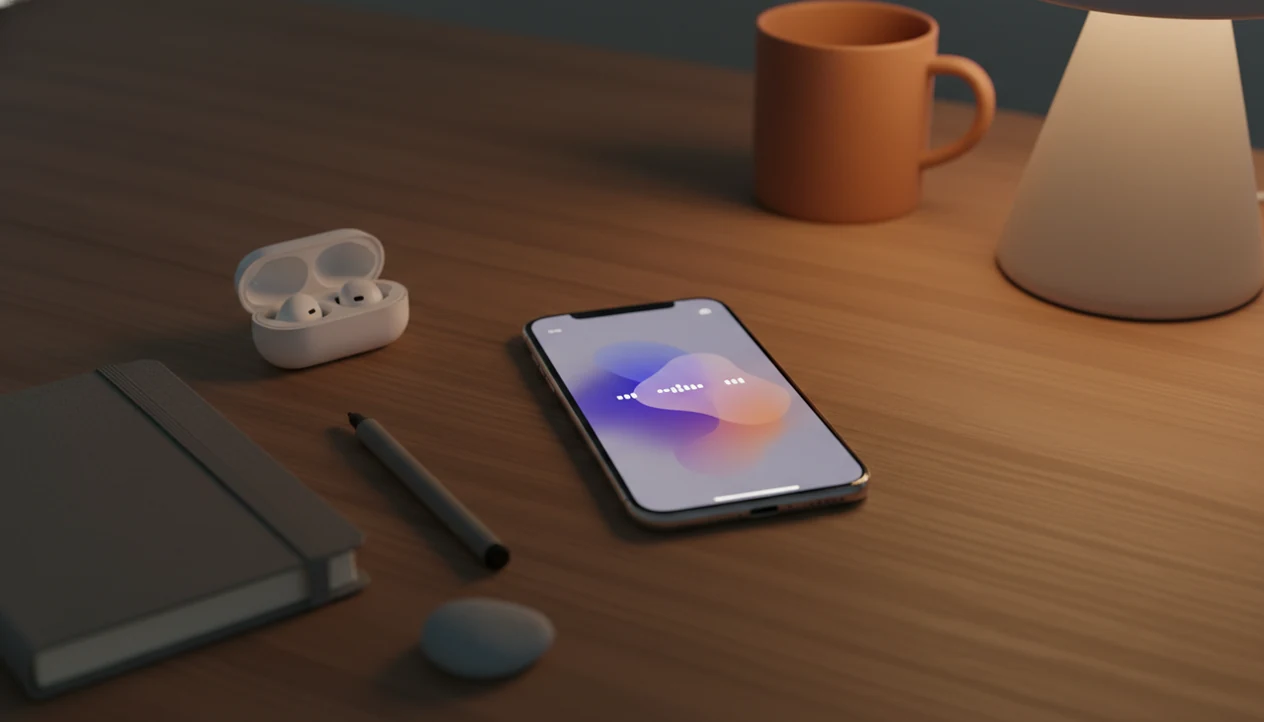
Use a calm, adult-focused image of someone wearing headphones with a phone meditation app open before a work session or bedtime. The scene should feel ordinary, not clinical. A desk, dim lamp, notebook, or nightstand works better than a staged medical setting.
Caption: Short guided audio can make meditation feel more ADHD-friendly than long silent sessions when spoken prompts offer a clear place to return after distraction.
Suggested alt text: Adult using headphones and a phone for ADHD-friendly meditation before focused work.
The visual should show the practical moment: choosing between a 5-minute breathing exercise and a 20-minute body scan in an app library. If the page also mentions task focus, deep work meditation can connect the image to calm single-tasking.
MindTastik for task transitions and bedtime restlessness
MindTastik’s guided meditation library suits adults who prefer spoken prompts to a silent timer. Breathing exercises offer another option for a pause between meetings, while sleep stories and soundscapes suit a bedtime routine. Keeping the choice to one familiar recording can reduce the decisions involved in starting.
Adults seeking ADHD assessment, medication guidance, or help with persistent daily impairment need professional care instead. Those who find spoken instructions distracting may prefer movement or a quieter practice. MindTastik is a support option, not a medical treatment.
What meditation apps cannot establish about ADHD
Meditation apps can be useful support tools, but the limits matter. This is especially true when ADHD, sleep loss, anxiety, work problems, or school struggles are involved.
- Meditation apps do not diagnose ADHD.
- Meditation apps do not replace therapy, coaching, medication, accommodations, or professional evaluation.
- Evidence for ADHD-specific digital meditation tools is promising but limited by study size, mixed methods, and possible bias.
- Most app studies focus on general stress, mood, anxiety, and sleep rather than ADHD-specific adult populations.
- Some users may find meditation frustrating, boring, activating, or hard to sustain.
- A calm session may help a rough moment without changing the larger pattern.
- People with severe distress, crisis symptoms, safety concerns, or major functional impairment should seek qualified professional support.
If audio feels distracting, some users try concentration music for meditation instead. That can be supportive, but it still is not medical care.
Between Meetings
- Use a calendar gap as a cue, not a challenge: close the laptop, start a 3-minute guided reset, and stop when the next meeting reminder appears.
- A desk pause works best when the first step is physical, such as placing both hands flat on the desk before pressing play. During screen-heavy workdays, the 20-20-20 mindfulness practice offers a simple reminder to pause and give your eyes a break.
- After a tense meeting reset, choose breathing audio over a longer meditation if your attention already feels overloaded.
- Keep the routine deliberately small; a repeated two-minute pause can be easier to protect than an ambitious focus ritual.
- If you miss the session, skip the guilt and attach the next attempt to the next natural work transition.
Focus Without Force
ADHD-friendly focus support tends to work best when it reduces decisions instead of adding another task to manage. Try using one short guided meditation for task-starting, one breathing exercise for a meeting reset, and one calming audio option for the end of the workday. The goal is not to force perfect concentration; the goal is to make the next work step easier to enter. If a session makes you feel more frustrated, shorten it or switch to a more active breathing cue. When delaying tasks becomes a recurring pattern, practical tips on how to stop procrastinating may complement your brief audio routine.
ADHD meditation app questions
Can a meditation app improve focus with ADHD?
A meditation app may help some adults settle before a task or recover from a stressful interruption. That is different from reliably improving ADHD symptoms. ADHD-specific mindfulness evidence remains limited and mixed, so an app is best treated as a support for routines rather than a proven attention treatment.
What type of meditation is easiest to start with ADHD?
Short guided practice is a practical starting point because spoken prompts provide an external cue when attention wanders. Breathing cues, body awareness, or mindful movement are options. The useful format is one that remains manageable, not one that requires perfect stillness or an empty mind.
How long should an ADHD meditation session be?
Start with 3 to 5 minutes if a longer session feels hard to begin or finish. This is a practical starting suggestion, not an established treatment dose. Attach the recording to a familiar transition, such as starting work or preparing for bed, and adjust the length according to how manageable it feels.
Can I move or keep my eyes open during meditation?
Movement can be part of practice if sitting still makes it harder to follow the cues. Sitting, standing, or gently stretching are options. There is no need to force a posture that increases frustration. Adapt the practice to sensory needs and use attention to bodily sensations as another point of return.
What should I do when I keep getting distracted during meditation?
Return to the next spoken cue, breath, or bodily sensation rather than restarting the entire recording. Returning after distraction is part of the practice. If the instructions are difficult to follow, try a shorter session or a simpler cue instead of treating distraction as a failed attempt.
Can meditation replace ADHD medication or therapy?
No. Meditation apps do not replace ADHD assessment, medication, therapy, coaching, or accommodations. Research does not conclusively show that mindfulness manages ADHD symptoms. Anyone considering a change to prescribed treatment should discuss it with a qualified clinician rather than substituting audio practice.
Why does meditation sometimes make me more anxious?
Meditation can produce negative experiences, including anxiety, and safety research is incomplete. The reason may differ from person to person. Stop a session that increases distress, or try a shorter practice with movement or a different attention cue. Seek professional advice if anxiety persists or worsens.