
Mindfulness Practice for Doing One Thing at a Time
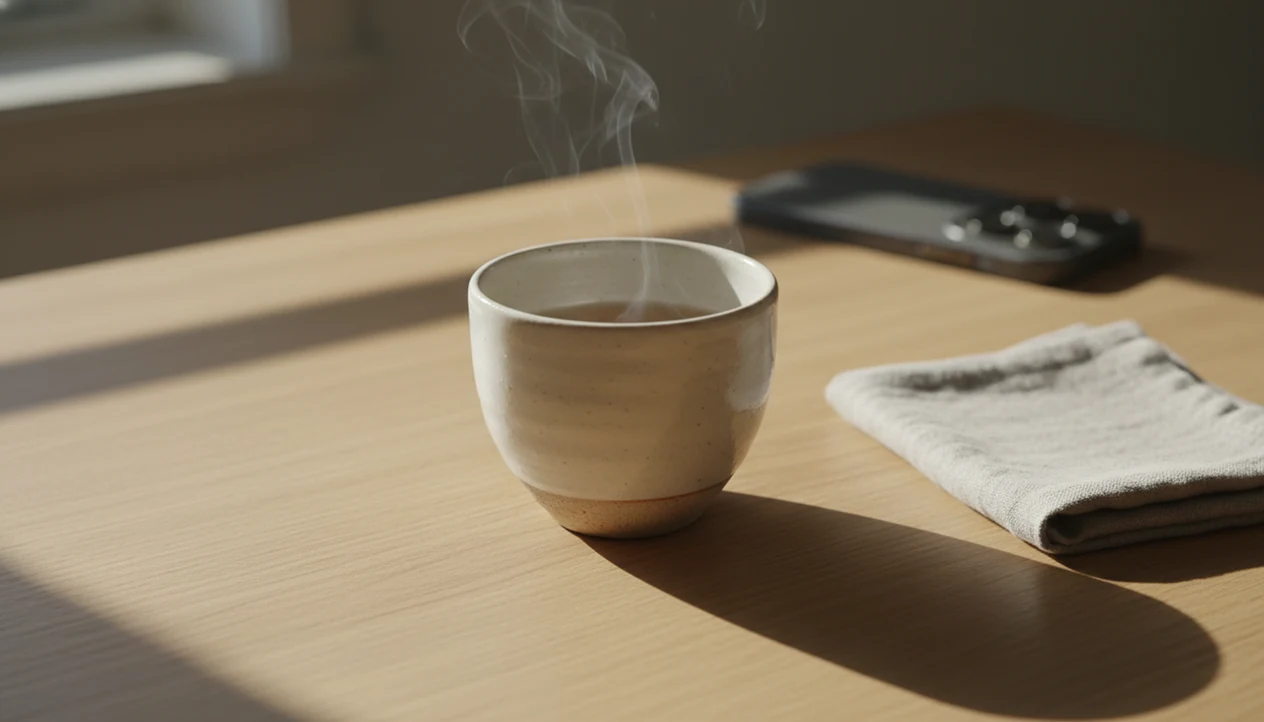


A single tasking mindfulness practice means choosing one activity or sensation and gently returning attention to it whenever the mind wanders. Sometimes called one-mindfully, it involves attending to a present-moment task without judging distractions. The aim is not to empty the mind. It is to practice a less scattered way of working, eating, walking, resting, or winding down for sleep.
An ordinary activity is enough: brushing teeth, drinking tea, folding a shirt, or answering one email. Choose a safe task, give it a short practice window, and notice when attention moves elsewhere. A quiet label such as “planning” or “checking” can mark the distraction before attention returns. The useful repetition is that return, not a perfect stretch without thoughts.
The essentials
- Pick one ordinary activity, such as brushing your teeth, drinking tea, or answering one email, and make it your mindfulness cue.
- When your mind wanders, silently label the distraction and return to the one thing you are doing.
- Short daily practice is more useful than occasional long sessions, especially for focus, anxiety support, and bedtime calm.
One-Task Mindfulness Practice Definition and Meaning
One-task mindfulness practice means placing attention on one chosen activity, then returning when attention drifts. It is single-task attention, not thought suppression.
Ordinary actions count. You can practice while eating lunch, showering, walking to the car, folding a shirt, or answering one email without opening five tabs. The point is not to make the moment special. The point is to notice the moment you are already in.
The related term one-mindfully is often used in mindfulness skills training. It means doing one thing with your whole attention. When your mind jumps to tomorrow’s meeting or last night’s text, the central skill is simple: notice, name it, and come back.
For beginners, one-task mindfulness is often easier than silent sitting because the task gives attention somewhere concrete to land.
Before You Start: Choose a Safe, Low-Stakes Task
Before you start, choose something simple, brief, and noncritical. One-task mindfulness is best practiced where a narrowed focus will not put you or anyone else at risk.
Use a task that can safely hold your attention without needing constant scanning, such as drinking tea, folding laundry, washing one dish, or listening to a short audio track. Do not use this practice while driving, supervising a child near hazards, operating equipment, crossing busy streets, or doing work where missing a cue could matter.
- Choose one low-stakes task that you can pause easily.
- Set a short window of one to five minutes instead of trying to force a long session.
- Silence optional notifications before you begin, or place the phone face down if it is not your anchor.
- Use an external anchor, such as sound, sight, or the feeling of an object in your hand, if breath or body sensations feel uncomfortable.
- Stop the exercise, open your eyes, look around the room, or switch anchors if the practice increases distress.
5 One-Task Mindfulness Facts for Focus and Calm
- One anchor is enough. Choose one task or sensation, such as breathing, typing, chewing, walking, or listening.
- Mind wandering is expected. The practice is not ruined when thoughts drift. Noticing the drift is part of the training.
- Multitasking has a cost. Frequent switching can increase cognitive load, which is the mental effort used to hold, update, and shift information. The American Psychological Association summarizes task-switching research as showing measurable time and accuracy costs when people rapidly move between tasks APA research: multitasking.
- Everyday life is valid practice. Brushing teeth, waiting for a file to upload, or carrying groceries can become a short reset.
- Consistency matters more than length. One minute repeated daily usually builds the habit better than a long session you avoid.
At a desk, this may look like writing one paragraph before checking messages. If you want a more structured routine for work blocks, focus meditation for work builds from the same idea.
How One-Task Mindfulness Works
One-task mindfulness works by repeating a simple notice-and-return cycle until attention becomes easier to steady. The mind still wanders; the training happens when you recognize that wandering and come back.
The anchor is the one thing you choose, such as breath, sound, chewing, typing, or the feeling of your feet on the floor. A distraction is anything that pulls attention away: a thought, urge, memory, worry, or phone check. A label is a quiet name for what happened, like “planning” or “checking.” The return is the gentle move back to the anchor.
- Choose one anchor that is easy to feel or hear.
- Notice when attention has drifted.
- Label the drift in one plain word.
- Return to the anchor without making the drift a mistake.
- Repeat the loop as often as needed.
Single-task practice can feel calmer because it reduces the start-stop cost of switching contexts. Benefits depend on repetition, timing, stress level, sleep, and the person practicing.
Attention Loop for One-Task Mindfulness Practice
The attention loop for one-task mindfulness is: choose, notice, return, repeat. You choose one anchor, notice distraction, return attention, and repeat without turning the drift into a personal failure.
Task switching feels draining because the brain has to reload context. That mental reloading adds cognitive load. In plain language, your attention keeps paying a small “start-up cost” every time you bounce from an email to a message to a spreadsheet. To cope with cognitive overload, start by reducing unnecessary task switches and choosing one clear priority.
A randomized worker trial found that an 8-week mindfulness program improved sustained attention and reduced mind wandering compared with a wait-list control PubMed research: 28004951. That does not mean one short practice fixes focus overnight. It suggests repeated refocusing can train attention in a measurable way. For learning tasks, you can also explore how to learn faster using neuroscience with practical study strategies.
The same loop can also support emotional regulation. When the mind says, “I’m behind,” you label thinking and return to the next keystroke. Small, almost boring. That is the work.
5-Step One-Task Mindfulness Practice Method
Use this method when you want a simple mindfulness practice doing one thing at a time guide you can start today.
- Set one cue. Pick a repeatable moment, such as after brushing your teeth, before opening email, or when you put earbuds on the nightstand.
- Choose one task. Use eating, showering, walking, answering one email, breathing, or starting bedtime audio.
- Slow the first minute. Notice the first bite, first step, first line, first inhale, or first sound.
- Label wandering. Silently say “planning,” “worrying,” “remembering,” or “checking” when your attention leaves.
- Return without criticism. Come back to the one task as if you were setting down a bag, not scolding yourself.
If you are building longer concentration blocks, deep work meditation uses the same return-and-repeat pattern with fewer interruptions.
Protect the task, not just the moment of attention
Returning attention is one skill; reducing avoidable interruptions is another. A review of laboratory task-switching research found that responses immediately after a switch were substantially slower and usually more error-prone. Preparation reduced the cost but did not remove it. In two controlled multitasking experiments, performance costs remained detectable throughout the 30 seconds after a secondary task ended. These findings concern laboratory tasks, not a measured productivity benefit from this mindfulness exercise.
For demanding work, pair the notice-and-return practice with a protected work block. Define one concrete task, silence nonessential notifications, and reserve email or messaging for a separate window when responsibilities allow. Write down an unrelated thought rather than immediately acting on it. Then take a brief screen-and-body break before deciding what comes next. This is a practical application of task-switching evidence, not a tested package with a guaranteed improvement in output or a required block length.
Single-task attention does not mean staring at a screen without breaks. The American Optometric Association’s digital eye strain guidance recommends looking at something at least 20 feet away for 20 seconds every 20 minutes during screen use, plus a 15-minute break after two hours of continuous device use. These are eye-health recommendations, not evidence of better productivity. A planned visual break is compatible with single-tasking; it need not become an email check.
Best-Fit Users and Safety Boundaries for One-Task Mindfulness
One-task mindfulness fits people who want a manageable everyday calm practice, but it is not medical treatment. It can support focus, stress awareness, and wind-down routines while still leaving room for professional care when needed.
| Best for | Not ideal for |
|---|---|
| Beginners who dislike long silent meditation | Urgent crisis support or safety concerns |
| Distracted workers who need one clear starting point | Severe untreated insomnia that is affecting daily functioning |
| Anxious rumination that keeps looping during ordinary tasks | Panic, depression, or anxiety symptoms that need clinical support |
| Bedtime wind-down, such as a 5-minute breath or body scan | Situations where attention must stay broad for safety |
| People who prefer practical, brief exercises | Replacing therapy, medication, or medical advice |
A common real-life fit is someone who wants a calm track ready when attention feels crowded and hard to settle. That can be a starting point, not a full care plan.
Daily Habit Cues for One-Task Mindfulness Practice
Daily cues make one-task mindfulness easier to repeat because they attach the practice to something already happening. Start with 1 to 5 minutes, then stop while it still feels manageable.
- After brushing teeth: Feel the floor, the wrist movement, and the taste of toothpaste. Label “brushing” when the mind runs ahead.
- Before opening email: Take three breaths and choose the first message only. Not the inbox. One message.
- After lunch: Walk for one minute and silently label “walking” with each few steps.
- Before bed: Dim the phone screen, choose one audio track, and listen without scrolling.
A tiny reward helps the loop stick. Notice one calmer breath, check off a paper log, or save a favorite audio. Students can adapt the same cue structure with study meditation for students.
Sleep and Anxiety Uses for One-Task Mindfulness Practice
Single-focus practice may help at night by giving the mind one gentle place to return when rumination starts. In a quiet room with dim light, “one thing” might mean staying with one breath, one body scan, or one steady guided voice.
A meta-analysis of randomized trials found mindfulness-based programs produced small-to-moderate improvements in anxiety, depression, and stress compared with inactive controls JAMA Internal Medicine study: 2734400. A randomized trial of mindfulness meditation for chronic insomnia reported greater improvement in insomnia severity than self-monitoring alone PubMed research: 24932187.
Try this before bed: choose a 5-minute breathing practice, a 20-minute body scan, or sleep audio, then stay with that one track.
MindTastik offers guided sessions for adults who want support with meditation, sleep routines, breathing practice, self-hypnosis, anxiety relief, and everyday calm.
MindTastik App Tools for One-Task Mindfulness Practice
Apps can make one-task mindfulness easier by removing the “what should I do?” decision. MindTastik offers guided meditation, sleep audio, breathing practices, and self-hypnosis sessions for adults seeking support with rest, anxiety, and everyday calm.
For bedtime practice, MindTastik offers a guided track, breathing exercise, or sleep audio session to follow instead of continuing to scroll.
Guided meditation gives your attention a voice to follow. Sleep audio can turn bedtime into one track instead of a scrolling session. Breathing exercises create a clear anchor, and self-hypnosis sessions may help some users settle into a repeated phrase or image.
Reminders, streaks, and mood or sleep logs can support consistency, but they cannot guarantee outcomes. A systematic review and meta-analysis of mobile mindfulness interventions found small but significant mental-health benefits, which supports apps as an entry point rather than a cure jmir reference.
Tools like MindTastik, Calm, and Headspace are most useful when they help you choose a starting point and repeat it.
Beginner Mistakes in One-Task Mindfulness Practice
“Why can’t I stop thinking during mindfulness?” Because stopping all thoughts is not the goal. The goal is to notice thinking and return to one chosen focus.
A common mistake is assuming short practices do not count. They do. One minute of fully brushing your teeth can teach the same return skill as a longer sit, just in a smaller container.
Another mistake is turning mindfulness into productivity pressure. If the practice becomes “I must focus better or I’m failing,” soften the tone. Try the phrase: notice, soften, return.
Restlessness is not failure either. Fidgeting hands in a lap, a foot tapping under the chair, or a sudden urge to check the phone are all workable moments. For people comparing focus supports, meditation for productivity without hype keeps the same grounded boundary.
Use one guided track as the attention anchor
MindTastik’s guided meditation library gives this practice a clear listening anchor: choose one session and return to the voice when attention drifts. Focus sessions and breathing exercises also suit a pause before starting work. An app adds little when an ordinary task, such as folding laundry, already provides enough structure. People who find spoken guidance distracting can use a quiet external anchor instead. Symptoms that affect daily functioning need professional support, not just another audio session.
What single-task mindfulness cannot replace
One-task mindfulness is useful, but it has real limits. Keep these boundaries clear.
- Mindfulness is not a replacement for professional mental health care, crisis support, medication, or medical guidance.
- Benefits are usually gradual and modest, not instant. Some days will feel scattered anyway.
- Inner-sensation focus may feel uncomfortable for some trauma survivors. External anchors, such as sound or sight, may feel safer.
- Severe insomnia, panic, depression, or anxiety may need clinical support, especially when symptoms affect work, relationships, or safety.
- Apps can support reminders, structure, and practice logs, but they cannot guarantee sleep, focus, or symptom improvement.
- Multitasking is sometimes necessary for caregiving, safety, medical work, driving-related awareness, or job demands.
- Some people feel more frustrated when they start noticing their thoughts. That does not mean they are doing it wrong, but it may mean the practice should be shorter or guided.
If focus problems are tied to ADHD traits, ADHD meditation app support may be a better starting frame.
Desk pauses between emails and work blocks
- Start during a calendar gap rather than a high-pressure deadline; one-task mindfulness works best when the task is ordinary enough to repeat.
- Close the laptop for 60 seconds before switching tasks, because a visible screen can keep the last task mentally open.
- Use a desk pause after sending an email: feel your hands, notice one breath, then choose the next single action.
- Keep the first practice almost boring; a simple reset is easier to repeat than an impressive routine.
- Pick one anchor for the full minute, such as typing, sipping water, or standing up, instead of monitoring every sensation at once.
Single-task mindfulness questions
How do I practice doing one thing at a time?
Choose a safe, ordinary activity and practice for one to five minutes. Keep attention on the activity rather than adding another task. When a thought, urge, or distraction appears, notice it, optionally label it with a word such as “planning,” and return. The return is the practice, not uninterrupted concentration.
What is the difference between single-tasking and mindfulness?
Single-tasking means doing one activity rather than switching among several. Mindfulness adds awareness of where attention is and a nonjudgmental response when it drifts. Finishing one email is single-tasking. Noticing an urge to check messages and returning to that email without self-criticism adds the mindfulness element.
What should I focus on during single-task mindfulness?
Use an anchor that belongs to the activity: the taste of tea, the movement of folding a shirt, or the sound of a guided voice. Keep it simple rather than monitoring every sensation. Start somewhere safe and low-stakes, not while driving, operating equipment, or supervising someone near hazards.
What if my mind wanders every few seconds?
Frequent wandering does not make the session a failure. Each time it becomes noticeable, name the distraction briefly and return to the chosen activity. Avoid checking how well the practice is going after every return. A shorter practice window or fewer visible alerts can make the task easier to stay with.
Can single-task mindfulness make me more productive?
It can provide a way to notice distraction and return to work, but there is no reliable productivity percentage for this practice in the cited research. Laboratory studies show time and accuracy costs from task switching. Protecting one task from avoidable interruptions is a reasonable application, not a promise of faster work.
How long should a beginner practice one-task mindfulness?
Start with one to five minutes attached to an ordinary activity, such as drinking tea or folding laundry. Stop while the practice remains manageable rather than forcing a long session. A repeatable cue can help establish the habit. Longer sessions are not necessary to practice noticing distraction and returning.
Can I use single-task mindfulness before sleep?
Before bed, the single anchor can be a guided voice, a body scan, or one comfortable breath at a time. Choose one track rather than browsing repeatedly. Treat this as a wind-down practice, not a demand to fall asleep. Severe insomnia that affects daily functioning needs clinical support.
What if focusing on my breathing makes me uncomfortable?
Breathing is optional. An external anchor, such as sound or sight, may feel safer than internal sensations, particularly for some trauma survivors. Choose something neutral and easy to pause. If the practice increases distress, stop rather than forcing attention inward. Persistent panic or anxiety symptoms call for professional support.