
Meditation for Context Switching Between Tasks, Meetings, and Home
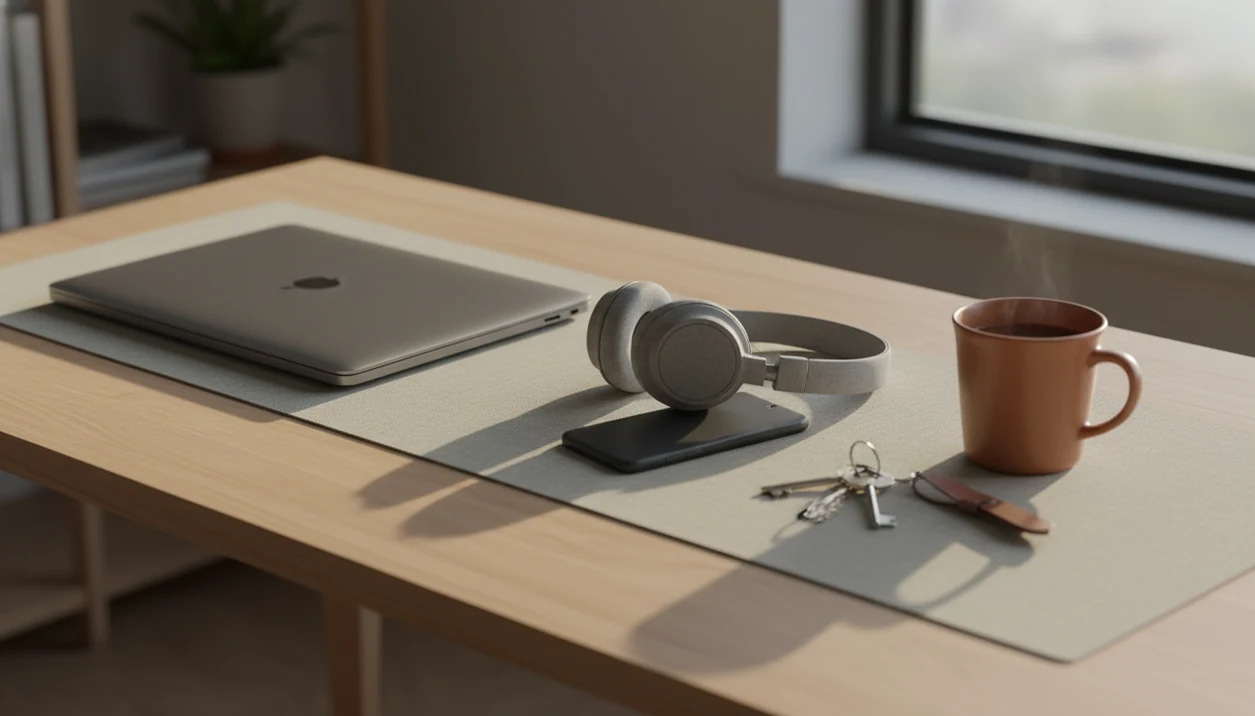


Meditation for context switching is a brief mindfulness pause between tasks or roles, intended to settle attention, release leftover stress, and make a deliberate start on the next activity. A 2- to 5-minute practice can use breathing, body awareness, or grounding. Common moments include finishing a call, moving from study to rest, closing a laptop, or arriving home after work.
The aim is a calmer transition, not a demand to become more productive. Thoughts about the previous task may still be present when the pause ends. A simple guided session gives attention somewhere to rest before the next activity begins. Short instructions and one clear cue, such as feeling both feet on the floor, keep the pause manageable.
The essentials
- Use transition meditation at natural breakpoints: after a call, before a meeting, after closing your laptop, or before shifting into family or sleep routines.
- The goal is calm and emotional reset, not forcing yourself to become more productive.
- App-guided resets work best when they are short, easy to start, and paired with breathing, body scanning, or grounding cues.
Context switching meditation definition for calmer transitions
A context switching meditation is a brief mindfulness practice used between tasks or roles to settle attention, release residual stress, and intentionally begin the next activity.
In plain terms, it is a micro-pause between “what just happened” and “what comes next.” You might use it after email and before a meeting, after a meeting and before deep work, after work and before home, or after studying and before rest.
The point is not to squeeze more output from your day. It is to notice the body, soften the leftover tension, and return to the present moment before you carry one role into another.
That carryover is real.
A task transition meditation can be as simple as closing your inbox, placing both feet on the floor, and taking five slower breaths before opening the next document. For deeper focus routines, a longer deep work meditation may fit better.
Task transition meditation data for busy workdays
Frequent switching is now a normal part of many workdays, and it often feels stressful because the mind does not change channels instantly. In a 2022 American Psychological Association workforce survey, 86% of full-time workers said they frequently multitasked or switched between tasks, and those workers reported higher stress than people who did not switch as often. Source: American Psychological Association, 2022 Work and Well-being Survey: APA research: compounding pressure 2022.
Attention residue helps explain the feeling. After a call, your mind may keep replaying the awkward sentence you said, even as your calendar alert pulls you into the next meeting. The old task is technically over, but some attention is still stuck there.
Meditation does not remove the workload. It also won't fix a meeting culture that gives no breathing room. However, a guided reset between tasks can soften the transition itself, which is often where people feel scattered.
For busy workers, a 2-minute breathing reset is often easier than a longer silent practice because it fits the gap that actually exists.
Switching costs are not evidence that meditation removes them
Laboratory research gives a concrete reason to allow time between tasks. A 2003 review of task-switching research found that responses immediately after a switch were substantially slower and usually more error-prone. Preparation reduced these costs but did not eliminate them. That finding concerns task performance under experimental conditions, not the effectiveness of a guided meditation between meetings.
The practical implication is to reduce avoidable switches as well as make necessary transitions calmer. Grouping email and messages into designated windows can protect uninterrupted work blocks. This is an application of task-switching findings, not a tested claim that a particular schedule or meditation produces a fixed productivity gain. A reset should sit alongside clearer priorities and fewer interruptions, rather than substitute for them.
Five facts about meditation for context switching
- Meditation for context switching is a micro-mindfulness practice. It helps you move between tasks, roles, or environments with more present-moment awareness.
- Short practices can still matter. A 2- to 5-minute breathing or body scan session may help reduce immediate stress before the next task begins.
- The evidence is stronger for stress than task-switching speed. Mindfulness research supports perceived stress and anxiety reduction more clearly than direct gains in switching performance.
- Guided audio can help beginners stay with it. A voice prompt can keep the reset simple when your mind is still half inside the previous meeting.
- It should support other care, not replace it. Transition meditation is not a substitute for therapy, rest, sleep hygiene, workload changes, or medical care when those are needed.
A randomized mindfulness-based stress reduction trial found a 33% drop in perceived stress scores compared with controls. PubMed research: 18005910. A 2014 systematic review also found moderate reductions in anxiety symptoms with mindfulness meditation. See Goyal et al., JAMA Internal Medicine, 2014: PubMed research: 24395196.
For task transitions, judge MindTastik by how easily it supports a 2- to 5-minute guided pause with clear breathing cues, not by promises to cure stress or make every quiet minute productive.
Nervous system cues behind context switching meditation
Meditation for context switching works by shifting you from automatic reactivity into intentional attention. The mechanism is emotional regulation and attentional settling, not a guaranteed productivity upgrade. For tasks that involve new ideas, mindfulness for creativity can help you approach the next step with curiosity.
A transition can trigger arousal: faster breathing, tight shoulders, a clenched jaw, or the urge to immediately check messages. Slower breathing, sensory grounding, and body awareness give the nervous system a different cue. In everyday language, you are telling the body, “We are not still in that last moment.”
Non-judgmental noticing is the key skill. You notice the unfinished thought, the irritation from the call, or the pressure to rush. Then you let the next breath become the new anchor.
Clinicians and mental health professionals typically frame mindfulness as a supportive practice for stress regulation, not a replacement for care. The National Center for Complementary and Integrative Health has reported moderate evidence that mindfulness meditation programs improve anxiety, depression, and pain in clinical populations. Source: NCCIH, Meditation and Mindfulness: Effectiveness and Safety: NCCIH mindfulness overview: meditation and mindfulness effectiveness and safety. Workplace mindfulness meta-analyses also suggest small to moderate improvements in perceived stress and well-being. PubMed research: 27611699.
Before you start a context switching meditation
Start a context switching meditation only when you are actually between things, not while you are handling something urgent or unsafe. The practice should create a small, protected pause, not split your attention further.
- Choose a real transition point: after sending the message, ending the call, closing the laptop, arriving home, or before opening the next task.
- Silence notifications for 2 to 5 minutes if you can. Even a short do-not-disturb window helps the body stop bracing for the next ping.
- Pick one simple cue before you begin, such as the breath, both feet on the floor, your hands resting, or ordinary room sounds.
- Use eyes-open grounding if body scanning feels too intense, awkward, or uncomfortable. Let the room, the chair, and visible objects be the anchor.
- Avoid practicing while driving, crossing streets, using tools, cooking over heat, watching children near hazards, or supervising anything that needs active attention.
A good reset begins with safety and simplicity. If the moment is not safe, wait until the task is fully paused.
Guided reset steps between tasks
Use this guided reset between tasks when you have a real break, even a small one. It works well after closing a tab, muting Slack pings for a reset, or sitting in the car before walking into home life.
- Choose a natural transition point, such as after a call, before a meeting, or after closing your laptop.
- Set a timer or guided session for 2 to 5 minutes, so the practice feels usable rather than heavy.
- Breathe with a slow exhale, letting each out-breath be slightly longer than the inhale.
- Notice body sensations, stray thoughts, and any leftover emotion from the previous task without trying to erase them.
- Begin the next task with one calm intention, such as “single-task,” “listen first,” or “move slowly.” If the next task feels creatively stuck, try mindfulness for creative blocks before deciding how to restart.
Tools like [MindTastik](), Calm, and Headspace can be used for guided meditation, breathing exercises, sleep audio, and self-hypnosis sessions for everyday calm support. Choose the shortest session that you will actually start.
For most people, a 2-minute reset before a meeting is more sustainable than saving mindfulness for a long session that never happens.
Six task transition meditation moments at work and home
Different transitions need different practices. A tense work call may call for grounding, while bedtime may need a softer downshift.
| Transition moment | Suggested practice | Best length | Calming intention |
|---|---|---|---|
| Before a meeting | Slow breathing with feet grounded | 2 minutes | “Arrive before I respond.” |
| After a difficult call | Body scan for jaw, shoulders, and hands | 3 to 5 minutes | “Let the call end here.” |
| Before deep work | Breath count or simple focus cue | 2 to 5 minutes | “One task at a time.” |
| After closing the laptop | Eyes-open grounding in the room | 3 minutes | “Shift from work to home.” |
| Before studying | Guided attention reset | 2 to 5 minutes | “Start with the first page.” |
| Before bedtime | Evening downshift audio | 5 minutes | “Rest does not need solving.” |
The work-to-home shift is where many people notice the practice most. The laptop closes, but the mind keeps drafting replies. If the next block is study, study meditation for students may offer a more specific starting point.
Best-fit and poor-fit users for context switching meditation
Best for
- Beginners: Short guided resets give clear instructions without requiring a full meditation habit.
- Remote workers: A pause can mark the difference between work mode and home mode when both happen in one room.
- Students: A task transition meditation can help separate scrolling, study, class, and rest.
- Meeting-heavy professionals: Breathing between calls can reduce the “stacked meeting” feeling.
- Caregivers shifting roles: A brief reset can help before moving from paid work into family care.
- People wanting calmer evenings: A small downshift after work may make the evening feel less abrupt.
Not for
- Replacing therapy or medical care.
- Overriding burnout with more self-management.
- Tolerating unsafe work conditions.
- Treating severe anxiety alone.
- Forcing productivity when the body needs rest.
Some people dislike inward body scanning, especially during stress. Eyes-open grounding may feel safer: name three things you see, feel your feet, and keep the breath natural.
Five common mistakes with work transition breathing
The first mistake is using meditation only as a productivity tool. Correct it by making the goal calmer arrival, not faster output.
The second mistake is choosing sessions that are too long for real transitions. If your next meeting starts in four minutes, a 20-minute body scan creates friction. Pick two minutes and begin.
Too much setup kills it.
The third mistake is leaving notifications on. Silence alerts before the reset, even if only for one short block. A buzzing phone teaches the body to stay braced.
The fourth mistake is judging the practice because the mind wanders. Wandering is not failure; noticing it is the actual repetition.
The fifth mistake is using reminders or streaks that create pressure. If an app reminder starts to feel like another manager, reduce it. Some readers comparing tools may prefer a focus meditation app with simple session access rather than streak-heavy prompts.
A 2-minute context switching meditation script
How do you do a 2-minute context switching meditation? Sit or stand in a steady position, breathe slowly, notice what you are leaving behind, and choose one intention for the next task.
Try this script silently:
“Place both feet on the floor. Let your hands rest where they are. Take one slow breath in, then a longer breath out. Take a second breath and let the shoulders drop slightly. Take a third breath and soften the jaw.
Notice the task you just finished. Maybe it is still echoing in thoughts, tension, or emotion. You do not have to solve it right now. Let it be known, then let it move to the side.
Feel your feet, your chair, or your hands. Look at one steady point in the room. Now name the next task gently: ‘I am beginning this meeting,’ or ‘I am starting one page.’
Begin with less force.”
When you are tired or emotionally overloaded, app-guided audio may be easier than reading a script. A familiar voice prompt can reduce the number of decisions you need to make. If attention shifts are especially difficult with ADHD, ADHD meditation app support offers guidance on choosing manageable practices.
Context Switching Between Meetings and Technical Work
For developers, analysts, and other knowledge workers, a calendar gap can still contain unfinished work: a debugging hypothesis, a spreadsheet assumption, or a decision awaiting approval. Before entering a meeting, leave a brief restart note in the relevant file: what remains unresolved and the next concrete action. This gives the outgoing task a place to wait, rather than making a meditation pause another demand to remember everything.
A review of 132 randomized workplace meditation trials reported improvements in perceived stress and sleep across occupations. Those findings concern meditation programs, not proof that a brief pause restores technical concentration after every interruption. On meeting heavy days, use the pause to notice lingering urgency from the previous conversation, while reserving actual calendar time to reconstruct the work.
If late messages repeatedly pull you back into unresolved decisions, pair any end of work meditation with a written handoff to tomorrow: pending questions, responsible colleagues, and the first task to reopen. Where your role allows it, agree on which messages genuinely require an evening response. A calmer transition cannot create recovery time that workplace expectations remove.
Short audio cues for the gap between tasks
MindTastik's guided meditations, focus sessions, and breathing exercises are relevant when a transition calls for a simple attention cue rather than more planning. A short session can mark the end of a meeting or the shift from work to home. Someone who prefers silence can use an unguided pause instead. If the immediate need is lunch, movement, or resolving an unfinished work issue, audio is not necessarily the best next step. MindTastik is not a medical treatment.
What a transition pause cannot fix
Meditation for context switching is useful, but it has clear limits.
- Direct research on context switching meditation specifically is limited; most evidence comes from broader mindfulness, stress, and workplace studies.
- Mindfulness evidence is stronger for stress, anxiety, and well-being than for task-switching efficiency or performance.
- Meditation does not fix unrealistic workloads, constant notifications, unclear priorities, or systemic job stress.
- People with severe anxiety, trauma histories, panic symptoms, or distress during inward attention may need support from a qualified professional.
- App-based resets can become another digital demand if reminders, streaks, or badges create pressure.
- Sleep, therapy, workload boundaries, medication, or medical care may still be needed, depending on the person.
- A short reset may help the transition feel calmer, but it cannot replace real rest.
After a long day of task switching, when the mind is still replaying meetings instead of settling, another productivity trick may not help. A steadier choice can be a short guided pause, a slower breath in a quiet room, and reaching out for support if sleep difficulties keep showing up.
Focus Without Force
| If you... | Try | Why | Note |
|---|---|---|---|
| You just closed a laptop after a demanding work block and have a meeting in five minutes. | A 2-minute breathing exercise with one clear cue, such as exhale slowly and relax the jaw. | It gives the nervous system a simple transition signal without asking for deep reflection. | Skip long sessions if the calendar gap is tight; rushing a meditation can defeat the purpose. |
| You are moving from a tense meeting reset into solo focus work. | A short guided meditation focused on releasing the last conversation and naming the next priority. | The structure may help you stop replaying the meeting and arrive at the next task with less mental residue. | If the meeting raised an urgent conflict, write down the action item first so the pause does not feel avoidant. |
| You feel foggy after several task switches and are tempted to start another tab. | A desk pause with eyes open, three slow breaths, and a single next-step choice. | This works best when the goal is decision clarity rather than emotional processing. | If you are sleep-deprived, a meditation may not replace a real break, food, movement, or rest. |
Context switching meditation questions
What is context switching meditation?
It is a brief mindfulness practice between tasks, roles, or settings. The pause uses a simple cue, such as breathing or feeling the feet on the floor, to notice leftover tension and begin the next activity deliberately. It is not a technique for clearing every thought or guaranteeing better performance.
How long should I meditate between tasks?
A 2- to 5-minute pause is a practical starting point for a gap between tasks or meetings, not a proven optimal duration. Choose a length that fits the actual break. If a meeting starts in two minutes, a longer session adds pressure rather than creating a useful transition.
Can meditation eliminate the cost of switching tasks?
There is not enough direct evidence to say that a brief meditation eliminates task-switching costs. Laboratory research shows that preparation can reduce switching costs without removing them. A transition pause is better framed as a way to settle attention and notice stress, alongside reducing unnecessary interruptions.
What can I do between back-to-back meetings?
Once the first call has ended, pause before opening the next one if time allows. Rest both feet on the floor, notice the jaw and shoulders, and take a few unforced breaths. Choose one intention for the next conversation. An urgent clarification or practical need may deserve attention first.
How do I stop thinking about work when I get home?
A brief pause after closing the laptop or arriving home can mark the change in roles. Notice thoughts about work without trying to solve all of them, then bring attention to the room, feet, or hands. This may make the transition less abrupt, but it cannot resolve excessive workload or unfinished responsibilities.
Is a meditation pause the same as a screen break?
Not necessarily. A meditation played on a screen may leave the eyes focused at the same distance. The American Optometric Association recommends looking at least 20 feet away for 20 seconds every 20 minutes during screen use. That is eye-health guidance, not evidence of a specific productivity improvement.