
Mindful Drawing
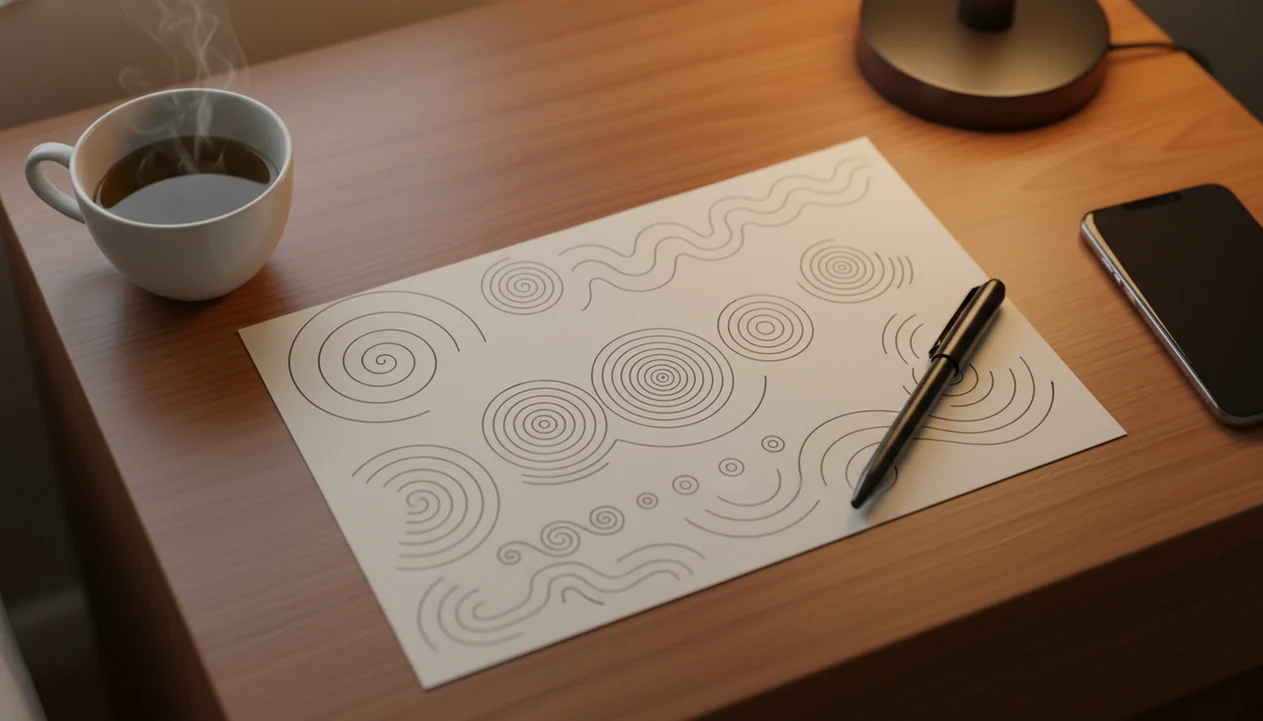


Mindful drawing is a meditation practice that uses lines, shapes, patterns, or observations to keep attention on the pen, paper, breath, and present-moment sensations rather than the finished artwork. Any pen and paper will do. Artistic skill is not the requirement: the practice is noticing what happens while drawing and gently returning attention when thoughts drift, without rating the result as good or bad.
Start with 5 to 10 minutes of simple circles, spirals, contour lines, or repeating patterns. Keep breathing comfortable and let the next mark be the focus. This short, repeatable ritual can support calm, concentration, or the transition toward bedtime. It can also sit alongside guided meditation, breathing exercises, or sleep audio as a screen-light activity, without becoming another project to finish.
Mindful drawing essentials
- Mindful drawing is about process, not artistic skill or a polished picture.
- Start with 5-10 minutes, slow breathing, and simple marks such as circles, spirals, contour lines, or repeating patterns.
- Use it alongside guided meditation, sleep audio, or breathing exercises when you want a screen-light, body-based way to extend calm.
Mindful Drawing Definition and Beginner Benefits
Mindful drawing is attention training through simple drawing, not art performance. The goal is to notice the pen, paper, breath, and body, then return when the mind wanders.
A pen and scrap paper are enough. No art background is required, and the page does not need to look finished. That matters for beginners who freeze at the first crooked line.
People often use mindful drawing to support a calmer nervous system, soften rumination, improve focus, or make the shift toward bedtime feel less abrupt. In dim light, tracing slow pencil lines across a page can feel easier than reaching for more stimulation. For another body-based approach to calm, explore the benefits of mindful movement through walking, swimming, or running.
A 2016 randomized controlled trial found that 45 minutes of creative art making reduced cortisol in many adults, regardless of prior art experience PMC research article: PMC5004743. That supports creative practice as a stress tool, but it does not prove mindful drawing cures stress.
Five Mindful Drawing Facts Beginners Should Know
- Process comes first: Mindful drawing works by keeping attention on the next mark, not by producing an impressive picture.
- Beginners can start immediately: A notebook margin, receipt back, or plain printer paper is enough for a useful session.
- The anchors are concrete: Breath, hand movement, pen pressure, paper texture, and visual attention give the mind something steady to return to. Similar sensory anchors can support mindful swimming, where attention rests on breath, movement, and contact with the water.
- Simple structure helps: Circles, mandalas, repeating patterns, spirals, and contour drawing reduce the number of choices you need to make.
- It pairs well with calm routines: Mindful drawing can extend meditation apps, sleep audio, breathing practices, and short everyday calm rituals.
For beginners, mindful drawing is often easier than silent sitting because the hand has a clear job. If you want a broader starting point, our meditation techniques for beginners guide explains other low-pressure options.
How Mindful Drawing Works
Mindful drawing works by turning attention into a small loop: you place awareness on the mark, notice when the mind leaves, and come back without making the distraction a failure. The drawing gives the brain a visible task, while the body has simple sensory anchors to track.
- Notice the breath, hand, paper, and first point of contact between pen and page.
- Draw one simple mark, such as a line, dot, curve, circle, or repeated pattern.
- Wander into planning, judging, remembering, or problem-solving when the mind naturally drifts.
- Return to the next mark, using breath, pen pressure, or paper texture as the way back.
Repeated marks lower decision load, which means there are fewer choices for the mind to manage. That can make focus steadier and give the nervous system a quieter rhythm to follow. The evidence behind this comes mostly from broader mindfulness and art-making research, not a single proven mindful drawing formula. It may support emotional regulation and everyday calming routines, but it does not treat anxiety disorders, insomnia, depression, trauma, or any other condition.
Mindful Drawing Effects on the Brain and Body
Mindful drawing works by giving attention a concrete anchor: the line, pressure, breath, paper texture, and small visual details. When distraction appears, you notice it and return to the next mark without turning the moment into a problem. Understanding why staying present feels difficult can help you respond to distraction with patience rather than self-criticism.
That loop is the practice.
Repetitive marks and slow breathing may reduce cognitive load because you stop deciding what to solve next. The nervous system gets fewer alarms to chase. Feet searching for a cool sheet at night may still happen, but the mind has a quieter task.
Evidence comes from broader mindfulness and art-making research, not one universal mindful drawing protocol. A 2018 meta-analysis found mindfulness-based interventions had moderate effects for anxiety symptoms in adults PubMed research: 29302051. A systematic review of art therapy research reported generally positive findings for mental health outcomes while noting small samples, varied methods, and study-quality limits PubMed research: 22560425.
Clinicians typically recommend professional care for persistent anxiety or sleep problems; mindful drawing is a supportive practice, not treatment.
How to Use Mindful Drawing in 10 Minutes
Use mindful drawing as a short ritual with a beginning, middle, and end. Ten minutes is enough to practice attention without making the session feel like a project.
- Set a timer for 5-10 minutes, choose a quiet place, and place one sheet of paper and one pen in front of you.
- Breathe slowly for three rounds before drawing, feeling your seat, feet, and hand on the page.
- Draw simple marks such as circles, lines, spirals, waves, or dots without planning the final image.
- Notice thoughts, emotions, and perfectionism, then return attention to the next line instead of arguing with the thought.
- Close by checking the body, naming one feeling, and stopping without judging the artwork.
For busy days, this fits well beside short meditation techniques. The small container helps. No setup ceremony required.
Before You Start Mindful Drawing
Before you start mindful drawing, make the session so simple that it does not feel like an art assignment. A little setup lowers the pressure before the first line appears.
- Choose paper you do not care about, such as printer paper, a notebook page, or the back of an envelope. Cheap paper makes crooked marks feel less important.
- Use one pen or pencil only. More supplies can turn a calming practice into a decision menu, especially when you are already tired.
- Dim the room for bedtime drawing, but skip phone reference images. Lower light can support the wind-down, while a bright screen may pull you back into alert mode.
- Set a short timer before picking an exercise. Five or ten minutes gives the practice a clean edge and keeps you from turning it into a project.
- Stop if drawing increases distress, harsh self-talk, or the urge to criticize yourself. Put the pen down, breathe, or choose a different grounding practice. The page is not the point; your state is.
Mindful Drawing Techniques for Sleep, Anxiety, and Focus
Different goals need different drawing anchors. Choose the technique that matches the state you are in, not the one that sounds most artistic. If drawing does not suit your mood, try mindful movement exercises that bring attention to gentle physical activity.
| Goal | Try this | What to notice |
|---|---|---|
| Sleep wind-down | Dim the light, draw slow repeated curves, mandala-style circles, or soft waves, then pair with calm audio. | Slower breathing, heavier eyelids, and the urge to stop scrolling. |
| Anxiety support | Draw grounding lines while using box breathing, then name sensations instead of analyzing worries. | Pressure in the pen, contact with the chair, and one breath at a time. |
| Focus reset | Do contour drawing of one object, a single-line sketch, or timed observation for five minutes. | Edges, shadows, proportion, and the moment attention drifts. |
Good meditation app for sleep anxiety and everyday calm routines deliver guided structure and repeatable cues, not a promise to erase every hard feeling. Tools like MindTastik, Calm, and Headspace can bridge audio practice with drawing when silence feels too open.
Best Mindful Drawing Exercises for Beginners
These beginner exercises keep decisions small. The point is staying present, not making a beautiful page.
- Simple circles: Fill a corner with circles of different sizes, noticing wrist movement and pen pressure.
- Contour drawing: Pick one object, such as a mug or leaf, and draw its outline slowly without rushing to correct it.
- Repeated pattern tiles: Divide the page into small boxes and repeat dots, lines, arches, or checks in each square.
- Breath-led lines: Draw upward on the inhale and downward on the exhale, letting each breath set the line length.
- Small mandala or spiral: Start in the center and move outward, adding one ring or curve at a time.
You can do these before or after a MindTastik guided meditation, breathing exercise, or sleep audio session. For bedtime imagery, visualization meditation for sleep can also pair naturally with slow spiral drawing.
Mindful Drawing Tips for Perfectionism and Wandering Thoughts
Does mindful drawing require artistic skill? No. It asks you to practice returning attention, especially when the drawing looks messy or the mind starts judging.
Use cheap materials so the page feels less precious. Try timed sessions, non-dominant-hand drawing, or closing the sketchbook quickly when the timer ends. One person on our team uses a pen that skips slightly, which makes “perfect” impossible from the start.
When thoughts show up, label them simply: “planning,” “judging,” or “remembering.” Then draw the next line. If frustration rises, simplify the practice to dots, straight lines, or one slow circle.
Frustration is a signal to reduce complexity, not proof that you failed. If body-based calming feels more useful than drawing that day, grounding meditation techniques may be a better match.
When drawing increases distress instead of easing it
A crooked line or wandering thought does not need correcting, but rising distress is a reason to stop rather than persist. The NCCIH guidance on stress and relaxation practices notes that some people experience increased anxiety, intrusive thoughts, or fear of losing control during relaxation. This is general safety guidance, not evidence that mindful drawing itself causes those reactions.
Keep early sessions brief and comfortable, with eyes open if visual focus feels safer. If attention to breathing or internal sensations becomes upsetting, stop drawing and switch to another activity rather than trying to complete the page. Severe or persistent symptoms deserve qualified clinical support. A drawing routine should remain optional, with no requirement to finish a pattern or reach a particular emotional state.
MindTastik Support for Mindful Drawing Routines
A guided meditation app can provide sleep audio, breathing exercises, and calm prompts for adults who want a more structured wind-down routine around mindful drawing.
There are three simple ways to pair mindful drawing with audio. Draw after a breathing session, so the body is already settling. Draw during calm background audio, especially if silence makes thoughts feel louder. Or draw before sleep audio, then put the pen down and let the session carry the rest of the wind-down routine.
You can also track one quick rating before and after: mood, anxiety level, focus, or sleep readiness. Keep it plain. A 1-5 note is enough.
Mindful drawing complements guided audio; it should not replace care when symptoms are severe. The useful part here is the pairing, not what the app is called.
Pairing drawing with a short breathing session
MindTastik’s breathing exercises can provide a starting point before a short drawing session. After the audio ends, simple marks give attention somewhere concrete to return. Sleep soundscapes are another option for a quiet drawing routine before bed.
This pairing suits adults who prefer an audio cue to begin or end the practice. Those who find spoken instructions distracting can use pen and paper alone. Persistent anxiety or sleep problems call for professional support, not an app-based drawing routine.
What mindful drawing cannot promise
Mindful drawing is a supportive self-help practice, not a replacement for professional treatment. It can help some people settle, but it should stay inside honest boundaries.
- Evidence directly on “mindful drawing” as a named protocol is limited.
- Many claims rely on broader mindfulness, art-making, and art therapy research.
- Some people feel more frustrated, self-critical, or perfectionistic when drawing.
- Benefits usually depend on regular practice, not one occasional session.
- It should not be described as curing insomnia, anxiety, depression, trauma, or other health conditions.
- People with severe anxiety, depression, insomnia, trauma symptoms, or thoughts of self-harm should seek qualified professional support.
- Bedtime drawing may backfire if bright lights, complex designs, or phone reference images keep you alert.
A 2012 systematic review found generally positive art therapy results for adults with mental health problems, but it also noted study quality and sample-size concerns.
For structured sessions beyond this page, MindTastik guided meditation app is the main MindTastik hub for guided meditation.
Mindful drawing questions
How is mindful drawing different from ordinary drawing?
The difference is the focus of attention. Ordinary drawing may aim to capture an object or improve technique. Mindful drawing centers on the movement of the hand, contact with the paper, breathing, and the next mark. A recognizable picture is optional, and noticing distraction is part of the practice.
What should a beginner draw mindfully?
Start with circles, dots, waves, or short lines repeated in one corner of the page. These give attention a clear task without many decisions. Another option is slowly tracing the outline of a mug or leaf. Choose one exercise for the session rather than trying to make a complete picture.
How long should a mindful drawing session last?
Five to ten minutes is a practical starting point, not a proven dose for treating symptoms. Set a short timer and stop when it ends, even if the page is unfinished. If the activity becomes uncomfortable or distressing, end sooner. A manageable session matters more than filling the paper.
Can mindful drawing help with anxiety?
Mindful drawing may offer a concrete focus when worries feel repetitive, but direct evidence for it as a named anxiety intervention is limited. Broader mindfulness and art-making findings do not establish that drawing treats an anxiety disorder. Stop if distress increases, and seek professional support for severe or persistent symptoms.
Can mindful drawing help before bed?
It can serve as a quiet transition toward bedtime, especially with simple repeated marks and no phone reference images. Keep the session short rather than turning it into an art project. There is not enough direct evidence to describe mindful drawing as an insomnia treatment or promise that it will bring sleep.
Do I have to match each line to my breathing?
No. Breath-led lines are one option, not a requirement. Breathing can stay comfortable while attention rests on pen pressure, hand movement, or paper texture. If coordinating breath and movement feels effortful, use repeated dots or circles instead. The task is returning attention, not producing a precise breathing pattern.
What if I keep judging my drawing?
Notice the judgment and give it a simple label, such as 'judging,' before returning to the next mark. Cheap paper and a short timer can reduce pressure to produce something worth keeping. If frustration builds, simplify to dots or one slow circle, or stop the session rather than forcing it.
Is mindful drawing the same as art therapy?
No. Mindful drawing is a self-directed attention practice using simple marks and sensory awareness. It should not be presented as professional treatment. Findings from art therapy research cannot automatically be applied to a brief drawing exercise at home, and the practice does not replace care for mental-health conditions.