
Finding Inner Peace With Mindfulness
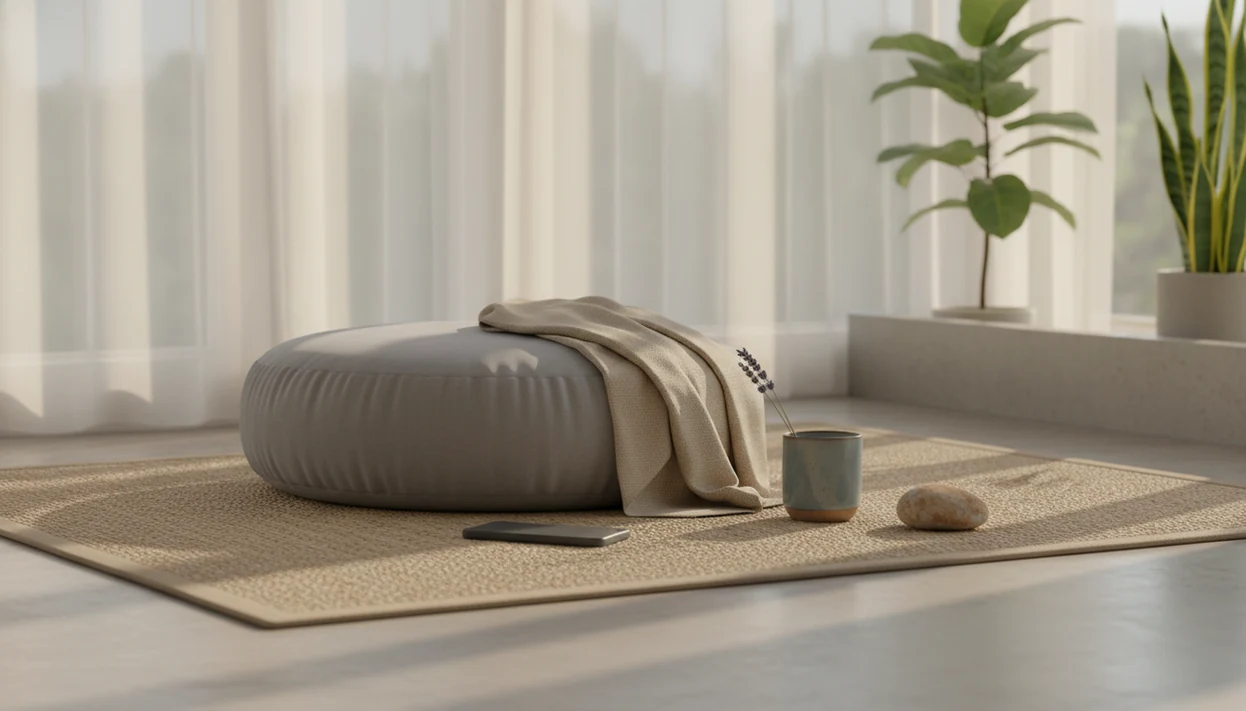


Finding inner peace with mindfulness means practicing awareness of thoughts, emotions, and body sensations without judgment, so they have less control over reactions. It is not an empty mind or permanent calm. A worry can still appear during a work break or at bedtime; the skill is noticing it without immediately following it. Short guided sessions, mindful breathing, and body check-ins offer concrete ways to practice that skill consistently.
For beginners, a repeatable 2- to 10-minute practice is a practical starting point, rather than an occasional long meditation. The aim is a steadier relationship with daily stress, not forcing discomfort away. This guide is educational, not a diagnosis or treatment plan. Severe symptoms, feeling unsafe, or thoughts of self-harm call for professional or emergency support, not meditation alone.
What matters most
- Inner peace is not the absence of thoughts or emotions; it is a calmer relationship with them.
- Research links regular mindfulness practice with moderate improvements in anxiety, depression, pain, and sleep quality.
- Beginners usually do best with 2- to 10-minute guided practices tied to daily routines like waking, work breaks, and bedtime.
Finding Inner Peace Mindfulness in Plain Terms
Finding inner peace through mindfulness means noticing what is happening inside you without immediately reacting to it. It is not about becoming emotionless, unusually spiritual, or permanently calm. It is more practical than that.
Thoughts still show up. A worry can still arrive while you’re brushing your teeth or staring at ceiling shadows at 2 a.m. Mindfulness helps you see that thought as something passing through, not as an order you must obey.
In daily life, this can look like guided meditation, breathing practice, body scans, mindful pauses, or app-based sessions. The goal is a little more space before you snap, spiral, scroll, or rehearse the same conversation for the tenth time.
Small space counts.
Five Finding Inner Peace Mindfulness Facts That Matter
- Inner peace is trainable. Repeating awareness practice strengthens the skill of noticing thoughts, emotions, and sensations before reacting.
- Short daily practice usually beats rare long sessions. For beginners, two minutes every morning is often easier to repeat than one ambitious weekend sit.
- Mindfulness can help several symptoms on average. A 2014 JAMA Internal Medicine meta-analysis of 47 randomized trials found moderate improvements in anxiety, depression, and pain with mindfulness meditation programs JAMA Internal Medicine study: 1809754.
- Guided sessions reduce guesswork. A calm voice through cheap earbuds can give beginners a clear next step when silence feels awkward.
- Routine matters. Mindfulness works best when it is woven into normal cues, not saved only for panic, insomnia, or the worst workday of the month.
For beginners, a short guided practice is often easier than silent meditation because it tells the mind where to return.
How Finding Inner Peace Mindfulness Works in the Nervous System
Finding inner peace mindfulness works by training attention, decentering thoughts, and helping the nervous system downshift. Attention training means you return to one anchor, such as breath, sound, body sensation, or a guided voice, every time the mind wanders.
Decentering is the second piece. A thought becomes a mental event, not a fact or command. “I can’t handle this” changes into “I’m having the thought that I can’t handle this.” That small shift can soften the grip.
Slower breathing and body awareness may also reduce threat scanning. Your shoulders drop. Your jaw unclenches. The body gets fewer signals that everything is urgent. To manage intense feelings with greater awareness, practice recognizing turbulent emotions before choosing how to respond.
MindTastik offers guided sessions, sleep-focused audio, breathing practices, and self-hypnosis for adults looking for support with rest, anxious moments, and daily calm. A helpful meditation app gives you a clear place to begin and simple cues you can return to, without presenting itself as a cure or substitute for professional care.
What research says about mind wandering and rumination
Less mind wandering does not necessarily mean an immediate drop in distracting thoughts. A 2023 meta-analysis of mindfulness-based attention training found no statistically significant average reduction within the mindfulness group at one measurement point. However, change over time favored mindfulness compared with the control condition. That distinction matters: practice may help prevent increasing distraction, even when a particular session still feels busy. A quiet session is not the only possible sign of benefit.
Repetitive thinking has a separate evidence base. A 2025 meta-analysis of mindfulness-based cognitive therapy found a moderate average reduction in rumination. The finding concerns a structured therapy approach, not proof that a brief breathing recording produces the same result. It also describes an average across participants, not a guarantee for each person. Persistent rumination that disrupts daily life deserves clinical attention rather than simply adding more meditation time.
How to Use Finding Inner Peace Mindfulness Daily
Use finding inner peace mindfulness as a repeatable daily cue, not a test of whether you are “good” at meditation. If you’re new, keep the practice short enough that you can do it even on an ordinary tired Tuesday.
- Set a 2- to 10-minute practice window. Pick a length that feels almost too easy.
- Choose one anchor such as breath, body, sound, or guided audio. Don’t rotate through five methods in one session.
- Notice thoughts and emotions without arguing with them. Label them gently, such as “planning,” “worry,” or “sadness.” If sadness keeps returning, mindfulness for sadness can help you acknowledge the feeling without demanding that it disappear.
- Return gently to the anchor every time the mind wanders. Wandering is not failure; returning is the practice.
- Repeat at the same daily cue, such as after waking, before work, or before bed. A dimmed phone screen before bedtime audio can become part of the signal.
Tools like MindTastik can support this with guided meditation, sleep audio, breathing exercises, and self-hypnosis sessions. If you want more starting points, our meditation techniques for beginners guide keeps the choices simple.
Finding Inner Peace Mindfulness Techniques for Anxiety, Sleep, and Focus
Different problems need different mindfulness techniques. A racing mind at bedtime is not the same as scattered attention between meetings, so the practice should match the moment.
| Situation | Technique | Why it helps | Best session length |
|---|---|---|---|
| Anxiety spikes | Breathing practice or grounding through the senses | Slower breathing and sensory naming give attention a stable place to land | 2 to 5 minutes |
| Bedtime rumination | Body scan or sleep meditation | Body-based attention can interrupt mental rehearsal and support a wind-down routine | 10 to 20 minutes |
| Work distraction | Focused attention on breath, sound, or a single task | Returning to one target trains the mind away from constant switching | 3 to 10 minutes |
| Emotional overload | Self-compassion check-in or labeling emotions | Naming emotions can create space before reacting | 2 to 8 minutes |
A 2015 JAMA Internal Medicine randomized clinical trial found mindfulness participants improved sleep quality more than a sleep hygiene education group JAMA Internal Medicine study: 2110998. For body-based bedtime options, progressive muscle relaxation for sleep may feel more concrete than silent sitting.
Best Uses and Safety Limits for Finding Inner Peace Mindfulness Practice
Finding inner peace mindfulness is best used as supportive daily practice, not as a substitute for medical or mental health care. It can be useful, but the boundary matters.
| Best for | Not ideal for |
|---|---|
| ✅ Adults who want everyday calm | ❌ Replacing therapy or psychiatric care |
| ✅ Sleep support and bedtime wind-down routines | ❌ Emergency mental health situations |
| ✅ Anxiety support during everyday stress | ❌ Trauma treatment without a qualified professional |
| ✅ Beginner meditation with structure | ❌ Medical treatment for severe symptoms |
| ✅ Focus resets during work or study | ❌ Thoughts of self-harm or suicidal crisis |
| ✅ A structured app routine | ❌ Substance misuse care without clinical support |
People with PTSD, severe anxiety, major depression, or suicidal thoughts should seek professional help and use apps only as complements. Apps such as MindTastik, Calm, and Headspace can offer structure, reminders, and guided practice, but they should stay in the support-tool lane.
Finding Inner Peace Mindfulness Guide for a Simple 7-Day Routine
A simple 7-day routine makes mindfulness easier to repeat because the next step is already chosen. You do not need a complicated plan or a perfect streak.
- Days 1-2: Two-minute breathing practice. Sit, breathe naturally, and count five slow exhalations before restarting.
- Days 3-4: Five-minute body scan or guided meditation. Move attention from forehead to feet, or follow a guided session.
- Days 5-6: One mindful pause during stress. Try it after a tense email, a delayed train, or muted Slack pings between meetings.
- Day 7: Choose the most useful practice. Schedule that one for the next week, at the same time and place. Before starting next week, try setting an intention to clarify how you want to approach your daily practice.
Behavioral design helps here. Reminders, habit cues, app streaks, and repeating the same session can improve consistency. Streaks are useful for some people, but they are not the measure of inner peace. For busy days, short meditation techniques can keep the routine alive.
Common Finding Inner Peace Mindfulness Mistakes
Most beginner mistakes come from expecting mindfulness to feel calm right away. Sometimes the first thing you notice is restlessness, tightness, or the fact that your mind has been loud all afternoon. When difficult feelings appear during practice, handshake meditation offers a way to meet painful emotions with kindness.
- Trying to empty the mind. The goal is not blankness. The goal is noticing and returning.
- Judging wandering thoughts. One eye peeking at the timer does not mean you failed.
- Using mindfulness only in emergencies. Practice works better when the body knows the route before panic or insomnia hits.
- Switching techniques constantly. Choose one simple routine for a week before changing it.
- Multitasking during guided sessions. If the audio is playing while you answer messages, it becomes background noise.
Discomfort can arise at first. Shorter guided practices, grounding, and open eyes can feel safer for many beginners. If sensory grounding helps, try grounding meditation techniques before longer silent sessions.
Guided practice when thoughts feel noisy
MindTastik’s guided meditation library suits adults who want spoken instructions for noticing thoughts, returning to breathing, or checking in with the body. Its breathing exercises offer another clear anchor when choosing a practice feels like one more task. A short session can serve as a repeatable cue during a work break or evening wind-down.
Adults who prefer silence may need only a timer and a familiar routine. Those seeking help for severe anxiety, trauma, or persistent distress should choose qualified clinical support rather than treating an app as care. MindTastik is not a medical treatment.
What mindfulness cannot resolve on its own
Mindfulness has real support, but it also has clear limits. A 2022 JAMA Psychiatry trial found an 8-week mindfulness-based stress reduction program was non-inferior to escitalopram for adults with anxiety disorders in that study JAMA Internal Medicine study: 2798510. That does not mean a casual app session replaces treatment.
- Mindfulness is not a fast cure for severe mental health conditions.
- Individual results vary, especially when practice is irregular or only used during crisis moments.
- Mindfulness does not remove external stressors like financial strain, illness, conflict, caregiving, or workload.
- Some people initially feel more emotional intensity when turning inward.
- App-based mindfulness can be less effective when used while multitasking or switching programs constantly.
- Professional care is appropriate for severe anxiety, trauma symptoms, major depression, substance misuse, or thoughts of self-harm.
- Clinicians typically recommend urgent support for suicidal thoughts, self-harm risk, psychosis, or symptoms that make daily life unsafe.
If meditation makes things feel sharper instead of steadier, pause and get support.
For structured sessions beyond this page, MindTastik guided meditation app is the main MindTastik hub for guided meditation.
Questions about mindfulness and inner peace
Can mindfulness bring inner peace without stopping thoughts?
Yes. Inner peace in this context means a calmer relationship with thoughts and feelings, not their disappearance. Mindfulness practice involves noticing a thought, recognizing it as a mental event, and returning to an anchor such as breathing or sound. Distraction can continue while reactions become less automatic.
What should I do when the same worry keeps returning during meditation?
Briefly label it as “worrying” or “planning,” then return attention to the chosen anchor. The label is not an argument against the thought or a demand that it disappear. Each return practices noticing distraction. If repetitive worry persistently disrupts daily life, meditation alone may not be enough.
Can I practice mindfulness in a noisy room?
Sound can be the anchor rather than an obstacle. Notice the sounds present, then return to listening when attention drifts into commentary or worry. A guided voice is another option when silence makes thoughts feel louder. The aim is not to make the surroundings quiet, but to practice returning attention.
Which mindfulness practice helps with racing thoughts at bedtime?
A body scan or sleep meditation can shift attention from mental rehearsal to body sensations during a wind-down routine. The guide suggests 10 to 20 minutes for this situation. These practices support settling down; they do not guarantee sleep or replace care for persistent sleep problems.
Why do I feel more restless when I start meditating?
A pause can make existing restlessness, tension, or mental noise more noticeable. That does not automatically mean the practice has failed, but distress should not be ignored. Keep practice brief rather than forcing a long session. Severe symptoms, feeling unsafe, or trauma-related distress call for qualified support.
Can mindfulness replace therapy for anxiety?
A casual mindfulness practice is not a substitute for therapy or medical care. Evidence from structured mindfulness programs cannot automatically be applied to brief app sessions. Mindfulness can serve as supportive daily practice, but severe anxiety, persistent distress, or safety concerns require professional assessment and appropriate care.