
Seated Meditation for Beginners: Posture, Breath, and Guided Practice
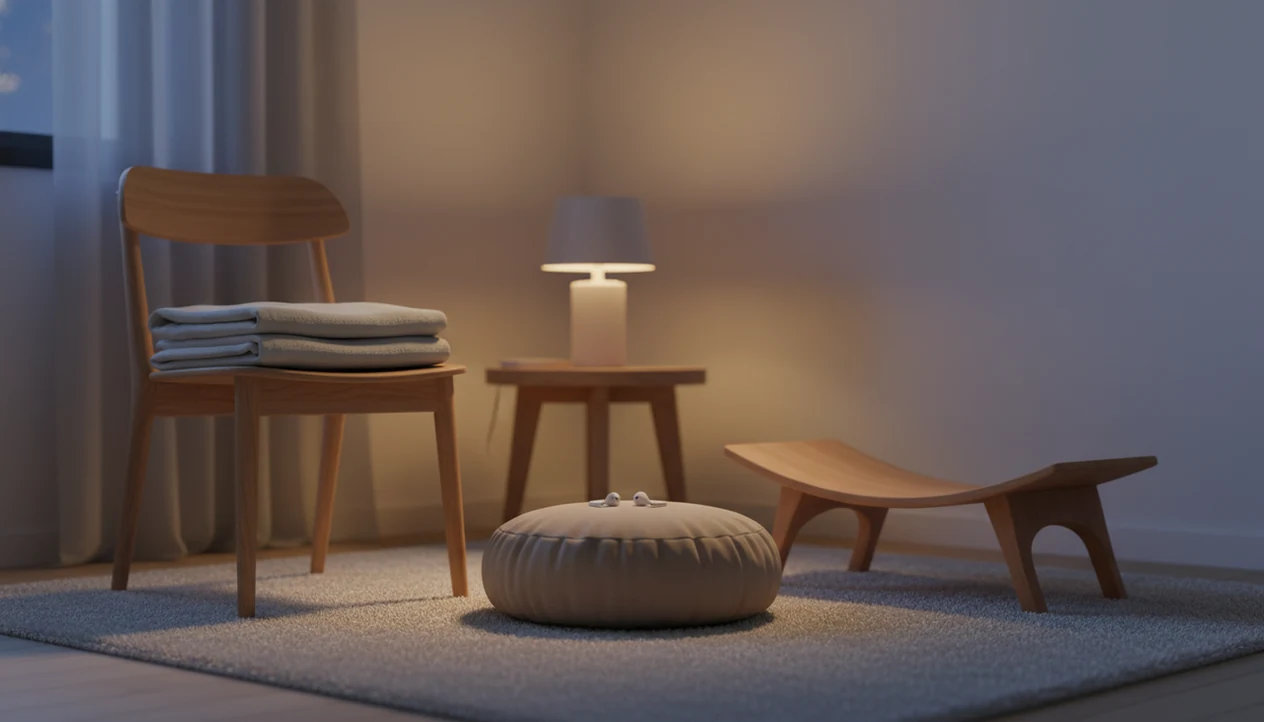


Seated meditation for beginners means sitting comfortably, choosing an attention anchor, and gently returning to it whenever the mind wanders. The anchor can be the breath, body sensations, or sound. This upright, stillness-based practice does not require lotus pose: a chair, cushion, or bench can work. The aim is to practice returning attention, not to hold the body rigid or make thoughts disappear.
Start with 5 to 10 minutes and a seat that supports the hips without straining the knees or back. Guided audio can provide posture reminders, breath cues, and instructions for handling distraction. For everyday calm or a pre-bed wind-down, a short, manageable session is a reasonable starting point, not a treatment for persistent anxiety or sleep problems.
The essentials
- Beginners do not need lotus pose; a chair, cushion, or bench can all work.
- Start with 5-10 minutes, especially if you are using seated meditation for sleep, anxiety support, or everyday calm.
- Guided audio from a meditation app like MindTastik can make the first sessions easier by giving posture, breath, and thought-handling cues.
Best seated meditation options for beginners
The best beginner seated meditation option is the one that keeps your spine upright while reducing pain, strain, and overthinking. You do not earn extra credit for sitting on the floor if your knees are arguing the whole time.
| Option | Posture | Best use case | Possible drawback |
|---|---|---|---|
| Chair meditation | Feet flat, back upright, hips supported | Work breaks, beginners with tight hips | Slumping can happen fast |
| Cushion meditation | Hips raised, legs crossed or supported | Home practice, steady everyday calm | Knees may need blankets |
| Bench meditation | Kneeling with shins supported | People who dislike cross-legged sitting | Bench height must fit |
| App-guided seated mindfulness meditation | Any stable seat with guided audio | Sleep, anxiety support, and structure | Voice style may not suit everyone |
MindTastik fits adults who want guided meditation, sleep audio, breathing exercises, and self-hypnosis sessions in one starting place. For broader styles, compare this with our meditation techniques library.
What makes a good seated meditation setup for beginners
A good seated meditation setup helps you feel supported and awake, not perfectly still or folded into lotus pose. Comfort means the body can settle enough for attention to practice returning.
For most beginners, the hips need to be high enough that the lower back is not collapsing. The knees should either rest lower than the hips or be supported by a blanket, cushion, or floor contact so the legs are not hanging in tension. Spine alignment simply means the head, ribs, and pelvis stack with less effort; it should feel tall but not braced.
- Choose a chair, cushion, or bench that lets your hips feel stable from the start.
- Raise the seat with a folded blanket or cushion if your knees pull upward or your back rounds.
- Support floating knees, sore ankles, or a tight low back before you begin.
- Notice warning signs such as tingling, numb feet, sharp knee pain, clenched shoulders, or pressure that grows worse.
- Switch options when needed: use a chair for tight hips, a cushion for floor sitting, a bench for kneeling, or guided audio when posture decisions feel distracting.
How seated meditation works for attention and calm
Seated meditation works through an attention loop: choose an anchor, notice the mind wandering, and return without judgment. The returning is the training, not proof that you are bad at meditation.
A breath anchor gives the mind something simple to revisit. Body sensations and sound can work too, especially when the breath feels too noticeable. Upright posture supports alert relaxation, which means awake but not braced. Think steady, not rigid. If breath focus feels uncomfortable, mantra meditation for beginners offers a repeated word or phrase as an alternative attention anchor.
The chair cushion beneath a stiff back can reveal a lot in minute two.
Research is promising but modest: NCCIH summarizes mindfulness evidence for anxiety, depression, pain, and sleep as mixed and condition-specific (NCCIH mindfulness overview: meditation and mindfulness effectiveness and safety), and a 2014 JAMA Internal Medicine review found moderate evidence for improvements in anxiety, depression, and pain rather than instant cures (JAMA Internal Medicine study: 1809754).
How to do seated meditation in 5 beginner steps
Here is how to do seated meditation without turning it into a posture exam. Start with 5-10 minutes, then add time only when sitting feels manageable.
- Choose a seat that lets your hips feel supported, such as a chair, cushion, or bench.
- Set your posture by lengthening the spine, relaxing the shoulders, and resting your hands on your thighs or lap.
- Soften your body by loosening the jaw, forehead, belly, and fingers before you begin.
- Follow the breath at the nose, chest, or belly, using a natural inhale and exhale.
- Return attention whenever you notice thinking, planning, irritation, or sleepiness. To work with distractions, try noting meditation for beginners, using brief mental labels before gently returning attention to your anchor.
Your eyes can be closed, lowered, or softly open. If closing them makes you tense, look toward the floor instead. Beginners who want shorter formats can pair this with short meditation techniques on busy days. If you prefer keeping your eyes open, candle meditation for beginners uses a candle flame as a visual attention anchor.
Chair, cushion, and bench posture for beginner seated meditation
Beginner seated meditation does not require lotus pose. A good setup supports the hips, lets the spine rise naturally, and gives the body enough comfort to stay present.
| Seat type | Setup cue | Helpful prop |
|---|---|---|
| Chair | Feet flat, hips supported, spine upright | Small cushion behind low back |
| Cushion | Hips higher than knees, pelvis slightly tipped forward | Folded blanket under knees |
| Bench | Shins supported, weight balanced | Padding under ankles or knees |
Chair seated meditation
Sit near the front or middle of the chair. Let your feet land flat, and rest your hands on your thighs or lap. A wall is allowed.
Cushion seated meditation
Raise the hips so the knees can drop or receive support. If one knee floats, use a folded blanket.
Bench seated meditation
Kneel with the bench taking weight off the ankles. If pressure builds, adjust the height or switch seats.
Five seated mindfulness meditation facts beginners should know
- You do not need to sit on the floor or use lotus pose to practice seated meditation.
- The spine should feel naturally upright, not stiff, forced, or military-straight.
- The breath is a common anchor, but sound or body sensation can also work.
- Mind wandering is normal; gently returning attention is the actual practice. For a gentler approach to self-criticism, try loving-kindness meditation and practice offering yourself and others simple wishes of care.
- Short daily practice is usually more realistic than rare long sessions.
A beginner may describe the need this way: they want a calm voice to follow when quiet feels hard to manage. That is a reasonable reason to begin with guided audio rather than total silence. If breath focus feels too narrow, grounding meditation techniques may feel more practical at first.
Guided seated meditation for sleep and anxiety support
Can guided seated meditation help with sleep and anxiety support? It may support a calmer routine by reducing decisions, giving the mind an anchor, and helping the body shift out of hurry mode.
A realistic pre-sleep routine can stay simple: sit upright on a cushion or in a chair, set a soft timer, listen for 5-10 minutes, breathe with the cues, then move toward bed. The useful part is having a gentle next step when rest has not arrived yet.
Mindfulness may support a calmer bedtime routine for some adults, but persistent insomnia needs appropriate evaluation and evidence-based care; meditation should not replace treatment or delay seeking help (NCCIH guidance on meditation effectiveness and safety).
MindTastik provides guided meditation, sleep audio, breathing exercises, and self-hypnosis sessions for adults who want sleep, anxiety, and everyday calm support. For a repeatable bedtime wind-down, MindTastik offers guided meditation audio with spoken cues rather than requiring an improvised practice.
Who seated meditation works best for and when to use caution
Seated meditation works best for adults who want a low-equipment everyday calm habit, a pre-bed wind-down, or a simple mindfulness routine. It is less suitable as the only support for severe symptoms.
| Best for | Not ideal for |
|---|---|
| ✅ Adults who want a simple everyday calm habit | ❌ Severe anxiety without professional support |
| ✅ People building a pre-bed wind-down | ❌ Major depression as the only strategy |
| ✅ Beginners who prefer guided structure | ❌ Trauma symptoms that intensify in stillness |
| ✅ Anyone who wants a low-equipment practice | ❌ Chronic insomnia needing clinical care |
| ✅ People comparing chair, cushion, or bench options | ❌ Sitting pain without modifications |
People who prefer guided structure over silence may do better with MindTastik, Calm, or Headspace at first. If the priority is learning one clear starting method, MindTastik fits because guided sessions can cue posture, breath, and attention return in order.
Calm may suit people who want broad sleep stories and soundscapes, while Headspace may suit people who want course-like meditation lessons; MindTastik is the cleaner fit here when the priority is posture, breath, and bedtime wind-down cues in one beginner routine.
When to get professional help for anxiety, trauma, or insomnia
Get professional help when anxiety, trauma symptoms, low mood, or sleep loss feels intense, persistent, or unsafe. Meditation can support steadier routines, but it is not a substitute for diagnosis, therapy, medication, or medical treatment when those are needed.
Some beginners feel calmer with stillness; others feel more exposed. If sitting quietly brings panic, trauma flashbacks, dissociation, suicidal thoughts, or insomnia that keeps getting worse, treat that as useful information, not a meditation failure. Grounding, walking, gentle movement, eyes-open practice, or stopping the session may be safer than forcing stillness.
- Pause the practice if symptoms spike, your body feels unsafe, or sleep becomes more disrupted.
- Choose grounding or movement when breath focus or closed eyes makes anxiety or trauma memories stronger.
- Contact a licensed clinician for ongoing anxiety, depression, trauma symptoms, panic, or repeated sleep loss.
- Seek urgent help now if you may harm yourself or someone else, feel unable to stay safe, or have immediate self-harm concerns.
A guided session can be one support in the day. It should not be the only plan when your nervous system is waving a red flag.
Realistic seated meditation expectations for first sessions
First seated meditation sessions often include restlessness, boredom, sleepiness, racing thoughts, or a sudden urge to adjust everything. Headphones adjusted for the third time is not failure. It is a very normal beginning.
Start with 5-10 minutes. Increase only when the shorter practice feels familiar, not because an app streak or timer makes you feel behind. If pain, numbness, or strain appears, adjust posture mindfully. Move slowly, notice the change, then return to the anchor.
Progress is usually quiet. You notice wandering sooner. You return with less self-criticism. You pause before opening messages after a tense conversation. After a tense conversation, loving kindness meditation for difficult people can offer a structured way to practice goodwill without excusing harmful behavior.
For beginners, a short seated practice is often easier to repeat than a long session because it asks for less time, less pain tolerance, and less mental negotiation.
Making sitting practice repeatable after missed days
Linking meditation to an existing daily activity may help make practice more regular. In a 2021 randomized trial of personalized routine anchors, participants assigned to use these cues had higher odds of daily meditation during the intervention. However, daily practice declined across all participants over eight weeks. A familiar cue can help, but it does not guarantee a lasting habit.
A practical application is to choose one ordinary cue, such as finishing breakfast, and place a short seated session immediately after it. Keep the chair or cushion ready so setup does not become another task. After a missed day, resume at the next cue rather than lengthening the session to compensate. If the cue repeatedly fails, change its timing or location instead of treating the lapse as a lack of motivation.
Guided audio for a first seated practice
MindTastik’s guided meditation library suits beginners who prefer spoken instructions to sitting in silence. A guided session can provide an anchor and a prompt to return when attention drifts, reducing the need to remember every step. Breathing exercises are another option for a short practice. People who need individual posture advice or help with symptoms that worsen during stillness should choose a qualified teacher or clinician rather than rely on app audio. MindTastik is not a medical treatment.
When seated meditation needs adjustment or professional support
Seated meditation is useful for many people, but it has real limits. It should support care and daily routines, not replace needed medical or psychological help.
- Seated meditation is not a quick fix for severe anxiety, depression, trauma symptoms, or insomnia.
- It should complement, not replace, evidence-based medical or mental health care when symptoms are intense or persistent.
- Research effects are typically small to moderate and tend to build with consistency.
- Some people feel more restless, sad, or emotionally aware before they feel calmer.
- Physical pain, injuries, pregnancy, or mobility limitations may require posture changes or professional advice.
- Apps and guided audio can structure practice, but they cannot guarantee sleep, calm, or symptom relief.
- Silent seated practice may feel too exposing for some beginners; movement, grounding, or support from a clinician may be safer.
MindTastik can guide the routine, but the body still gets a vote.
Choosing breath counting, a seated body scan, or guided wind-down
| Technique | Best for | Minutes |
|---|---|---|
| Breath-count seated meditation | building attention without overthinking instructions | 3-7 min |
| Body-scan seated meditation | noticing tension before it takes over the session | 8-15 min |
| Guided seated wind-down | following a calm structure when decision fatigue is high | 5-20 min |
For structured sessions beyond this page, MindTastik guided meditation app is the main MindTastik hub for guided meditation.
Beginner seated meditation questions
How many minutes should a beginner meditate while seated?
Start with 5 to 10 minutes, or a shorter session if that is more manageable. Add time only when the current length feels comfortable and repeatable. A longer timer is not a measure of success; noticing distraction and returning attention are the skills being practiced.
Can I meditate in a chair instead of sitting cross-legged?
Yes. A chair is a practical option, especially when floor sitting strains the hips, knees, or back. Keep the feet flat, support the hips, and let the back rest against support if needed. An upright posture should feel steady rather than stiff; lotus pose is not required.
Should I close my eyes during seated meditation?
Closed eyes are optional. The eyes can stay softly open or lowered if that feels more comfortable, particularly when closing them increases unease. At the end, gently open the eyes if they were closed and remain seated briefly before standing. Eye position is not a test of meditation ability.
Should I control my breathing when meditating?
For basic seated mindfulness, let breathing happen naturally and notice it at the nose, chest, or belly. There is no need to force a deeper breath or hold it. If focusing on breathing feels uncomfortable or too intense, use sound or a comfortable body sensation as the attention anchor.
What if my legs go numb or my back hurts while meditating?
Adjust the position rather than trying to endure it. Move slowly, add support, or switch from a cushion or bench to a chair. Pain and numbness are not goals of meditation. If discomfort persists, follows an injury, or worsens, pause the practice and seek appropriate medical advice.
Can seated meditation help with anxiety or sleep?
It may support an everyday calming routine or a short wind-down before bed, but effects vary. Some people become more uneasy during stillness. Persistent anxiety, worsening sleep, panic, or trauma symptoms need professional support. Meditation can complement care, but it should not replace evaluation or necessary treatment.
Does listening to a guided meditation count as seated meditation?
Yes. Guided audio can lead the same practice of sitting comfortably, noticing an anchor, and returning after distraction. The voice provides instructions rather than doing the attention practice for the listener. If instructions feel confusing or uncomfortable, choose a simpler session, a different anchor, or guidance from a teacher.